India’s industrial sustainability push is entering a new phase as Re Sustainability Limited (ReSL) and Indian Oil Corporation Limited (IndianOil) formalize a nationwide framework for used oil recycling. The Memorandum of Understanding (MoU) signals a coordinated shift toward circular resource management in one of the country’s most under-optimized waste streams using lubricating oil.
The partnership is structured to create an end-to-end system for collecting, processing, and reintegrating used oil into industrial supply chains. It reframes waste as a recoverable asset, aligning with India’s broader goals around resource efficiency, emissions reduction, and industrial decarbonization.
Building a reverse logistics backbone for lubricant recovery
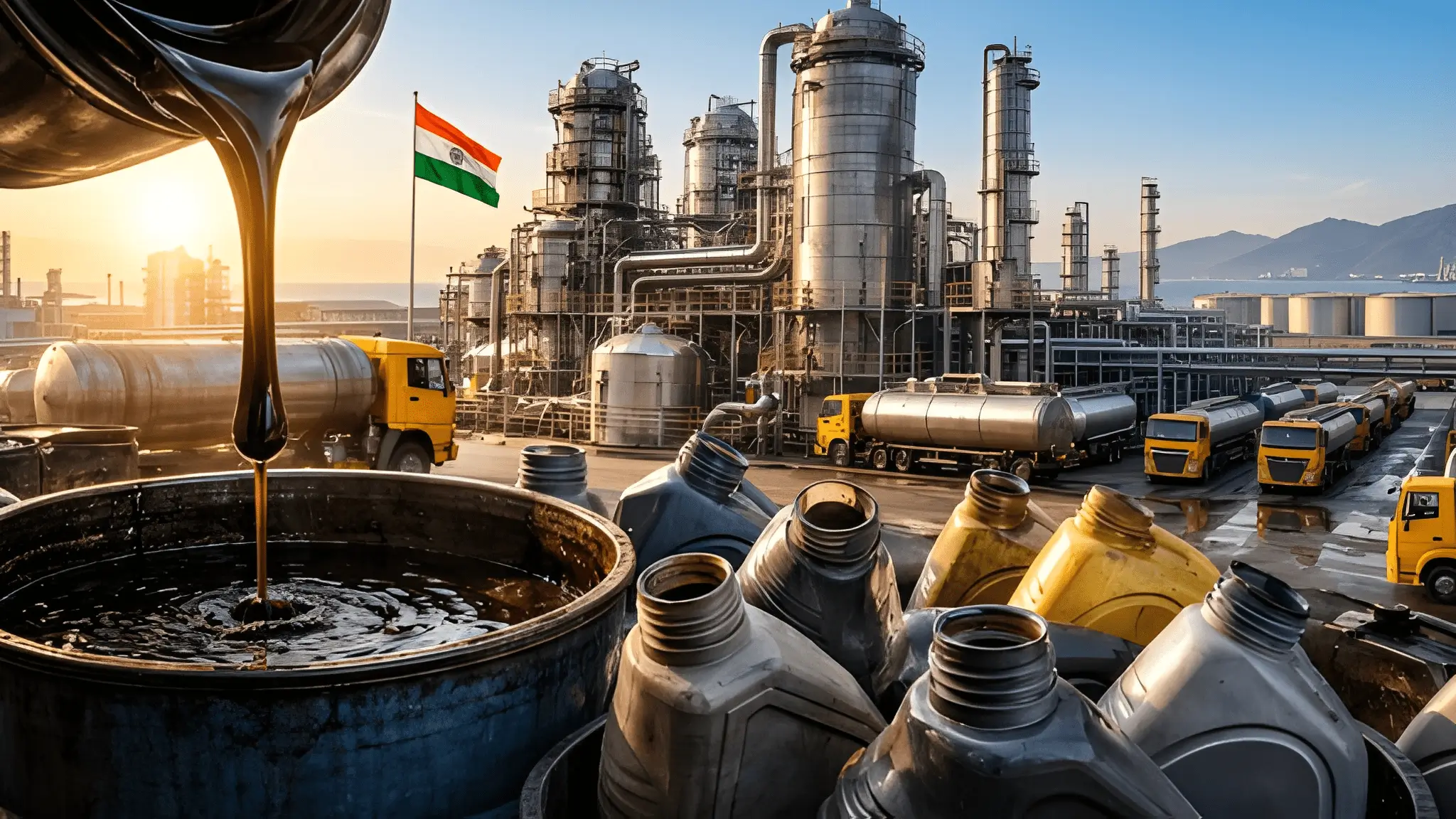
At the core of the initiative lies the creation of a Special Purpose Vehicle (SPV), which will architect and operate a national reverse logistics network. This system will aggregate used lubricating oil from both automotive and industrial sources and route it to advanced recycling facilities.
Moreover, the infrastructure will not only streamline collection but also introduce traceability across the value chain, a critical requirement for scaling regulated recycling markets in India. The recovered material will undergo re-refining into Re-Refined Base Oil (RRBO), enabling direct reuse in lubricant production. As a result, the model reduces dependence on virgin crude-derived inputs while improving lifecycle efficiency across the lubricant ecosystem.
Re-refining capacity targets industrial-grade output
Under the proposed framework, collected oil will be processed into Group I and Group II+ base oils that meet Bureau of Indian Standards (BIS) and global quality benchmarks. This positions the initiative not just as a waste management solution, but as a viable industrial supply stream.
The partners are targeting the collection of approximately 100 kilotonnes of used oil annually through a structured network of aggregation hubs, logistics systems, and processing facilities. In addition, they plan to establish a modern re-refining plant with a capacity ranging between 50,000 and 100,000 tonnes per year, expected to become operational within three years.
Leadership frames circularity as energy strategy
Bankim Patra, Country Head (Lubes) at Indian Oil Corporation Limited, said the initiative reflects the company’s ongoing commitment to combining energy security with environmental responsibility.
“As India’s largest integrated energy company, Indian Oil continues to explore solutions that strengthen sustainable resource management. This collaboration aims to establish an organized framework for collecting and recycling used oil while promoting responsible reuse of valuable resources within the energy ecosystem,” he said.
Masood Mallick, Managing Director and Group CEO of Re Sustainability Limited, positioned the partnership as a structural shift in how India handles complex waste streams.
“India’s shift toward resource-efficient growth requires systems capable of recovering value from complex waste streams. Our partnership with Indian Oil is focused on developing an integrated ecosystem for used oil recovery and re-refining. This initiative moves the sector beyond traditional waste disposal practices and toward large-scale resource recovery,” he said.
India generates an estimated 1.3 million tonnes of used lubricating oil annually, yet only about 200,000 tonnes flows through formal recycling channels. The remainder often enters informal or inefficient disposal pathways, leading to environmental risks and material loss.
However, the new ecosystem aims to significantly expand regulated recovery volumes by formalizing collection and processing infrastructure at scale. The initiative also incorporates recycling of plastic lubricant containers under Extended Producer Responsibility (EPR) regulations, strengthening compliance while addressing packaging waste.
Infrastructure expansion aligns with long-term sustainability goals
The project combines greenfield investments with upgrades to existing processing infrastructure, ensuring faster deployment and capital efficiency. Furthermore, it integrates circularity into India’s energy value chain, linking waste recovery directly with industrial reuse. Re Sustainability, backed by KKR, brings operational scale across multiple geographies, while IndianOil contributes deep integration across refining, logistics, and fuel distribution networks. Together, the collaboration creates a vertically aligned model capable of reshaping how India manages lubricant waste.
As India accelerates its transition toward sustainable industrial systems, this partnership establishes a foundational layer for circular hydrocarbons, turning a fragmented waste stream into a structured, high-value resource economy.