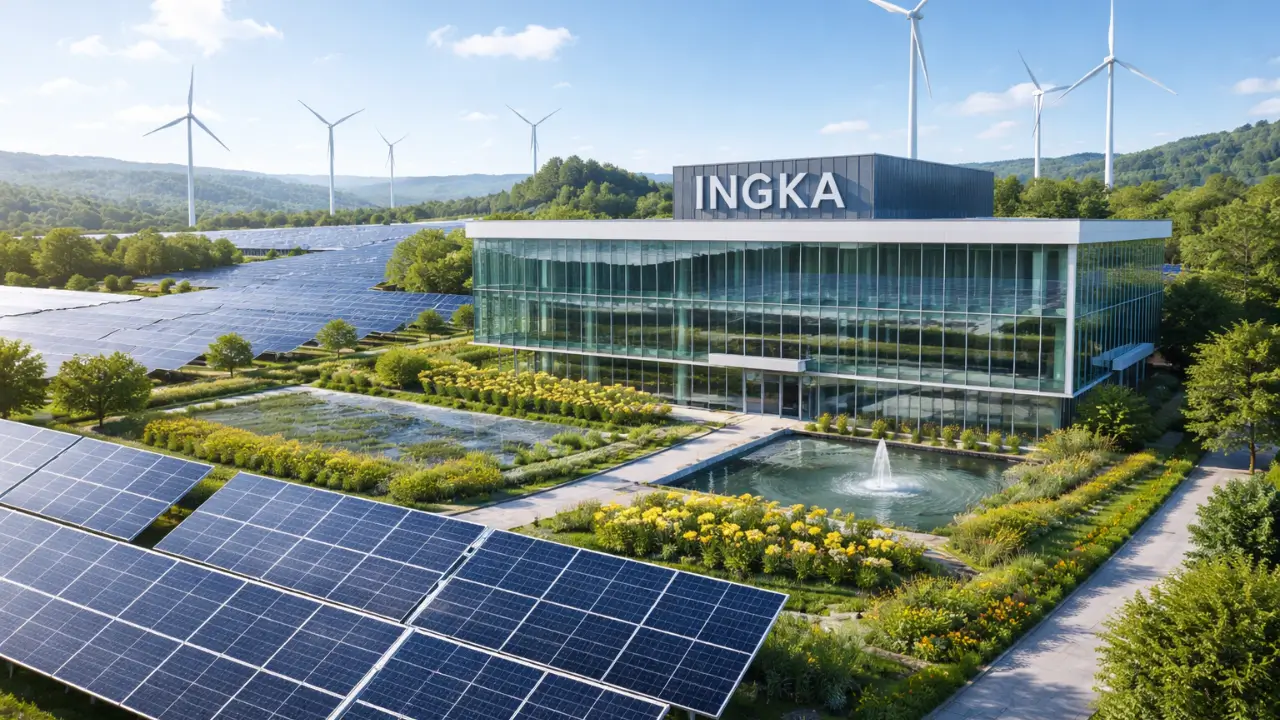
Ingka Group, the parent company and largest retailer behind IKEA, is advancing its renewable energy strategy by transforming an existing wind farm in Portugal into a hybrid power park that combines wind and solar generation.
The project integrates a new solar installation with an existing wind park, allowing both technologies to operate through the same grid connection. As a result, Ingka expects the upgraded asset to generate a combined 233 GWh of renewable electricity annually, strengthening the company’s broader push to scale its clean energy portfolio across Europe.
Hybridization Unlocks Higher Renewable Output
The Portuguese wind facility currently operates 25 wind turbines with a total installed capacity of 50 MW, producing roughly 150 GWh of electricity annually, enough to supply power comparable to that used by around 30 IKEA stores.
Now, Ingka Group is adding a solar installation at the same location. The solar array will generate approximately 83 GWh per year, pushing the total output of the hybrid park to 233 GWh annually.
Beyond increasing total energy production, the hybrid design improves the efficiency of the existing grid connection. Even with some export limitations, the upgrade raises the grid’s capacity factor from 34% to 50%, while also aligning generation patterns more closely with Ingka’s daytime electricity demand.
In practice, the project demonstrates how renewable developers can extract more energy value from existing infrastructure rather than building entirely new grid connections, an increasingly important consideration as power networks face congestion from rising clean energy deployments.
Renewables Investment Accelerates Toward 2030
The hybrid park also reflects Ingka Group’s long-term strategy to expand renewable generation through its investment arm, Ingka Investments. Over the past decade, the company has steadily built a renewable portfolio comparable in scale to a mid-sized power producer. To date, Ingka Investments has invested or committed roughly €4.3 billion in renewable energy projects, while the company plans to allocate up to €7.5 billion by 2030.
Through these investments, Ingka aims to reach around 15 TWh of annual renewable energy production, enough to power more than four million households or support the charging demand of five to six million electric vehicles each year.
Consequently, the Portugal hybridization project serves as a practical example of how the company intends to accelerate its contribution to the low-carbon energy transition while supporting its own operational power demand.
Maximizing Infrastructure Through Hybrid Energy Design
The hybrid park design reflects a broader trend in renewable energy development: combining multiple generation sources at a single site to maximize infrastructure efficiency.
By installing solar panels alongside wind turbines and connecting them through the same grid point, developers can significantly increase the full-load utilization of the connection. In many cases, solar output peaks during the day when wind generation may dip, allowing both technologies to complement each other across different hours of the day.
Advanced panel configurations such as vertical installations or bifacial modules capable of capturing sunlight from both sides, further enhance energy yield. As a result, hybrid installations can deliver higher total output without requiring additional transmission capacity, which remains one of the most significant bottlenecks in renewable expansion globally.
Moreover, combining wind and solar resources introduces a more balanced generation profile. While neither resource produces electricity continuously, their differing production cycles can smooth power output and improve predictability compared with standalone renewable projects.
A Strategic Model for Scalable Clean Energy
For Ingka Group, the hybrid system illustrates a model for scaling renewable power while minimizing environmental footprint. Rather than expanding energy infrastructure across new land areas, the company is focusing on maximizing existing assets.
The approach aligns with a broader industry shift toward hybrid renewable parks, which many energy developers view as a key strategy for improving grid efficiency and accelerating decarbonization.
Frederik de Jong, Head of Renewable Energy at Ingka Investments, said:
“This new hybrid park in Portugal is a great step forward in our renewable energy journey. It illustrates our commitment to innovation, allowing us to significantly increase our energy output using existing infrastructure. This not only boosts our clean energy capacity but also sets a benchmark for how we can integrate different renewable sources to create a more stable and efficient power supply for the future.”
Growing Global Renewable Portfolio
Ingka Group’s renewable footprint continues to expand across international markets. Through Ingka Investments, the company currently owns and operates 49 wind farms across 17 countries and 26 solar parks across nine countries. Together, these assets produce more than 5 TWh of electricity annually, equivalent to the yearly consumption of more than 1.47 million European households.
As energy demand rises, particularly from digital infrastructure, electrification, and AI-driven data centers, large corporations increasingly view renewable generation as both a sustainability commitment and a strategic energy hedge.
By hybridizing its Portuguese wind asset, Ingka Group signals how corporate energy investors may continue to optimize renewable portfolios, extracting more power from existing infrastructure while strengthening long-term energy resilience.