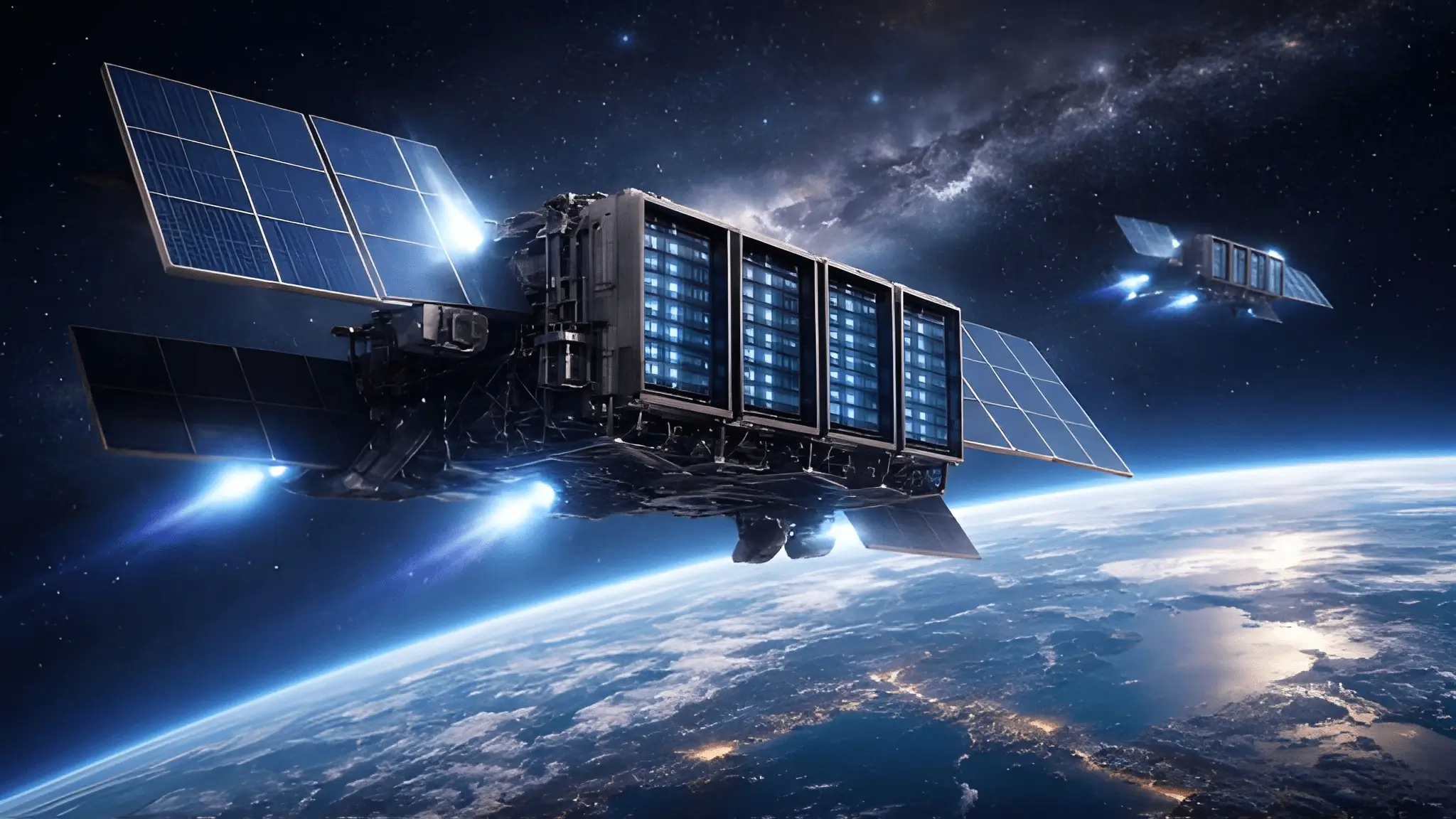
Redmond-based Starcloud has raised a $170 million Series A at a $1.1 billion valuation, advancing an ambitious plan to build data centers in orbit as artificial intelligence demand strains Earth-bound infrastructure.
The funding positions Starcloud among a new class of infrastructure startups targeting compute constraints not through incremental efficiency gains, but through geographic relocation into space. The round lifts total capital raised to $200 million and marks one of the fastest paths to unicorn status following a Y Combinator debut.
AI Demand Pushes Infrastructure Beyond Earth
Artificial intelligence workloads continue to accelerate compute demand at a pace terrestrial systems struggle to match. Starcloud argues that permitting timelines, land constraints, and energy availability have become structural bottlenecks.
“The AI revolution is colliding with the physical limits of our terrestrial energy grid,” Philip Johnston, co-founder and CEO of Starcloud, said in the release. “We are quickly running out of places to build new energy projects for data centers on Earth. By moving AI compute to space, we unlock access to unlimited solar power and completely remove the energy bottleneck. This funding allows us to rapidly scale our orbital infrastructure and meet the massive commercial demand for sustainable AI compute.”
The company’s core thesis reframes energy not as a cost center, but as a location problem. Low Earth orbit offers near-continuous solar exposure, eliminating the intermittency and permitting friction that define ground-based energy expansion. However, execution risk remains high given the complexity of operating compute infrastructure in space.
Redmond Emerges as Strategic Space-Compute Hub
Starcloud relocated its headquarters to Redmond in early 2024 to access a concentrated pool of satellite engineering and data center talent. The move aligns the company with a growing regional ecosystem that includes satellite manufacturing and space infrastructure players.
This geographic clustering has begun to mirror traditional cloud corridors, but with a space-centric specialization. As a result, Starcloud gains proximity to both aerospace supply chains and hyperscale infrastructure expertise, an unusual but increasingly relevant overlap.
Oversubscribed Round Signals Institutional Conviction
The Series A was structured in two tranches, initially led by Benchmark with participation from EQT, followed by an extension co-led by both firms. The round drew capital from major infrastructure and venture investors, including Macquarie Capital, NFX, Nebular, Y Combinator, Adjacent, 776 Ventures, Fuse Ventures, Manhattan West, and Monolith Power Systems.
Angel participation included senior figures from aerospace, enterprise, and finance sectors, reinforcing the cross-industry relevance of space-based compute. Importantly, EQT’s ownership of more than 70 data centers introduces operational alignment between terrestrial and orbital infrastructure strategies. Meanwhile, Macquarie’s scale in infrastructure financing suggests long-term capital readiness for expansion beyond experimental deployments.
Early Missions Demonstrate Technical Viability
Starcloud has moved rapidly from concept to deployment. With just $3 million in pre-seed funding, the company designed, built, and launched its first satellite, Starcloud-1, in November 2025 aboard a SpaceX rocket.
The mission demonstrated several firsts in orbital computing. The company successfully deployed an Nvidia H100 GPU in orbit, achieving a 100-times increase in AI compute capability in space environments. It also completed orbital AI training, executed inference workloads using a version of Gemini, and demonstrated fine-tuning of models in orbit.
These milestones suggest that compute workloads can operate beyond Earth with fewer compromises than previously assumed. However, scaling from experimental payloads to commercial-grade infrastructure remains a significant leap.
The company plans to launch Starcloud-2 later this year, introducing a system designed for commercial operations. The satellite will feature the largest deployable radiator ever used in a commercial context and deliver 100 times the power generation capacity of its predecessor.
This next phase marks a transition from proof-of-concept to revenue-generating infrastructure. Starcloud expects to support edge and cloud workloads for early customers, including Crusoe, while working alongside partners such as AWS, Google Cloud, and Nvidia. Consequently, the company begins positioning itself not as a research initiative, but as a viable extension of the global cloud ecosystem.
Board Expansion Reflects Long-Term Infrastructure Bet
Benchmark General Partner Chetan Puttagunta will join Starcloud’s board as part of the financing.
In a statement in today’s release, Puttagunta said, “We believe that we are in the early innings of a decades-long buildout of AI infrastructure. Starcloud is pioneering a solution to the challenges of scaling AI infrastructure on Earth with orbital data centers. Their extraordinary engineering team has achieved significant technical breakthroughs in power and cooling, as well as innovative advancements in manufacturing processes. Most notably, the great team at Starcloud has reached these milestones while remaining exceptionally capital efficient. We believe their technical rigor and remarkable ambitions will enable them to achieve extraordinary scale.”
His appointment signals investor expectations that orbital infrastructure could evolve into a foundational layer of global compute capacity. Starcloud reached a $1.1 billion valuation just 17 months after its demo day with Y Combinator, making it the fastest unicorn in the accelerator’s history, according to the company.
The trajectory underscores how quickly capital has shifted toward infrastructure solutions that address AI scaling constraints at a systems level rather than at the chip or model layer. The newly raised funds will support development of the Starcloud-3 satellite series, expansion of manufacturing capabilities, hiring, and procurement of future launch contracts.
Meanwhile, the company is building toward vertically integrated production, a move that could reduce costs and improve deployment cadence over time. The broader implication remains clear: orbital data centers are moving from speculative concept to early infrastructure category. However, whether space becomes a mainstream compute layer will depend on reliability, economics, and integration with existing cloud ecosystems.