Panasonic Corporation announced a new push into the rapidly evolving data center cooling market, launching a liquid cooling systems business designed for generative AI infrastructure across Europe.
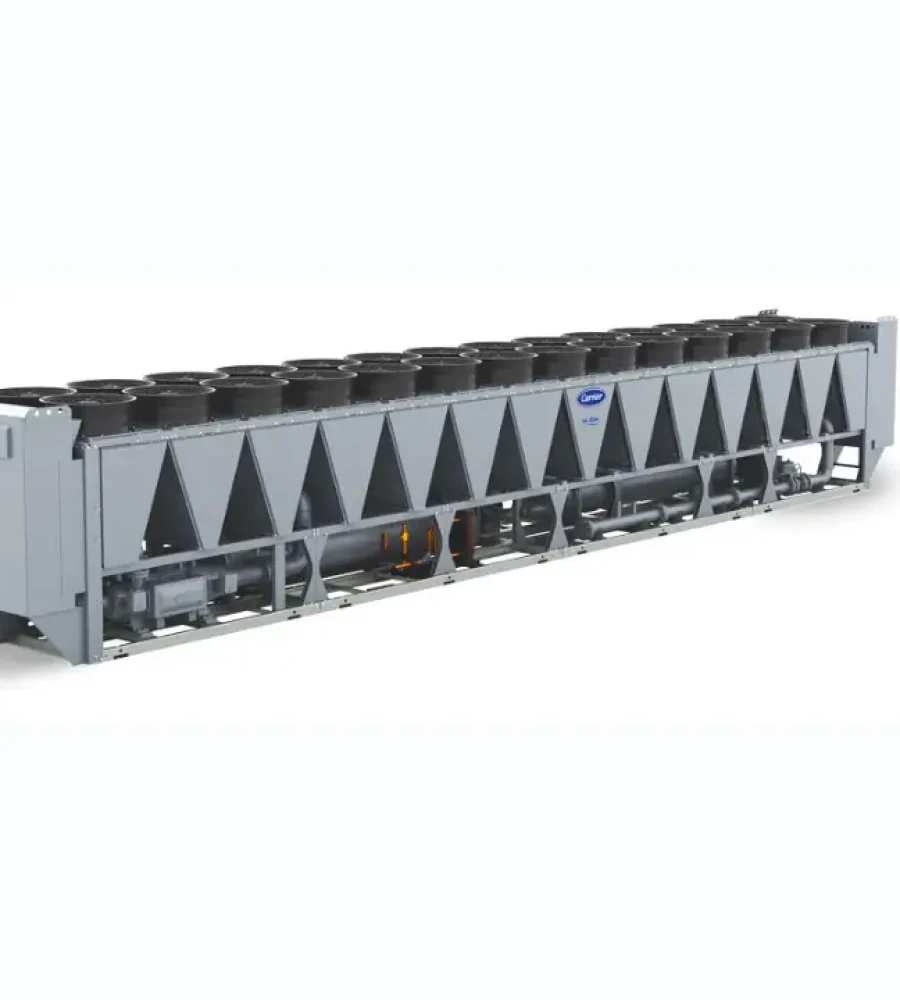
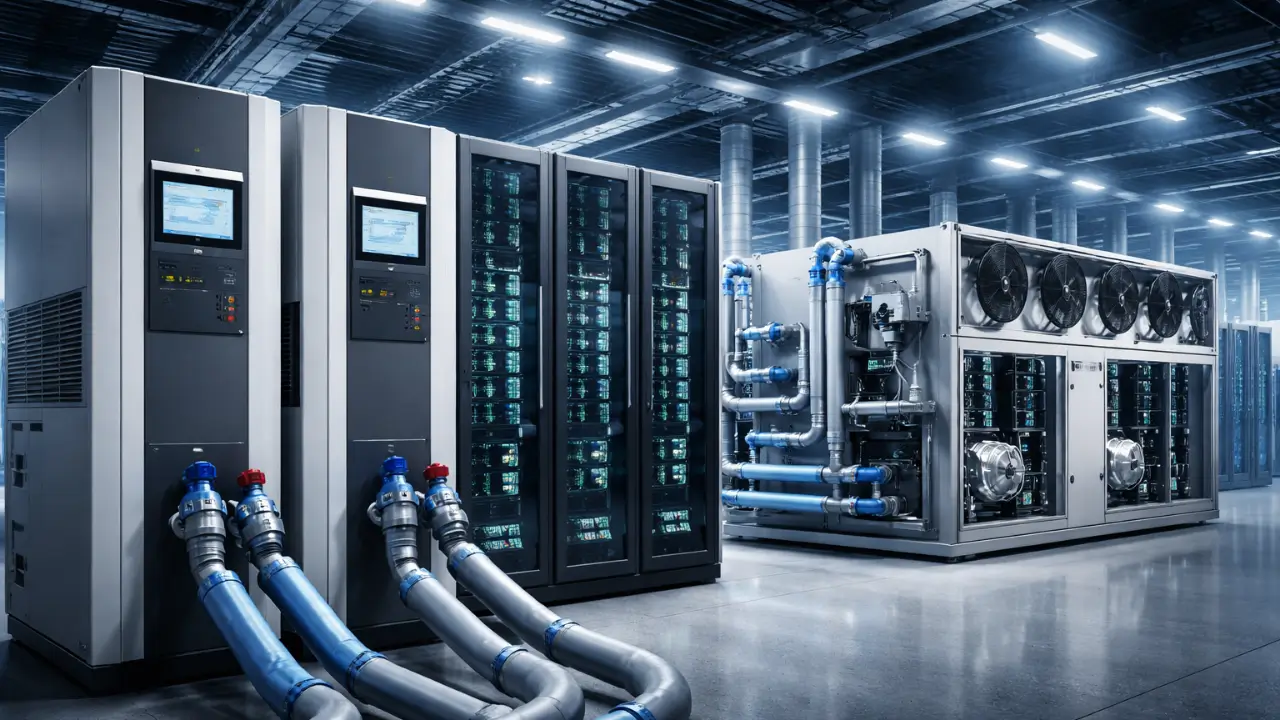
The company confirmed that its Heating & Ventilation A/C Company has begun accepting orders from March 4, 2026 for a new portfolio of cooling equipment built specifically for next-generation AI facilities. The offering includes two Coolant Distribution Units (CDUs) rated at 400kW and 800kW, alongside free-cooling chillers with 800kW and 1,200kW capacities.
Panasonic also disclosed that it is developing higher-capacity CDUs exceeding 1,200kW, with order acceptance scheduled to begin within March 2026. The launch positions Panasonic directly within the expanding infrastructure race surrounding generative AI data centers, where thermal management increasingly defines operational efficiency.
AI Infrastructure Forces Cooling Architecture to Evolve
Panasonic’s new CDUs address this shift by performing heat exchange and distributing coolant directly to high-density racks. The systems rely on chilled water supplied by data center chillers, allowing operators to integrate liquid cooling with existing thermal infrastructure.
Because of this hybrid architecture, facilities can combine traditional air-cooling with liquid-based heat removal. That design reduces power consumption while simultaneously shrinking the physical footprint required to achieve the same cooling capacity.
Tecnair Acquisition Strengthens European Data Center Strategy
Panasonic’s liquid cooling push also builds on a strategic expansion it initiated in 2023, when the company acquired Tecnair S.p.A, an Italy-based manufacturer of Close Control Air-Conditioning Units (CCUs) used in precision air-cooling systems for data centers.
That acquisition strengthened Panasonic’s presence in the European digital infrastructure market and provided the engineering foundation needed to broaden its cooling portfolio.
By introducing CDUs alongside Tecnair’s air-cooling systems, Panasonic can now deliver integrated thermal management platforms tailored to evolving AI infrastructure requirements. This layered approach positions the company to serve both legacy facilities and newly constructed AI campuses.
Free-Cooling Chillers Target Edge Data Center Efficiency
Panasonic also expanded its thermal strategy beyond hyperscale environments. The company introduced its first data-center-specific chillers equipped with free-cooling capabilities, designed for small and medium-scale facilities, including edge data centers.
Free-cooling technology leverages low outdoor temperatures up to 10°C to generate chilled water, significantly improving energy efficiency by reducing reliance on mechanical refrigeration. The chillers also use the low-global-warming-potential refrigerant R1234ze(E), which carries a GWP value of 1. This refrigerant choice helps reduce environmental impact while aligning with tightening sustainability expectations across European infrastructure projects.
As generative AI reshapes computing architecture, thermal management increasingly sits at the center of data center design. GPU clusters now concentrate enormous power densities within single racks. Consequently, cooling systems no longer operate as supporting infrastructure; they now determine scalability, efficiency, and operational resilience.