The world runs on infrastructure few people ever see. Yet today, that foundation is under more pressure than ever before. Data infrastructure was never meant to be glamorous. It was built to be dependable, the silent backbone of the digital age.
This exclusive editorial series highlights ten executives whose decisions are materially shaping how AI-era infrastructure is designed, financed, and scaled. More importantly, these leaders have earned their place not by operating within existing frameworks, but by redefining them. Instead of preserving legacy models, they are challenging architectural assumptions, influencing board-level capital strategy, and aligning infrastructure design with long-term technological ambition. As a result, their impact extends well beyond their own organizations.
Each spotlight within this Top 10 is more than a profile. It serves as a strategic lens into how C-level leaders are thinking about the next decade of compute. Ultimately, this series is about understanding how today’s executive choices will define tomorrow’s technological landscape.
Executive Profile
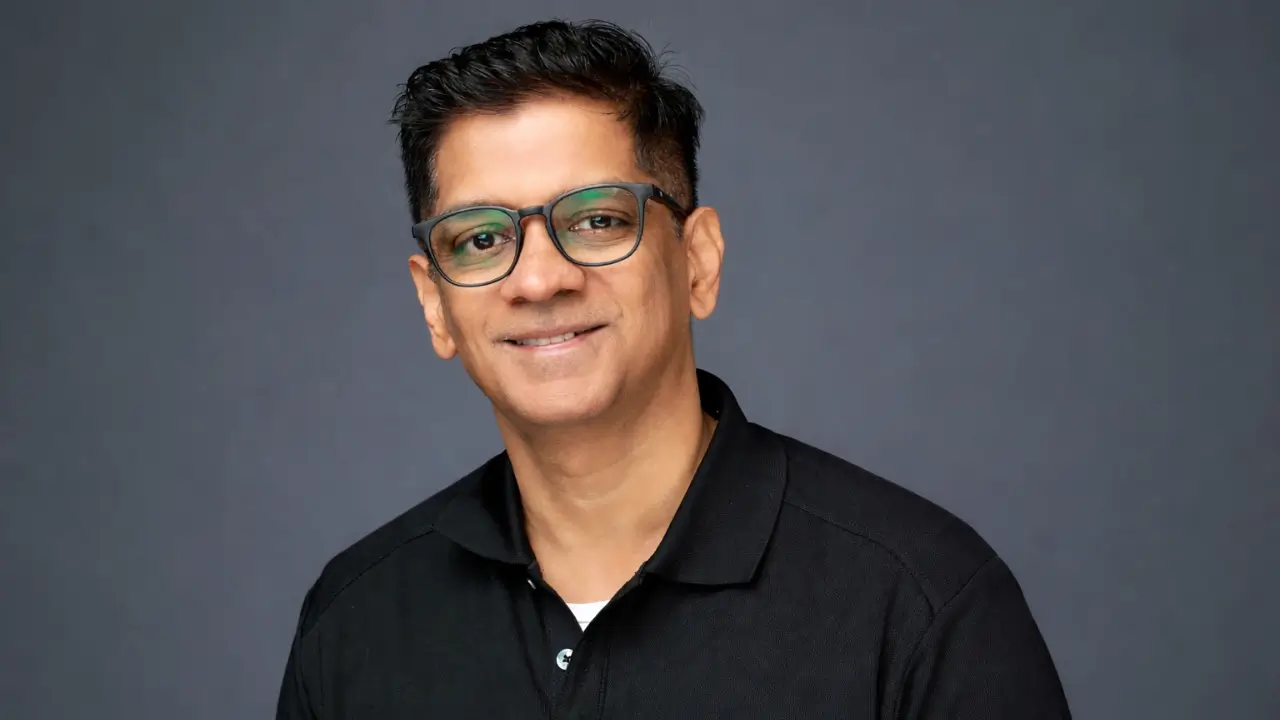
Mr. Vijay Sampathkumar
Infrastructure & Thermal Architecture Leader
At the outset of this series, we feature Mr. Vijay Sampathkumar, an infrastructure leader whose perspective on thermal architecture reflects the industry’s structural shift toward AI-scale readiness.
Vijay’s career sits at the intersection of engineering depth and infrastructure strategy. Over the years, he has built a reputation for viewing data centre design not as a facilities function, but as a long-horizon systems challenge, one where thermodynamics, capital allocation, and digital transformation must be aligned from inception.
His professional journey mirrors the evolution of the data infrastructure industry itself: from traditional enterprise environments to hyperscale expansion, and now into AI-driven high-density ecosystems. With experience across emerging markets and rapidly modernising digital economies, Vijay brings a pragmatic yet future-oriented lens to infrastructure planning particularly in regions positioned for greenfield AI growth.
What distinguishes his leadership is a disciplined return to fundamentals. As compute densities accelerate and energy constraints intensify, he consistently emphasizes that infrastructure decisions must be grounded in physical realities. Thermal limits, power distribution, and commissioning rigor are not operational afterthoughts, they are strategic design variables.
In conversations around AI-readiness, Vijay often reframes the debate. For him, scalability is not merely about adding capacity; it is about engineering resilience into the architecture from day one. This philosophy becomes especially visible in his advocacy for liquid-first design principles in high-density environments, where cooling is treated not as a support system, but as a core enabler of computational ambition.
Nowhere is this more evident than in his views on liquid cooling.
Strategic Lens: Liquid Cooling as an AI Enabler
For Vijay, liquid cooling is not an incremental upgrade. It is a structural shift.
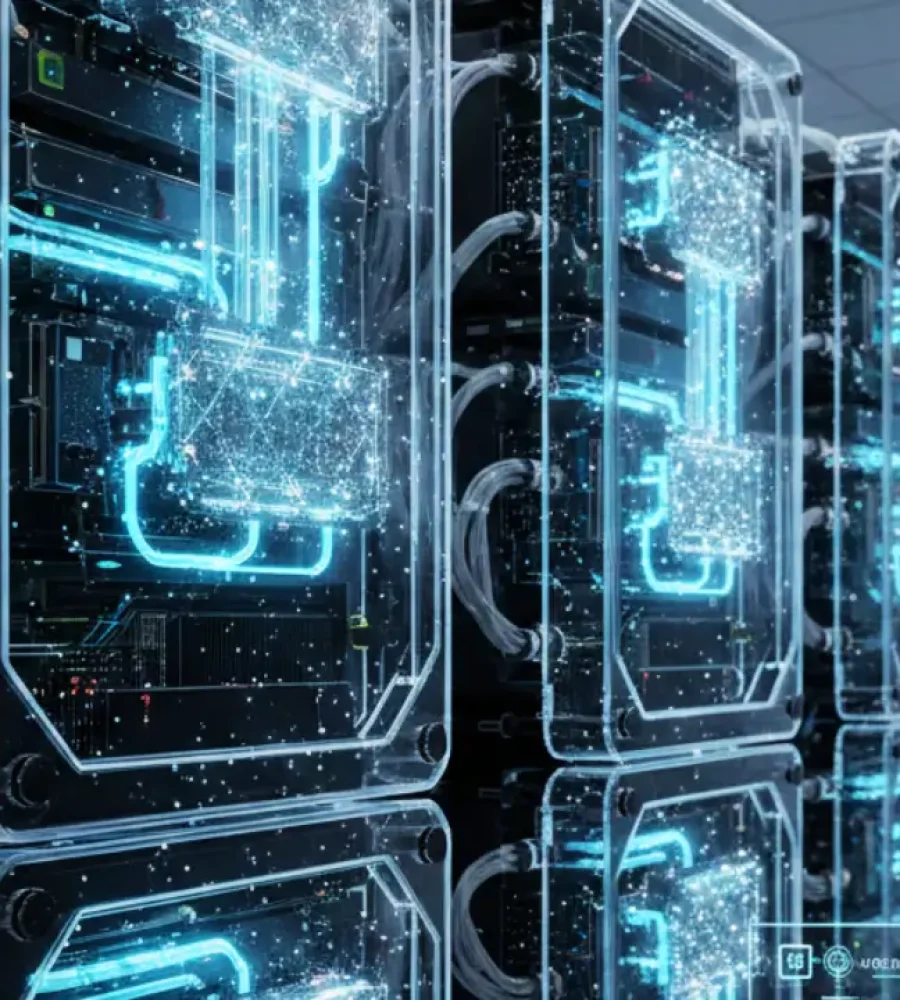
As rack densities move beyond historical norms and AI clusters sustain prolonged high-intensity workloads, traditional air-based systems approach thermodynamic limits. In his view, the industry’s transition toward liquid and hybrid architectures is not driven by experimentation or vendor cycles, it is driven by physics. Rather than treating cooling as mechanical overhead, Vijay frames it as a performance multiplier, an architectural enabler that unlocks higher compute densities while stabilizing energy intensity.
In His Own Words
Below is the full Q&A with Vijay Sampathkumar, presented in its original form to preserve the clarity and precision of his perspective.
Q1. AI workloads are driving rack densities far beyond traditional enterprise design thresholds. From your perspective, what is the most underestimated bottleneck in scaling AI infrastructure today and why is thermal management becoming a strategic board-level discussion?
The most underestimated bottleneck in scaling AI infrastructure is thermal scalability under sustained AI load.
Power capacity can be expanded. Capital can be deployed. Land can be secured. But heat dissipation at AI-scale densities is governed by physics. Once rack densities exceed 40–60 kW and advanced AI clusters are already pushing beyond that, thermal design becomes the limiting variable. This is why cooling has moved into boardroom discussions. It influences capital allocation, deployment velocity, energy procurement strategy, and long-term infrastructure risk.
In the AI era, cooling is no longer a support system, it is a strategic control layer for compute.
Q2.The industry is clearly shifting from conventional air-based systems toward liquid and hybrid cooling architectures. What signals tell you that this transition is no longer optional but inevitable for AI-scale deployments?
The shift toward liquid and hybrid cooling architectures is no longer experimental, it is structural.
Three signals confirm this inevitability:
- Semiconductor roadmaps are outpacing what air can realistically dissipate.
- Hyperscalers are embedding liquid readiness into new builds rather than planning retrofits.
- Energy efficiency mandates cannot be achieved at AI-scale densities using air-only systems.
This transition is not about innovation cycles, it is about thermodynamic constraints.
When physics becomes the constraint, architecture must evolve.
Q3. Sustainability metrics are increasingly shaping infrastructure investments. How do advanced cooling technologies contribute to reducing energy intensity, water dependency, and overall environmental footprint in modern data centres?
Advanced cooling technologies are one of the most direct levers to reduce infrastructure energy intensity.
Liquid-based systems improve heat capture efficiency and significantly reduce mechanical air movement, historically one of the largest parasitic loads in data centres. This translates into lower PUE, more stable performance under sustained load, and improved energy proportionality. Beyond efficiency, next-generation thermal architectures reduce water stress through optimized closed-loop systems and unlock the potential for waste heat reuse.
In a capital environment where ESG metrics shape investment decisions, thermal strategy directly influences environmental exposure, operating costs, and infrastructure valuation.
Q4. India and Southeast Asia are experiencing rapid digital infrastructure growth. What structural gaps or opportunities do you see in these regions when it comes to preparing data centres for high-density AI and HPC workloads?
India and Southeast Asia are at a strategic inflection point.
Unlike mature Western markets burdened by legacy retrofits, much of the infrastructure expansion in these regions is greenfield. This creates a rare opportunity to design AI-ready, liquid-compatible facilities from day one. National initiatives such as Make in India emphasize domestic capability, digital sovereignty, and advanced manufacturing growth. However, smart manufacturing and AI-driven industrial ecosystems require equally advanced digital backbones.
If infrastructure design aligns with industrial policy, India can leapfrog traditional data centre evolution cycles and position itself as a global hub for high-density, energy-efficient compute.
The next phase of competitiveness will not be defined by megawatts deployed, but by how intelligently those megawatts are architected.
Q5.Scaling next-generation infrastructure requires alignment between hyperscalers, colocation operators, policymakers, and technology innovators. How critical is ecosystem collaboration in accelerating AI-ready thermal architectures?
AI-scale infrastructure cannot evolve in silos.
Thermal architecture intersects with chip design, rack standards, facility engineering, power sourcing, water policy, and regulatory frameworks. Alignment across hyperscalers, colocation operators, cooling innovators, utilities, and policymakers is essential. The markets that institutionalize ecosystem collaboration, rather than isolated technological progress will accelerate deployment while reducing systemic risk.
Infrastructure transformation at this scale demands coordinated evolution, not incremental upgrades.
Q6. Looking ahead to 2026 and beyond, how do you envision the role of cooling evolving within the broader digital infrastructure stack? What architectural shifts should operators be preparing for today?
By 2026 and beyond, cooling will be integrated directly into compute architecture rather than treated as a peripheral facility layer.
We will see:
- Standardized liquid-ready rack ecosystems
- Modular high-density zones within hybrid facilities
- AI-driven real-time thermal optimization
- Tighter coupling between renewable energy sourcing and heat management strategies
Cooling will evolve from cost center to performance multiplier.
The organizations that treat thermal architecture as strategic infrastructure, not mechanical overhead will define the next era of digital leadership.
Vijay Sampathkumar: Building Beyond Limits
Vijay Sampathkumar’s presence in this series reflects exactly why he stands among the Top 10 Impactful Players in Data Infrastructure. His perspective moves cooling beyond the idea of an operational enhancement. Instead, he frames it as a core architectural decision, one that influences energy strategy, ESG commitments, speed to deployment, and even a nation’s digital readiness. It is a reminder that infrastructure choices ripple far beyond the data hall.
What makes his voice particularly timely is its practicality. When heat and power become the true constraints, leadership cannot focus only on adding more capacity. It must focus on designing smarter capacity systems that are intentional, efficient, and future-ready from day one.
As this series unfolds, one message will remain clear: the next phase of AI growth will not be determined by software alone. It will depend on infrastructure leaders who recognize that performance, sustainability, and resilience all begin with the physical foundation and who are willing to design it accordingly.
Part 2 will spotlight the Next Player on our list, shaping how the backbone of the AI economy is being architected for the decade ahead.