
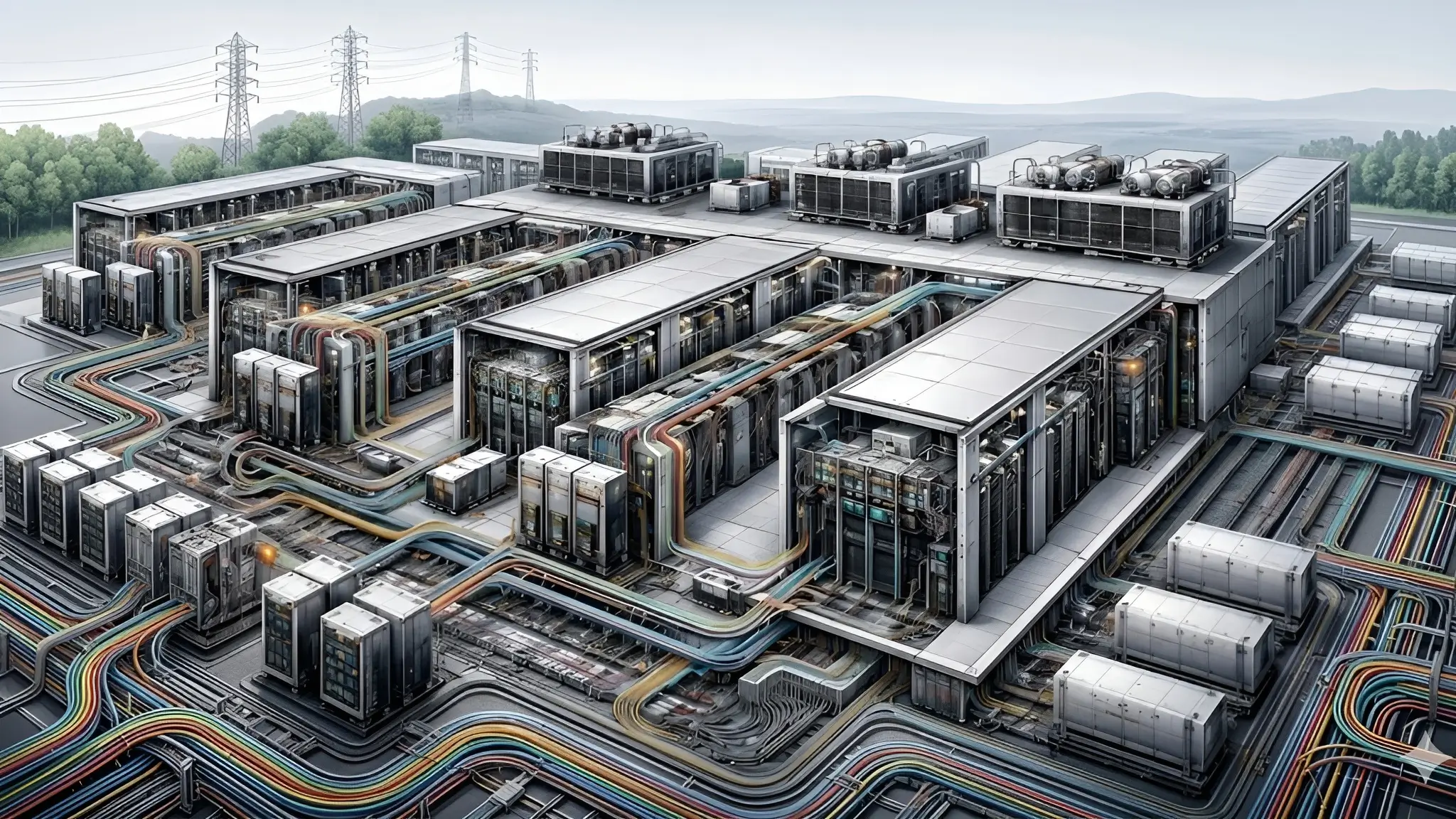
Why “Plug-and-Play” Power Design Is Often an Illusion
Modular data centers gained attention because prefabricated units promise rapid deployment and predictable infrastructure assembly. Vendors often highlight the idea that facilities arrive ready to connect to utilities with minimal engineering effort. That expectation creates a perception that electrical design simply involves connecting modules to a site power feed and activating them. However, real deployments reveal that integrating modular systems into local electrical infrastructure requires significant planning and verification. Electrical engineers must evaluate compatibility between the module’s internal switchgear, upstream substations, and utility distribution characteristics. Local electrical regulations, grounding requirements, and protection coordination rules introduce additional engineering work before any module begins operation.

Electrical integration rarely follows a uniform blueprint because every site connects to a different grid environment and utility infrastructure. Incoming feeders, transformer configurations, and protection schemes often vary across regions, which forces designers to adapt modular electrical systems to local conditions. Compatibility issues can appear when equipment from different vendors uses unique communication protocols or control interfaces. Engineers therefore need to validate interoperability between UPS systems, monitoring platforms, and facility management systems before commissioning begins. Technical alignment across these components requires specialized engineering expertise and careful coordination between vendors. Consequently, the “plug-and-play” concept often evolves into a detailed electrical integration project.
Site grounding and protection coordination represent another layer of complexity that modular marketing narratives frequently overlook. Electrical grounding networks must align with local codes, soil conditions, and the protection philosophy of upstream substations. Improper grounding integration can lead to equipment faults, nuisance tripping, or unstable voltage conditions within the facility. Engineers must also coordinate protective relays and circuit breakers to ensure faults isolate quickly without disrupting critical loads. These protective systems require modeling and testing before energizing the facility to maintain operational reliability. Therefore, modular infrastructure still demands comprehensive electrical engineering work before becoming operational.
UPS Sizing in Modular Data Centers: The Capacity Guessing Game
Uninterruptible power supply systems form the backbone of electrical continuity in modular facilities. Designers must determine the correct UPS capacity before modules arrive on site because the physical layout leaves limited room for later expansion. Early planning typically relies on projected IT loads derived from initial equipment deployment forecasts. These projections often assume stable rack densities and predictable growth patterns across the facility. In reality, computing infrastructure evolves quickly, and new workloads frequently alter power demand profiles within a short time frame. As a result, early UPS sizing decisions can become misaligned with operational requirements soon after deployment.
UPS modularity helps operators scale capacity by adding power modules inside a cabinet system, yet this flexibility has practical limits. Cabinet frame capacity, electrical bus ratings, and battery system design constrain how far expansion can proceed. Once those limits appear, the facility must introduce additional UPS frames or redesign upstream distribution circuits. Integrating new UPS units into an existing electrical topology requires careful synchronization with existing control systems and protection mechanisms. Engineers must also ensure balanced load distribution across parallel modules to prevent overheating or operational inefficiencies. These operational constraints demonstrate that UPS expansion within modular deployments is rarely as simple as installing additional hardware.
The challenge becomes even more significant as high-performance computing and artificial intelligence workloads enter modular facilities. Modern GPU clusters can draw far higher rack-level power than traditional enterprise servers. Power consumption patterns in these environments fluctuate rapidly during training cycles or data processing workloads. Such variability complicates the assumptions engineers use when sizing UPS battery capacity and inverter modules. Infrastructure that initially supported moderate rack densities may struggle to handle sudden increases in power demand. Consequently, capacity planning for modular power systems increasingly requires anticipating future workloads rather than only current equipment requirements.

Redundancy Architecture: When Modular Power Paths Become Fragile
Power redundancy plays a fundamental role in maintaining continuous digital services within any data center environment. Engineers traditionally design facilities with independent power paths to eliminate single points of failure. Large conventional facilities often use complex electrical topologies such as dual-bus distribution systems or fully isolated power trains. These configurations ensure that equipment continues operating even when maintenance or faults affect one side of the electrical infrastructure. Modular facilities attempt to replicate this redundancy within smaller prefabricated units. Achieving the same reliability levels inside constrained module footprints introduces significant design challenges.
Many modular deployments rely on simplified A and B power paths that share portions of the upstream electrical infrastructure. Shared busways, switchgear sections, or generator systems can introduce hidden dependencies between the supposedly independent paths. When these components fail, both power paths may experience disruption despite redundant equipment inside the module. Engineers must carefully analyze the entire electrical chain from utility connection to rack-level distribution to identify potential weaknesses. Fault isolation, protection coordination, and maintenance access all influence how resilient the system truly becomes. These considerations reveal that redundancy design in modular environments requires meticulous system-level evaluation.
Operational complexity increases when redundancy strategies must support maintenance without affecting live workloads. Technicians need the ability to isolate components such as UPS modules, circuit breakers, or busways without interrupting the flow of electricity to servers. Parallel UPS configurations and redundant distribution paths allow maintenance operations to occur safely while systems remain active. However, misconfigured redundancy or improper load balancing across electrical phases can create operational risks. Uneven loads may increase heat generation, reduce equipment lifespan, and trigger unnecessary alarms in monitoring systems. Careful planning and continuous monitoring therefore remain essential to preserving reliability in modular facilities.
Power Distribution Inside the Module: Busways, PDUs, and the Density Shift
Electrical distribution inside modular data center units must accommodate both current rack densities and the evolving characteristics of modern computing hardware. Engineers typically deploy overhead busways, floor cable trays, and rack-level power distribution units to deliver electricity from the module’s switchgear to individual equipment racks. These distribution systems must maintain electrical stability while supporting redundancy strategies and operational flexibility. Prefabricated modules often arrive with fixed internal layouts that limit how engineers can route cables or expand distribution infrastructure. Such constraints require careful planning during the design phase to ensure sufficient electrical capacity across every distribution path. Internal electrical architecture therefore becomes a critical determinant of how effectively modular facilities support modern workloads.
Busway systems often serve as the backbone of internal electrical distribution because they allow power taps to connect racks without extensive cable installations. Engineers value busways for their ability to support flexible rack layouts and quick reconfiguration of equipment locations. However, every busway has a defined current rating that limits the number of high-power racks it can safely support. When rack densities increase significantly, the available busway capacity can become a constraint that affects the entire module. Designers must therefore anticipate potential density growth and specify busway ratings that accommodate future electrical loads. These engineering decisions shape the long-term operational flexibility of modular facilities.
Power distribution units installed within racks introduce additional design considerations as computing infrastructure evolves. Traditional enterprise racks often required modest electrical capacity and relatively simple distribution equipment. Modern high-performance computing clusters demand significantly higher currents, which forces engineers to evaluate PDU ratings, outlet configurations, and monitoring capabilities. Advanced PDUs now incorporate intelligent metering systems that track voltage, current, and power consumption in real time. These monitoring capabilities help operators identify load imbalances and prevent circuit overloads within the module’s electrical network. Effective PDU design therefore contributes to both operational visibility and infrastructure reliability.
Cable routing constraints inside modular structures can also influence electrical performance and maintenance accessibility. Engineers must route power cables carefully to prevent overheating, signal interference, and physical obstruction of cooling airflow. Modular enclosures provide limited space for cable trays, which increases the importance of disciplined cable management strategies. Proper routing ensures technicians can access circuits quickly during maintenance without disturbing adjacent electrical systems. In addition, clear cable organization reduces the risk of accidental disconnections or equipment damage during upgrades. Electrical layout discipline inside the module therefore supports long-term operational stability.
Rising rack densities driven by GPU clusters and high-performance computing environments have intensified the engineering demands placed on modular electrical distribution systems. Individual racks can now draw significantly more power than earlier enterprise server installations. Engineers must therefore analyze electrical distribution paths to confirm that busways, PDUs, and circuit breakers support sustained high-current operation. Thermal considerations also become critical because electrical conductors generate heat proportional to current flow. Overloaded distribution components can degrade insulation, increase failure risk, and shorten equipment lifespan. Consequently, the shift toward higher rack power densities requires continuous reassessment of electrical distribution strategies inside modular facilities.
The Expansion Dilemma: Scaling Electrical Capacity After Deployment
Organizations frequently adopt modular facilities because they expect to expand infrastructure gradually as computing demand grows. Modular architecture allows operators to add additional units without constructing entirely new buildings. However, electrical infrastructure often introduces constraints that limit how easily facilities can scale beyond their initial design parameters. Power feeds, transformers, and switchgear systems installed during the first deployment phase determine the maximum electrical capacity available to the entire site. If these upstream systems lack sufficient headroom, adding new modules may require significant electrical upgrades. Expansion therefore becomes an engineering project rather than a simple installation task.
Transformer capacity represents one of the most critical constraints when organizations attempt to scale modular infrastructure. Each transformer converts utility voltage into the levels required for facility distribution systems. These devices operate within specific capacity ratings that define the maximum electrical load they can support safely. When additional modules increase demand beyond those limits, engineers must install larger transformers or add parallel units to distribute the load. Such upgrades involve coordination with utility providers, physical space planning, and careful scheduling to avoid service interruptions. Consequently, transformer capacity planning plays a major role in determining the scalability of modular facilities.
Feeder circuits that deliver electricity from substations to facility switchgear can also restrict expansion opportunities. Electrical feeders must support the total current drawn by all connected modules while maintaining acceptable voltage stability. If initial design assumptions underestimated future computing density, feeder conductors may approach their thermal limits during peak demand. Upgrading these circuits requires new cabling installations, protective equipment adjustments, and in some cases civil engineering work to accommodate additional conduits. These upgrades often occur while the facility continues operating, which increases the complexity of the process. Scaling electrical infrastructure after deployment therefore requires detailed planning and careful execution.
Operational disruption represents another significant concern when retrofitting power systems inside live modular facilities. Electrical upgrades often require temporary shutdowns of certain circuits so technicians can install new switchgear or integrate additional distribution equipment. Such interventions must occur within carefully controlled maintenance windows to protect critical workloads running in the facility. Engineers must also ensure that temporary electrical configurations maintain redundancy and fault protection during construction activities. Improperly managed upgrades can expose servers to power interruptions or unstable voltage conditions. Facility operators therefore approach electrical expansion projects with rigorous risk management procedures.
In addition, modular power blocks designed during the original deployment phase can create structural limitations that affect expansion possibilities. Power blocks often integrate UPS systems, distribution switchgear, and monitoring infrastructure into tightly organized electrical units. These blocks simplify installation during the initial build but can restrict physical space for new equipment later. Engineers sometimes need to redesign distribution pathways or install additional external infrastructure to support expansion. Such changes require coordination across electrical, mechanical, and structural engineering disciplines. Planning modular deployments with long-term growth scenarios in mind therefore reduces the likelihood of complex retrofits later.
Power Architecture Will Define the Future of Modular Data Centers
Electrical design has emerged as one of the most decisive factors shaping the performance and scalability of modular data center infrastructure. While prefabricated modules accelerate deployment timelines, the underlying power architecture still requires careful engineering and long-term planning. Designers must evaluate utility integration, internal distribution systems, redundancy strategies, and expansion capabilities before installation begins. These decisions determine whether a facility can adapt to evolving computing workloads without extensive redesign. Effective electrical architecture therefore supports both operational reliability and future infrastructure growth.
Engineers increasingly approach modular facilities with a systems perspective that considers the entire electrical chain from utility connection to rack-level equipment. Planning must account for evolving technologies such as high-density computing platforms and accelerated processing architectures. Electrical infrastructure that supports today’s workloads may require additional flexibility to accommodate future performance requirements. Designers therefore evaluate scalable UPS configurations, adaptable distribution systems, and infrastructure layouts that allow incremental expansion. Such strategies help ensure that modular facilities remain viable as digital infrastructure continues evolving.
Reliable operation also depends on continuous monitoring and proactive management of electrical infrastructure. Modern facilities integrate advanced monitoring systems that track power consumption, load balance, and equipment performance across the entire distribution network. These systems provide operators with the data necessary to detect anomalies and prevent failures before they disrupt services. Monitoring platforms also support capacity planning by revealing how electrical loads evolve over time. This visibility enables organizations to make informed decisions about future infrastructure investments. Effective monitoring therefore strengthens both reliability and operational efficiency.
In conclusion, modular infrastructure offers compelling advantages for rapid deployment and flexible expansion of digital capacity. Electrical engineering considerations, however, remain central to achieving the reliability and scalability expected from modern data centers. Designers must balance the efficiency of prefabricated modules with the realities of complex electrical integration and long-term capacity planning. Facilities that anticipate future power density growth and infrastructure evolution will adapt more successfully to emerging computing demands. The future trajectory of modular deployments will therefore depend heavily on thoughtful electrical architecture and disciplined engineering practice.











