
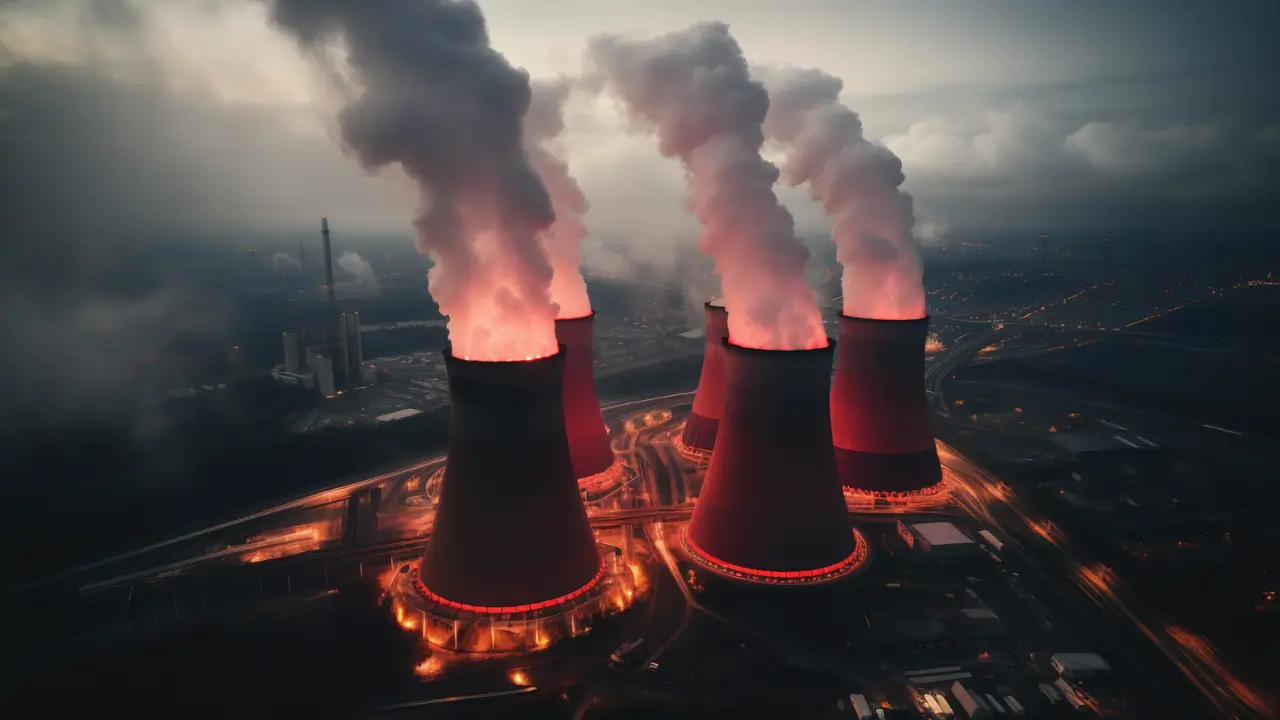
Nuclear energy is seeing a strong resurgence as a backbone for the rapid expansion of AI data centers. As AI workloads scale, hyperscalers such as Meta, Microsoft, Google, and Amazon are committing billions to secure firm, carbon-free electricity. Consequently, nuclear power is emerging as a strategic alternative to intermittent renewables. At the same time, these long-term deals support energy security in an era shaped by supply chain stress and geopolitical tension.

Electricity demand from U.S. data centers could double by 2030. Therefore, hyperscalers need power sources that operate continuously. Nuclear meets this requirement by offering stable baseload generation. Meta’s agreements alone account for up to 6.6 gigawatts by 2035. As a result, the industry is reframing nuclear as a core enabler of AI growth rather than a legacy technology.
Meta’s Expanding Nuclear Strategy
At the center of this shift, Meta has taken a leading role. Instead of relying on a single pathway, the company is pursuing a diversified nuclear strategy. It blends restarts of existing plants with investments in advanced reactors. In doing so, Meta balances near-term reliability with long-term innovation.
Meta’s nuclear push began in late 2024. The company signed a power purchase agreement with Constellation Energy for Three Mile Island Unit 1 in Pennsylvania. This deal secures 835 megawatts starting in 2027. From there, Meta expanded its portfolio through multiple agreements in 2025. Together, these commitments form a 6.6-gigawatt pipeline.
Building a Diversified Nuclear Portfolio
First, Meta will source 2.2 gigawatts from Vistra’s nuclear facilities in Ohio. These assets will undergo targeted upgrades to increase output. As a result, Meta gains dependable capacity using proven infrastructure.
Next, Meta invested $500 million in Oklo. This funding supports a 1.2-gigawatt campus of liquid-metal-cooled fast reactors in Ohio. The first units could enter service by 2030. Moreover, Oklo’s design emphasizes fuel recycling, which improves sustainability and reduces waste.

Finally, Meta committed to TerraPower’s Natrium reactors. These sodium-cooled systems include molten salt storage for flexible output. Up to 2.8 gigawatts could come online starting in 2032 at a site in Wyoming. Although regulatory reviews continue, this project represents the most advanced component of Meta’s nuclear strategy.
Taken together, these agreements rely on private capital and ambitious timelines. At the same time, they signal a broader revival of nuclear power for continuous AI workloads.
Hyperscalers Accelerate the Nuclear Shift
More broadly, Meta is not acting alone. Across the United States, hyperscalers are turning to nuclear power as grid constraints intensify. Because AI workloads operate around the clock, firms need power that does not fluctuate. As a result, tech companies are using their balance sheets to revive stalled plants and accelerate next-generation reactors.
Microsoft moved early with a long-term agreement to restart Three Mile Island Unit 1. This deal secures 835 megawatts for Azure data centers over a twenty-year period. Meanwhile, Google targeted emerging reactor designs. It committed to 500 megawatts from Kairos Power’s fluoride salt-cooled small modular reactors, with deployments planned around 2030.
At the same time, Amazon Web Services pursued a geographic strategy. It invested $500 million in X-energy’s high-temperature gas reactors. Importantly, Amazon plans to place these reactors near its Virginia data center campuses. This approach reduces transmission losses and avoids grid congestion.
Why Small Modular Reactors Matter
Small modular reactors play a central role in this transition. Unlike traditional nuclear plants, SMRs are factory-built and deployed in modules. Consequently, construction timelines are shorter and capital risk is lower.
Most SMRs produce under 300 megawatts per unit. However, multiple modules can be combined to reach gigawatt scale. Designs from Oklo and TerraPower illustrate this model. They rely on passive cooling and fast-neutron technology. As a result, they improve safety while reducing waste.
Regulatory momentum is also building. TerraPower cleared key design milestones with U.S. regulators in 2025. Meanwhile, Oklo benefits from support under the Department of Energy’s advanced reactor programs. Looking ahead, international agencies project dozens of SMR deployments by 2035.
Grid Pressure and Strategic Security
Grid stress adds urgency to the nuclear shift. U.S. data centers may consume nearly 9 percent of national electricity by 2030. Today, the figure remains closer to 3 percent. Therefore, grid operators warn of shortages and sharp price increases.
In this context, nuclear’s capacity factor above 90 percent becomes critical. Solar and wind cannot yet deliver that level of reliability. Beyond economics, nuclear also strengthens national security. Domestic reactors reduce exposure to volatile fuel markets and foreign supply chains. As chip competition intensifies, reliable power becomes strategic infrastructure.
Barriers and the Road Ahead
Despite growing momentum, challenges remain. Several advanced reactors still await full operating licenses. Capital costs remain higher than gas-fired plants. In addition, supply chain constraints and labor shortages persist.
Even so, long-term contracts and government incentives are narrowing the gap. Annual U.S. nuclear additions are expected to rise through 2030. A large share of this growth will come from AI-driven demand.
A Symbiotic Future for AI and Nuclear Power
Ultimately, the relationship between AI and nuclear energy is becoming symbiotic. Nuclear provides the constant power that AI systems require. In return, AI is driving investment, innovation, and regulatory reform in nuclear technology.
As data centers evolve into dense compute hubs, nuclear power offers stability, scale, and decarbonization. Together, they are reshaping the future of energy and the digital economy.











