 Skip to content
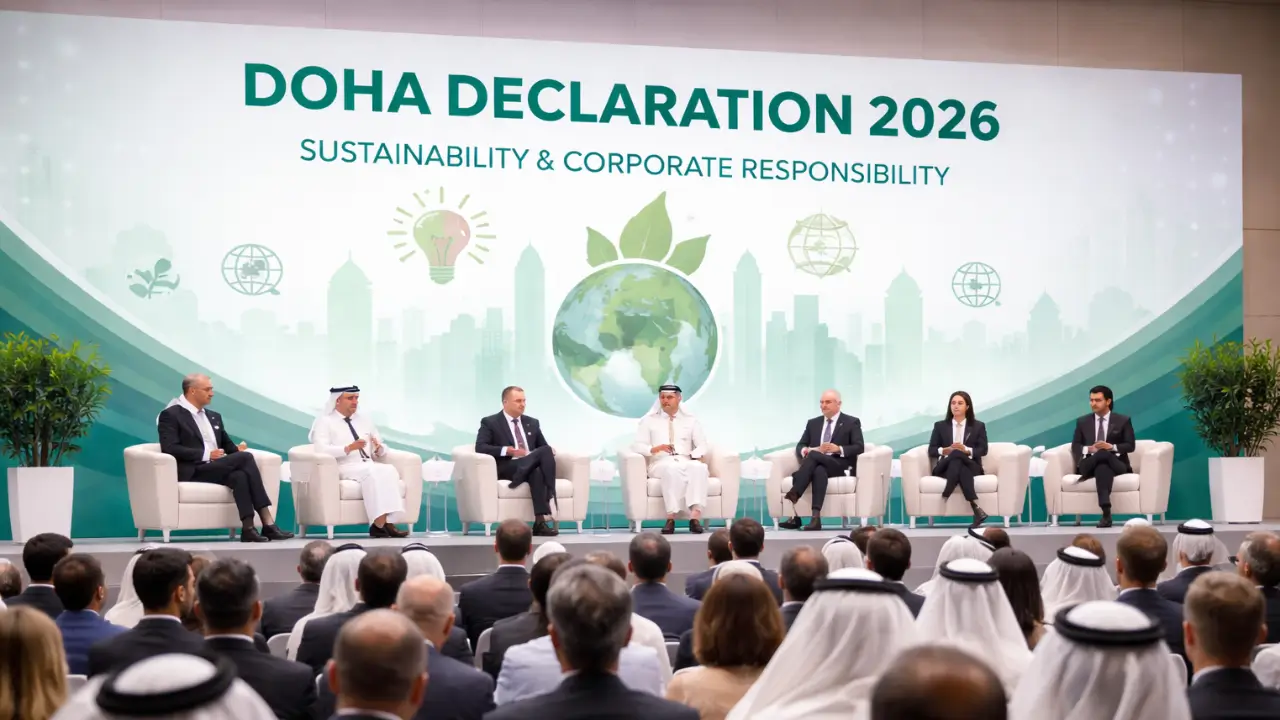
Doha Declaration Shapes Regional Corporate Sustainability
Qatar’s private sector formally endorsed a new sustainability framework following the adoption of the Doha Declaration 2026 at a high-level industry forum. The declaration was adopted during the fourth Private Sector Social Responsibility and Its role in the Sustainable Development Conference, according to conference organisers. The two-day meeting was hosted by the Qatar Chamber and concluded yesterday in Doha.

The agreement establishes a long-term roadmap intended to align commercial profitability with environmental and social objectives. Moreover, it reflects a coordinated effort by regional business stakeholders to standardise corporate social responsibility practices. Participants framed the declaration as a strategic response to rising global expectations around governance, transparency and sustainability performance.
Recommendations emerging from the conference focused on unifying CSR standards across markets. In addition, they emphasised stronger governance across global value chains. Increased investment in innovation, digital transformation and green finance was also highlighted as a priority for sustaining competitiveness.
Unified Standards and ESG Integration Emphasised
The declaration calls for the adoption of a unified professional classification for corporate social responsibility. Specifically, it proposes the Arab CSR Index as a regional benchmark for measuring and comparing performance. This approach was presented as a mechanism for improving consistency and accountability among private sector actors.

Family-owned enterprises were urged to embed environmental, social and governance practices into their operational models. Furthermore, the declaration encourages these businesses to support initiatives promoting digital education, community health, women’s empowerment, youth engagement and social entrepreneurship. These areas were described as critical to inclusive economic development.
Participants also highlighted the importance of transitioning away from fragmented CSR activities. Instead, an integrated ESG-driven model aligned with international sustainability standards was promoted. This shift was characterised as essential for long-term resilience and economic competitiveness across Arab markets.
Technology, Innovation and Green Finance Priorities
Investment in artificial intelligence and green technologies featured prominently in conference discussions. Participants highlighted these tools as essential for improving operational efficiency while reducing carbon footprints. Accordingly, technology adoption was positioned as both a sustainability and productivity lever.
The conference recommended increased capital allocation toward green finance instruments. These instruments were framed as enablers of low-carbon projects and digital transformation initiatives. In parallel, innovation was presented as a driver of value creation across emerging and traditional sectors.
The declaration also recommended launching an International Observatory for Sustainability and Social Responsibility. This body would support knowledge sharing, data collection and policy alignment across regions. Professional exchange and twinning programs were also proposed to strengthen institutional capacity. These initiatives aim to spread a culture of social responsibility among younger generations.
Regional Solidarity and Governance Role Highlighted
Humanitarian solidarity was emphasised as a core principle within the declaration. The text calls for the creation of joint Arab funds and initiatives to support research and development. In addition, digital entrepreneurship was identified as a key area for collaborative investment.
Conference participants described social responsibility as a strategic pillar of good governance. They argued that the private sector plays a central role in achieving the United Nations Sustainable Development Goals. Moreover, private enterprises were positioned as critical to building trust between businesses and society.
The declaration further underscores the need for coordinated action across public and private stakeholders. As a result, sustainability was framed not as a compliance obligation but as a shared economic imperative. The Doha Declaration 2026 was presented as a reference point for this evolving approach.
Broad Institutional Backing and Implementation Focus
The conference was jointly organised by the Qatar Chamber, the Union of Arab Chambers, the League of Arab States, the Regional Network Consultancy and the United Nations Industrial Development Organization. It began on Wednesday and brought together business leaders, policymakers and international partners.
Organisers said the declaration represents a collective commitment to translating the conference’s vision into practical policies. Furthermore, it was described as laying the foundations for a new social contract. This framework aims to balance economic growth with sustainability and equity for future generations.
As implementation moves forward, participants stressed the importance of measurable outcomes and institutional coordination. Consequently, the declaration is expected to influence corporate strategies and regional policy discussions in the coming years.












