Skip to content
The Invisible Cost Behind the Cloud
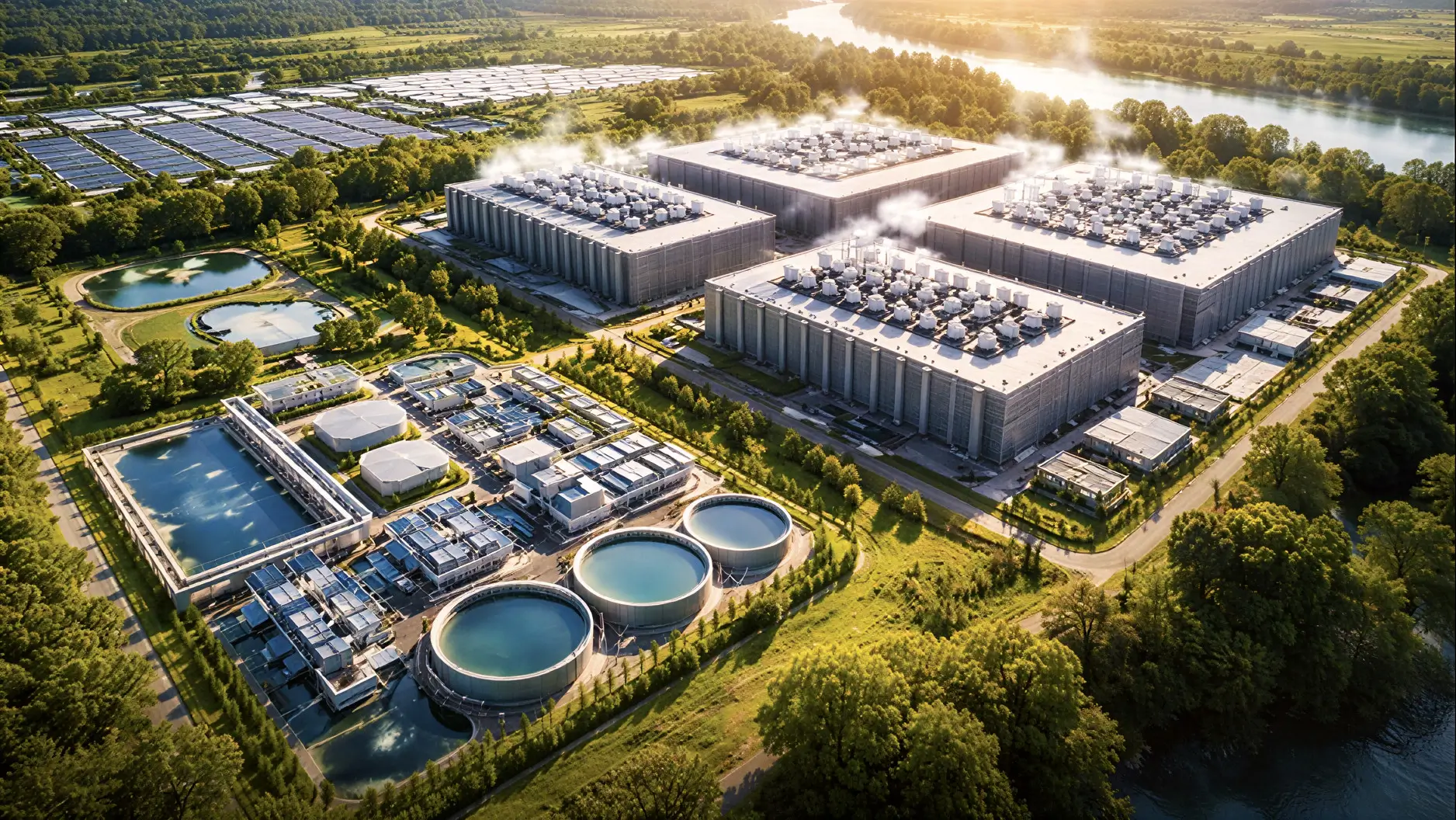
Data centers rarely appear in conversations about water scarcity, though their growing scale increasingly draws attention for water use in certain regions. As hyperscale campuses expand across arid basins, floodplains, and water-stressed urban corridors, engineers face an uncomfortable arithmetic. Computing demand scales exponentially, while freshwater availability does not. The resulting tension has placed hyperscale water-positive data centers at the center of a global infrastructure debate that now spans utilities, regulators, hydrologists, and capital markets alike.

Until recently, water efficiency functioned as a secondary design constraint, trailing energy optimization and network latency. However, artificial intelligence workloads, high-density racks, and advanced cooling architectures have forced operators to confront water consumption directly. Public disclosures indicate that hyperscale operators consume significant volumes of water annually, with potential impacts in water-stressed basins in certain regions, often from the same aquifers that sustain surrounding communities. Consequently, the question has shifted from whether water efficiency matters to whether hyperscale water-positive data centers can realistically offset their consumption altogether.
Unlike carbon accounting, water accounting requires context: impacts of water use depend on location, season, and local hydrology. Local hydrology determines impact, making geographic context as important as absolute volumes. A liter saved in a coastal basin does not compensate for a liter extracted from an arid watershed. As a result, claims surrounding water positivity increasingly face scrutiny from regulators and environmental scientists who demand basin-level accountability.
Moreover, public scrutiny has increased, and regulatory frameworks in some regions restrict withdrawals in sensitive basins. Meanwhile, institutional investors increasingly ask how water risk may affect long-term asset viability. Against this backdrop, the technical feasibility of hyperscale water-positive data centers has become both an engineering challenge and a political necessity.

Defining Water-Positive in a Hyperscale Context
Water-positive claims require careful accounting and consideration of basin-level replenishment, even though the concept may appear straightforward. In principle, a facility achieves water positivity by replenishing more water than it consumes. In practice, the calculation requires rigorous boundaries, temporal alignment, and geographic precision. For hyperscale facilities, that complexity multiplies due to scale, operational continuity, and dependence on local utilities.
Unlike carbon offsets, credible water replenishment emphasizes basin-specific actions, ideally within the same watershed. Hydrologists emphasize that replenishment must occur within the same watershed and within comparable timeframes to meaningfully reduce stress. Therefore, operators pursuing hyperscale water-positive data centers must align replenishment projects directly with local basin deficits rather than distant conservation efforts.
ndustry frameworks, including the Alliance for Water Stewardship standard, provide guidelines for water-positive criteria in certain contexts. Still, enforcement remains voluntary, and reporting methodologies vary. Consequently, analysts caution that not all water-positive claims carry equal weight.
Another layer of complexity emerges from operational variability. Cooling demand fluctuates with climate, workload intensity, and architectural choices. Therefore, annual water use effectiveness metrics provide only a partial picture. Engineers now argue that real-time water intensity metrics may better reflect operational reality at scale.
Regulators have begun to take notice. In several European jurisdictions, environmental impact assessments now require water risk modeling across drought scenarios. That regulatory shift suggests that hyperscale water-positive data centers may soon face formal verification rather than aspirational targets.
Cooling Technologies Reshaping Water Demand
Cooling systems account for the majority of water consumption in most data centers. Traditional evaporative cooling designs rely on continuous water makeup to dissipate heat, making them particularly vulnerable to water constraints. However, next-generation cooling architectures now promise to alter that equation materially.
Direct-to-chip liquid cooling has gained traction as rack densities rise. By circulating coolant directly across processors, these systems reduce reliance on evaporative towers. Although liquid cooling still requires water indirectly through heat rejection, overall consumption declines significantly compared with air-based systems. Engineers increasingly view this shift as foundational for large-scale facilities operating in hot climates.
Immersion cooling pushes the concept further by submerging servers in dielectric fluids. These closed-loop systems virtually eliminate evaporative losses. However, adoption remains limited due to supply chain constraints, maintenance retraining, and retrofitting challenges. Despite those hurdles, analysts note that immersion cooling may represent one of the most viable paths toward hyperscale water-positive data centers at scale.
Hybrid cooling strategies also play a role. Facilities increasingly combine dry cooling during cooler months with limited evaporative use during peak heat periods. This seasonal optimization reduces annual water draw while preserving thermal safety margins. Such adaptive approaches have become central to engineering roadmaps for advanced hyperscale deployments.
Water reuse systems further complement cooling innovation. On-site treatment plants now allow facilities to reuse blowdown water multiple times before discharge. In some cases, treated wastewater from municipal sources replaces potable supplies entirely. These integrations demonstrate how hyperscale campuses increasingly function as nodes within broader urban water systems.
Watershed Replenishment as Infrastructure, Not Offset
Replenishment strategies increasingly define whether water-positive claims withstand scrutiny. Rather than treating replenishment as a reputational exercise, engineers now frame it as basin-scale infrastructure investment. This shift means funding projects that measurably increase water availability where withdrawals occur.
Managed aquifer recharge has emerged as a preferred mechanism in arid and semi-arid regions. Excess surface water during seasonal flows gets directed into recharge basins, allowing groundwater levels to recover over time. Data center operators partner with municipalities to co-finance these systems, aligning industrial demand with public water resilience goals.
Urban stormwater capture also plays a growing role. Cities increasingly deploy permeable infrastructure to reduce runoff while replenishing local aquifers. Hyperscale campuses integrated into these urban designs can contribute to net-positive outcomes, although verification requires long-term monitoring. Consequently, basin-level hydrological modeling has become essential.
Agricultural efficiency projects represent another replenishment avenue, particularly in regions where irrigation dominates water use. Investments in drip irrigation, canal lining, and precision agriculture reduce withdrawals at scale. Still, water scientists caution that such savings must remain within the same basin to support credible accounting.
Measurement remains the central challenge. Recharge benefits often accrue over decades, while consumption occurs continuously. Therefore, third-party verification frameworks increasingly emphasize modeled outcomes rather than immediate volumetric parity, shaping how hyperscale water-positive data centers define progress in stressed regions.
Wastewater as a Primary Cooling Resource
Municipal wastewater has transitioned from contingency supply to core infrastructure for large data centers. Advanced treatment technologies now allow non-potable reuse at industrial scale, reducing reliance on freshwater sources. As a result, wastewater integration features prominently in planning for facilities located near urban centers.
Tertiary and quaternary treatment systems remove biological contaminants, enabling reuse for cooling towers and heat exchangers. Although capital-intensive, these systems create closed-loop relationships between cities and hyperscale operators. Analysts note that such arrangements often improve municipal wastewater economics while supporting regional water resilience.
Geographic proximity determines feasibility. Facilities located far from wastewater treatment plants face prohibitive pipeline costs and energy penalties. Consequently, site selection criteria increasingly prioritize access to reclaimed water networks, particularly for hyperscale water-positive data centers in densely populated regions.
Operational resilience also benefits from reuse. During drought restrictions, reclaimed water supplies often remain available when potable allocations tighten. This reliability strengthens the business case for wastewater cooling while advancing basin-level sustainability objectives.
Public perception presents a softer challenge. Despite technical safety, communities sometimes resist wastewater reuse due to misunderstanding. Transparent reporting and regulatory oversight therefore play critical roles in legitimizing large-scale reuse models.
Desalination: A Limited and Location-Specific Tool
Desalination frequently enters discussions about water security, yet its applicability to data centers remains constrained. While desalinated water offers independence from freshwater basins, energy intensity and brine disposal limit widespread adoption. Therefore, desalination supports advanced facilities only under specific geographic and regulatory conditions.
Coastal facilities sometimes integrate desalination to supplement cooling demand. However, intake structures, marine ecosystem impacts, and permitting complexity slow deployment. Analysts emphasize that desalination rarely functions as a standalone solution for large-scale digital infrastructure.
Energy-water trade-offs further complicate desalination. High electricity consumption increases indirect water use upstream, particularly in thermal power generation regions. As a result, desalination strategies must align with broader sustainability frameworks governing hyperscale development.
Emerging technologies such as forward osmosis and solar desalination attract research interest, though commercialization remains limited. While promising, these approaches currently lack the maturity required to anchor long-term infrastructure planning.
Regulators increasingly scrutinize desalination proposals. Environmental impact assessments now require lifecycle analysis rather than localized metrics alone. Consequently, desalination’s role remains supplementary within broader water management strategies for hyperscale water-positive data centers.
Investor Scrutiny and the Financialization of Water Risk
Capital markets have increasingly treated water risk as a material financial variable rather than an environmental externality. Asset managers now assess exposure to water scarcity alongside energy volatility and regulatory uncertainty. This shift has placed large-scale data infrastructure under intensified scrutiny from institutional investors seeking resilience rather than growth alone.
Credit rating agencies have followed suit. Water dependency now features in infrastructure risk assessments, particularly for long-lived digital assets. Analysts note that facilities lacking credible water mitigation strategies may face higher financing costs, reshaping the economics of hyperscale development.
Insurance markets also reflect this recalibration. Underwriters increasingly model drought exposure and regulatory shutdown risk when pricing coverage. As a result, water stewardship performance influences insurability, particularly in high-risk basins.
Disclosure frameworks amplify investor pressure. Initiatives such as CDP Water and the Taskforce on Nature-related Financial Disclosures have standardized reporting expectations. Consequently, hyperscale water-positive data centers now operate within a disclosure ecosystem that penalizes opacity.
Long-term asset valuation further reinforces this trend. Pension funds and sovereign investors increasingly favor infrastructure aligned with regional sustainability goals. That preference elevates water-positive design from optional attribute to strategic prerequisite.
Verification Challenges and Accounting Integrity
Verification remains the most contested dimension of water positivity. Unlike energy consumption, water impact varies with timing, location, and hydrological context. Therefore, accounting frameworks face methodological scrutiny from scientists and regulators alike.
Temporal mismatches complicate claims. Replenishment projects may deliver benefits over decades, while consumption occurs continuously. This asymmetry challenges annual reporting cycles commonly used to communicate progress.
Spatial boundaries present additional hurdles. Basin definitions vary across jurisdictions, creating inconsistencies in impact assessment. Hydrologists stress that replenishment outside stressed sub-basins undermines credibility.
Third-party assurance has begun to fill credibility gaps. Independent audits now validate water balance claims using modeled outcomes and long-term projections. Even so, verification standards remain fragmented, complicating comparisons among hyperscale water-positive data centers globally.
Data transparency continues to evolve. Public dashboards increasingly disclose facility-level water intensity, moving beyond corporate averages. This granular reporting may soon redefine accountability expectations for large-scale digital infrastructure.
Basin-Specific Constraints and Regional Divergence
Geography ultimately determines feasibility. Water-rich regions face fewer constraints, yet they still confront ecological limits and community concerns. Meanwhile, arid basins impose structural barriers that even advanced engineering cannot fully overcome.
In the U.S. Southwest, prolonged drought has tightened allocations across sectors. Data center proposals increasingly require off-site replenishment commitments to gain approval. These conditions highlight the fragile operating environment for hyperscale water-positive data centers in arid climates.
Northern Europe presents a contrasting picture. Abundant surface water reduces scarcity risk, yet regulatory emphasis on ecosystem protection limits withdrawals. Consequently, facilities in these regions often prioritize wastewater reuse over raw abstraction.
Asia-Pacific markets introduce further complexity. Rapid urbanization strains water infrastructure, while regulatory regimes vary widely. As a result, multinational operators adapt strategies to local governance capacity rather than uniform global standards.
Climate volatility adds uncertainty across all regions. Extreme weather disrupts both supply and replenishment assumptions. Therefore, resilience planning now shapes how hyperscale water-positive data centers approach long-term basin engagement.
Structural Limits of Water Positivity at Scale
Despite technological advances, water positivity faces inherent constraints. Physical hydrology imposes limits that efficiency alone cannot erase. As data center density increases, cumulative impacts challenge even the most ambitious frameworks.
Competition for water intensifies these pressures. Agriculture, municipalities, and ecosystems all draw from shared basins. Even net-positive accounting cannot resolve conflicts where absolute scarcity prevails.
Technological substitution offers partial relief. Workload optimization and geographic distribution reduce localized stress, yet latency and regulatory constraints limit flexibility. Consequently, system-wide coordination becomes essential.
Policy alignment remains uneven. While some governments incentivize water stewardship, others prioritize economic development. This divergence influences where hyperscale water-positive data centers can realistically deliver net benefits.
Long-term projections underscore uncertainty. Climate models suggest increasing variability rather than linear decline. Under such conditions, water positivity may function as a directional goal rather than a permanent state.
The Feasibility Horizon for Water-Positive Operations
Engineering roadmaps increasingly frame water positivity as a moving target rather than a fixed endpoint. As computing demand grows, absolute water use may stabilize or decline per unit of compute, yet total basin impact can still rise. This dynamic shapes expectations for hyperscale water-positive data centers over the next decade.
Technological maturity timelines further constrain feasibility. Advanced cooling systems require redesigns across supply chains, while wastewater integration depends on municipal capacity upgrades. These dependencies mean progress remains uneven, advancing fastest where public infrastructure aligns with private investment.
Workload evolution also influences outcomes. Artificial intelligence training clusters concentrate heat loads, increasing localized cooling demand. Consequently, next-generation architectures must reconcile performance density with water stewardship objectives at scale.
Temporal alignment remains a persistent challenge. Replenishment benefits often materialize after years, while operational withdrawals occur immediately. This lag complicates near-term validation, particularly under regulatory review.
Scenario modeling increasingly informs decision-making. Operators now test designs against drought intensification and regulatory tightening assumptions. Such stress testing defines the outer bounds of feasibility for hyperscale water-positive data centers in vulnerable regions.
Coordination Limits Across Institutions and Basins
Water systems rarely align with administrative boundaries. River basins span municipalities, states, and national borders, complicating governance. These structural realities limit how far water-positive strategies can advance without coordinated public frameworks.
Public-private collaboration has improved, yet asymmetries persist. Utilities prioritize residential reliability, while industrial users seek predictability for capital planning. Balancing these interests remains central to sustaining large-scale facilities without social friction.
Data sharing presents another obstacle. Hydrological datasets often lack granularity or real-time availability. Without shared baselines, verifying basin-level impact becomes difficult for operators and regulators alike.
International divergence further complicates coordination. While some regions mandate integrated water resource management, others rely on fragmented oversight. This patchwork limits scalability for standardized approaches across global portfolios.
Institutional inertia also plays a role. Water infrastructure evolves slowly, constrained by legacy systems and funding cycles. As a result, technological readiness often outpaces governance capacity affecting deployment timelines.
A Conditional Path Forward Without Guarantees
Water positivity increasingly functions as a directional framework rather than a universal solution. In favorable basins, engineering and governance may align to support net-positive outcomes. Elsewhere, structural scarcity imposes limits that even advanced design cannot overcome for hyperscale water-positive data centers.
Transparency will likely determine credibility. Granular reporting, third-party verification, and basin-specific disclosures shape public trust. Without these mechanisms, claims risk dilution amid growing scrutiny.
Adaptive management offers a partial answer. Facilities increasingly adjust operations based on real-time hydrological conditions rather than static permits. This responsiveness may define the operational future of hyperscale water-positive data centers under climate volatility.
Long-term viability ultimately depends on restraint as much as innovation. Geographic distribution of compute, demand-side efficiency, and policy alignment reduce cumulative stress. These systemic factors frame the realistic ceiling for hyperscale data centers expansion.
The engineering race continues, yet outcomes remain conditional. Water positivity can mitigate impact, extend social license, and improve resilience. However, it cannot rewrite hydrology. That reality defines the boundary conditions within which hyperscale water-positive data centers must operate.