 Skip to content
Structural Reorientation of Power Systems
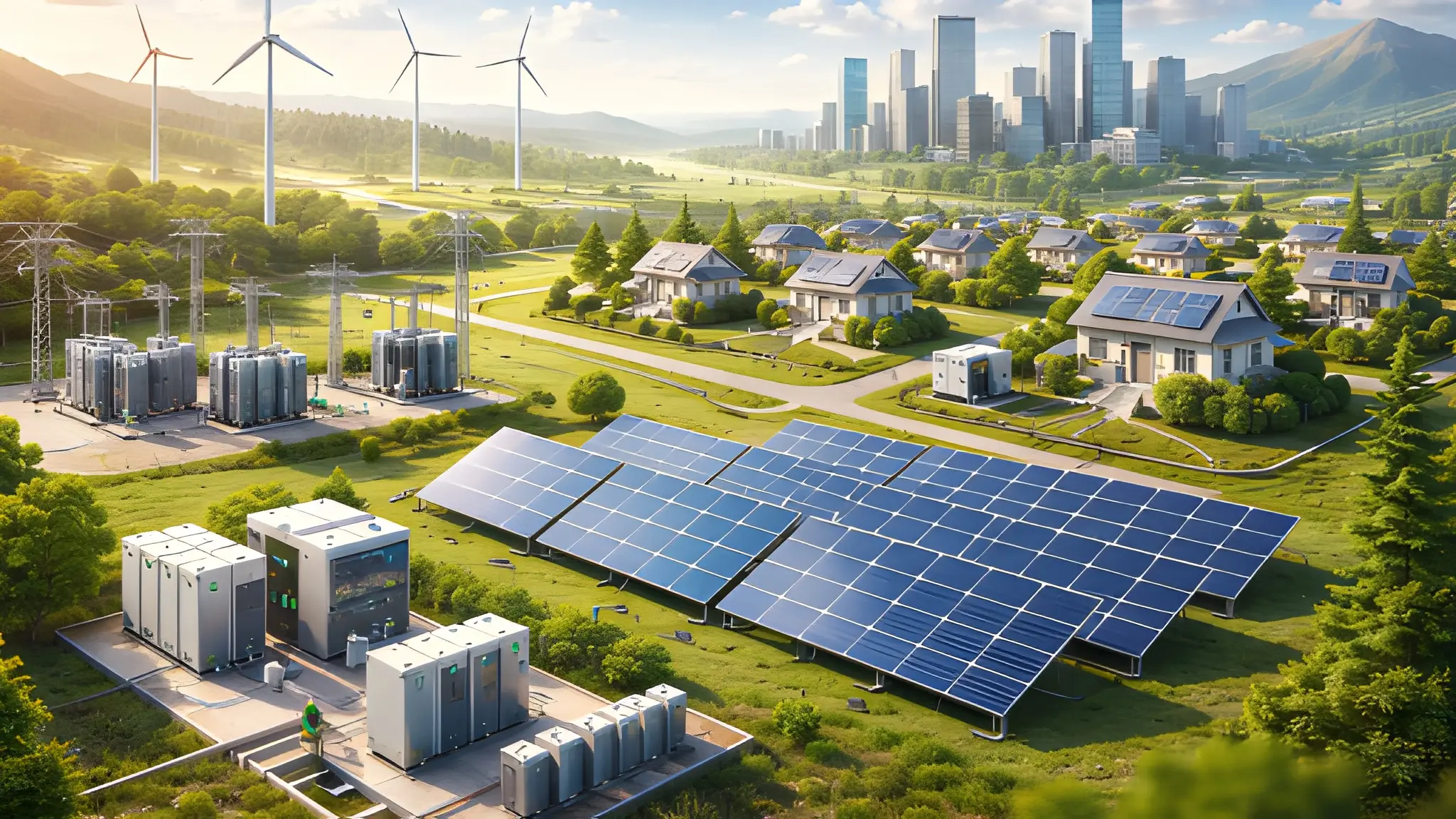
Electric power infrastructure is undergoing a structural reorientation as decentralized energy systems reshape how electricity is produced, coordinated, and stabilized across distribution networks. Historically, centralized generation assets supplied electricity through hierarchical transmission and distribution layers designed for one-directional flow. Contemporary grid evolution increasingly emphasizes locality, responsiveness, and system modularity, reflecting the operational realities introduced by distributed generation and control technologies. This reorientation represents an architectural transition rather than an incremental extension of legacy design.

Rather than replacing centralized assets outright, decentralized energy systems introduce parallel structural logic within existing grids. Distribution networks host growing concentrations of generation, storage, and controllable demand that interact dynamically with upstream systems. Power flows therefore emerge from localized conditions as much as from centralized scheduling. This coexistence necessitates architectural frameworks capable of managing interaction rather than enforcing uniform control.
Reliability within this evolving architecture derives from coordination and visibility rather than scale alone. System stability increasingly depends on the ability to interpret localized behavior and align it with network constraints. Distributed assets contribute operational flexibility when coordination frameworks are present. Accordingly, decentralized energy systems redefine grid reliability as a property of system design rather than asset concentration.
Rooftop Solar as a Distributed Generation Layer
Rooftop solar occupies a distinct architectural position within decentralized energy systems by embedding electricity production directly within the built environment. These installations operate behind the meter, influencing local consumption patterns while interacting with distribution networks. Feeder-level conditions such as voltage profiles and reverse power flows can change as rooftop penetration increases. Integration therefore requires technical accommodation rather than passive absorption.

From a systems perspective, rooftop solar introduces generation density rather than centralized scale. Individual installations remain small, yet aggregated presence can materially affect local network behavior. Distribution systems increasingly host clusters of solar-equipped buildings whose collective output interacts with feeder constraints. Decentralized energy systems depend on aggregation-aware coordination rather than isolated asset management.
Operational practices for rooftop solar vary across jurisdictions. In some networks, advanced inverter functions and monitoring platforms support active coordination. In other regions, visibility remains limited and integration relies on conservative planning assumptions. These variations underscore that decentralized energy systems evolve unevenly, shaped by regulatory frameworks and infrastructure readiness rather than uniform technical deployment.
Microgrids as Bounded Operational Domains
Microgrids represent a clear architectural expression of decentralized energy systems through their ability to operate as bounded electrical domains. Defined by their capacity to function both grid-connected and independently, microgrids integrate generation, storage, and loads under a unified control hierarchy. This structure enables localized optimization while preserving compatibility with wider networks.
Control architectures within microgrids distribute decision-making across layered systems. Local controllers manage immediate electrical conditions, while supervisory systems coordinate transitions between operating modes. When conditions require, microgrids can isolate from the broader grid to maintain internal stability. Such behavior reflects design intent rather than emergency improvisation.
Interoperability shapes microgrid scalability. Assets from different vendors must operate cohesively under shared communication standards. Open protocols and standardized control semantics support this integration. Decentralized energy systems rely on interoperability to expand microgrid deployment without introducing fragmentation or excessive customization.
Community Energy Storage as a System Interface
Community energy storage functions within decentralized energy systems as a shared interface between variable generation and localized demand. Positioned at neighborhood or feeder levels, these storage assets provide balancing capability that individual installations may not efficiently deliver alone. Rather than acting solely as backup resources, community storage supports routine system coordination.
Architecturally, community storage decouples generation timing from consumption without re-centralizing control. Excess energy from distributed generation can be absorbed locally and released as conditions change. This temporal flexibility supports distribution stability when coordination frameworks are present. Outcomes, however, depend on governance models and operational integration.
Operational governance varies across deployments. Some community storage systems operate under utility control, while others involve cooperative or third-party management structures. Allocation rules and control priorities differ accordingly. These variations illustrate that decentralized energy systems incorporate multiple institutional models rather than a single template.
Digital Platforms as Coordination Infrastructure
Digital platforms form the coordination infrastructure that enables decentralized energy systems to operate coherently. These platforms integrate data from distributed assets and translate localized conditions into control actions. Rather than replacing centralized operations entirely, digital coordination supplements existing frameworks by enabling distributed responsiveness.
Platform architectures emphasize interoperability, cybersecurity, and adaptive logic. Data models and communication protocols allow heterogeneous assets to participate under unified operational rules. Where deployed, these platforms support dynamic balancing and constraint management. Deployment depth varies across regions, reflecting differing investment and regulatory priorities.
Local energy trading and coordination mechanisms often operate within such platforms. Design choices determine whether stability constraints, operational limits, or economic signals dominate decision logic. Decentralized energy systems therefore reflect platform governance as much as technical capability. No single trading architecture applies universally across deployments.
Local Energy Trading as an Architectural Function
Local energy trading within decentralized energy systems functions as an architectural coordination mechanism rather than a uniform market construct. Trading frameworks are embedded within digital platforms that enable distributed assets to exchange energy under defined operational constraints. Instead of mirroring wholesale market structures, local trading mechanisms reflect distribution-level realities and network limitations. This embedded design positions trading as a system behavior rather than an isolated economic activity.
Platform governance determines how trading logic operates in practice. Some implementations prioritize network stability by enforcing technical constraints before transactional settlement. Other designs emphasize economic signaling while bounding behavior within safe operating envelopes. These variations demonstrate that decentralized energy systems do not impose a single trading hierarchy but accommodate multiple architectural interpretations.
Operational oversight remains integral even where trading autonomy exists. Distribution operators typically retain supervisory visibility to ensure localized exchanges align with broader system requirements. Control layers monitor aggregate behavior and intervene when necessary. Through this layered approach, decentralized energy systems balance local autonomy with network coherence.
Platform Design for Distributed Coordination
Digital platforms supporting decentralized energy systems act primarily as orchestration environments rather than standalone marketplaces. These platforms aggregate telemetry from distributed generation, storage, and controllable demand. Integrated analytics translate system states into control actions that respect local constraints. Platform design therefore shapes how decentralized assets collectively behave.
Interoperability remains a foundational design requirement. Standardized interfaces enable devices from different vendors to communicate and respond consistently. Without such standards, integration complexity would limit scalability. Decentralized energy systems depend on interoperability to expand participation without fragmenting control architectures.
Decision intelligence is distributed across platform layers. Edge controllers execute immediate responses to local conditions, while supervisory algorithms align outcomes with network objectives. This layered intelligence reduces latency and enhances resilience. Decentralized energy systems leverage distributed decision-making to avoid centralized bottlenecks.
Proximity Effects and Transmission Utilization
Generation proximity influences network utilization within decentralized energy systems by aligning production closer to consumption. When local generation offsets local demand, electricity traverses shorter electrical paths. This structural alignment can reduce reliance on long-distance transmission for localized balancing. Outcomes depend on network topology and asset placement rather than deployment scale alone.
Distribution networks experience altered loading patterns as proximity effects manifest. Local generation can moderate upstream flows during periods of high demand. However, reverse flows may emerge under certain conditions, requiring adaptive operational practices. Decentralized energy systems therefore shift operational focus toward managing localized dynamics.
Planning methodologies increasingly incorporate proximity considerations. Distribution planners assess how localized generation interacts with feeder constraints and protection schemes. Integration strategies emphasize coordination rather than assumption-based capacity offsets. Through such planning, decentralized energy systems align structural design with operational realities.
Distribution-Level Stability Mechanisms
Stability within decentralized energy systems emerges through coordinated action among distributed assets rather than centralized inertia alone. Inverter-based resources can contribute to voltage management and system support when configured accordingly. Control functions operate continuously to adjust behavior in response to local conditions. These mechanisms embed stability into everyday operation.
Voltage regulation illustrates distributed stability clearly. Advanced inverters adjust reactive power output to support feeder voltage profiles. Deployment practices vary by jurisdiction and regulatory framework. Where implemented, such functions reduce reliance on centralized voltage control equipment.
Disturbance response also evolves within decentralized architectures. Localized controls can isolate faults and reconfigure networks dynamically. Restoration processes increasingly rely on automated coordination rather than manual intervention. Decentralized energy systems thereby enhance resilience through integrated control design.
Community Participation and Governance Structures
Community participation within decentralized energy systems operates through structured governance frameworks rather than informal engagement. Digital interfaces abstract technical complexity while enabling stakeholder interaction. Participation mechanisms vary widely across projects, reflecting local institutional arrangements. No single governance model dominates deployment practice.
Utilities and system operators adapt roles to accommodate participation. In some contexts, operators facilitate local coordination while retaining system oversight. Elsewhere, third-party platforms mediate interactions under regulatory supervision. These arrangements illustrate the institutional diversity embedded within decentralized energy systems.
Decision rights distribute across governance layers. Asset owners retain operational discretion within defined parameters, while operators enforce system constraints. Automated rule enforcement supports consistency. Through layered governance, decentralized energy systems align technical control with institutional responsibility.
Integration Challenges at System Boundaries
Integration challenges arise at the boundaries between legacy infrastructure and decentralized assets. Traditional systems were designed for predictable flows and centralized control. Distributed participation introduces variability that legacy interfaces may not readily accommodate. Addressing these boundaries requires architectural adaptation rather than incremental patching.
Protection schemes exemplify boundary challenges. Bidirectional flows can complicate fault detection under legacy designs. Adaptive protection approaches incorporate sensing and communication to respond dynamically. Adoption remains uneven, reflecting varying utility readiness.
Institutional coordination presents additional boundary considerations. Transmission and distribution entities increasingly share operational visibility to manage distributed interactions. Data integration platforms facilitate this coordination. Decentralized energy systems thus require organizational alignment alongside technical integration.
Advanced Microgrid Orchestration Frameworks
Microgrid orchestration within decentralized energy systems increasingly reflects layered control architectures rather than monolithic command structures. Modern orchestration frameworks coordinate generation, storage, and controllable loads through hierarchical logic. Local controllers address immediate electrical conditions, while supervisory layers align microgrid behavior with distribution network requirements. This structure supports responsiveness without fragmenting authority.
Adaptive orchestration enables microgrids to operate flexibly across operating states. Control systems manage transitions between grid-connected and islanded modes according to predefined rules. These transitions rely on sensing, communication, and control integration. Decentralized energy systems benefit from orchestration designs that embed adaptability rather than improvisation.
Interoperability remains critical for orchestration scalability. Microgrids often integrate assets from multiple vendors. Standardized communication protocols and control semantics reduce integration friction. Where standards are applied consistently, decentralized energy systems expand without excessive customization.
Storage-Centric Architectural Evolution
Energy storage occupies an increasingly central role within decentralized energy systems by enabling temporal coordination across assets. Storage assets support balancing and stabilization when integrated into control frameworks. Rather than functioning solely as contingency resources, storage participates in routine operational logic. Architectural significance depends on integration depth rather than asset presence alone.
Control strategies for storage vary across deployments. Some systems prioritize local balancing, while others integrate storage into broader coordination platforms. Dispatch decisions reflect governance models and technical capabilities. Decentralized energy systems therefore exhibit diverse storage architectures shaped by institutional context.
Modularity influences storage scalability. Standardized storage units facilitate incremental deployment and maintenance. Modular design limits fault propagation and simplifies upgrades. Through modularity, decentralized energy systems integrate storage as adaptable infrastructure components.
Distribution Operators as Platform Stewards
Distribution operators increasingly assume stewardship roles within decentralized energy systems. This evolution reflects the need to manage coordination platforms hosting distributed assets. Operators oversee system integrity while enabling localized participation. Adoption of platform stewardship varies by regulatory environment and organizational maturity.
Situational awareness underpins effective stewardship. Operators deploy monitoring and data integration systems to maintain visibility across distributed resources. Where implemented, these systems support informed operational decisions. Decentralized energy systems depend on such visibility to align distributed behavior with network constraints.
Governance frameworks define stewardship boundaries. Asset owners retain operational autonomy within defined parameters. Operators enforce technical and safety constraints through automated mechanisms. Layered governance enables decentralized energy systems to balance participation with reliability.
Adaptive Protection and Control Architectures
Protection strategies within decentralized energy systems evolve in response to bidirectional flows and dynamic configurations. Legacy protection assumed predictable fault characteristics. Distributed architectures require adaptive approaches that integrate sensing, communication, and control. Implementation depth varies across utilities and regions.
Adaptive protection systems rely on real-time network awareness. Distributed sensors detect anomalies and inform coordinated responses. Control platforms isolate faults while preserving service continuity where possible. Decentralized energy systems embed safety through responsive design rather than static assumptions.
Control coordination complements protection functions. Distributed controllers adjust operating modes following disturbances. Automated restoration sequences support efficient recovery. Through coordinated control, decentralized energy systems enhance operational resilience.
Interoperable Communication Infrastructure
Communication infrastructure underlies all coordination within decentralized energy systems. Reliable data exchange supports monitoring, control, and governance. Network architectures emphasize security, redundancy, and low latency. Without robust communication, distributed coordination cannot function effectively.
Standardized data models facilitate interoperability. Consistent semantics ensure devices interpret commands and measurements uniformly. Adoption of shared standards reduces integration complexity. Decentralized energy systems depend on common communication frameworks to scale participation.
Cybersecurity considerations shape communication design. Distributed assets expand potential attack surfaces. Security mechanisms integrate into protocols and platforms. Through embedded security, decentralized energy systems protect operational integrity while supporting openness.
Architectural Scalability and System Evolution
Scalability remains essential to the long-term viability of decentralized energy systems. Architectural frameworks must accommodate asset diversity without disproportionate complexity. Modular design principles support incremental expansion. Systems evolve through replication rather than reinvention.
Evolutionary design anticipates technological change. Platforms incorporate extensibility to integrate emerging assets. Backward compatibility preserves existing investments. Decentralized energy systems maintain relevance through adaptive architecture.
Operational learning informs architectural refinement. Experience from deployments feeds back into platform design and governance practices. Continuous improvement sustains system coherence. Through learning loops, decentralized energy systems mature as living infrastructures.
Local Resilience as an Architectural Property
Resilience within decentralized energy systems increasingly derives from structural design choices rather than from contingency planning alone. Distributed generation, localized storage, and adaptive controls embed recovery capability into network topology. When disturbances occur, systems can reconfigure according to predefined logic rather than relying exclusively on centralized intervention. This approach frames resilience as a continuous operational attribute rather than an episodic response.
Redundancy at the distribution level supports localized continuity of service. Multiple generation and storage nodes within a network reduce dependency on any single asset. Control frameworks can isolate affected segments while maintaining functionality elsewhere. Decentralized energy systems therefore mitigate disruption through architectural foresight, though effectiveness depends on deployment density and control integration.
Operational autonomy contributes further to resilience outcomes. Microgrids and localized controllers can execute predefined modes independently when upstream coordination becomes constrained. Autonomy reduces response latency under stress conditions. Decentralized energy systems benefit from such autonomy where governance and technical frameworks permit local action.
Interoperability at System Scale
Interoperability remains a foundational requirement as decentralized energy systems expand across broader network footprints. Distributed assets must communicate consistently across organizational and technical boundaries. Standardized interfaces enable diverse systems to participate under shared operational logic. Without interoperability, decentralization risks fragmentation rather than coordination.
Architectural alignment across system layers supports scalable interoperability. Physical devices, communication networks, and software platforms adhere to common abstractions. Layered design simplifies integration while preserving flexibility. Decentralized energy systems rely on this alignment to manage complexity as participation grows.
Governance mechanisms reinforce technical interoperability. Stakeholders adopt shared standards, certification processes, and compliance regimes. Institutional coordination ensures that technical agreements translate into operational consistency. Through governance alignment, decentralized energy systems sustain interoperability beyond initial deployment.
Distributed Intelligence and Decision Autonomy
Decision-making within decentralized energy systems distributes across multiple layers of intelligence. Embedded controllers execute localized responses based on real-time conditions. Supervisory platforms align these responses with network-level objectives. This distribution enhances responsiveness while preserving coherence across the system.
Edge autonomy reduces reliance on continuous centralized communication. Local controllers can respond immediately to voltage fluctuations or disturbances. Such autonomy supports stability under dynamic conditions. Decentralized energy systems leverage localized intelligence where control frameworks support independent action.
Coordination mechanisms reconcile autonomous decisions with system-wide constraints. Platforms monitor aggregate behavior and adjust boundary conditions dynamically. Feedback loops maintain alignment across layers. Through coordinated autonomy, decentralized energy systems balance independence with integration.
Structural Implications for Grid Planning
Planning methodologies adapt in response to decentralized energy systems. Traditional approaches emphasized centralized capacity expansion and deterministic forecasting. Decentralized architectures prioritize flexibility, modularity, and adaptability. Planning increasingly incorporates scenario-based evaluation rather than fixed assumptions.
Infrastructure investment strategies evolve accordingly. Modular upgrades replace monolithic expansions in many contexts. Distribution networks receive enhancements that support distributed participation and monitoring. Decentralized energy systems influence not only technical design but also planning philosophy.
Institutional collaboration underpins effective planning. Transmission and distribution entities coordinate to align architectural evolution. Shared planning platforms facilitate integrated decision-making. Through collaboration, decentralized energy systems integrate into broader grid development frameworks.
Long-Term Structural Transformation
Over time, decentralized energy systems reshape the conceptual boundaries of power networks. Generation, storage, and consumption increasingly converge within localized ecosystems. Digital coordination replaces centralized dispatch as the dominant organizing principle where platforms are deployed. This transformation reflects architectural evolution rather than policy mandate alone.
Stakeholder relationships adapt alongside structural change. Consumers may participate as asset owners, operators evolve into coordinators, and platforms function as infrastructure. These role shifts vary across regions and regulatory contexts. Decentralized energy systems accommodate multiple institutional arrangements rather than enforcing uniform roles.
Future grid architectures build upon decentralized principles. Localized capability coexists with system-wide coordination. Adaptive design replaces static configuration as the norm. Through continuous evolution, decentralized energy systems establish durable foundations for modern power networks.
System Integration Maturity
Integration maturity within decentralized energy systems becomes evident when coordination across distributed assets operates as a routine function rather than an exceptional effort. Early deployments often focused on proving technical feasibility. More mature systems emphasize predictable interaction among generation, storage, demand, and network controls. This maturity reflects architectural coherence rather than the presence of advanced components alone.
Institutional alignment contributes significantly to integration maturity. Clear operational roles enable asset owners, operators, and platform providers to coordinate without ambiguity. Data sharing frameworks support situational awareness while respecting governance boundaries. Decentralized energy systems reach higher maturity when institutional design complements technical architecture.
Lifecycle processes further reinforce integration stability. Standardized onboarding, commissioning, maintenance, and decommissioning practices reduce operational friction as systems evolve. These processes allow assets to enter and exit coordination frameworks without destabilizing operations. Through lifecycle alignment, decentralized energy systems sustain long-term operability.
Architectural Convergence Across Energy Domains
Convergence increasingly defines advanced power infrastructures as electrical networks integrate with digital systems and adjacent energy domains. Coordination platforms enable interaction among electricity, storage, mobility, and building environments. This integration supports cross-domain flexibility while maintaining domain-specific operational logic. Such convergence reflects intentional system architecture rather than accidental overlap.
Platform-level integration enables shared situational awareness across connected domains. Unified data architectures allow systems to exchange contextual information without relying on centralized micromanagement. Control strategies align behavior across assets while respecting localized constraints. Effective convergence depends on interoperability frameworks that govern these interactions.
Operational frameworks evolve to manage the complexity introduced by cross-domain integration. Abstraction layers reduce the risk of brittle interdependencies. Modular interfaces allow individual systems to develop independently while remaining aligned. Through deliberate architectural design, multiple energy domains can be integrated without compromising resilience.
Enduring Role of Distributed Power Generation
Distributed power generation remains a foundational architectural element by placing electricity production closer to points of use. Spatial proximity enhances system responsiveness and aligns power flows with local operating conditions. This alignment endures across different generation technologies and ownership structures. As a result, distributed generation functions as a stable and enduring feature of modern grid design.
Operational frameworks continue to evolve in how localized generation participates in system coordination. Control algorithms increasingly align generation behavior with storage assets and responsive demand where capabilities permit. Such coordination improves operational predictability without sacrificing flexibility. When effectively managed, distributed generation contributes materially to system stability.
Governance mechanisms formalize participation by localized assets within grid operations. Standards and operational rules establish consistent behavioral expectations across technologies. These frameworks integrate distributed resources into routine system operation rather than treating them as exceptions. Through institutionalization, localized production becomes a core component of power infrastructure.
Distribution Networks as Active Systems
Distribution networks complete their transition by functioning as active coordination platforms rather than passive conduits. Sensors, controllers, and software layers enable continuous adaptation to changing operating conditions. Networks increasingly respond dynamically instead of serving solely as delivery channels. This operational evolution fundamentally reshapes the purpose of distribution infrastructure.
Situational awareness underpins active operation. Data streams from distributed assets inform real-time decision-making where monitoring systems are deployed. Operators gain enhanced visibility into network states and asset behavior. Such awareness is essential for managing complexity across increasingly interactive power networks.
Platform-based operation reinforces this capability. Distribution systems host coordination services that manage interactions among multiple participants. Adaptive logic replaces rigid scheduling in certain contexts. This approach sustains operational agility without reliance on centralized micromanagement.
Architectural Permanence and Evolution
Permanence in modern power architectures emerges from adaptability rather than static design. Structural frameworks anticipate change through modular components and interoperable interfaces. Extensible platforms integrate emerging technologies without disrupting core operations. Such adaptability underpins long-term relevance.
Evolution advances through incremental refinement shaped by operational experience. Insights from real-world deployment guide architectural adjustments and governance updates. Continuous improvement replaces episodic transformation. Energy infrastructures therefore mature organically within established frameworks.
Institutional memory strengthens structural durability over time. Standards bodies, operators, and industry stakeholders formalize lessons learned through shared practices. These mechanisms stabilize system behavior while enabling innovation. Through institutionalization, long-term endurance is achieved.
Decentralized Energy Systems as an Infrastructure Paradigm
This model represents an infrastructure paradigm rather than a temporary technological evolution. Core architectural principles prioritize locality, coordination, and adaptability. Power networks function as distributed ecosystems shaped by digital intelligence. Such a shift alters how electricity infrastructure is designed, governed, and operated.
Professional practice evolves alongside this structural change. Engineers, operators, and planners increasingly address system-level integration challenges instead of isolated asset performance. Operational effectiveness hinges on coordination quality and governance clarity. Design disciplines therefore move beyond component-centric optimization toward holistic system thinking.
Long-term infrastructure resilience arises from this architectural orientation. Systems accommodate change without structural failure. Localized capability operates in parallel with network-wide coordination. Through coherent design, this approach establishes a durable foundation for modern power infrastructure.










