
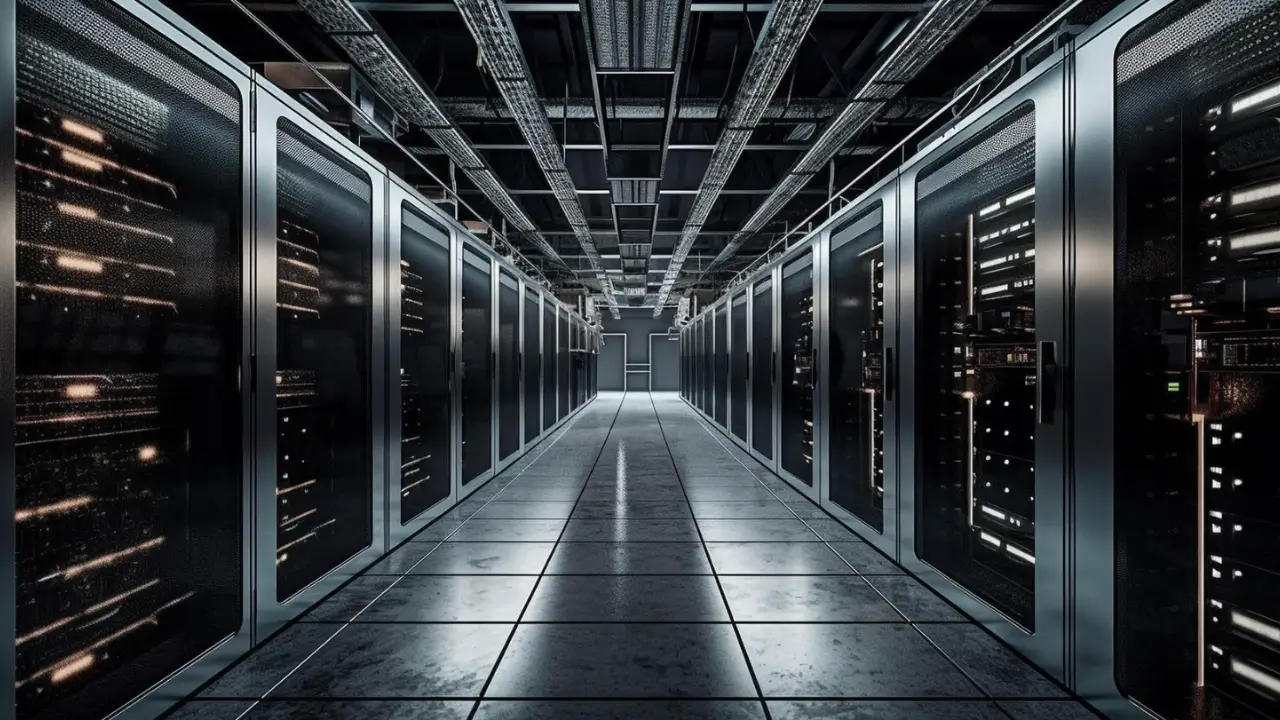
As compute performance accelerates, the data center industry is reaching a clear economic tipping point. For decades, traditional cooling approaches scaled alongside modest increases in rack density. However, that balance is now breaking down. As GPU-heavy AI and high performance computing workloads push rack power toward 200 kilowatts, cooling costs, space efficiency, reliability, and long-term operating economics begin to converge. Consequently, what once appeared manageable now exposes structural limits in legacy infrastructure models.

In effect, the industry faces a choice. Either cooling strategies evolve in step with compute density, or costs rise to unsustainable levels.
Understanding 200 kW Racks in Modern AI Infrastructure
To begin with, racks operating at 200 kW represent the outer edge of current deployment trends. Historically, air-cooled racks rarely exceeded single-digit kilowatt levels. Even more recently, many operators viewed 30 kW as high density. Today, however, AI and HPC clusters built around multi-GPU servers regularly exceed 80 to 120 kW per rack. As a result, leading deployments now push steadily toward 200 kW and beyond.
This escalation does not occur in isolation. Instead, several reinforcing forces drive it simultaneously. On one hand, GPU counts per server continue to rise with each generation. On the other hand, thermal design power increases as accelerators grow more capable. At the same time, architectural requirements demand tighter integration between compute, memory, and networking within a single cabinet. Consequently, industry forecasts suggest rack densities above 100 kW will soon become commonplace across hyperscale and enterprise environments.

At these levels, physics begins to dictate economics. Specifically, air lacks sufficient thermal capacity to remove extreme heat efficiently. Therefore, as rack power rises, air-based cooling systems grow disproportionately expensive and complex.
The Escalating Costs of Air Cooling at Extreme Density
As rack density increases, the limitations of air cooling become unavoidable. Fundamentally, air cooling relies on moving massive volumes of air through servers and across heat sinks. Accordingly, higher densities require more aggressive airflow strategies, including containment, raised floors, and increasingly powerful CRAC units.
However, these visible investments tell only part of the story. In practice, hidden costs accumulate rapidly. For example, facilities require extensive computational fluid dynamics modeling, reinforced structural designs, oversized chillers, and complex ductwork. As a result, capital expenditure rises sharply. Over time, operating costs increase as well, since fan energy grows, mechanical wear accelerates, and PUE degrades.
Moreover, as densities climb further, airflow paths become so constrained that operators often over-engineer systems simply to avoid hotspots. Consequently, oversizing and redundancy persist throughout the facility’s lifespan. In real-world deployments, this leads to a clear outcome: the marginal cost of cooling each additional kilowatt with air increases in a distinctly non-linear manner.
Power Availability and Efficiency as Binding Constraints
At the same time, power availability has emerged as one of the most binding constraints in modern data center design. Utility feeds, UPS systems, PDUs, and backup generators impose firm limits on deliverable energy. Therefore, inefficient cooling directly reduces the power available for productive compute.
In other words, every watt consumed by fans or chillers is a watt unavailable to GPUs and CPUs. As a result, inefficient cooling pushes PUE higher. While many air-cooled facilities operate between 1.4 and 1.8, liquid-cooled environments often achieve values near or below 1.2.
As density rises further, these inefficiencies compound. Operators respond by lowering temperature setpoints, increasing airflow, and driving chillers harder. Consequently, utility bills climb and effective cost per FLOP increases. Over time, these dynamics erode the economic advantages of high-performance compute.
How Liquid Cooling Alters the Cost Curve
Against this backdrop, liquid cooling fundamentally reshapes cooling economics. Because liquids transfer heat far more efficiently than air, they allow operators to remove heat directly at the source. As a result, liquid cooling decouples thermal management from airflow volume.
This shift produces several benefits. First, circulating liquid requires far less energy than moving air, which immediately reduces cooling power consumption. Consequently, PUE improves and more electrical capacity supports compute. Second, by extracting heat close to the silicon, liquid cooling minimizes hotspots and thermal gradients. Therefore, operators avoid the costly overdesign common in air-based systems. Third, once liquid infrastructure is deployed, the marginal cost of cooling additional rack power scales far more linearly.
In many deployments, these effects combine to produce compelling returns. Operational savings, higher achievable density, and improved utilization often offset upfront costs within a few years. Importantly, these outcomes reflect measured performance rather than theoretical projections.
Space, Land, and Deployment Economics
Beyond energy efficiency, liquid cooling also transforms space economics. By enabling 200 kW within a single rack, operators can concentrate compute into significantly smaller footprints. Instead of spreading capacity across dozens of low-density cabinets, facilities can reduce aisle count and shrink building size.
This advantage becomes especially meaningful in land-constrained or urban markets. In those regions, real estate costs materially affect total cost of ownership. Furthermore, because liquid cooling reduces reliance on raised floors and extensive ductwork, it supports more compact layouts. As a result, construction timelines shorten, and deployment speed improves.
In competitive AI markets, this acceleration matters. Delays in bringing capacity online often translate directly into lost revenue or slower innovation cycles.
Reliability, Risk, and Performance Implications
Cooling decisions also shape reliability and performance outcomes. Thermal instability accelerates component wear and increases failure rates. When temperatures rise, GPUs and CPUs throttle, which reduces performance per watt and raises compute costs.
Liquid cooling improves stability by maintaining tighter temperature control. Over time, this consistency extends component lifespan, reduces unplanned outages, and lowers maintenance expense. In addition, stable thermal conditions reduce the need for excessive backup cooling, further lowering capital requirements.
Admittedly, liquid cooling introduces different risks, such as leaks and operational complexity. Nevertheless, modern systems incorporate leak detection, modular components, and continuous monitoring. Consequently, when engineered correctly, these designs meet the reliability expectations of mission-critical environments.
Sustainability and Regulatory Economics
Looking ahead, sustainability pressures increasingly influence data center economics. In this context, liquid cooling aligns well with emerging requirements. By reducing cooling energy demand, it lowers carbon intensity and supports efficiency targets.
Moreover, waste heat captured from liquid cooling loops can be reused for district heating or industrial processes. As a result, operators can convert a cost into a secondary benefit. Water usage also matters. Traditional evaporative systems consume large volumes of water. By contrast, closed-loop liquid designs dramatically reduce dependency, thereby mitigating regulatory and environmental risk.
The Cost of Delay
For operators who delay adoption, financial risks continue to rise. Retrofitting air-cooled facilities for liquid cooling often costs far more than integrating liquid systems into new builds. In many cases, retrofits require major reconstruction, extended downtime, and higher capital outlays.
At the same time, facilities designed exclusively around air cooling risk becoming stranded assets. As industry norms shift, such sites may struggle to attract AI workloads, command lower colocation rates, and face accelerated obsolescence.
A Financial Tipping Point
Ultimately, when rack power approaches 200 kW, the economic calculus changes decisively. Air cooling costs escalate as power and space constraints tighten. By contrast, liquid cooling flattens the cost curve, improves efficiency, and unlocks far higher density per square foot.
At this stage, 200 kW racks represent more than a technical milestone. They mark a financial turning point. Operators who design for liquid cooling gain superior cost control, faster deployment, stronger reliability, and improved sustainability outcomes. At scale, liquid cooling is no longer an optional enhancement. Instead, it becomes the rational default for data centers built to support the next decade of compute demand.











