 Skip to content
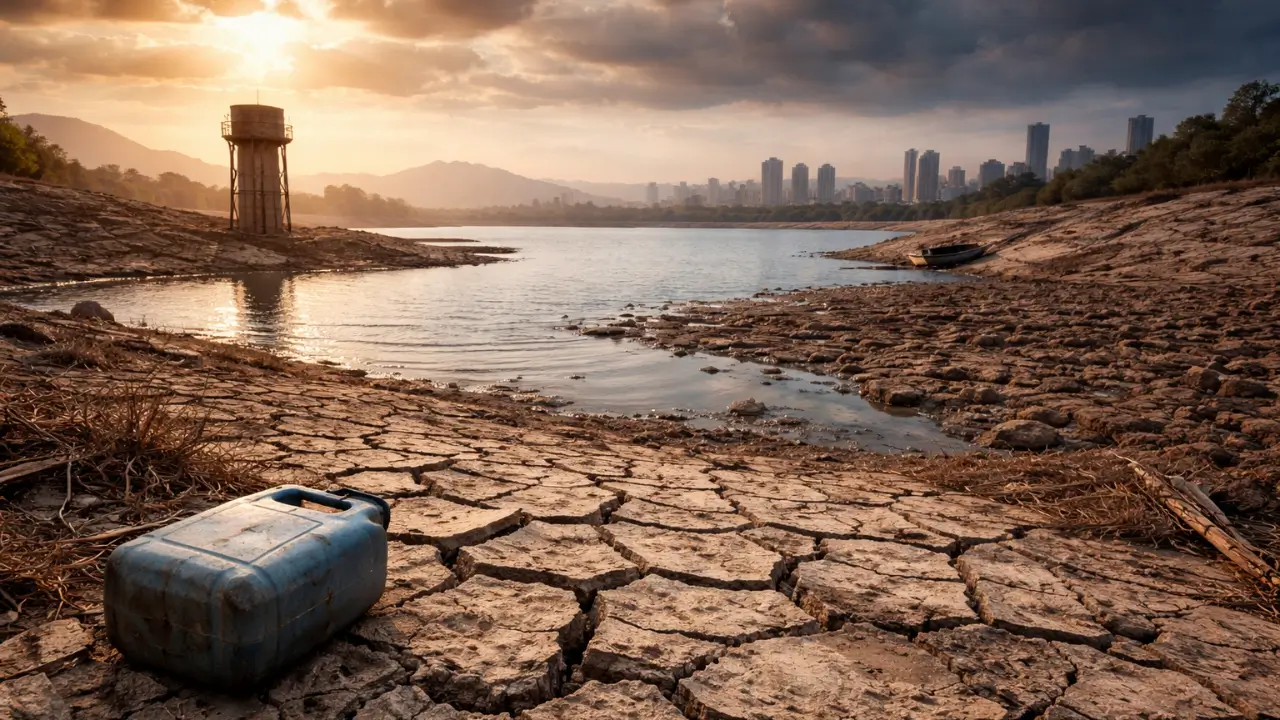
At first glance, the United Nations University’s warning of a looming water supply bankruptcy may appear rhetorical. In reality, it reflects a growing scientific consensus that many freshwater systems now operate beyond recoverable limits. The concept reframes water scarcity not as a temporary crisis driven by drought cycles, but as a structural imbalance in which withdrawals, pollution, and ecosystem degradation consistently exceed natural replenishment. In that context, water supply bankruptcy signals a condition where past overuse has eroded the reserves societies rely on for future stability.

Crucially, decades of accumulated evidence underpin this warning rather than a single climatic shock. Research compiled by the UN University Institute for Water, Environment and Health indicates that nearly three-quarters of the global population now lives in countries classified as water-insecure or critically water-insecure under composite indicators that measure availability, access, and resilience. Meanwhile, roughly four billion people experience severe water scarcity for at least part of the year, underscoring how widespread stress has become even outside traditionally arid regions.
From Crisis to Structural Deficit
Importantly, the water supply bankruptcy framing shifts attention away from episodic shortages and toward long-term depletion of natural water capital. Unlike conventional water stress metrics, which often fluctuate seasonally, bankruptcy implies a sustained drawdown of groundwater, lakes, wetlands, and glaciers that recovery cannot quickly reverse. The UN University report stresses that many regions now consume what effectively amounts to their hydrological savings, leaving little buffer against future shocks.
For example, satellite-based assessments show that more than half of the world’s large lakes and reservoirs have experienced net water losses since the early 1990s. These declines result from a combination of climatic change, upstream diversion, and rising demand. Similarly, researchers observe long-term declining trends across a substantial share of the world’s major aquifers, particularly in heavily irrigated or densely populated regions. Although the precise proportion varies depending on how analysts define “major aquifers,” the overall direction remains consistent across datasets.

Moreover, the scale of human dependence on stressed systems magnifies the risk. UN synthesis data suggest that around three billion people live in areas where total water storage is declining or highly variable. A significant share of global food production also originates in these regions, linking water instability directly to agricultural output and supply-chain resilience. This relationship does not imply imminent global food collapse, but it does highlight growing exposure to disruption.
The Economic and Environmental Balance Sheet
From an economic standpoint, water supply bankruptcy carries consequences that extend far beyond utilities and irrigation districts. Agriculture accounts for roughly 70% of global freshwater withdrawals, and farmers now cultivate more than 170 million hectares of irrigated cropland under high or very high water stress. These pressures raise costs, reduce yields, and intensify exposure to climate variability, particularly for smallholder producers.
In addition, land degradation, groundwater depletion, and climate-related impacts impose substantial economic losses each year. UN estimates place the combined global costs in the hundreds of billions of dollars annually, depending on how analysts account for ecosystem damage, lost productivity, and adaptation expenses. While methodologies differ, these figures underscore that water mismanagement represents a material drag on economic performance rather than an abstract environmental concern.
Environmental feedback loops further complicate the picture. Salinisation has degraded well over 100 million hectares of cropland worldwide, reducing productivity and locking regions into cycles of declining yields and rising water demand. At the same time, glacier retreat has reduced long-term water storage in many mountain-fed river systems. Although the magnitude of glacier loss varies by region and measurement method, observed declines since the late 20th century have already altered seasonal flow patterns for downstream communities.
Geography No Longer Offers Protection
Notably, water supply bankruptcy does not confine itself to dry climates. Regions that experience frequent flooding can still face long-term deficits when extraction consistently exceeds renewable supply or when degraded ecosystems lose their ability to regulate water. This reality challenges the assumption that rainfall alone guarantees water security.
Rivers offer a stark illustration. Systems such as the Colorado River in North America and the Indus River in South Asia no longer reliably reach the sea, largely because sustained upstream diversions and over-allocation redirect flows. These outcomes reflect governance and infrastructure decisions as much as hydrology, highlighting how policy choices shape water outcomes over time.
Social consequences follow closely behind. Communities with fewer financial and institutional resources absorb the greatest impacts of water scarcity, from health risks linked to unsafe supplies to lost livelihoods in agriculture. Without deliberate attention to equity, efforts to manage water supply bankruptcy risk deepening existing inequalities rather than resolving them.
Governing a Bankrupt System
Against this backdrop, the UN University’s call for a new global water agenda centers on realism rather than restoration fantasies. The proposed approach prioritizes damage limitation, transparent water accounting, enforceable withdrawal limits, and protection of remaining natural water assets. Rather than assuming that efficiency gains alone can close the gap, the framework acknowledges physical limits and emphasizes resilience.
Policy tools already exist. Water pricing reforms, improved irrigation efficiency, wastewater reuse, and ecosystem restoration can all help narrow the imbalance between supply and demand. However, these measures require political commitment and public investment, especially in regions where governance capacity remains uneven.
Equally important, policymakers should view water infrastructure spending through a strategic lens. Investments that stabilize water systems can reduce long-term economic losses, enhance food security, and buffer societies against climate volatility. In this sense, confronting water supply bankruptcy represents not only an environmental necessity but also a rational economic choice.
A Defining Moment for Water Governance
Ultimately, the UN’s water supply bankruptcy warning marks a turning point in how societies frame freshwater challenges. Evidence now shows that incremental fixes will not suffice in systems already operating beyond sustainable limits. While uncertainty remains in the precise magnitude of some impacts, the overall trajectory is clear.
The choice now lies between managing decline deliberately or allowing unmanaged depletion to dictate outcomes. By treating water as a finite asset rather than an endlessly renewable input, governments and industries can still mitigate the most severe risks. Failing to act would leave societies increasingly exposed in a world where water supply bankruptcy becomes not a warning, but a defining condition.










