 Skip to content
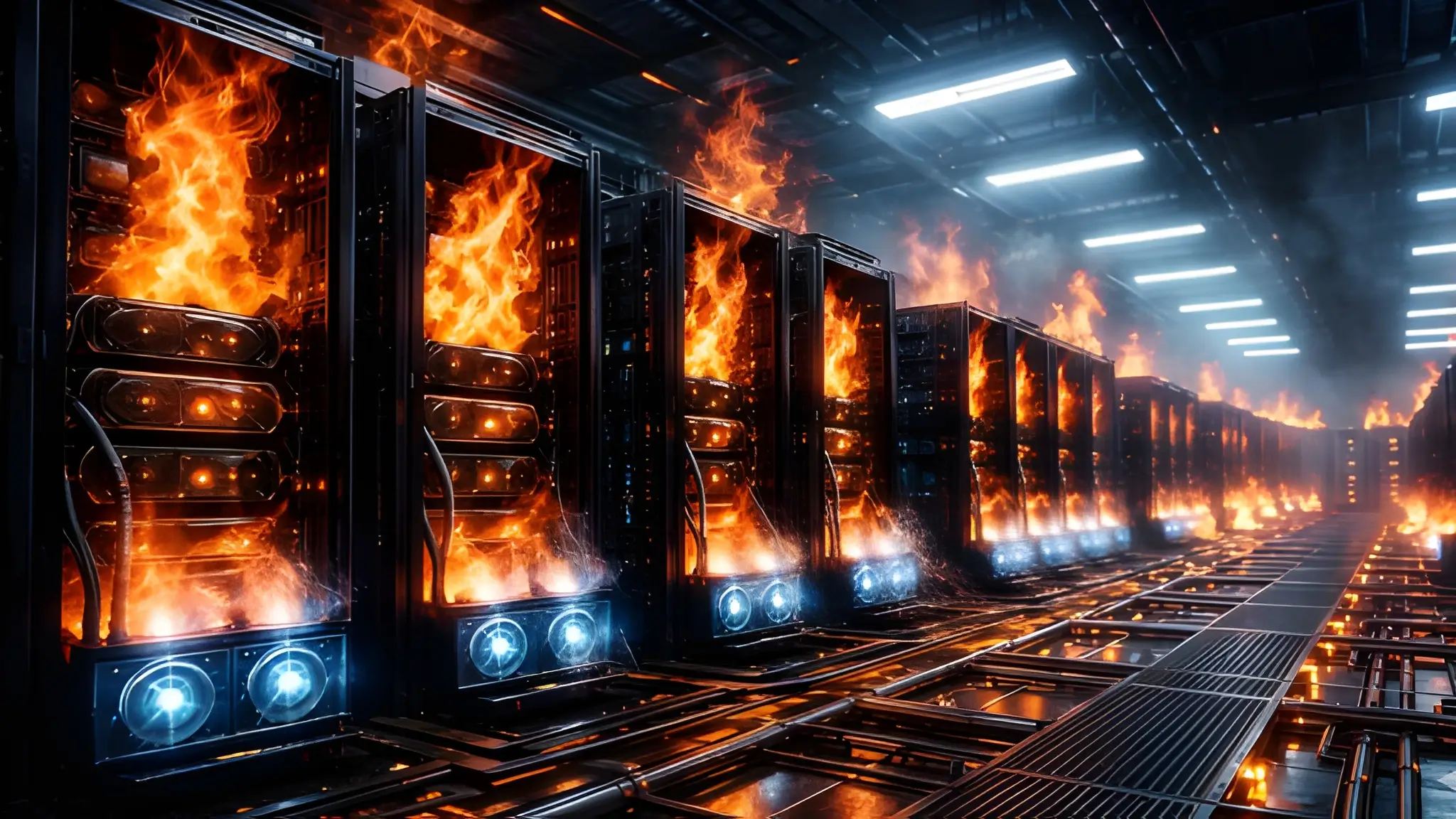
GPU density inside modern data center racks has increased at a pace that outstrips the evolution of supporting thermal systems. Operators now deploy high-wattage accelerators exceeding 700W per unit, yet many facilities still rely on airflow models designed for far lower thermal loads. Rack-level power densities have crossed 80–100 kW in advanced deployments, creating thermal gradients that legacy cooling strategies fail to dissipate evenly. Engineers often push compute consolidation to optimize footprint and capital efficiency, but this approach amplifies heat concentration within confined spaces. As a result, clusters exhibit zones where cooling capacity cannot match heat generation, leading to latent inefficiencies. This mismatch results in underutilized compute due to thermal constraints, where installed GPUs cannot sustain expected throughput under sustained load conditions.

Thermal design cycles historically followed incremental hardware improvements, but AI infrastructure has disrupted that cadence with abrupt jumps in power density. Traditional cold aisle and hot aisle containment systems struggle to maintain consistent airflow distribution when confronted with uneven heat loads across racks. Liquid cooling adoption has accelerated, yet integration remains inconsistent across facilities and often limited to specific nodes rather than system-wide deployment. Mechanical cooling systems, including chillers and CRAC units, cannot dynamically respond to micro-level heat fluctuations within densely packed clusters. This lag between compute scaling and thermal adaptation results in localized overheating that reduces effective utilization rates. Consequently, infrastructure that appears overprovisioned on paper operates below its theoretical performance ceiling in practice.
The industry’s focus on maximizing compute per square foot has overshadowed the importance of thermal symmetry across racks and clusters. Design frameworks prioritize power delivery and rack space optimization, often treating cooling as a secondary constraint rather than a primary design variable. High-density GPU deployments introduce complex airflow interactions, including recirculation, bypass airflow, and pressure imbalances that disrupt intended cooling paths. Engineers frequently rely on computational fluid dynamics simulations during design, but real-world deployments diverge due to cable congestion, partial rack loading, and environmental variability. These deviations create thermal inefficiencies that accumulate over time and reduce sustained cluster performance. Ultimately, the inability to align thermal architecture with rapid density growth constrains the operational effectiveness of modern AI infrastructure.
More GPUs ≠ More Output
Adding more GPUs to a cluster does not guarantee proportional performance gains because thermal and interconnect constraints introduce nonlinear scaling effects. High-performance GPUs generate significant heat under sustained workloads, which raises ambient temperatures within the rack and affects neighboring components. Elevated temperatures increase resistance in electronic pathways, reducing efficiency and amplifying power losses across the system. Network interconnects, such as NVLink and InfiniBand, also exhibit thermal sensitivity that can impact communication efficiency between nodes under elevated temperature conditions. As cluster density rises, these compounded effects flatten performance curves despite increased computational capacity. Therefore, linear scaling assumptions fail under real-world thermal conditions.
Thermal buildup affects clock speeds through dynamic frequency scaling mechanisms embedded within GPUs. When temperatures approach predefined thresholds, GPUs automatically reduce clock frequencies to prevent hardware damage and maintain operational stability. This process, known as thermal throttling, directly reduces compute throughput and elongates workload execution times. In multi-GPU clusters, throttling behavior may not occur uniformly, leading to synchronization delays across distributed workloads. Workloads that depend on tightly coupled processing suffer disproportionately from these inconsistencies, reducing overall system efficiency. Hence, performance degradation becomes a systemic issue rather than an isolated hardware limitation.
Cluster-level orchestration systems often assume consistent performance across nodes, but thermal variability undermines these assumptions. Scheduling algorithms distribute workloads based on resource availability, and while some advanced systems incorporate thermal awareness, most deployments still have limited integration of real-time thermal conditions within racks. This oversight leads to uneven load distribution, where some GPUs operate near optimal conditions while others remain thermally constrained. Over time, these disparities introduce inefficiencies that reduce aggregate cluster output. Moreover, sustained thermal stress can accelerate hardware degradation, increasing failure rates and maintenance requirements. Consequently, adding more GPUs without addressing thermal dynamics introduces diminishing returns in performance scaling.

Your Bottleneck Isn’t Silicon. It’s Heat Pockets.
Localized heat pockets represent one of the most critical yet underdiagnosed challenges in high-density GPU clusters. These pockets form due to uneven airflow distribution, obstructions within racks, and variations in component placement. Even minor inconsistencies in airflow can create temperature differentials that significantly impact GPU performance. Identical GPUs operating under the same workload may exhibit divergent behavior because of micro-environmental differences within the rack. This variability complicates performance optimization and introduces unpredictability in workload execution. Therefore, heat pockets effectively become invisible bottlenecks that limit cluster efficiency.
Hotspots often emerge near the top of racks where heated air accumulates, especially in environments with inadequate exhaust management. Cable density, power distribution units, and non-uniform server layouts further disrupt airflow patterns and exacerbate localized heating. Sensors placed at rack inlets and outlets may not capture these micro-level variations, leading to incomplete thermal visibility. Advanced monitoring solutions that use distributed sensors can identify these hotspots, but adoption varies across operators, with hyperscale environments advancing faster than enterprise deployments due to cost and integration complexity. Without accurate thermal mapping, operators cannot effectively mitigate localized overheating. This lack of visibility reinforces inefficiencies across the cluster.
Heat pockets also influence workload reliability by increasing the likelihood of thermal-induced instability and contributing to higher error rates under sustained operating conditions. Elevated temperatures can affect memory modules, interconnects, and power delivery components, leading to intermittent failures that are difficult to diagnose. These issues often manifest as performance inconsistencies rather than outright system failures, making them harder to detect through conventional monitoring tools. Engineers may attribute these anomalies to software inefficiencies, overlooking the underlying thermal causes. Addressing heat pockets requires a holistic approach that combines airflow optimization, sensor deployment, and real-time analytics. Otherwise, these localized issues continue to erode cluster performance over time.
The Cooling Layer No One Designed For
Cluster architecture has traditionally prioritized compute density, power distribution, and network topology, leaving cooling considerations underdeveloped. Designers often treat cooling as an infrastructure layer that operates independently of compute architecture, rather than integrating it into system-level design. This separation creates inefficiencies when thermal dynamics interact with hardware performance in complex ways. Airflow management, for instance, depends on rack configuration, server orientation, and cable routing, yet these factors receive limited attention during design phases. As GPU density increases, these overlooked variables become critical determinants of performance. Consequently, the cooling layer emerges as a limiting factor in cluster scalability.
Liquid cooling technologies, including direct-to-chip and immersion cooling, offer higher thermal efficiency compared to traditional air cooling systems. However, their deployment often occurs in isolated segments of the data center rather than as part of a cohesive thermal strategy. Integrating these technologies requires redesigning rack layouts, power delivery systems, and maintenance workflows, which many operators hesitate to undertake. Partial adoption creates hybrid environments where cooling performance varies across different sections of the cluster. This inconsistency undermines the benefits of advanced cooling solutions and limits their impact on overall efficiency. Therefore, a fragmented approach to cooling fails to address the systemic nature of thermal challenges.
Airflow dynamics within high-density clusters remain poorly understood due to the complexity of real-world deployments. Computational models provide baseline insights, but they cannot fully capture the effects of physical obstructions, environmental variability, and operational changes. Engineers often rely on static design assumptions that do not adapt to evolving workload patterns and hardware configurations. This gap between theoretical models and operational reality leads to suboptimal cooling performance. In addition, the limited standardization of granular thermal efficiency metrics beyond broad indicators complicates detailed decision-making processes. As a result, cooling design continues to lag behind the rapid evolution of compute infrastructure.
Peak Benchmarks Don’t Survive Real Workloads
Benchmarking frameworks typically evaluate GPU performance under controlled conditions that do not reflect sustained operational environments. These tests often run for short durations and assume optimal cooling conditions, which rarely persist in production settings. As workloads extend over longer periods, thermal accumulation begins to influence hardware behavior and performance metrics. GPUs that perform at peak levels during benchmarks may experience gradual degradation in throughput during continuous operation. This divergence between benchmark results and real-world performance creates unrealistic expectations for system capabilities. Consequently, operators may overestimate the effectiveness of their infrastructure.
Thermal throttling plays a central role in this performance discrepancy by dynamically adjusting GPU frequencies based on temperature thresholds. Under sustained workloads, GPUs frequently reach these thresholds, triggering reductions in clock speeds that directly impact processing capacity. These adjustments occur continuously, creating fluctuations in performance that benchmarks fail to capture. In distributed training scenarios, such fluctuations can disrupt synchronization across nodes and extend training times. The cumulative effect of these inefficiencies becomes significant at scale, reducing overall system productivity. Therefore, sustained workload performance must be evaluated independently of peak benchmark metrics.
Workload characteristics also influence how thermal constraints affect performance, as different AI models impose varying computational and memory demands. Training large language models generates sustained high utilization, while inference workloads may produce intermittent spikes in activity. These patterns interact differently with thermal systems, leading to varied performance outcomes. Systems optimized for peak performance may struggle to maintain efficiency under diverse workload conditions. Monitoring tools that capture real-time thermal and performance data can provide more accurate insights into system behavior. However, many operators still rely on static metrics that fail to reflect dynamic operational realities.
You Scaled the Cluster—Not the Output
Scaling GPU clusters without aligning thermal infrastructure results in diminishing returns that undermine the value of additional compute investment. Each incremental increase in density amplifies existing thermal inefficiencies, reducing the marginal performance gains of new hardware. Operators often focus on expanding capacity to meet growing demand, but this approach overlooks the constraints imposed by cooling systems. The gap between installed compute and usable performance continues to widen as thermal challenges intensify. This dynamic shifts the bottleneck from silicon capability to environmental conditions within the data center. Cooling is emerging as a primary bottleneck alongside power delivery and network constraints in determining effective output. Ultimately, cooling becomes the defining factor in determining effective output.
Thermal alignment requires integrating cooling considerations into every stage of cluster design, from hardware selection to workload orchestration. Engineers must evaluate airflow patterns, heat distribution, and cooling capacity alongside compute and power requirements. Advanced cooling technologies should be deployed as part of a unified strategy rather than isolated solutions. Real-time monitoring and adaptive control systems can help maintain optimal thermal conditions across the cluster. These measures enable operators to maximize the utilization of existing hardware without compromising performance. Therefore, addressing thermal constraints is essential for achieving sustainable scalability.
The future of high-density computing depends on recognizing cooling as a core component of system architecture rather than a supporting function. As AI workloads continue to grow in complexity and scale, thermal management is expected to play an increasingly critical role alongside power and network design in determining infrastructure efficiency. Operators who fail to adapt their cooling strategies risk underutilizing their most valuable assets. In contrast, those who prioritize thermal optimization can unlock higher levels of performance from existing deployments. This shift requires a fundamental change in how data centers are designed and operated. Hence, scaling output demands a balanced approach that aligns compute expansion with thermal capability.












