 Skip to content
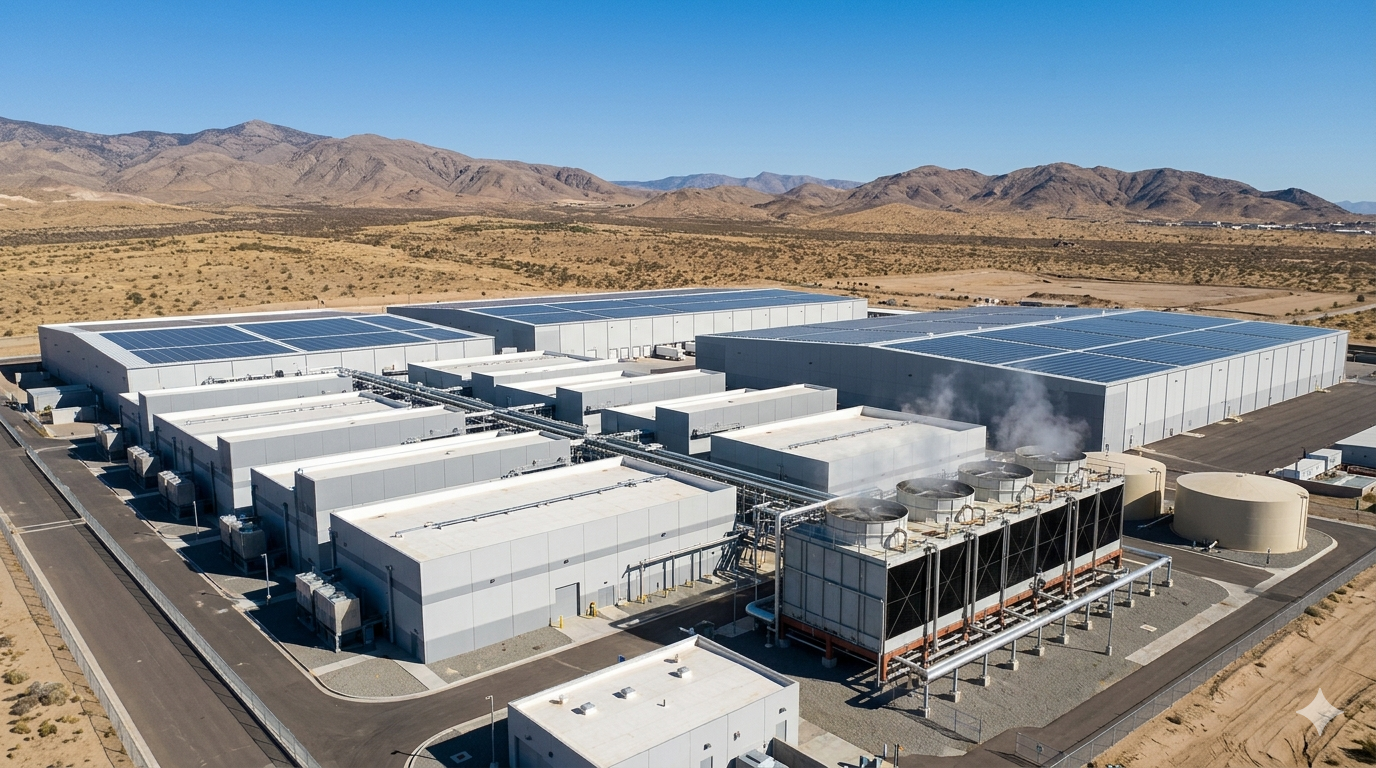
Water used to be an afterthought in data center site selection. Power availability, land cost, connectivity, and tax incentives dominated the conversation. Water showed up at the end of the checklist, if at all, as a utility input that operators assumed would simply be available. That assumption is breaking down. As AI data centers scale to gigawatt densities and cooling water consumption rises proportionally, water access is moving from a footnote to a first-order site selection constraint in markets across the world.

The shift is not gradual. A hyperscale AI training facility running at 100 megawatts can consume millions of litres of water daily through evaporative cooling. Multiply that across the dozens of campuses under construction simultaneously in water-stressed regions, and the aggregate demand starts competing with municipal and agricultural users in ways that generate real regulatory and operational risk. Several US states, including Virginia and Arizona, have already seen water availability become a binding constraint on data center permitting. The problem is global, and it is accelerating.
Why Water Consumption Is Higher Than Most Operators Report
The water consumption figures that data center operators publish rarely capture the full picture. Most operators report water usage effectiveness, or WUE, which measures water consumed directly at the facility. However, this metric excludes the water consumed upstream in power generation. Thermal power plants, including gas and coal generators, use significant volumes of water for cooling. Consequently, a data center that draws power from a water-intensive grid carries an embedded water footprint that its own WUE figure does not reveal.
Cooling choices and the geography bias in water reporting expose this gap directly. The same facility in two different power markets can have vastly different total water footprints depending on the generation mix supplying its grid connection. Operators who have committed to zero water consumption targets at their facilities may still carry significant water exposure through their power supply chains. That gap is becoming harder to ignore as regulators and investors push for more comprehensive water disclosure.

Where Water Stress Is Already Reshaping Site Decisions
The markets where water stress has moved from theoretical risk to operational constraint are no longer edge cases. Water stress and the future geography of data centers maps the collision between hyperscale expansion plans and regional water availability across North America, Europe, and Asia Pacific. Northern Virginia, the world’s largest data center market, sits in a watershed where data center water consumption now draws formal regulatory scrutiny. Arizona, a major growth market for US data center development, operates in one of the most water-stressed regions in the country.
In Europe, operators face a similar dynamic. The Netherlands imposed a temporary moratorium on new large data centers in the Amsterdam region partly on water and energy grounds. Several Spanish municipalities, now facing the €90 billion AI infrastructure buildout from AWS and Microsoft, are raising water access questions alongside land acquisition concerns. Furthermore, in India and Southeast Asia, where AI infrastructure investment is accelerating rapidly, water scarcity in dry seasons creates operational risk that site selection processes have historically underweighted.
The Cooling Architecture Response
The industry’s response to water stress is shifting cooling architecture away from evaporative systems toward closed-loop and liquid cooling designs that drastically reduce consumptive water use. Designing low-water data centers with immersion architectures outlines how immersion cooling eliminates evaporative water loss entirely by submerging hardware in dielectric fluid that transfers heat without consuming water. Direct-to-chip liquid cooling similarly reduces water consumption compared to cooling tower-based systems by moving heat removal closer to the source.
The circular water loop model takes this further by recirculating coolant in a closed system, reducing makeup water requirements to near zero in well-designed implementations. However, these systems carry higher capital costs and require operator expertise that not all data center teams currently possess. Additionally, the transition from evaporative to closed-loop cooling often requires facility redesign that adds cost and complexity to retrofits of existing sites.
What Site Selection Teams Need to Ask Differently
Site selection processes need to incorporate water risk assessment at the same level of rigour as power risk assessment. That means evaluating not just current water availability but projected availability under climate stress scenarios over the asset’s operational life. It means understanding the regulatory trajectory for water allocation in the target market, including whether data centers compete with agricultural or municipal users under local water rights frameworks. And it means assessing the cooling architecture compatibility of candidate sites before committing to development.
Cooling factors driving site selection for AI infrastructure provides the framework for that evaluation, connecting climate data, water availability, and cooling technology options into a site assessment approach that reflects current AI infrastructure requirements. The operators who build water risk into their site selection criteria now will avoid the permitting delays, regulatory friction, and reputational exposure that operators who ignored it are already experiencing in constrained markets. Water is no longer a secondary input. It is a primary site selection filter, and the industry is learning that lesson at varying speeds.












