
.Nscale Locks $3.5 Billion Figure Robotics Compute Deal  ·Qatar’s Meeza Lands Major Hyperscaler Deal for 8MW ·Qualcomm Strikes Amazon AI Chip Deal, Opens Door to $4 Billion Stock ·Hitachi Energy Bets $300M on China Grid Manufacturing Corvex Builds Toward 8MW Cloud Infrastructure Footprint LITEON Bets $176 Million on DCX Liquid Cooling EdgeConneX Backs Singapore’s AI-Ready Tropical Data Center Testbed

The GPU Shortage Narrative Is Covering for a Much Deeper Supply Chain Problem

The GPU shortage supply chain problem runs deeper than the quarterly earnings narrative suggests. Every quarter, TSMC reports record revenue.

Share
GPU shortage supply chain problem HBM CoWoS advanced packaging TSMC AI infrastructure 2026

The GPU shortage supply chain problem runs deeper than the quarterly earnings narrative suggests. Every quarter, TSMC reports record revenue. Every quarter, analysts celebrate the numbers as proof that the AI infrastructure buildout is real and accelerating. And every quarter, the same conclusion follows: more demand, more chips, more capacity coming. The narrative is clean, confident, and almost entirely wrong about where the actual constraint lives.

TSMC’s Q1 2026 results were genuinely impressive. A 58 percent profit surge, revenue of $35.9 billion, full-year guidance raised above 30 percent growth. The numbers confirm that AI chip demand is not slowing. What they do not confirm, and what almost nobody in the mainstream coverage is saying clearly, is that TSMC’s wafer output is not the binding constraint on how many AI GPUs the world can actually deploy. That constraint sits upstream, downstream, and largely invisible to anyone not deep in the semiconductor supply chain.

The Real Bottleneck Is Not Silicon. It Is What Goes Around It.

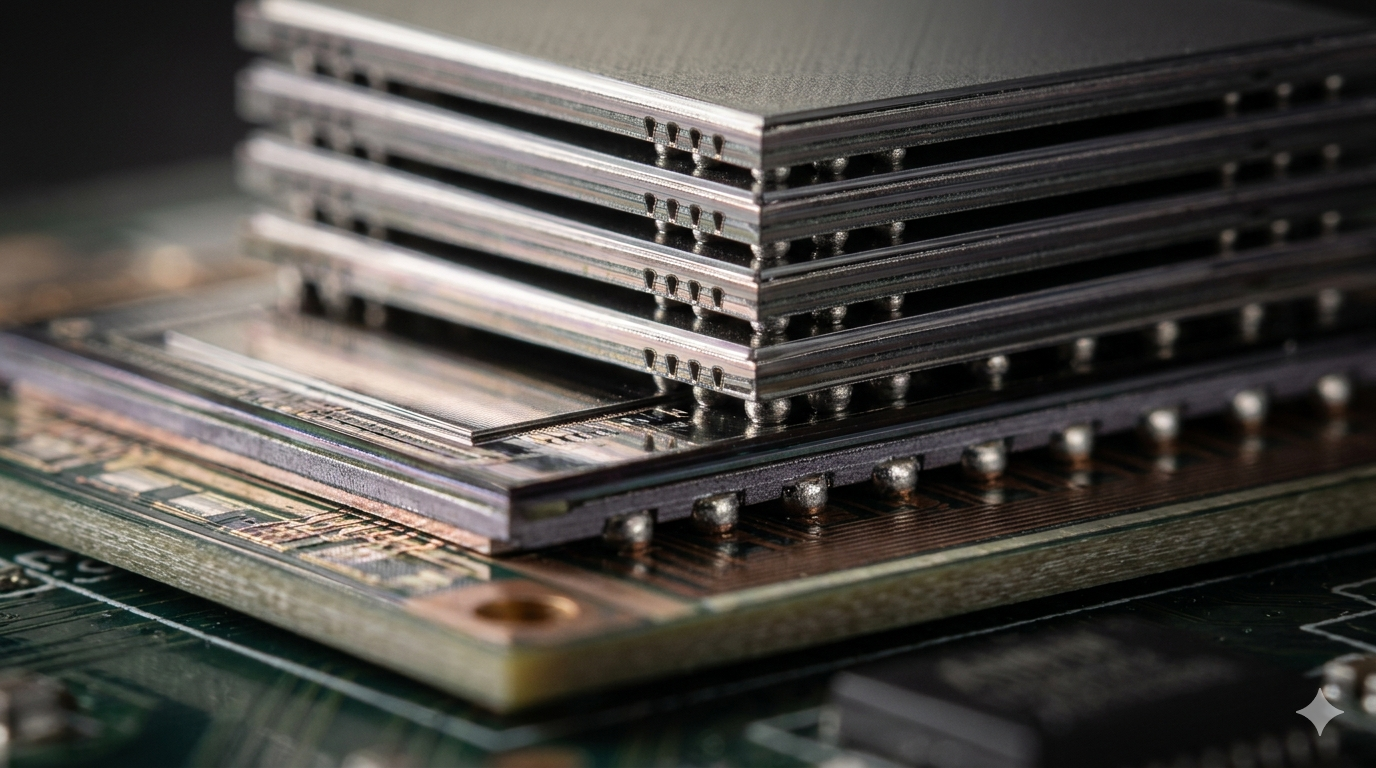
Building a modern AI GPU requires more than a finished wafer. It requires High Bandwidth Memory, the stacked DRAM architecture that gives GPU dies the memory bandwidth that AI training and inference workloads demand. Three companies manufacture HBM: SK Hynix, Samsung, and Micron. SK Hynix alone supplies the majority of HBM for Nvidia’s highest-demand products. That concentration means TSMC’s fab output does not set the effective capacity ceiling for AI GPU production. SK Hynix’s HBM production line does.

Beyond HBM, every high-end AI GPU requires advanced packaging. CoWoS, TSMC’s Chip-on-Wafer-on-Substrate process, integrates the GPU die and HBM stacks into a single package with the interconnect density that modern AI chip architectures require. CoWoS capacity sits entirely separate from wafer capacity, constrained by specialised substrate materials, precision bonding equipment, and yield management at tolerances that standard packaging cannot achieve. TSMC has been aggressively expanding CoWoS capacity, but the expansion timeline runs in years, not quarters. Consequently, every announcement of record GPU demand is simultaneously an announcement of record pressure on a packaging process that has a fixed expansion rate.

TSMC’s move of 3nm production to Japan is partly a geographic diversification story, but it is also a story about the limits of concentrating every critical process at a single facility. The real question is not whether TSMC can produce enough leading-edge wafers. It is whether the entire supply chain around those wafers, including the HBM suppliers, the CoWoS capacity, the substrate manufacturers, and the advanced assembly and test operations, can scale at the same rate. The honest answer is that they cannot, and the gap between wafer output growth and system-level GPU availability reflects that directly.

Why the GPU Shortage Supply Chain Keeps Getting Misdiagnosed

The GPU shortage narrative persists because wafer starts are a number that gets reported. Analyst models are built around it. Investor presentations reference it. TSMC’s earnings calls address it directly. The constraint is legible and discussable in ways that CoWoS yield rates and HBM allocation agreements are not.

The less legible constraints, however, do not fit neatly into earnings call talking points. SK Hynix does not break out HBM allocation by customer in its quarterly results. TSMC does not report CoWoS capacity utilisation as a standalone metric. The substrate suppliers, many of which are Taiwanese and Japanese companies operating well below the radar of Western financial media, do not hold investor days where they announce their expansion constraints. The result is a public narrative about AI chip supply that focuses on the most visible number while the actual constraints operate in the spaces between the headlines.

When the leading chipmaker commits, the AI demand debate ends — but that framing assumes the chipmaker’s output is the relevant commitment. The commitment that actually matters is the entire supply chain’s collective ability to deliver finished, packaged, tested AI computing systems at the rate the market demands. TSMC’s capex commitment of up to $56 billion in 2026 is enormous and necessary. It is not sufficient, however, if the rest of the supply chain cannot keep pace.

What This Means for Anyone Planning AI Infrastructure

Practically speaking, the GPU supply constraint is not going to resolve on the timeline that TSMC’s production ramp suggests. Operators modelling infrastructure deployment plans around the assumption that hardware availability will normalise in 2026 or early 2027 are working from a supply chain model that does not account for the packaging and memory constraints limiting actual system deliveries.

Consequently, this affects investment decisions in ways the surface narrative obscures. A neocloud that has secured GPU allocation from Nvidia has not secured a delivery timeline. It has secured a position in a queue that moves at the rate of the slowest constraint in the supply chain. Similarly, an enterprise planning an AI training cluster for deployment in the second half of 2026 needs to model against CoWoS capacity expansion rates, not TSMC wafer starts, to get an honest picture of when its hardware will actually arrive.

Why the Operators Who Know This Are Already Acting Differently

As a result, the operators who understand this are quietly extending their lead. They locked in hardware commitments earlier, built flexibility into their deployment plans, and are not relying on the public narrative about supply normalisation to validate their timelines. Meanwhile, operators still planning against wafer production numbers are going to find that the gap between announced capacity and delivered systems is larger and more persistent than the headline figures suggest.

TSMC’s results deserve the attention they receive. A 58 percent profit surge at the company that manufactures the chips powering the AI economy is genuinely significant. But the conclusion that follows from those results is not that the GPU supply problem is resolving. It is that demand is so strong that even a supply chain operating at its packaging and memory limits is generating record revenue. The shortage is not ending. It is just becoming more profitable for the people at the top of the stack.


[simple-author-box]

More from AI Infrastructure

The hardest part of scaling AI may no longer sit entirely inside the processor.

AI capacity can look available long before the surrounding infrastructure is ready A customer

The compute contract may be moving faster than the electricity system AI infrastructure procurement

COMPUTE WEEKLY

The briefing that 40,000+ tech leaders read every Monday. Sharp, fast, essential.

Building an AI Startup Without Owning GPUs

Not owning GPUs has become the default, deliberate strategy for building an AI company — not a compromise founders accept reluctantly. H100 rental rates fell 64-75% in fifteen months, a dense ecosystem of neoclouds and inference-as-a-service providers now lets startups skip infrastructure entirely, and credit programs can fund a company’s first year before a founder writes a check
Most Read

A compute node sitting behind a garage door can perform the same basic computational

A project can leave a site without leaving behind the conditions that made the

A commercial operation date can look precise long before the underlying project is capable

A 5 GW AI infrastructure plan can satisfy every conventional site-selection requirement and still

A fire strategy becomes expensive when the building has already decided where walls, equipment,

Disruptor Spotlight

Cerebras Systems

The chip that makes Nvidia nervous. Cerebras’ Wafer Scale Engine is rewriting the rules of AI inference at scale.
Faster
0 x
YoY Revenue
0 x
Transistors
0 T
Market Pulse
MSFT
+1.02%
NVDA
+0.66%
AMZN
-0.078%
AMD
-6.95%
TSMC
-2.98%
Indicative only · Not financial advice
Upcoming Events
SEP
The AI Infrastructure Race (India)
WEBINAR · ONLINE
The AI Infrastructure Race: Won on Power, Land and Trust — Not Capital
MAY
0
AI Infrastructure Summit
DUBAI · IN PERSON
MEA’s premier AI infrastructure event.
JUN
0 0
Compute Forecast Summit
SINGAPORE · IN PERSON
Our flagship APAC event. Early bird open.
Latest Moves
Live
ecolab
Ecolab Deepens Cooling Strategy With $4.75B CoolIT Acquisition
Ecolab is making one of its biggest moves yet into AI infrastructure after completing its $4.75 billion acquisition of liquid cooling specialist CoolIT Systems
Pure DC AVK Europe data center microgrid Dublin 110MW AI infrastructure Ireland 2026
Pure DC and AVK Deploy Europe’s First 110 MW Data Center Microgrid in Dublin
The Pure DC Dublin microgrid has made history as Europe’s first large-scale on-site data center microgrid, launched in partnership with power solutions provider AVK at Pure DC’s campus in Ireland.
Pace Digitek
Pace Digitek Partners With MEGMEET to Expand AI Data Center Power Business
India’s AI infrastructure ecosystem continues to mature as domestic technology manufacturers move beyond traditional telecommunications and industrial markets toward high-growth digital infrastructure opportunities
Follow Compute Forecast
11K followers
1200 followers
Companies to Watch
CW
CoreWeave
Neo Cloud · $19B · IPO Watch
CB
Cerebras Systems
AI Hardware · $4.25B · Pre-IPO
G42
G42
Sovereign AI · Abu Dhabi
H
Humain
Saudi AI · $40B Fund
Latest Podcast
AI Capex, Cloud Margins & the Nuclear Bet
48 MIN · 25 APR 2026

The GPU Shortage Narrative Is Covering for a Much Deeper Supply Chain Problem

The GPU shortage supply chain problem runs deeper than the quarterly earnings narrative suggests. Every quarter, TSMC reports record revenue.

Share
GPU shortage supply chain problem HBM CoWoS advanced packaging TSMC AI infrastructure 2026
55
847 SHARES

0
SHARES

[simple-author-box]

More from AI Infrastructure

A compute node sitting behind a garage door can perform the same basic computational

A project can leave a site without leaving behind the conditions that made the

A commercial operation date can look precise long before the underlying project is capable

A 5 GW AI infrastructure plan can satisfy every conventional site-selection requirement and still

COMPUTE WEEKLY

The briefing that 40,000+ tech leaders read every Monday. Sharp, fast, essential.

Great! We’ve received your information.

Global AI Infrastructure Outlook 2026

The briefing that 40,000+ tech leaders read every Monday. Sharp, fast, essential.
Download Free
Most Read

A compute node sitting behind a garage door can perform the same basic computational

A project can leave a site without leaving behind the conditions that made the

A commercial operation date can look precise long before the underlying project is capable

A 5 GW AI infrastructure plan can satisfy every conventional site-selection requirement and still

A fire strategy becomes expensive when the building has already decided where walls, equipment,

Disruptor Spotlight

Cerebras Systems

The chip that makes Nvidia nervous. Cerebras’ Wafer Scale Engine is rewriting the rules of AI inference at scale.
Faster
0 x
YoY Revenue
0 x
Transistors
0 T
Market Pulse
NVDA
$924.60
+2.4%
MSFT
$421.30
+1.1%
AMZN
$192.80
-0.6%
NVDA
$924.60
+2.4%
NVDA
$924.60
+2.4%
Indicative only · Not financial advice
Upcoming Events
MAY
0 0
DCD Global — London
LONDON · IN PERSON
World’s largest DC event. CF is media partner.
MAY
0
AI Infrastructure Summit
DUBAI · IN PERSON
MEA’s premier AI infrastructure event.
JUN
0 0

Compute Forecast Summit

SINGAPORE · IN PERSON
Our flagship APAC event. Early bird open.
Latest Moves
  • Live
Sam Altman
OpenAI appoints new Chief Infrastructure Officer to lead $100B DC programme
27 APR · OPENAI
Sam Altman
OpenAI appoints new Chief Infrastructure Officer to lead $100B DC programme
27 APR · OPENAI
Sam Altman
OpenAI appoints new Chief Infrastructure Officer to lead $100B DC programme
27 APR · OPENAI
Follow Compute Forecast
18.4K followers
12.1K followers
9.3K subscribers
41 episodes
Companies to Watch
CW
CoreWeave
Neo Cloud · $19B · IPO Watch
CB
Cerebras Systems
AI Hardware · $4.25B · Pre-IPO
G42
G42
Sovereign AI · Abu Dhabi
CW
Humain
Saudi AI · $40B Fund
Latest Podcast
AI Capex, Cloud Margins & the Nuclear Bet
48 MIN · 25 APR 2026
Scroll to Top








