
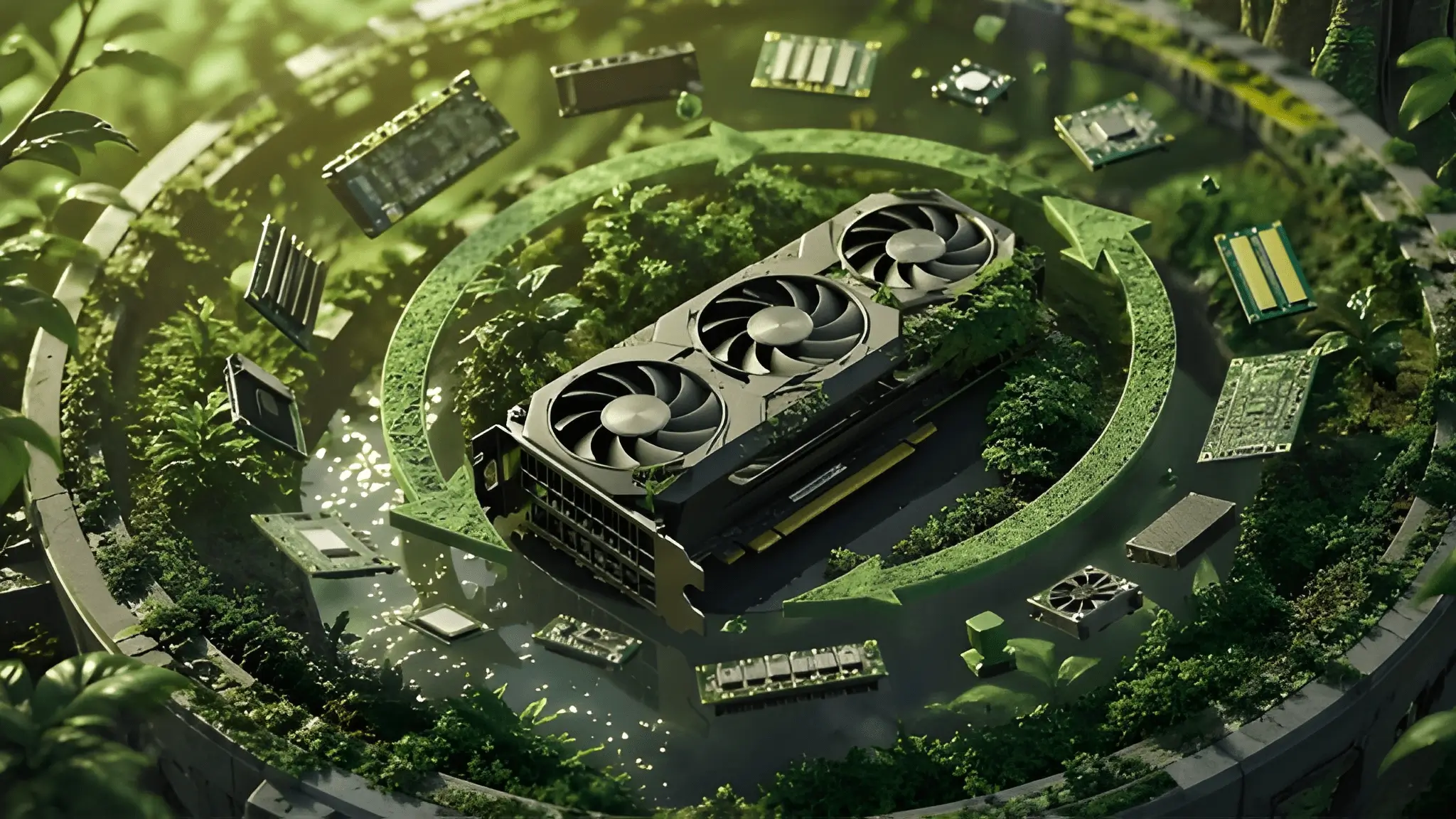
The infrastructure industry has long measured progress through efficiency gains, density improvements, and incremental cost reductions that rarely challenged the fundamental lifecycle of hardware. Servers arrived, delivered peak performance for a limited window, and often exited the system as depreciated assets, though some operators recover residual value through resale or redeployment. That model no longer aligns with the scale, velocity, and material intensity of modern digital infrastructure. Pressure from supply chain volatility, capital constraints, and environmental accountability has forced operators to reconsider how infrastructure is designed, deployed, and retired. The conversation has shifted from performance optimization to lifecycle orchestration, where every component carries extended value beyond its initial deployment phase. This shift introduces a structural rethink that prioritizes reuse pathways, modular upgrades, and asset circulation across multiple operational contexts. The emerging model increasingly treats infrastructure as dynamic inventory that can move through stages of performance relevance and economic utility, rather than remaining static capital.

Stop Owning Servers. Start Owning Lifecycles
Ownership models built around capital expenditure cycles have historically limited how infrastructure operators extract value from hardware investments. A server purchased for peak workloads often becomes underutilized within a few years as performance demands evolve and newer architectures emerge. Lifecycle-oriented strategies reframe this dynamic by treating hardware as a managed asset portfolio rather than a fixed installation. Operators now track performance degradation, workload compatibility, and redeployment potential across the entire lifespan of each component. This approach allows infrastructure teams to extend utilization windows by reallocating hardware to less intensive environments instead of retiring it prematurely. Lifecycle management platforms can integrate telemetry, predictive analytics, and asset tracking to enable these transitions with greater precision. As a result, infrastructure ownership transforms into lifecycle stewardship, where value extraction continues long after initial deployment.
The financial implications of lifecycle ownership extend beyond cost savings into capital efficiency and risk mitigation. Hardware procurement strategies now consider residual value, secondary market demand, and refurbishment potential at the point of acquisition. Vendors have begun offering lifecycle services that include buyback programs, refurbishment pipelines, and redeployment frameworks to support this model. Infrastructure operators gain flexibility by aligning procurement with long-term asset circulation rather than short-term capacity needs. This shift reduces stranded capital and improves return on investment across hardware portfolios. In addition, lifecycle ownership introduces accountability for material usage and disposal outcomes, which aligns with emerging regulatory expectations. The result is a more resilient infrastructure strategy that balances performance, cost, and sustainability objectives without relying on constant replacement cycles.
Modular or Obsolete: There’s No Middle Ground
Monolithic infrastructure designs struggle to adapt to rapid changes in hardware architecture and workload requirements. Systems built as tightly integrated units often limit upgrade flexibility and may require broader replacement when key components become outdated or inefficient. Modular design principles address this limitation by enabling targeted upgrades without disrupting the entire system. Components such as processors, memory, storage, and power modules can be swapped independently based on performance needs and technological advancements. This flexibility reduces the need for large-scale rebuilds and extends the usable life of infrastructure assets. Modular systems also support faster iteration cycles, allowing operators to integrate new technologies without waiting for complete system refresh timelines. Consequently, modularity becomes a prerequisite for maintaining relevance in a rapidly evolving infrastructure landscape.

The operational benefits of modular infrastructure extend into deployment speed and maintenance efficiency. Standardized interfaces and interchangeable components simplify installation, repair, and upgrades across large-scale environments. Infrastructure teams can replace or upgrade specific modules without taking entire systems offline, which minimizes downtime and operational disruption. This capability becomes critical in high-availability environments where service continuity directly impacts business outcomes. Furthermore, modular systems enable more efficient inventory management by reducing the need to stock complete systems for replacement scenarios. Operators can maintain smaller inventories of standardized components that serve multiple configurations. As a result, modularity not only enhances flexibility but also streamlines operations and reduces logistical complexity.
Your Old GPUs Aren’t Dead, They’re Just Misplaced
Hardware depreciation does not equate to functional obsolescence, particularly in environments where workload requirements vary significantly. Graphics processing units that no longer meet the demands of advanced machine learning models often retain substantial value for less intensive applications. Secondary markets have emerged to facilitate the redistribution of such hardware across different operational contexts. Enterprises, edge environments, and research institutions increasingly acquire previously deployed hardware to support workloads that do not require cutting-edge performance. This redistribution extends the lifecycle of components and reduces the demand for new manufacturing. The concept of reallocating hardware across different workload tiers allows infrastructure operators to match capabilities with appropriate use cases across multiple stages. Consequently, hardware continues to deliver value beyond its initial deployment environment.
The growth of secondary hardware ecosystems introduces new dynamics in infrastructure planning and asset management. Platforms that specialize in refurbished and redeployed hardware provide visibility into pricing, availability, and performance benchmarks. Operators can integrate these platforms into procurement strategies to optimize cost and resource utilization. Additionally, standardized testing and certification processes ensure that redeployed hardware meets reliability and performance requirements. This development reduces the perceived risk associated with using previously deployed components. However, it also requires robust tracking systems to maintain visibility into asset history and performance characteristics. As a result, secondary markets become an integral part of the infrastructure lifecycle rather than an afterthought.
Built to Break Apart: The Future of Data Center Design
Traditional infrastructure design prioritizes durability and integration, often at the expense of disassembly and material recovery. Systems built without consideration for teardown create challenges when components reach the end of their primary lifecycle. Designing for disassembly introduces a new set of engineering priorities that focus on accessibility, separability, and material recovery. Components are assembled using methods that allow easy separation without damaging reusable parts. This approach enables efficient refurbishment, recycling, and redeployment of individual elements. Infrastructure designers are beginning to consider end-of-life scenarios during the initial design phase rather than solely as an afterthought. Therefore, disassembly becomes a core design principle that supports circularity across the entire lifecycle.
Material recovery plays a critical role in reducing the environmental impact of infrastructure systems. Components such as metals, semiconductors, and rare earth elements carry significant embedded energy and resource costs. Recovering these materials through structured disassembly processes reduces the need for new extraction and manufacturing. Design strategies that prioritize material separation improve recovery rates and reduce contamination during recycling. Infrastructure operators can partner with specialized facilities to process disassembled components and reintegrate materials into new production cycles. This approach supports more circular material flows where materials can retain value across multiple lifecycles, although fully closed-loop systems remain limited. As a result, infrastructure design evolves to support both operational performance and resource sustainability.
Scaling Fast, Wasting Faster? The Hyperscale Reality Check
The rapid expansion of large-scale infrastructure introduces a tension between growth and resource efficiency. Hyperscale environments prioritize speed, capacity, and performance to meet increasing demand for digital services. This focus often leads to accelerated hardware refresh cycles and increased material consumption. Infrastructure operators face pressure to deploy the latest technologies to maintain competitive performance levels. However, this approach can undermine efforts to extend hardware lifecycles and reduce waste. The scale of deployment amplifies the impact of these decisions, making inefficiencies more significant at a global level. Meanwhile, balancing growth with lifecycle optimization becomes a critical challenge for the industry.
Efforts to integrate circular principles into large-scale environments require systemic changes in procurement, design, and operations. Operators must align performance objectives with lifecycle strategies to avoid unnecessary replacement cycles. Data-driven decision-making plays a key role in identifying opportunities for reuse and redeployment within large infrastructure fleets. Standardization across hardware platforms can facilitate component interchangeability and support modular upgrades. Collaboration with suppliers and service providers becomes essential to establish end-to-end lifecycle management frameworks. However, achieving this balance requires a shift in organizational priorities and performance metrics. As a result, hyperscale operators must reconcile the demands of rapid growth with the constraints of resource efficiency.
The concept of infrastructure permanence no longer aligns with the realities of modern digital systems. Hardware, materials, and components can move through extended cycles of deployment, redeployment, and recovery in advanced lifecycle management models. This model is gradually transforming infrastructure toward a more regenerative system where value can persist beyond initial use. Operators gain flexibility by treating assets as part of a dynamic lifecycle rather than a fixed investment. Design, procurement, and operations converge to support this continuous flow of resources and capabilities. Ultimately, infrastructure is evolving toward adaptation alongside replacement, supporting improved performance and resource efficiency over time.











