 Skip to content
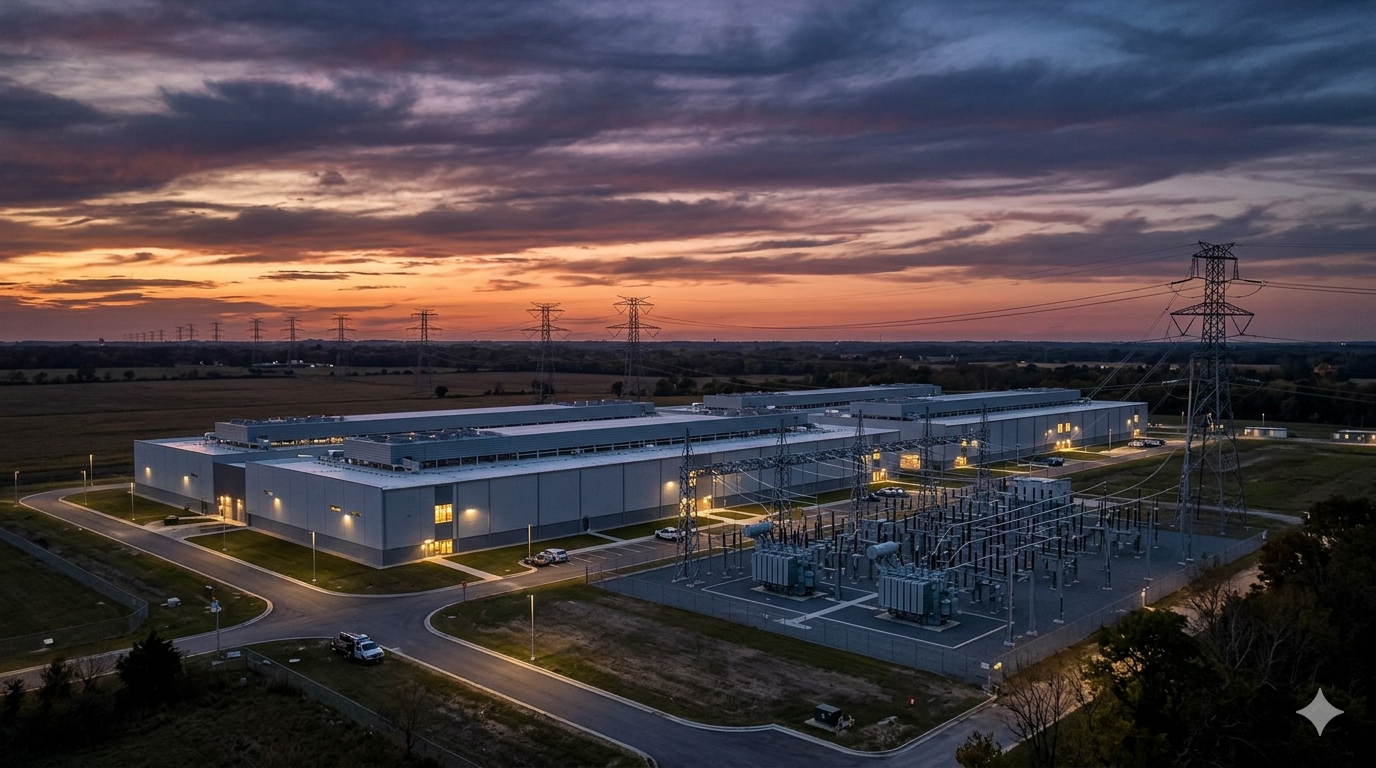
Grid operators across the United States offer major financial incentives to large industrial customers that reduce electricity use during peak stress events. These demand response programs pay participants for helping stabilize the grid. In return, operators compensate them for the capacity they can shed when the system needs it most. Manufacturers, cold storage facilities, and commercial real estate operators join these programs routinely. They collect payments that lower net energy costs while also supporting grid stability. AI data centers, despite being one of the largest and fastest-growing sources of industrial electricity demand, almost never participate.

This refusal is not irrational from an individual operator’s perspective. A GPU cluster running a training job or serving inference requests cannot pause for thirty minutes without consequences. Delays can affect customer commitments, contractual obligations, and competitive positioning. The operational argument against demand response is real. However, the industry has not seriously examined whether that argument is as absolute as it assumes. It has also ignored the financial and political costs of that assumption. The demand response opportunity is larger than most operators recognize, and the cost of refusing it keeps growing.
What Grid Operators Are Actually Offering
Demand response programs vary by region and grid operator, but the basic structure stays the same. Participants agree to reduce load by a specific amount when the grid operator calls on them. In return, they receive capacity payments for being available, even if no event occurs. They also receive energy payments when they actually reduce load. The PJM Interconnection, which covers major data center markets in Virginia, Ohio, and Pennsylvania, runs capacity markets where demand response resources can earn several hundred dollars per megawatt per day during peak periods.
For a large AI data center campus drawing two hundred to five hundred megawatts, these payments create a meaningful revenue stream. A facility that can reduce load by fifty megawatts during grid stress events could earn millions of dollars each year just for maintaining that flexibility. This happens even before any actual reduction event occurs. For independent data center operators and neocloud companies managing thin margins on expensive GPU infrastructure, that revenue matters. Yet the industry continues to leave it on the table.
As documented in our analysis of transformer and substation supply chains, the grid infrastructure serving AI data centers requires major investment. Demand response participation could help utilities and grid operators justify that spending more easily.
The Architecture Argument and Its Limits
The standard industry argument is simple: AI workloads cannot be interrupted. A training run paused mid-computation must checkpoint and restart from a saved state. That process wastes computational progress made since the last checkpoint. An inference cluster that reduces capacity during peak demand may fail to meet service-level agreements. The resulting cost, from lost progress, contract risk, and customer churn, can exceed the value of demand response payments. Therefore, operators conclude that participation makes no economic sense.

This argument is accurate for some workloads, but it is too broad as a general rule. Not all AI data center load is equally urgent or equally difficult to interrupt. Training jobs outside critical delivery timelines can tolerate short interruptions if checkpoint intervals are short. Internal workloads without external service obligations can pause without contractual risk. Non-critical batch processing, data pipelines, and model evaluation jobs can shift around demand response windows without affecting customer-facing performance. As a result, more flexible load exists than the industry usually admits. That flexible share is often large enough to create valuable demand response capacity without touching customer-critical GPU clusters.
What New Architectures Make Possible
The architectural barrier is real, but it is shrinking. New infrastructure designs are creating flexibility that did not exist two years ago. Disaggregated computing architectures separate storage, memory, and compute resources instead of combining them inside individual servers. This structure lets operators pause and move workloads more easily without relying on a full checkpoint-restart cycle.Checkpoint-restart technology has also improved. Modern distributed training frameworks now support checkpoint intervals measured in minutes rather than hours. This sharply reduces the computational cost of short interruptions.
Inference-only facilities create another opportunity. Unlike training campuses, inference workloads are highly parallel and easier to distribute across locations. An operator with facilities in multiple grid markets can shift workloads away from one facility during a demand response event and route them to another market without disruption. This geographic load balancing already exists for reliability reasons. Using it for demand response requires incremental investment and stronger operational processes, not a complete redesign.
The Political and Regulatory Cost of Continued Refusal
Beyond lost revenue, refusing to join demand response programs creates political and regulatory risk. Grid operators and state public utility commissions face growing pressure from legislators and ratepayer advocates. They want large industrial customers that contribute to grid stress to carry a fair share of the burden.
An industry that consumes massive grid capacity while offering no flexibility becomes an easy political target. Regulators can respond by imposing mandatory obligations instead of voluntary incentives.Several states are already considering legislation that would require large data center customers to join demand response programs before receiving new grid interconnection approvals. This momentum is growing because voluntary participation has remained so low.
The industry faces a simple choice. It can participate voluntarily, shape the rules around the real constraints of AI workloads, and capture the financial benefits. Or it can wait for regulators to design mandatory participation rules with less understanding and less flexibility.As documented in our analysis of the time-to-power crisis as AI’s hidden scaling ceiling, grid access already limits AI infrastructure growth in many markets. Voluntary demand response participation is one of the few tools available to improve that relationship without waiting for decade-long grid investment cycles.
Building the Business Case
Operators best positioned to benefit are the ones that start now. They need operational frameworks, metering infrastructure, and workload management systems that support reliable participation. Grid operators need participants who can commit to specific load reductions with confidence.Meeting that standard requires a clear understanding of flexible load. Most current data center operations systems do not provide that level of visibility. Operators need better metering, stronger monitoring, and workload classification systems that show which loads are flexible, by how much, and for how long.
This investment makes sense even without demand response revenue. Better visibility improves energy cost management, strengthens capacity planning, and helps operators prove grid-friendliness to regulators and communities that increasingly scrutinize power usage. Demand response revenue becomes the financial return on an operational investment that already delivers multiple benefits. The industry should stop treating demand response as a burden it cannot manage. Instead, it should treat it as a revenue opportunity it has failed to organize itself to capture.












