 Skip to content
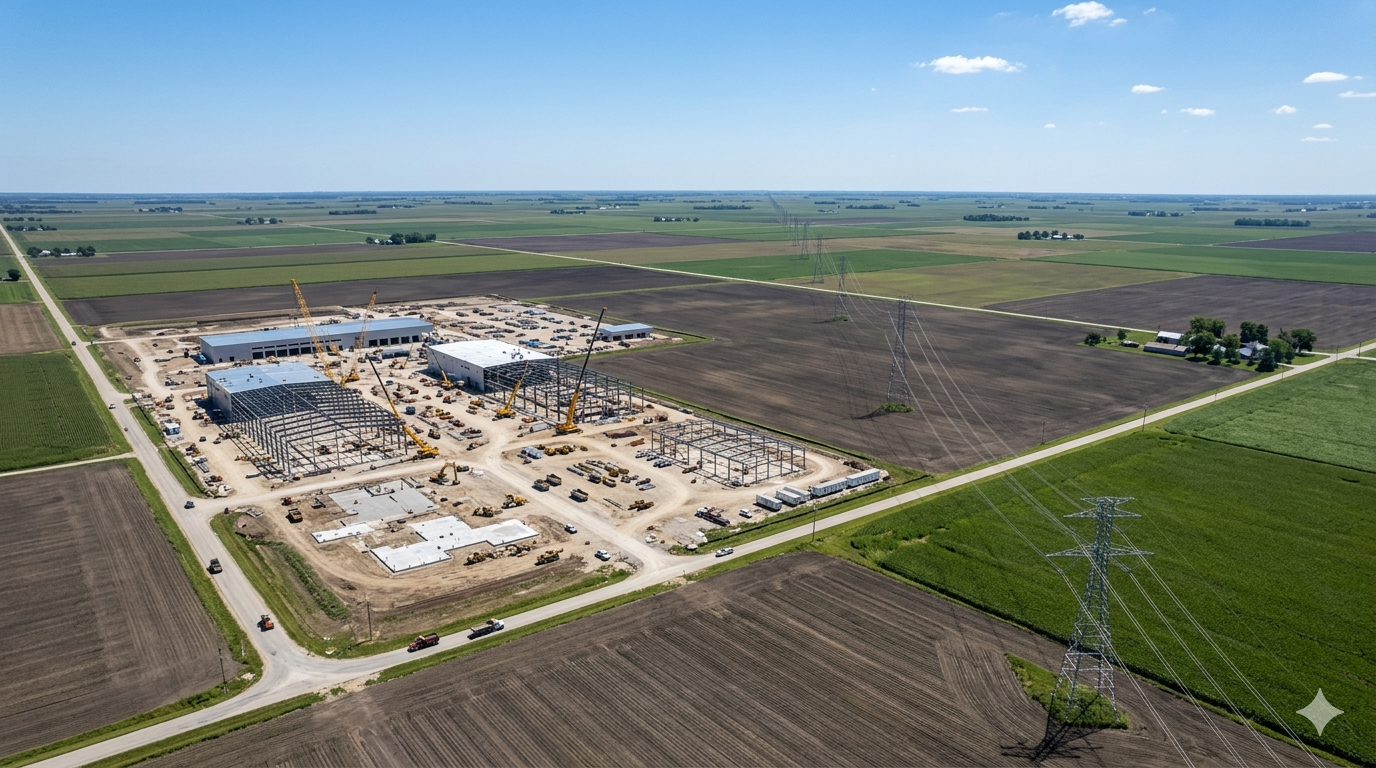
Northern Virginia still has the largest concentration of operational data center capacity in the world. Phoenix is currently the fastest-growing primary market in the country. Texas has become the default alternative location for developers who cannot wait out Virginia’s interconnection queues. But the market that will define the next phase of US AI infrastructure buildout is none of those three. It is the Midwest, and most of the AI infrastructure industry has not yet priced that in.

MISO’s April 13 long-term load forecast, specifically, makes the case directly. The Midcontinent Independent System Operator projects that data centers in its central region will account for the majority of its 35% peak load increase by 2035. The region covers Illinois, Indiana, and Michigan primarily. This represents a 42-gigawatt jump in demand across a market that, for most of the past decade, was not on the primary list of AI infrastructure destinations. It is changing rapidly now, and the reasons why are structural rather than temporary or cyclical.
Why Primary Markets Are Pushing Development Outward
The primary markets have a well-documented problem. Northern Virginia’s grid interconnection queues for loads above 100 megawatts extend five to seven years. Permitting processes have become more contested as community opposition has organised and translated into state legislative pressure. Available land at the scale required for gigawatt campuses is, consequently, scarce. Phoenix has the land but faces water constraints that are, in the long term, a structural risk for cooling-intensive facilities. Texas remains attractive but is absorbing so much development that its own interconnection timelines are lengthening in the most active corridors.
The operators who have been watching these dynamics longest are not, however, waiting for primary market conditions to improve. They are moving to markets where the structural prerequisites for large-scale AI campus development are, specifically, more accessible. As we have covered in our analysis of data center developers running out of build-ready land, the scarcity of sites that combine available power, available land, and manageable permitting is forcing a genuine geographic reorientation. The Midwest offers all three in combinations that primary markets cannot currently match.

What the Midwest Actually Offers
The structural advantages of the Midwest are, specifically, measurable. Grid interconnection timelines in MISO markets are, notably, shorter than those in PJM-served markets in the Mid-Atlantic. Utilities in Illinois, Indiana, and Michigan have been actively courting large industrial load additions. The regulatory relationships that matter for data center development are, in many cases, already warm rather than needing to be built from scratch.
Land availability is a more significant structural advantage than it appears on the surface. The Midwest has abundant industrial and agricultural land near transmission infrastructure. Brownfield sites from former manufacturing facilities carry existing power connections and permitting histories that reduce development timelines. Water availability for cooling purposes is, moreover, substantially better than in drought-exposed western markets. The Great Lakes region is one of the most water-secure areas in North America. That advantage is, moreover, becoming increasingly important as cooling water access shapes both the operational economics and regulatory approval processes for large data center campuses. As we have covered in our analysis of the water constraint defining the next phase of AI infrastructure geography, the geographic advantages of water-secure markets will compound as western markets face increasing regulatory pressure on cooling water use.
The Site Selection Shift Is Already Visible
The geographic reorientation toward the Midwest is not, however, a forecast at this point. It is, rather, a pattern already visible in interconnection queue data, site acquisition activity, and the public statements of major developers and hyperscalers. Columbus, Ohio has, for instance, emerged as one of the most active secondary markets in the country. Kansas City and the broader Kansas City-to-St Louis corridor has attracted significant developer attention. Chicago’s existing fibre infrastructure makes it, moreover, a natural inference hub, and its utility relationships with ComEd and Ameren are, consequently, attracting the kind of hyperscaler engagement that produces anchor tenant commitments.
The signal that matters most is not, in other words, which individual projects are announced. It is, specifically, whether the operators making site selection decisions at scale are now prioritising Midwest markets over primary ones. Hyperscaler real estate teams and the infrastructure funds committing capital to large campus developments are, consequently, the ones to watch most closely. As we have covered in our analysis of how AI data center site selection has changed, the criteria that determine where AI infrastructure gets built have shifted fundamentally in the past two years. Power access and interconnection timeline now outweigh proximity to existing fibre hubs and talent concentrations for large training campuses. The Midwest wins on those criteria in ways it did not three years ago.
What This Means for the Infrastructure Buildout
MISO’s forecast of 8 to 14 gigawatts of data center additions in 2026 and 2027 alone reflects how rapidly the pipeline has built. Until recently, the Midwest was a secondary consideration for most large AI infrastructure operators. That acceleration, consequently, creates both opportunity and risk. The opportunity is for Midwest utilities and state governments that engage constructively with AI infrastructure development. Offering fast interconnection, supportive permitting, and direct developer engagement will attract a disproportionate share of a very large capital allocation. The risk is that the pace of development will outrun the planning cycles of utilities designed for a much more gradual load growth environment.
As we have covered in our analysis of the next data center boom and where it will happen, the markets that will define the next phase of the buildout are not the ones that are already crowded. They are the ones where the structural prerequisites are aligning fastest. Right now, that is the Midwest.












