 Skip to content
SoftBank’s Strategic Pivot Toward Automated Infrastructure
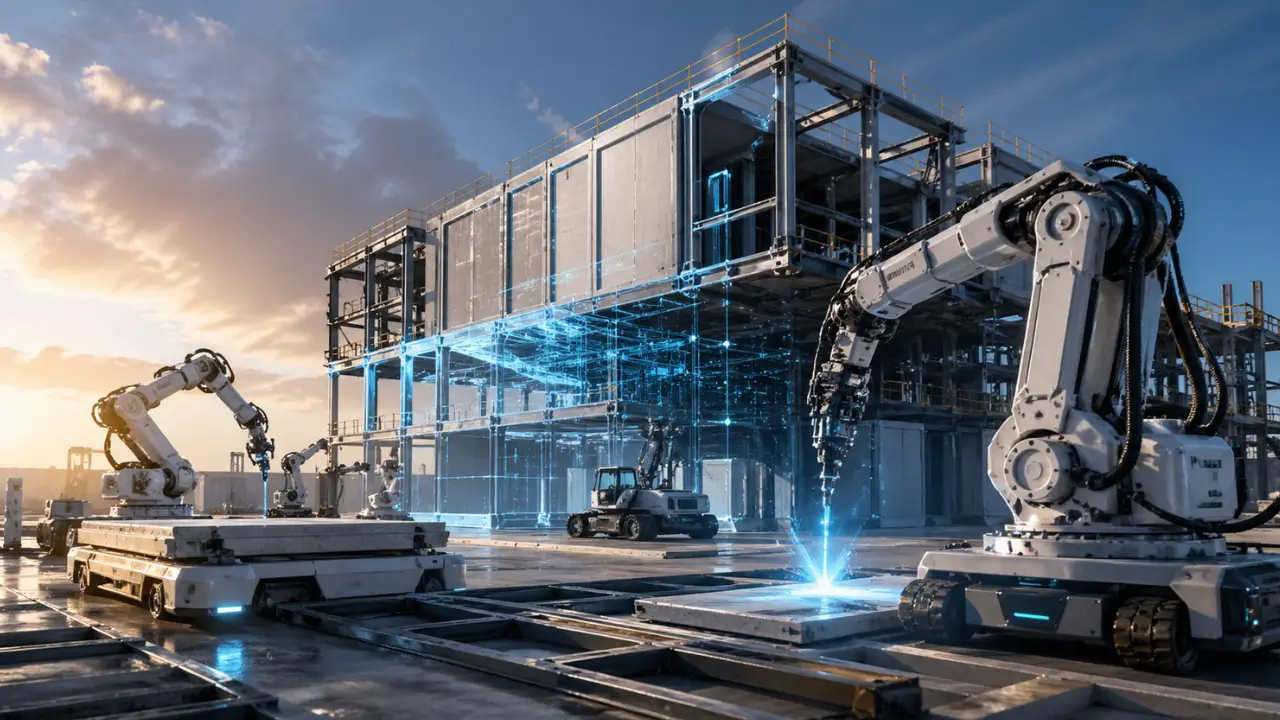
SoftBank is advancing a new industrial strategy that blends robotics, artificial intelligence, and infrastructure development into a single scalable platform. The company is assembling a new venture, Roze AI, aimed at transforming how data centers are built and deployed across the United States.

This move reflects a broader industry shift as hyperscalers and investors compete to compress build timelines and reduce capital inefficiencies. The initiative places SoftBank at the center of a new infrastructure paradigm where automation replaces traditional construction bottlenecks.
Roze AI is expected to deploy autonomous robotics systems to streamline data center construction, targeting both speed and cost optimization. The model aligns with growing demand for AI-ready infrastructure, particularly as compute requirements surge across sectors. By embedding automation directly into the construction lifecycle, SoftBank aims to eliminate labor constraints and standardize build quality at scale. This approach could redefine infrastructure delivery in a market where delays often translate into lost revenue opportunities.
IPO Ambitions Signal Aggressive Capital Strategy
SoftBank is not positioning Roze AI as a long-term incubation project but as a near-term capital markets play. Reports indicate that internal discussions are already underway to take the company public by the second half of 2026. The targeted valuation of $100 billion underscores the scale of ambition behind the venture. However, such a valuation would place Roze among the most valuable infrastructure startups globally before establishing a long operational track record.

The accelerated IPO timeline suggests SoftBank intends to capitalize on current investor appetite for AI-linked infrastructure assets. Public markets have shown increasing willingness to reward companies tied to compute expansion and automation efficiency.
By fast-tracking Roze AI toward listing, SoftBank could unlock liquidity while reinforcing its positioning as a key enabler of the AI economy. The strategy also reflects a broader trend of monetizing infrastructure plays earlier in their lifecycle.
Industry Context: Automation Becomes Core to Industrial Reinvention
The move comes as global technology leaders intensify efforts to modernize industrial systems through AI and robotics. Jeff Bezos has co-founded Project Prometheus, a venture focused on acquiring legacy industrial companies and upgrading them with advanced automation technologies. This signals a convergence between digital intelligence and physical infrastructure, where efficiency gains are no longer incremental but exponential. SoftBank’s Roze AI fits squarely within this emerging category of “infrastructure intelligence” platforms.
Automation in construction has remained relatively underdeveloped compared to manufacturing or logistics. Data centers, however, present a unique opportunity due to their modular design and repeatable architecture. By introducing robotics into this segment, SoftBank could unlock significant productivity gains while setting new industry benchmarks. The competitive advantage will likely depend on execution speed and the ability to integrate hardware, software, and operational workflows seamlessly.
Internal Skepticism Highlights Execution Risks
Despite the strategic clarity, not all stakeholders within SoftBank appear aligned on the aggressive roadmap. According to reports, some insiders have raised concerns “about the valuation and the proposed timeline for an IPO.” These concerns point to execution risks, particularly in scaling a robotics-driven construction model that has yet to be proven at hyperscale. The gap between concept validation and industrial deployment remains a critical hurdle.
SoftBank’s history of backing unconventional ventures adds another layer of complexity to investor sentiment. The company previously invested heavily in experimental startups, including Zume, an AI-powered pizza delivery business that ultimately failed. While such bets highlight SoftBank’s willingness to explore frontier technologies, they also underscore the importance of disciplined execution. However, Roze AI represents a more infrastructure-centric play, which may offer stronger long-term fundamentals if successfully executed.
Compute Forecast: A Defining Bet on Infrastructure Intelligence
Roze AI represents more than a new business unit; it signals SoftBank’s conviction that the next phase of the AI economy will be built on automated infrastructure. The convergence of robotics and data center construction could compress deployment cycles and unlock new efficiencies across the compute value chain. If successful, the model may become a blueprint for future infrastructure projects globally. Meanwhile, the planned IPO introduces both opportunity and scrutiny, as markets assess whether ambition can translate into execution at scale.












