
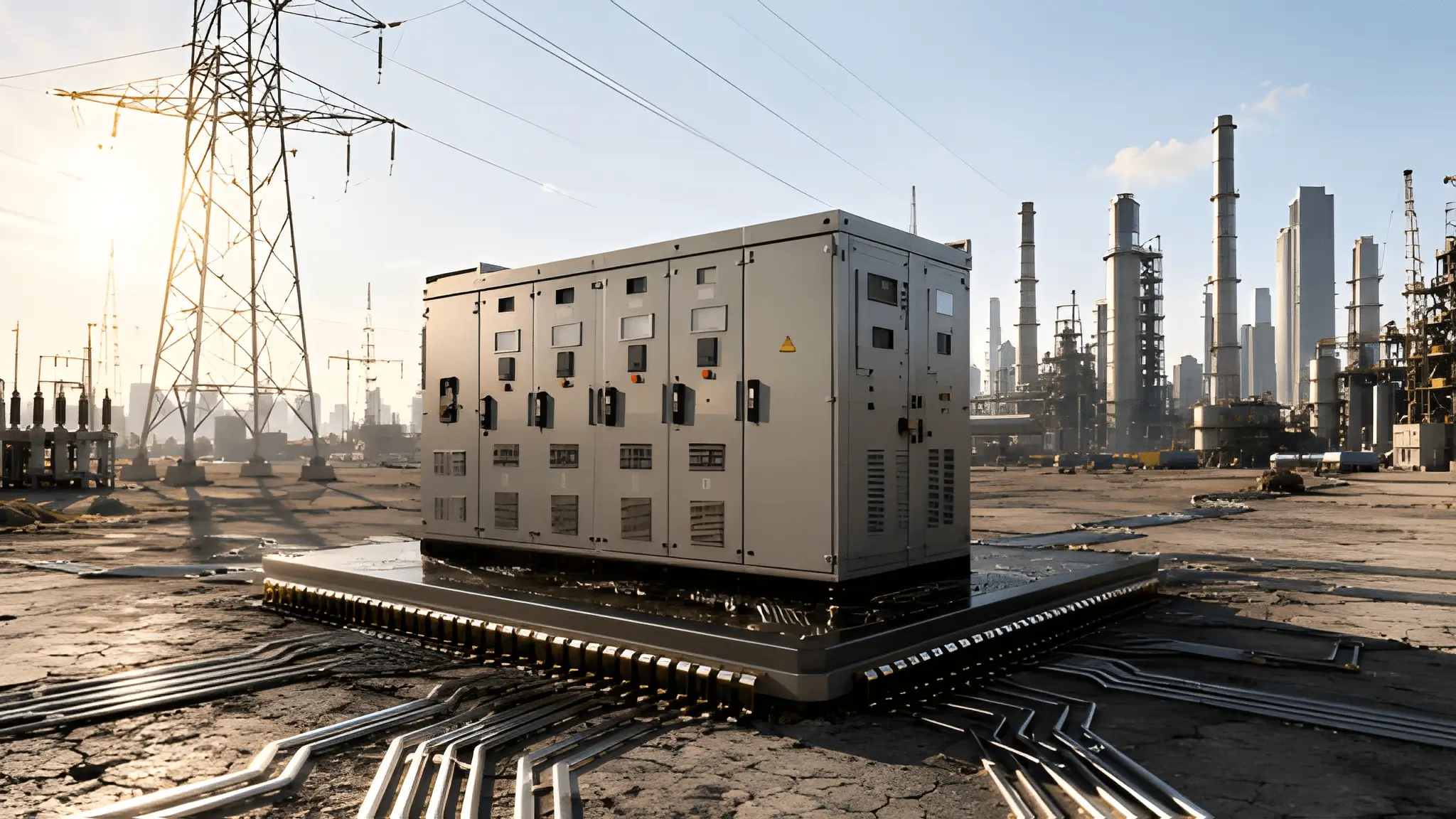
A few years ago, discussions about infrastructure constraints in digital systems usually centered on semiconductors, fabrication capacity, and advanced packaging. That conversation has shifted toward a different layer of the stack because electrical infrastructure now determines whether large-scale computing projects move from planning to operation. Utility interconnections, transformers, substations, and medium-voltage distribution systems increasingly dictate deployment schedules across hyperscale facilities. Capital continues to flow into computing capacity, yet physical energization remains tied to equipment that requires long manufacturing cycles and specialized commissioning. Executive teams increasingly discover that securing computing hardware does not guarantee operational capacity when electrical delivery systems remain unavailable. Supply chain influence has therefore migrated toward companies that manufacture and deploy critical power equipment across transmission and distribution networks.

What makes this development notable is that it extends beyond temporary shortages or cyclical demand spikes. Equipment providers that historically operated in the background now occupy strategic positions within investment decisions, site selection processes, financing discussions, and capacity planning exercises. Delivery commitments from major electrical equipment manufacturers increasingly influence project economics because a delayed energization date can alter expected returns on billions of dollars in infrastructure spending. Large order backlogs across transmission and distribution suppliers reflect this shift in market power. Investors often focus on generation assets and computing hardware, yet project schedules frequently depend on equipment located between the utility connection point and the server hall. Control over that layer has become one of the most consequential forms of leverage within the infrastructure economy.
The Allocation Economy: When Orders Become Futures
Procurement teams once viewed switchgear orders as a straightforward industrial purchasing exercise that followed engineering design and preceded construction. Current market conditions have transformed that process into something closer to capacity trading because delivery windows themselves carry strategic value. Large customers increasingly place orders and establish long-term procurement agreements well before equipment installation dates, making access to future production capacity an important competitive advantage. Equipment manufacturers maintain extensive backlogs that provide revenue visibility, while customers treat production allocations as scarce assets that support long-term growth plans. Some organizations negotiate framework agreements that secure future manufacturing capacity before final project approvals occur. The result is a market environment in which access to manufacturing capacity has become an important strategic consideration alongside traditional purchasing decisions.
Evidence of this shift appears across the order books of major power infrastructure suppliers. Hitachi Energy India reported record order backlogs exceeding INR 29,000 crore, while broader electrification suppliers continue to report expanding demand linked to transmission projects, industrial electrification, and digital infrastructure development. GE Vernova has publicly reported a backlog measured in the hundreds of billions of dollars, reflecting sustained demand across power and grid businesses. Backlogs of this scale create a situation where future manufacturing output becomes increasingly spoken for before equipment enters production. Customers therefore compete not only for products but also for certainty regarding delivery schedules. That competition changes procurement behavior because organizations seek allocation security long before construction milestones require physical equipment.

Standardization Breaks Under AI Load Profiles
Electrical equipment manufacturers built their businesses around repeatability because standardized designs support predictable production schedules, procurement efficiency, testing consistency, and margin stability. AI infrastructure introduces a different demand pattern that challenges those assumptions across multiple layers of the supply chain. Large computing facilities increasingly request electrical architectures tailored to unique power densities, redundancy requirements, rack configurations, cooling systems, and utility interconnection strategies. Those requirements often push projects beyond catalog-based solutions and into engineered-to-order territory. Manufacturing organizations must then allocate additional engineering resources before production begins, extending timelines and increasing complexity. What appears to be a single customer requirement therefore creates ripple effects that influence factory throughput across entire product portfolios.
High-density computing environments frequently require electrical distribution strategies that differ from traditional enterprise facilities. Operators evaluate larger fault-current levels, more complex protection coordination schemes, enhanced redundancy configurations, and power delivery architectures capable of supporting rapid load growth. Equipment providers respond by modifying existing designs or creating project-specific configurations that satisfy technical requirements. Each modification introduces engineering reviews, validation procedures, documentation updates, and manufacturing adjustments. Production lines optimized for standard products consequently experience disruptions when customized systems enter the workflow. Additional engineering requirements can place greater demands on specialized design teams within an already capacity-constrained environment.
This trend can increase engineering, manufacturing, and project management complexity across multiple stages of equipment delivery. Every engineered variation consumes design capacity that could otherwise support standardized production. Factory planning becomes more difficult because project specifications arrive with varying technical requirements and documentation demands. Suppliers throughout the value chain must accommodate unique component combinations, testing procedures, and delivery schedules. Production efficiency declines when manufacturing teams switch between highly customized configurations rather than processing larger volumes of repeatable products. Production schedules can become more challenging to manage when rising demand coincides with increasing project complexity.
The broader market experiences the consequences even when projects themselves remain conventional. Industrial facilities, utility modernization programs, transportation electrification initiatives, and commercial developments compete for manufacturing resources within the same ecosystem. Growing volumes of highly engineered projects require additional engineering and manufacturing resources across the broader electrical equipment ecosystem. Equipment manufacturers continue expanding facilities and workforce capabilities, yet demand diversification complicates scaling efforts. Capacity growth alone does not eliminate bottlenecks when engineering complexity rises simultaneously. Organizations seeking predictable timelines increasingly recognize that technical uniqueness carries system-wide implications beyond individual project boundaries.
Insurance Underwriters Enter the Equipment Queue
Insurance providers historically evaluated infrastructure projects through familiar categories that included site conditions, natural hazards, operational practices, and construction risks. Large-scale computing developments increasingly require a different assessment framework because equipment availability now influences project viability in measurable ways. Delayed energization can postpone revenue generation, alter financing assumptions, increase carrying costs, and extend construction exposure periods. Risk carriers therefore examine equipment procurement strategies with greater scrutiny than in previous infrastructure cycles. Questions that once belonged exclusively to engineering and procurement teams now attract attention from insurers evaluating project risk profiles. Supply chain certainty has become a component of risk assessment rather than a purely operational concern.
Project stakeholders increasingly incorporate manufacturer selection, delivery commitments, supplier diversification, and contractual protections into broader project risk-management discussions. Underwriters seek evidence that critical equipment can arrive within required timelines and perform according to design expectations. Project stakeholders increasingly incorporate manufacturer selection, delivery commitments, supplier diversification, and contractual protections into broader project risk-management discussions. Procurement decisions therefore carry implications beyond engineering performance and capital expenditure. Project risk assessments increasingly evaluate whether supply chain assumptions align with realistic manufacturing, delivery, and commissioning conditions. As a result, equipment sourcing decisions can influence broader project planning and risk-management considerations.
The Skills Gap Behind the Steel Cabinet
Conversations about electrical infrastructure shortages often focus on manufacturing capacity, raw materials, and supply chain resilience. Those factors matter, yet a less visible constraint sits between equipment delivery and operational readiness. Switchgear does not create value when it arrives at a site because value emerges only after installation, testing, verification, and energization occur successfully. That process depends on highly specialized professionals who possess certifications, field experience, and technical expertise developed over many years. Demand for large-scale electrical infrastructure has expanded faster than the available pool of qualified personnel in several regions. Workforce availability therefore influences deployment schedules with the same intensity as equipment availability in many projects.
Protection engineers represent one of the most critical groups within this ecosystem because they design and validate the schemes that keep electrical systems operating safely and reliably. Commissioning specialists verify that equipment performs according to design specifications before energization takes place. Field technicians execute testing procedures that confirm operational readiness across complex electrical networks. Utility coordination teams manage interactions between project infrastructure and external grid systems. Each role requires specialized training and experience that cannot be replicated quickly through short-term hiring initiatives. Labor shortages therefore create delays that persist even when equipment arrives according to schedule.
The Chokepoint Won’t Dissolve, It Will Evolve
Industry discussions often frame infrastructure constraints as temporary shortages that disappear once manufacturers expand production capacity. Electrical infrastructure presents a more complex reality because resolving one bottleneck frequently exposes another. Increased switchgear output can reduce procurement delays, yet commissioning resources may then become the limiting factor. Expanded workforce availability can accelerate project completion, yet regulatory requirements and standards development may emerge as the next source of friction. Infrastructure systems operate through interconnected dependencies rather than isolated constraints. Strategic planning therefore requires a broader perspective than simply increasing equipment supply. Bottlenecks tend to migrate across the value chain instead of disappearing entirely.
Policy considerations will likely play a larger role as governments, utilities, manufacturers, and infrastructure developers attempt to accelerate electrification and computing expansion. Standards harmonization, workforce development programs, permitting reforms, and supply chain investments all influence how quickly capacity reaches the market. Decisions made within these areas can determine whether infrastructure ecosystems scale efficiently or encounter recurring friction points. Stakeholders increasingly recognize that equipment manufacturing represents only one component of a much larger system. Long-term competitiveness depends on coordination across engineering, workforce, regulatory, and operational domains. Successful regions will likely be those that address multiple constraints simultaneously rather than focusing on individual bottlenecks in isolation.
For executive teams, the strategic lesson extends beyond procurement planning. Critical electrical infrastructure now influences timelines, capital allocation decisions, risk assessments, and expansion strategies across sectors that depend on reliable power delivery. Visibility into manufacturing capacity, engineering resources, commissioning readiness, and regulatory conditions has become increasingly important for long-term planning. Organizations that treat electrical infrastructure as a strategic capability rather than a procurement category may gain advantages in execution certainty and deployment speed. Market leadership increasingly depends on the ability to navigate interconnected infrastructure constraints with precision. Competitive differentiation therefore emerges from orchestration as much as from investment scale.
Electrical infrastructure plays an increasingly important role in determining how quickly new industrial, digital, and electrification projects can be deployed. Control no longer rests solely with organizations that own generating assets or deploy computing hardware. Successful project execution increasingly depends on the ability to coordinate manufacturing capacity, engineering expertise, commissioning resources, standards compliance, and delivery schedules across complex supply chains. Each successive wave of electrification and digital expansion reinforces the importance of these capabilities. Constraints will continue to evolve as technology requirements change and infrastructure systems adapt. The defining challenge is not eliminating bottlenecks altogether but managing them as a permanent strategic function within the infrastructure economy.











