 Skip to content
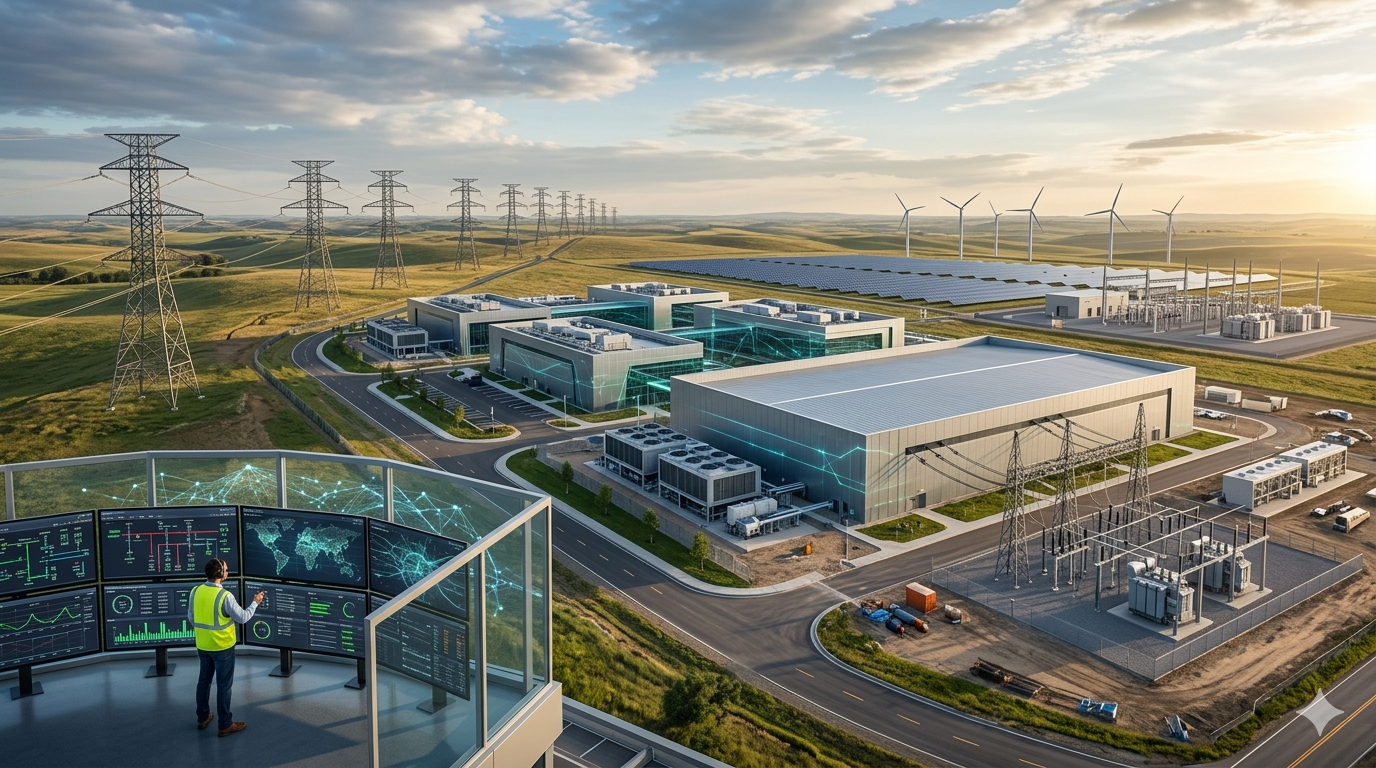
The United States has taken a significant step toward accelerating AI infrastructure deployment after federal regulators approved new measures designed to speed up power grid connections for data centers.The Federal Energy Regulatory Commission (FERC) announced a series of orders aimed at reducing one of the biggest bottlenecks facing the AI industry: access to electricity. The changes aim to dramatically shorten the time required to connect large power users, including hyperscale AI data centers, to the grid. The move comes as demand for AI computing capacity continues to grow rapidly across the United States. Technology companies are investing hundreds of billions of dollars in new AI infrastructure, but many projects have faced delays because grid interconnection processes can take years to complete.Under FERC’s new framework, regulators hope to reduce approval timelines to approximately 90 days, creating a faster pathway for large-scale data center developments while maintaining grid reliability and consumer protections.

FERC Targets Grid Connection Delays
The commission’s latest action focuses on addressing long-standing interconnection challenges that have emerged as one of the most significant obstacles to AI infrastructure expansion. For years, developers of data centers, power plants, and industrial facilities have faced lengthy approval processes when seeking access to transmission networks. In many regions, growing demand has overwhelmed existing procedures, creating backlogs that can delay projects for several years.
FERC Chair Laura Swett described the reforms as a major national priority, emphasizing the need to modernize electricity markets and support economic growth driven by artificial intelligence. As part of the order, FERC directed six regional grid operators and transmission owners to review their existing tariffs and policies for large-load customers. Within 60 days, they must either justify current approaches or submit revisions that better address the needs of major electricity consumers such as AI data centers. The agency believes these changes will help remove uncertainty while providing clearer pathways for large-scale infrastructure projects.
AI Developers May Face New Requirements
While the reforms promise faster grid access, they also place new responsibilities on hyperscale data center operators. Additionally, FERC will require utilities to report the costs of serving data center customers. This requirement will help regulators monitor how utilities allocate infrastructure expenses. The approach reflects growing concerns about the impact of large AI facilities on regional power systems. Modern AI data centers consume enormous amounts of electricity, with some facilities requiring as much power as a small city. As new projects emerge across the country, utilities and regulators face increasing pressure to expand infrastructure while maintaining affordability and reliability for existing customers. By requiring large users to contribute toward necessary upgrades, regulators hope to balance economic development with consumer protection.
Rising Demand Creates New Challenges
The latest FERC action arrives during one of the most significant periods of electricity demand growth in decades. After years of relatively stable consumption, the rapid expansion of AI infrastructure has created a new wave of demand across US power markets. Hyperscalers including Google, Microsoft, Amazon, and Meta continue to build massive data center campuses to support AI training and inference workloads.
At the same time, policymakers are increasingly concerned about the impact these developments may have on electricity prices. The issue has become politically sensitive as consumers in several regions face rising utility bills. Critics have argued that large data center projects can place additional pressure on grid infrastructure, leading to higher costs for households and businesses. The Trump administration has strongly supported AI infrastructure development, viewing artificial intelligence as a strategic priority for economic competitiveness. However, regulators are also under pressure to ensure that infrastructure expansion does not unfairly shift costs onto ratepayers. To improve transparency, FERC will require utilities to report costs associated with serving data center customers, allowing regulators to monitor how infrastructure expenses are allocated.

Balancing AI Growth and Grid Reliability
Industry experts say the order represents a turning point in how regulators approach large-load interconnections. Robert Montejo, a partner at Duane Morris LLP, noted that data center development has moved beyond the early stages of rapid expansion and now requires a more structured regulatory framework. The challenge for regulators is balancing two competing priorities. On one hand, AI infrastructure represents a major economic opportunity and could help finance grid modernization. On the other, the pace of new demand is testing the limits of existing transmission systems. FERC stopped short of implementing a nationwide one-size-fits-all policy, instead allowing regional grid operators flexibility to address local conditions.
That approach could prove important as electricity markets across the country face different levels of demand growth, generation capacity, and infrastructure constraints. As AI adoption accelerates, the ability to connect new data centers quickly and reliably will become increasingly important. FERC’s latest reforms signal that access to power is no longer simply an infrastructure issue—it has become a central component of the United States’ broader AI strategy.












