 Skip to content
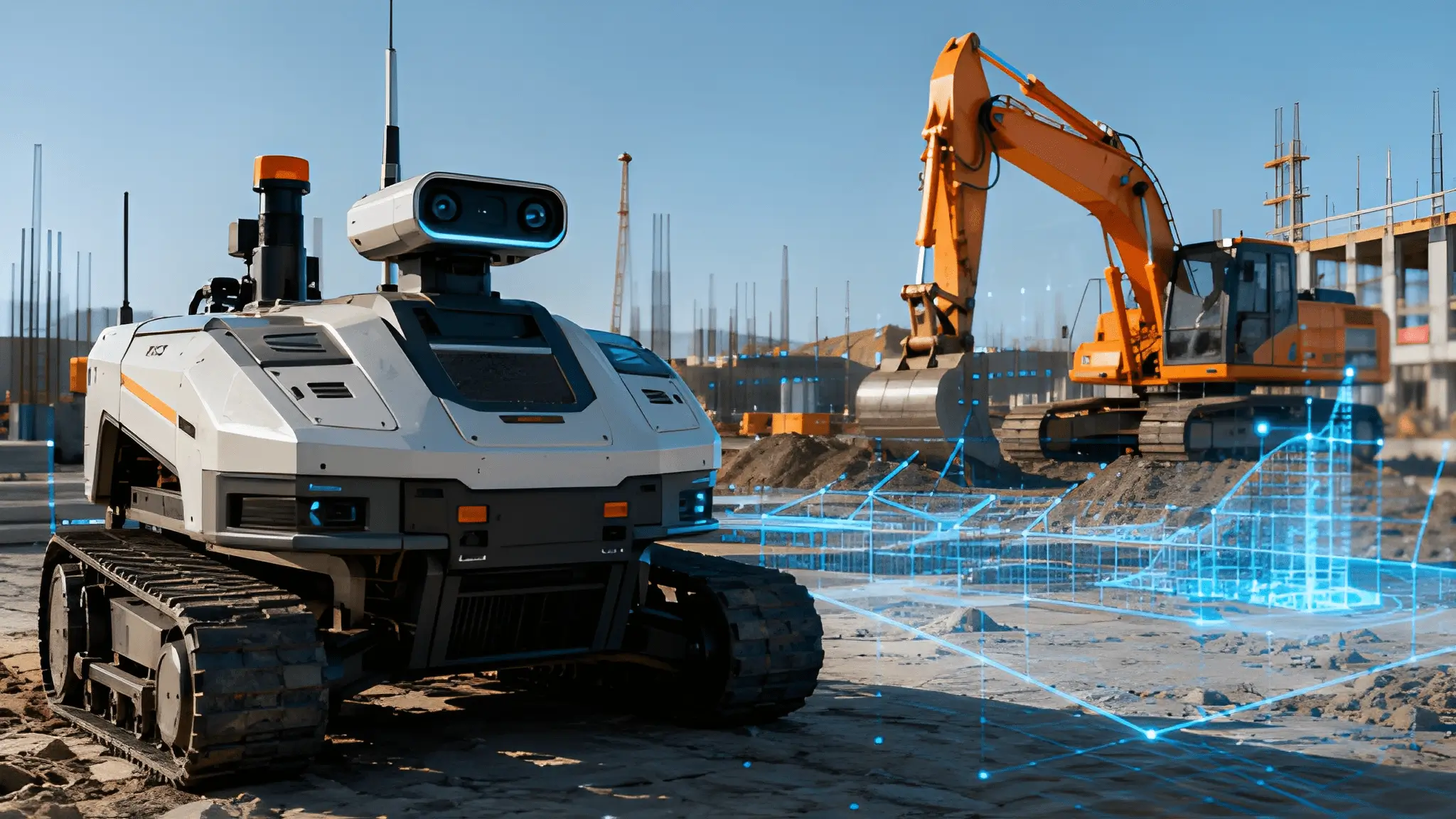
Built Robotics is partnering with the University of Pennsylvania’s Safe Autonomous Systems Lab (xLAB) to accelerate the development of physical AI systems designed for complex construction environments. The collaboration combines Built Robotics’ extensive operational data with Penn Engineering’s expertise in safety-critical autonomous systems. Together, the organizations aim to create foundational intelligence models capable of helping machines operate safely alongside workers in dynamic outdoor settings. The initiative reflects a broader industry shift toward deploying artificial intelligence beyond digital environments and into physical infrastructure projects.

The partnership arrives at a time when construction companies increasingly seek automation technologies that can improve productivity while addressing safety challenges. Additionally, Built Robotics plans to leverage years of field data collected from active construction projects and introduce a purpose-built data collection robot to capture a wider range of environmental and human interactions. Researchers expect the resulting dataset to support the development of a world foundation model tailored to construction operations. Therefore, such models could become a critical layer in the next generation of autonomous heavy equipment and jobsite robotics.
Built Robotics has spent nearly a decade developing autonomous controls for large-scale construction machinery. Since launching in 2016, the company has expanded its presence across infrastructure and renewable energy projects. Its Robotic Pile Driver (RPD 35), introduced in 2023 for utility-scale solar construction, helped extend the company’s footprint in the rapidly growing solar sector. Initially, Built Robotics says its technology has accumulated more than 50,000 operational hours, supported the installation of over 3 gigawatts of solar capacity, and is currently deployed across more than 40 project sites.
Penn xLAB Gains Access to Active Construction Environments
The collaboration offers Penn Engineering researchers access to real-world construction conditions that are often difficult to replicate in controlled testing environments. Rahul Mangharam, professor of electrical and systems engineering and principal investigator of xLAB, has focused much of his research on safety-critical autonomous systems operating in unpredictable environments. Meanwhile, access to active construction sites will allow researchers to validate AI systems against real operational challenges rather than laboratory simulations alone. The effort could help close one of the most persistent gaps in autonomous system development.
“xLAB is committed to building safety-critical autonomous systems for real-world deployment, and construction represents one of the most demanding frontiers for that work,” said Mangharam. “The fundamental challenge is bridging the gap between validation in controlled environments and robust performance under operational conditions. Our collaboration with Built will give us access to active jobsites with high-fidelity mapping data and real-world operational parameters, enabling us to build practical autonomous systems solving a real-world need.”
The relationship carries a personal connection as well. Built Robotics Founder and Chief Executive Officer Noah Ready-Campbell graduated from the University of Pennsylvania, creating a natural alignment between the company and the institution. However, the partnership extends beyond academic ties and focuses on advancing safety standards across an industry that remains heavily dependent on human labor and complex equipment operations.

Edge Cases Become Critical Training Ground for Safer AI
A central objective of the initiative involves collecting data that traditional construction robots may not typically encounter. Built Robotics plans to gather information covering unusual worker movements, obstructed visibility scenarios, difficult lighting conditions, and unexpected human behaviors. These edge cases represent some of the most challenging situations for autonomous systems attempting to identify and respond to people safely. Improving performance under such conditions remains a key requirement before physical AI can achieve broader deployment across construction projects.
“What xLAB has built in safety architecture is precisely the kind of rigorous foundation that physical AI demands,” said Ready-Campbell. “Our proprietary edge AI model for personnel detection has been refined across some of the most demanding operational environments in the industry — active construction sites with hundreds of employees stretching over thousands of acres.” By systematically collecting and labeling rare operational scenarios, researchers expect to improve human-detection capabilities beyond conventional benchmarks. The resulting AI models will aim to identify workers and hazards in conditions where visibility, positioning, or environmental factors make detection more difficult. Industry leaders increasingly view this category of training data as essential for creating autonomous systems that can perform reliably under real-world conditions.
Industry Safety Emerges as Strategic Priority
The collaboration also highlights a growing industry consensus that safety will shape the adoption curve for autonomous construction equipment. Construction technology developers face pressure to demonstrate that automation can reduce risk rather than introduce new uncertainties. As a result, investments in perception systems, validation frameworks, and safety architectures are becoming strategic priorities across the sector.
Ready-Campbell emphasized the industry’s collective responsibility in advancing safe automation standards. “We’re members of AEM (Association of Equipment Manufacturers), and they have what’s called the Futures Council, which is basically a kind of forward-looking committee that is looking at, among other things, physical AI and construction and autonomous machines. We think safety is a rising tide that lifts all boats. If there’s a safety issue, even if it wasn’t one of Built’s robots, it will cast a pall across the overall industry, and so the right thing to do is to try to help everybody work safely across the industry.” Ready-Campbell also noted that Erol Ahmed, Vice President of Communications at Built Robotics, currently serves as chair of the AEM Futures Council. That involvement places the company near ongoing discussions around future standards and policy considerations for autonomous equipment deployment.
Pilot Program Targets Expansion Across Multiple Vehicle Platforms
The first phase of the partnership will focus on deploying Built Robotics’ edge AI model through a fleet of construction survey robots operating on active solar projects. These machines will collect high-fidelity sensor data that researchers can use to strengthen existing models and support future development efforts. The approach creates a feedback loop in which operational deployments continuously improve AI performance through new observations and training examples. Consequently, the project could accelerate the transfer of advanced perception capabilities into a broader range of construction equipment.
Liam Osler, Engineering Director for AI at Built Robotics, underscored the shared vision behind the initiative. “We are driven by the same core conviction as xLAB: that physical AI must first be safe, and that it is poised to set a new standard for safety in construction.” Built Robotics expects insights from the pilot to support AI deployment across additional vehicle categories and construction activities. Expanding beyond piling and trenching applications could open new opportunities for automation throughout infrastructure, energy, and industrial development projects. The strategy aligns with the industry’s long-term ambition to create intelligent machines capable of operating across diverse work environments while maintaining strict safety standards.
Physical AI Becomes the Next Competitive Frontier
The partnership signals how physical AI is evolving from a research concept into a practical commercial objective. Meanwhile, construction environments present some of the most demanding challenges for autonomous systems due to constant movement, changing terrain, and unpredictable human activity. Success in these conditions could provide a blueprint for deploying similar technologies across logistics, mining, agriculture, and other industrial sectors.
“With one of the most respected robotics programs in the world, Penn Engineering — my alma mater — was a natural starting point for this collaboration,” said Ready-Campbell. “Dean Vijay Kumar’s pioneering work on quadcopters and multi-robot coordination at the GRASP Lab was formative for me when I started Built. And as our fleet of robots has scaled in the field, the mission alignment with xLAB has become crystal clear. I couldn’t be more excited to partner with Professor Mangharam to set a new bar for how physical AI is designed, validated, and deployed in the field.”
For Built Robotics, the collaboration represents more than an academic research project. It reflects an effort to establish the technological foundations required for large-scale autonomous construction operations. Consequently, As physical AI advances from experimentation toward deployment, access to real-world data, rigorous safety validation, and industry collaboration may determine which companies emerge as leaders in the next phase of construction automation.












