
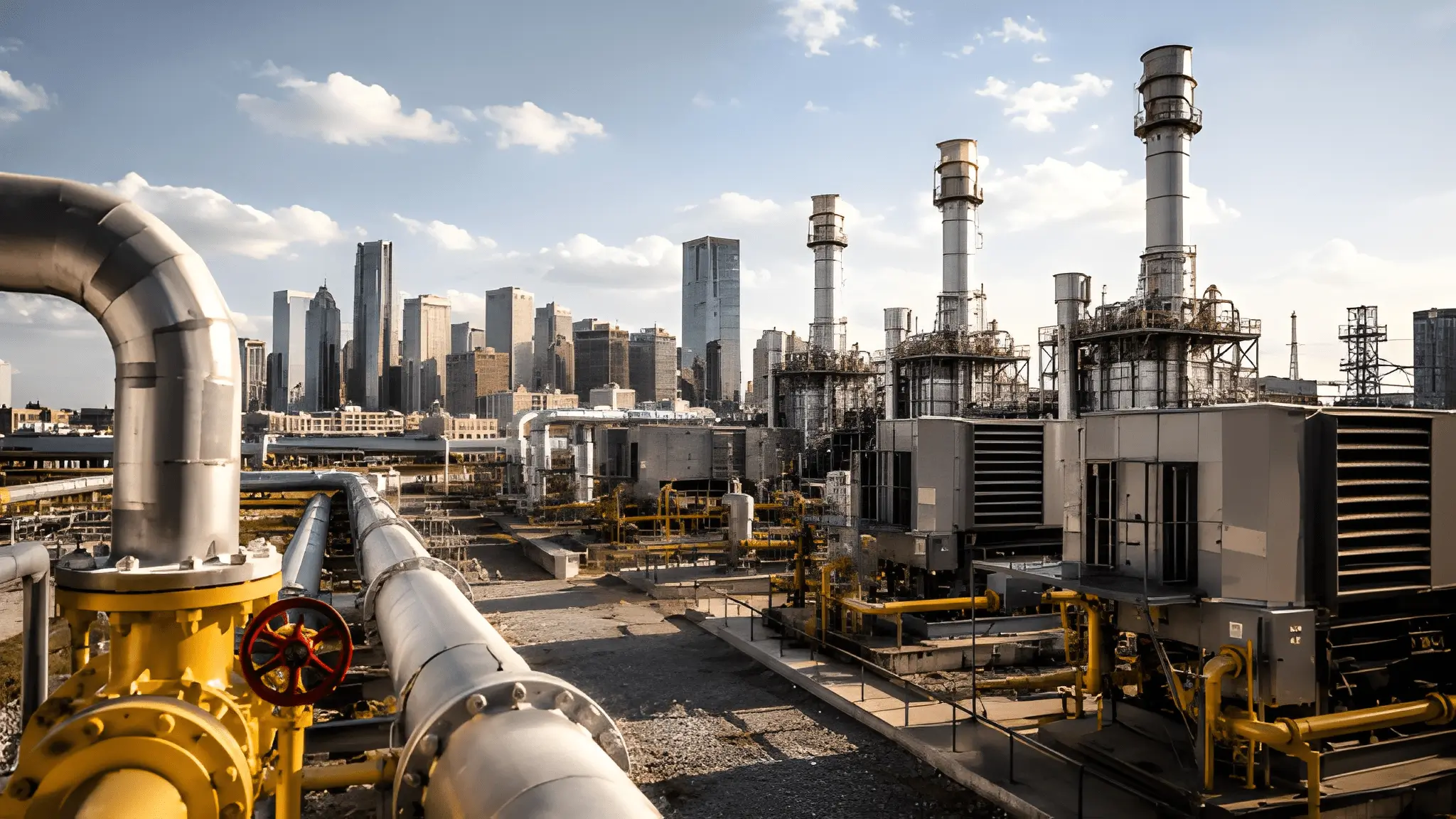
Reliable electrical capacity has become only one part of the equation when companies evaluate locations for large artificial intelligence campuses across the United States. Developers increasingly discover that transmission availability no longer guarantees project certainty because interconnection queues, infrastructure upgrades, and utility scheduling often extend well beyond commercial deployment targets. Houston sits within one of North America’s largest concentrations of natural gas production, processing, storage, and transmission infrastructure, giving industrial developers direct access to extensive fuel supply networks that can support dedicated power generation projects. That shift changes investment conversations from utility capacity toward fuel logistics, environmental approvals, land ownership, and operational resilience that collectively determine whether a project reaches commercial operation within expected timelines. Executive teams therefore examine infrastructure through a broader commercial lens that includes regulatory exposure alongside engineering feasibility rather than treating electricity procurement as an isolated decision.

Why the Gulf Coast Pipeline Map Beats the Grid Map
For projects considering onsite natural gas generation, site selection around Houston requires evaluating both nearby natural gas transmission corridors and available electrical infrastructure because fuel delivery becomes a critical part of the power supply strategy. Developers pursuing dedicated generation examine pipeline connectivity because consistent fuel delivery can remove dependence on constrained utility interconnection schedules that continue affecting large industrial loads across several regions. Texas benefits from an extensive intrastate pipeline network that transports significant gas volumes without relying heavily on federal interstate regulation, creating greater routing flexibility for industrial consumers within the state. Pipeline proximity also influences engineering costs because shorter lateral connections generally reduce construction complexity and associated infrastructure requirements for dedicated generating assets. Site selection teams therefore combine pipeline mapping, compressor station access, easement availability, and future production forecasts before assessing conventional electrical infrastructure characteristics.
Planning around pipeline infrastructure introduces different commercial considerations than planning around transmission infrastructure because fuel delivery contracts replace portions of traditional utility interconnection risk. Industrial developers evaluate firm transportation agreements, pressure requirements, maintenance schedules, and upstream production diversity before confirming that continuous fuel availability aligns with expected facility operations. Engineering consultants also analyze redundancy across multiple pipeline systems because dependence on a single supply corridor increases operational exposure during maintenance events or unexpected disruptions. Houston’s concentration of processing facilities, gathering systems, storage assets, and transmission networks creates an ecosystem where fuel logistics often remain geographically advantageous for energy-intensive developments. Financial models consequently compare pipeline connection costs against projected delays associated with transmission upgrades, recognizing that construction timing frequently influences project economics as much as capital expenditure. Corporate investment committees increasingly require integrated assessments covering infrastructure, regulation, engineering, and long-term operating risk before approving campus development strategies.
Air Permits in Harris County: The Clock You Can’t Control
Securing fuel supply represents only one milestone because environmental permitting frequently becomes the governing factor for project delivery schedules in Harris County. Behind-the-meter generating facilities must satisfy air quality requirements administered by the Texas Commission on Environmental Quality before construction can advance toward commercial operation. Permit classifications depend on generator capacity, projected emissions, operating hours, combustion technology, and pollution control equipment rather than electrical output alone. Larger facilities may require federal operating permits under the Clean Air Act if emissions exceed applicable Title V thresholds, introducing additional procedural requirements that extend regulatory review. Technical documentation must demonstrate compliance with emission standards through detailed modeling, equipment specifications, monitoring plans, and operating assumptions supported by defensible engineering analysis. Project sponsors therefore allocate substantial time for regulatory preparation because TCEQ air permitting requires detailed emissions calculations, modeling analyses, equipment specifications, and supporting technical documentation before a permit application can be fully evaluated.
Contested case hearings introduce another variable that project schedules cannot accurately predict because eligible parties may challenge permit decisions under established administrative procedures. Public participation remains an established element of environmental permitting, particularly when proposed industrial facilities generate concerns regarding emissions, community impacts, or local environmental conditions. Developers must therefore prepare comprehensive environmental analyses capable of supporting technical conclusions throughout regulatory review rather than focusing exclusively on engineering design. Legal advisors, environmental consultants, and permitting specialists frequently coordinate throughout the application process because regulatory responses often require multidisciplinary technical evidence. Consequently, construction financing and procurement schedules increasingly account for permitting uncertainty by incorporating schedule contingencies that recognize administrative review may extend beyond original commercial expectations. Executive decision makers now evaluate permitting exposure with the same discipline applied to fuel supply, equipment procurement, and engineering execution because each element can materially influence investment outcomes.
Hurricane-Proofing Megawatts: Gas vs Storm Risk
Reliable fuel access alone cannot guarantee uninterrupted operations because Gulf Coast weather introduces physical risks that demand resilient engineering across every major infrastructure system. Category 4 hurricanes present multiple hazards including storm surge, inland flooding, sustained wind loading, flying debris, and extended transportation disruptions that influence facility design long before construction begins. Structural engineers evaluate finished floor elevations, equipment placement, drainage capacity, floodplain mapping, and wind-resistant construction standards to reduce operational vulnerability during severe weather events. Critical electrical equipment often occupies elevated platforms or hardened structures that minimize flood exposure while maintaining maintenance accessibility throughout the asset lifecycle. Pipeline infrastructure generally remains less vulnerable to direct wind damage than overhead electrical transmission, although associated compressor stations and supporting infrastructure still require comprehensive resilience planning. Campus developers therefore integrate civil engineering, mechanical design, emergency response planning, and utility coordination into a unified resilience strategy rather than addressing each discipline independently.

Fuel security during extreme weather depends not only on pipeline integrity but also on upstream production continuity, compressor availability, power restoration priorities, and regional transportation conditions. Operators therefore examine supply diversity across multiple pipeline systems while assessing contractual provisions that govern fuel delivery during extraordinary operating circumstances. Emergency planning also includes redundant communications, backup water systems, spare critical equipment, and maintenance logistics that support continued operations when external infrastructure experiences temporary disruption. Grid-connected facilities remain exposed to transmission outages outside campus boundaries even when onsite equipment remains fully operational after a severe storm event. Nevertheless, dedicated generation introduces separate operational responsibilities because owners assume direct accountability for equipment maintenance, emissions compliance, and long-term asset reliability throughout changing environmental conditions. Effective resilience planning ultimately depends on balancing infrastructure independence with disciplined operational governance that extends well beyond initial construction decisions.
Water Without the Utility: Cooling Towers Meet Process Water Rules
Behind-the-meter generating facilities require more than dependable fuel because thermal generation still depends on reliable water management for cooling and associated plant operations. Water demand varies according to turbine configuration, cooling technology, ambient climate conditions, operating profile, and efficiency objectives established during project design. Developers seeking to reduce dependence on municipal utilities frequently evaluate groundwater, reclaimed water, or privately developed water infrastructure where local regulations permit those alternatives. Groundwater withdrawals may fall under the authority of regional groundwater conservation districts depending on project location, requiring compliance with local production rules, registration requirements, or permitting obligations. Process water management also extends beyond supply because discharge, storage, reuse, and stormwater controls remain subject to regulatory oversight administered through applicable state and federal environmental frameworks. Engineering teams therefore integrate water strategy into the earliest stages of campus planning because retrofitting supply infrastructure after construction significantly increases both capital expenditure and project complexity.
Cooling tower selection directly influences operational efficiency, environmental performance, and long-term operating costs because different technologies consume water at different rates under Gulf Coast climate conditions. Closed-loop systems, advanced water treatment, blowdown management, and recycling technologies can reduce freshwater demand while maintaining acceptable thermal performance for continuous operation. Developers also evaluate seasonal drought conditions, aquifer sustainability, infrastructure expansion plans, and future industrial growth because regional water availability may change throughout the expected operational life of an artificial intelligence campus. Water infrastructure contracts increasingly receive executive attention alongside energy supply agreements because uninterrupted cooling capability supports both generation reliability and computing availability. Environmental compliance programs must document monitoring procedures, operational controls, and reporting obligations that demonstrate continuing adherence to applicable water management requirements throughout facility operations. Long-term project economics therefore depends on securing dependable water resources with the same discipline applied to fuel procurement, emissions compliance, and electrical infrastructure planning.
The Landman Problem: Mineral Rights Under Your Campus
Surface ownership does not always provide complete development control across Texas because mineral rights frequently remain separate from the surface estate through historical conveyances dating back several decades. Large industrial developments near Houston may occupy properties previously associated with oil and gas exploration where subsurface interests remain active despite changes in surface ownership. Project sponsors therefore conduct detailed title examinations that identify existing leases, easements, royalty interests, recorded agreements, and outstanding mineral ownership before completing land acquisition. Legal due diligence extends beyond traditional real estate review because mineral owners may retain certain rights to access underlying resources depending on lease terms and applicable Texas property law. Construction planning consequently incorporates legal analysis alongside geotechnical investigations to reduce conflicts that could affect future facility operations or infrastructure placement. Executive teams increasingly recognize that land acquisition risk extends beneath the surface as much as across property boundaries when evaluating strategic industrial sites.
Existing oilfield infrastructure may introduce additional engineering considerations because abandoned wells, legacy pipelines, and historical production facilities can influence foundation design and long-term liability assessments. Environmental site investigations frequently include subsurface mapping, historical land use analysis, well record reviews, and field verification before final engineering designs receive approval. Developers also negotiate surface use agreements where necessary to establish operational certainty while protecting infrastructure from future access disputes involving mineral interest holders. Insurance providers and project lenders closely evaluate unresolved property issues because legal uncertainty can affect financing terms, construction schedules, and asset valuation throughout the investment lifecycle. Finally, comprehensive land due diligence often produces measurable commercial value by identifying legal constraints before engineering commitments become difficult or expensive to modify. Successful campus development therefore depends on aligning legal ownership, engineering feasibility, environmental compliance, and commercial objectives within a unified site development strategy.
The Real Verdict: Is Gas Behind-the-Meter Worth the Fight?
Dedicated natural gas generation offers a credible pathway for artificial intelligence campuses seeking greater control over project schedules, yet the approach introduces obligations that extend far beyond energy procurement. Pipeline proximity, environmental permitting, water management, land ownership, and hurricane resilience collectively determine whether an individual site delivers commercial value within expected investment timelines. Utility interconnection delays may justify alternative infrastructure strategies for certain developments, but that conclusion depends on rigorous technical and regulatory evaluation rather than a universal preference for onsite generation. Organizations that underestimate permitting complexity or property constraints can face significant schedule impacts even after securing reliable fuel access because environmental approvals, land issues, and infrastructure coordination remain essential prerequisites for construction. Executive leadership therefore benefits from integrating engineering, environmental, legal, financial, and operational expertise into a single investment framework before finalizing development commitments.
Infrastructure strategy for Gulf Coast artificial intelligence campuses remains highly site specific because regulatory conditions, utility capacity, fuel availability, land characteristics, and commercial objectives differ across individual development locations. Behind-the-meter generation provides an alternative development pathway in locations where pipeline access, permitting requirements, and project execution plans align with the developer’s commercial and operational objectives. Grid interconnection may remain the stronger option where transmission upgrades progress efficiently, environmental approvals present greater uncertainty, or operational priorities favor utility ownership of generation assets. Investors should therefore compare complete lifecycle costs that include regulatory compliance, operational staffing, maintenance obligations, resilience investments, environmental monitoring, and future expansion flexibility instead of focusing exclusively on initial construction expenditure. Organizations that align fuel strategy, permitting discipline, engineering resilience, and land due diligence from the outset will place themselves in the strongest position to deliver reliable computing capacity under evolving Gulf Coast market conditions.











