
The Queue Broke the Model
The artificial intelligence boom did something quietly radical. It broke the utility grid’s old playbook. For decades, data centers waited patiently in line for grid connections. That patience is gone now. More than 2,500 gigawatts worth of projects are currently stalled in connection queues worldwide. Renewables, storage, and large industrial loads all compete for the same scarce slots. Data centers sit squarely in that traffic jam. Meanwhile, the numbers behind AI’s appetite keep climbing. Electricity consumption from data centers is projected to roughly double, from 485 TWh in 2025 to 950 TWh by 2030. That figure represents around 3% of global electricity demand by that date. It sounds modest in isolation. However, the geography tells a sharper story. In the United States, data centers account for nearly half of electricity demand growth between now and 2030. That concentration, not the global percentage, is what breaks regional grids.

Why Patience Ran Out
Grid expansion simply cannot move at AI speed. Consequently, hyperscalers face brutal mismatches. Building new transmission lines can take four to eight years in advanced economies, and wait times for transformers and cables have doubled in the past three years. No cloud roadmap survives an eight-year delay. Texas illustrates the urgency well. Complex regulatory and permitting workflows, overloaded interconnection queues, and major grid upgrades are causing multiyear delays in data center deployments across regions such as Northern Virginia. Therefore, operators started asking a different question. Instead of waiting for the grid, why not skip it entirely? That question created an entirely new market. Hyperscalers cannot afford the five to seven year interconnection and upgrade queue in major hubs. Instead, 2026 marks the rise of the independent power producer model. Data centers now arrive pre-equipped with their own generation. Grid readiness has become optional, not foundational.
Enter the Molten Carbonate Fuel Cell
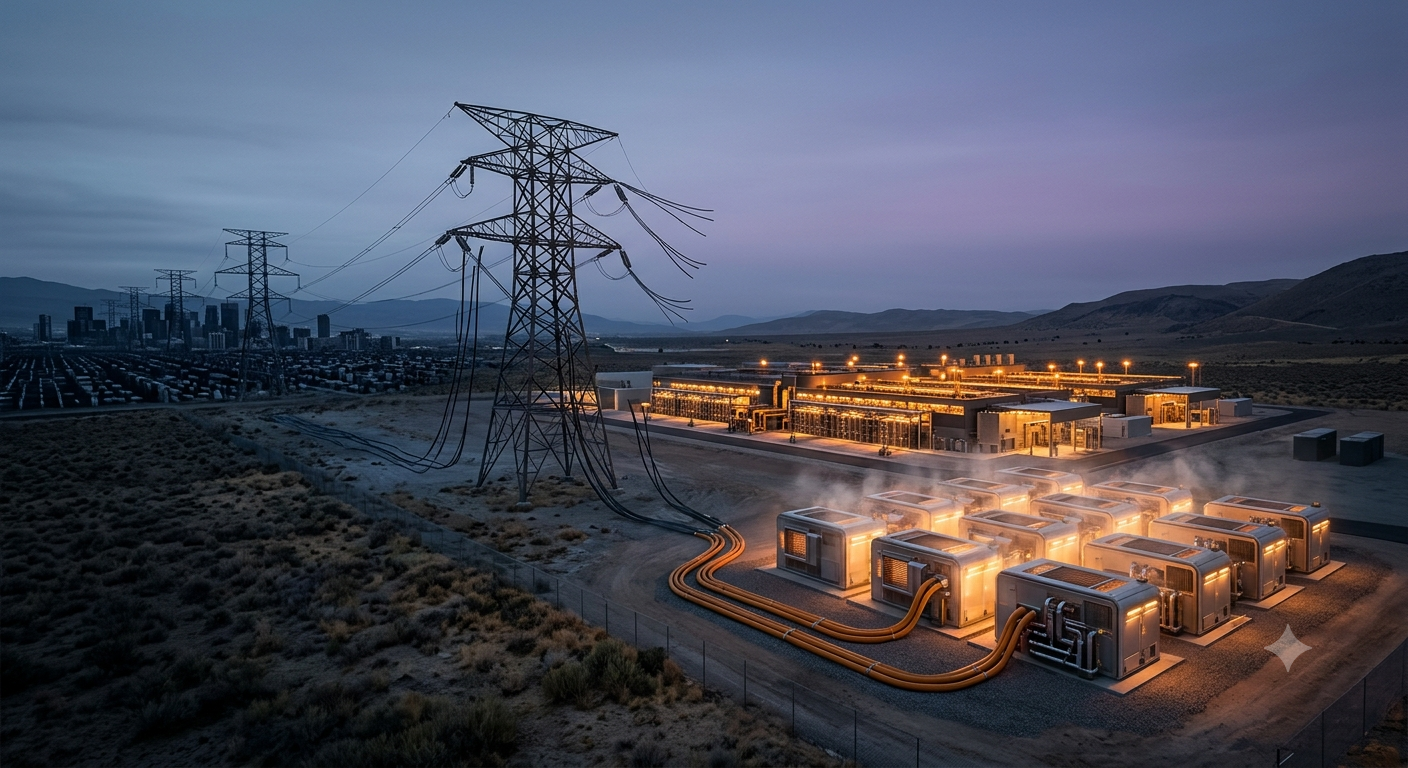
Among the technologies racing to fill this gap, molten carbonate fuel cells stand out. Unlike batteries, they generate power continuously. Unlike diesel generators, they run cleaner and quieter. Crucially, they deliver genuine baseload power, not just backup. FuelCell Energy has emerged as the clearest MCFC specialist chasing this opportunity. With power availability increasingly limiting the pace of AI and data center expansion, FuelCell Energy introduced standardized packaged 12.5-megawatt power blocks to enable faster deployment in grid-constrained markets. Speed, not just cleanliness, drives this pitch. The packaging strategy matters enormously here. The new offering packages ten modules of 1.25 MW each into a standardized block intended to reduce site-specific engineering and permitting requirements. Standardization slashes the custom-engineering delays that plagued earlier fuel cell projects.
The Commercial Pipeline Is Already Real
Skeptics might dismiss MCFCs as a future promise. The pipeline data suggests otherwise. By early 2026, more than 80% of FuelCell Energy’s commercial pipeline was tied to data centers. That is not a hypothetical market. It is the company’s dominant business line today. Specific deals reinforce this shift further. The company has signed non-binding agreements with SDCL for up to 450 MW of global data center deployments and with Inuverse for up to 100 MW at an AI data center in South Korea. Both remain non-binding for now. Still, the scale signals serious hyperscaler interest.Financially, the momentum shows clearly too. The company’s business development pipeline has increased by 275% since February 2025, with most of the growth coming from data centre customers. Revenue grew 48% over the last twelve months to $169.7 million. Manufacturing capacity is racing to keep pace. FuelCell Energy plans to expand manufacturing capacity at its Torrington, Connecticut facility from approximately 100 MW to 350 MW.

What Makes MCFCs Technically Different
Carbonate fuel cells offer something rare among alternatives. They pair cleanly with industrial decarbonization goals. Carbonate fuel cells provide baseload power, superior efficiency, compatibility with other technologies, and modular scalability. That combination explains why data center operators take the technology seriously. Power delivery format adds another advantage. FuelCell Energy is marketing its carbonate fuel cells to AI data centers, offering 800-volt DC output that connects directly to server racks, with waste heat recovery that can boost usable power load by 11%. Direct DC output skips conversion losses that plague traditional AC systems. Every efficiency point matters at gigawatt scale. Carbon capture compatibility extends the pitch even further. Lab-tested results show over 90% capture efficiency, with a pilot project planned in 2026 at the ExxonMobil Rotterdam site. Few power technologies pair generation with capture this naturally.
Why This Counts as Defection
Calling this shift a “defection” is not exaggeration. Hyperscalers are not merely diversifying suppliers. They are exiting dependency on public infrastructure entirely. The move away from the cluster model could be aided by the growth of off-grid solutions for data centers in areas with energy abundance, such as Texas. Regulators have noticed this trend too. The IEA warns that unless significant investments are made into transmission infrastructure, up to 20 percent of planned data center projects could be at risk of delays. That warning explains the urgency behind the fuel cell rush. Operators are not waiting to find out. Importantly, gas remains the dominant near-term alternative still. Around 15 to 27 GW of onsite natural gas may power data centers by 2030, mostly in the United States. Fuel cells compete against gas turbines, not against inaction. Both pathways share one motivation: total grid independence.
The Limits Nobody Advertises
No escape hatch comes without friction, however. FuelCell Energy’s own financials reveal real execution risk. Revenue of $30.5 million fell short of the consensus estimate of $42 million, with the company attributing the shortfall to a $6 million timing impact related to module installation. Deal conversion remains the harder challenge still. FCEL’s pipeline is heavily weighted toward proposals rather than signed contracts, and the company only adds finalized deals to backlog. That approach can improve backlog quality, but it also reduces near-term visibility when deals take longer to close. Hyperscaler interest does not guarantee signed megawatts. Supply chain capacity adds further uncertainty. Generation equipment is also in high demand. Turbine deliveries for new gas-fired power plants now face lead times of several years. Fuel cell manufacturers face comparable scaling pressure as they race toward gigawatt-level deployment.
What the Defection Actually Means
Ultimately, this shift signals something larger than one technology. Big Tech no longer treats the public grid as inevitable infrastructure. Instead, hyperscalers now treat power generation as a controllable variable. They want it owned, modular, and fast to deploy. Consequently, the public grid’s role is shrinking in importance for the largest AI buildouts. Companies once content to wait years are now building their own escape routes. Carbonate fuel cells did not create this defection alone. They simply arrived at the precise moment hyperscalers needed an exit ramp. That timing alone may decide which energy technologies define the AI decade ahead.











