 Skip to content
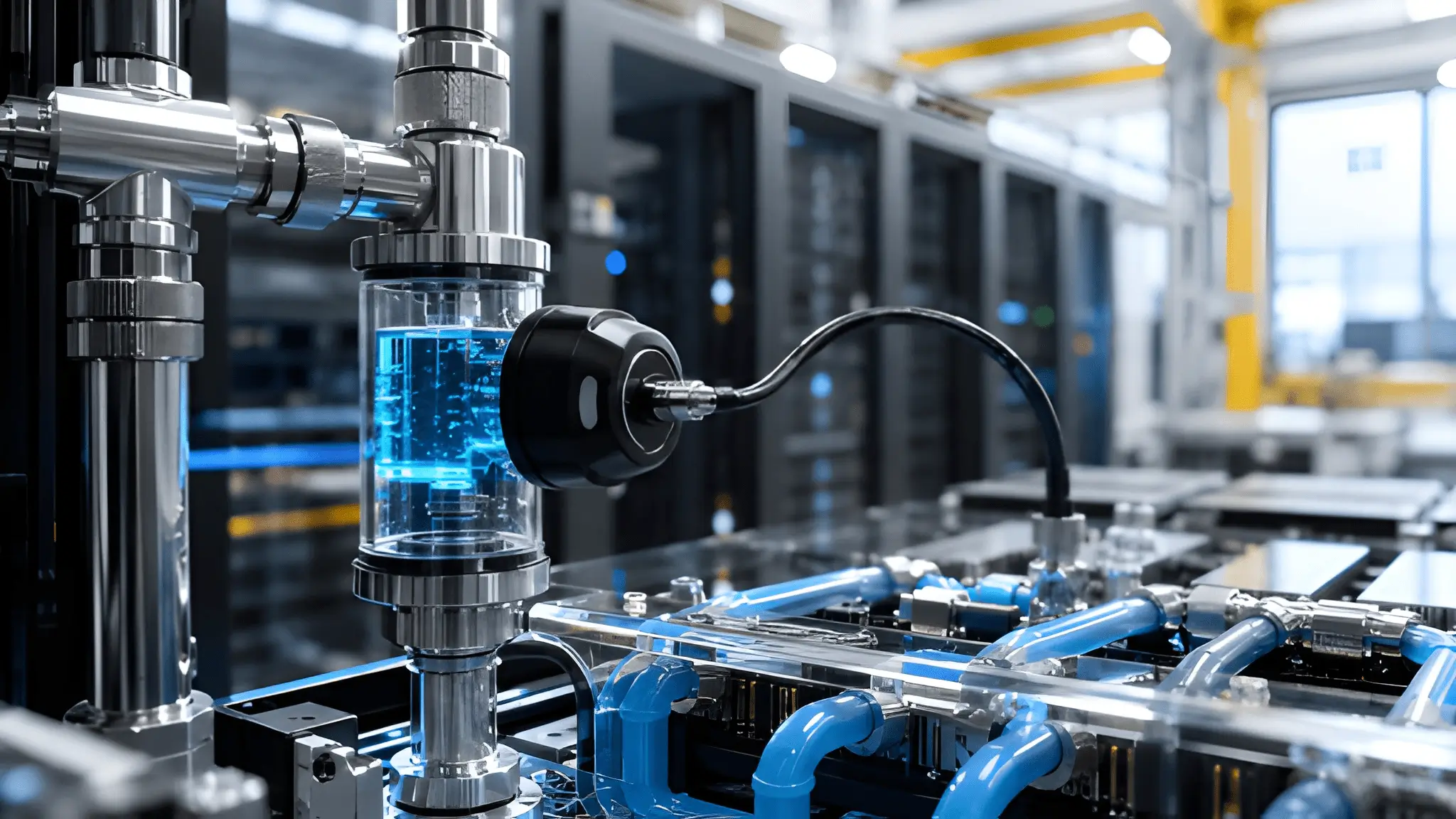
The rapid shift toward liquid-cooled AI infrastructure is creating an entirely new operational challenge inside modern data centers: maintaining coolant health before small chemical changes escalate into costly outages. Omen AI Inc. believes that challenge is becoming a critical layer of AI infrastructure management, and investors appear to agree after backing the company with fresh capital aimed at accelerating deployment. The startup announced a $31 million Series A funding round as operators increasingly seek technologies that improve uptime across high-density GPU environments.

The investment reflects growing confidence that monitoring cooling fluids continuously could become as important as monitoring servers themselves. The Series A round was led by Nava Ventures with participation from CRV, Vanderbilt University, Mann+Hummel, Starhill Holdings and Hard Launch Capital. The company plans to expand its platform as liquid cooling adoption accelerates across hyperscale and AI-focused data centers. The funding also highlights increasing investor attention toward infrastructure software that reduces operational risk rather than simply adding computing capacity.
Coolant Health Emerges as a Critical AI Infrastructure Challenge
As AI clusters continue to scale, data center operators are packing more graphics processing units into every rack to maximize computing performance. That increase in power density also raises operating temperatures, making liquid cooling an essential technology for maintaining system reliability. However, hotter cooling environments create conditions that make coolant contamination significantly more difficult to manage over time. Bacteria, microscopic metal particles and other contaminants can gradually affect coolant quality and restrict fluid circulation inside cooling systems.
According to the company, most liquid cooling systems rely on a water-based coolant mixed with additives designed to suppress bacterial growth. Operators sometimes increase the water ratio to improve heat absorption and support higher chip performance, but that adjustment also raises contamination risks. As coolant chemistry changes, biological growth and metallic particles can accumulate inside the system, eventually reducing cooling efficiency and threatening hardware performance. Consequently, maintaining coolant integrity has become an operational priority as AI infrastructure grows more power intensive.
Continuous Monitoring Aims to Replace Scheduled Coolant Flushes
Traditional maintenance practices typically require operators to flush liquid cooling systems, discard used coolant and refill the infrastructure with a fresh mixture after contamination reaches certain levels. Completing that process often requires an entire rack of servers to remain offline for several hours, creating substantial operational and financial consequences for facilities running AI workloads around the clock. Downtime during those maintenance windows can cost operators millions of dollars depending on cluster utilization and workload demand. The company positions its monitoring platform as an alternative that provides continuous visibility into coolant conditions before failures develop.
The platform continuously analyzes coolant chemistry, biological contamination, metal content and equipment wear patterns to identify emerging issues without waiting for laboratory testing. Rather than depending on periodic sampling, operators receive ongoing intelligence about coolant health, allowing intervention before contamination requires a full system shutdown. The approach shifts coolant management from reactive maintenance toward predictive infrastructure operations. As AI infrastructure becomes more valuable, minimizing unplanned interruptions has become increasingly important for data center operators. “You’re not risking huge amounts of downtime because you have no insight into what’s going on chemically,” Laberge explained.

Omen AI Pivoted From Industrial Equipment to AI Data Centers
Founder and Chief Executive Zach Laberge launched his first business in 2020 while still 14 years old, securing $3 million to develop sensor technology for construction machinery maintenance. He later left school with his parents’ support to focus on building the company full time. In 2024, he established Omen AI with an initial focus on monitoring fluids used in industrial pneumatic systems, eliminating the need for operators to collect samples and send them to laboratories for analysis. The company’s industrial experience eventually opened a path into the rapidly expanding AI infrastructure market.
One of Omen AI’s customers is Caterpillar Inc., whose business includes supplying turbines and generators used for on-site power generation at data centers. As Caterpillar dealers became increasingly involved in AI data center construction projects, they asked whether Omen’s monitoring technology could also be applied inside those facilities. That request led the company to recognize how extensively fluids are used throughout data center infrastructure, from HVAC operations to direct chip cooling systems. The discovery reshaped Omen AI’s commercial strategy toward AI infrastructure. “Taking a sample, shipping it to a lab, and waiting days for results is dangerously inadequate when you’re protecting billions in GPU infrastructure and operating industrial machines,” he said. “Omen AI was built to prevent catastrophic failure. We help data centers push their hardware to the absolute limit, unlocking compute performance operators didn’t know they had.”
AI Data Center Customers Expand as Liquid Cooling Adoption Accelerates
Omen AI says it now serves approximately a dozen data center operators, including TensorWave, a neocloud provider focused exclusively on Advanced Micro Devices GPUs. Customers can deploy permanent sensor arrays connected directly to liquid cooling systems for continuous monitoring or use portable diagnostic equipment for immediate on-site analysis. Both configurations track more than 21 elemental coolant signatures, allowing operators to observe contamination trends and equipment wear in real time. The platform replaces conventional sample-based testing with continuous operational intelligence.
The company’s growth comes as AI data center rack densities increasingly exceed the limits of conventional air cooling. Liquid cooling has become central to supporting next-generation AI infrastructure, creating new demand for technologies that improve coolant reliability and operational efficiency. Investors have responded by backing companies developing monitoring, cooling and fluid management technologies across the AI infrastructure ecosystem. Omen AI enters a competitive market that includes Iceotope, which recently raised Series B funding, and Pyxis Lab Inc., which introduced its own coolant chemistry monitoring platform last month.
Investors See Infrastructure Reliability Becoming the Next AI Battleground
As GPU deployments continue expanding, operators are placing greater emphasis on preventing failures that interrupt high-value AI workloads. Technologies capable of continuously monitoring physical infrastructure are attracting investment because they reduce operational uncertainty while supporting maximum hardware utilization. Instead of treating coolant as a maintenance expense, many operators increasingly view coolant intelligence as part of overall infrastructure resilience. Therefore, startups focused on predictive monitoring could become an increasingly important segment of the AI infrastructure market. Cory Rellas of Nava Ventures said the financial consequences of unexpected infrastructure failures helped shape the firm’s investment decision. “Despite the high stakes, these systems are still monitored with lab tests that take days,” Rellas said. “Omen AI built the solution: continuous, real-time visibility into the health of the machines doing the world’s most critical work.”












