
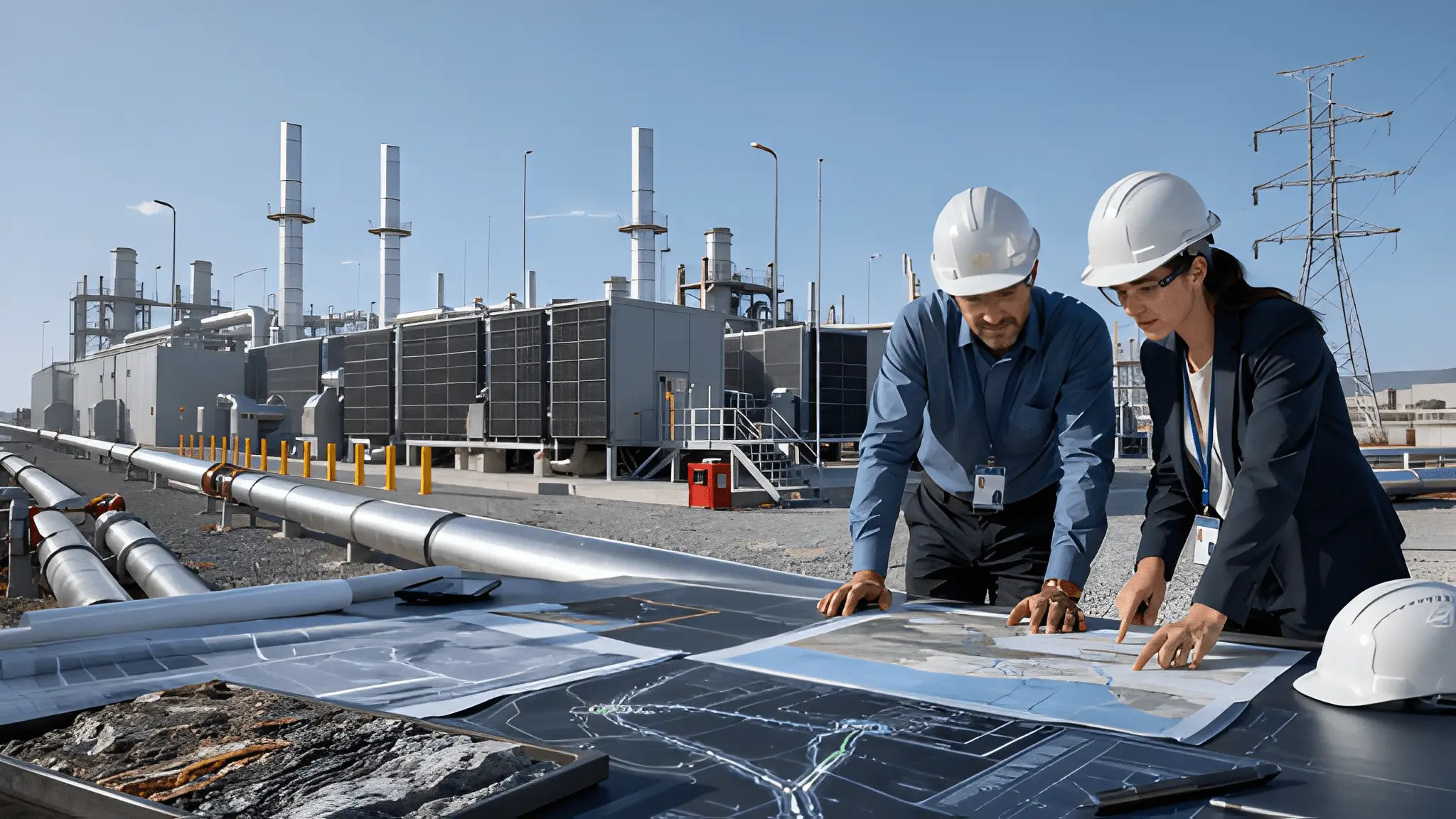
Infrastructure investors rarely lose confidence because demand disappears, but they often reconsider projects when infrastructure assumptions fail under detailed review. Large-scale artificial intelligence deployments, hyperscale cloud expansion, and industrial electrification have changed how investors evaluate physical assets before capital reaches construction. Power availability alone no longer answers the central investment question because reliable operations depend on several interconnected physical variables that influence one another over decades. Investment committees increasingly examine whether every supporting infrastructure component can sustain continuous expansion instead of simply enabling an initial deployment. That broader perspective has transformed pre-acquisition investigations into multidisciplinary exercises where energy, geology, utilities, transportation, and commercial contracts receive equal attention during underwriting.

Traditional infrastructure due diligence routinely includes title records, environmental compliance, zoning permissions, utility availability, and transmission access because these elements establish baseline project feasibility before capital deployment. Current underwriting models incorporate additional operational dependencies that directly affect project timing, financing certainty, and long-term operating costs across increasingly power-intensive facilities. Investors now examine how natural gas delivery, interconnection queues, geotechnical limitations, water availability, and equipment procurement collectively influence execution risk before committing capital. Capital providers also recognize that infrastructure bottlenecks frequently emerge outside property boundaries, creating constraints that conventional land evaluations never measured. Consequently, site evaluation has evolved into an integrated infrastructure assessment where every dependency influences valuation assumptions before acquisition agreements reach execution.
Why Tier 1 Zip Codes Are Failing the 2028 Test
Legacy hyperscale corridors continue attracting interest because they already contain dense fiber ecosystems, experienced contractors, mature supplier networks, and established customer demand. Those advantages, however, increasingly compete against physical infrastructure constraints that have become harder to overcome despite strong commercial fundamentals. Interconnection studies across several major North American utility territories have expanded substantially as transmission systems absorb unprecedented volumes of new generation and large electrical loads. Developers therefore encounter greater uncertainty regarding energization schedules even after securing land, permits, and financing commitments for otherwise attractive projects. Project financing models routinely evaluate construction schedules alongside capital expenditures because delayed infrastructure availability can postpone commercial operations and affect projected cash flows.
A comparable shift has emerged in behind-the-meter planning because dependable fuel supply now influences project economics as strongly as electrical infrastructure availability. Large campuses designed around dedicated generation require proximity to reliable natural gas transmission systems capable of supporting continuous high-capacity operations without introducing excessive infrastructure costs. Pipeline extensions, easement negotiations, compressor availability, and fuel contracting can extend development schedules even when electrical infrastructure appears favorable on initial review. Infrastructure evaluations commonly compare development timelines across candidate locations because existing energy infrastructure can reduce construction complexity and project execution risk. However, metropolitan locations with extended interconnection queues, constrained utility infrastructure, or limited fuel delivery options may present greater execution risk than sites where those constraints have already been addressed.

Molecule Maps: The New Constraint Layer in Site Scoring
Reliable fuel availability has become a measurable infrastructure variable rather than a secondary operational consideration during large-scale project evaluation. Project developers and technical advisers analyze natural gas transportation systems alongside electrical infrastructure because dedicated generation strategies require dependable fuel delivery throughout facility operations. Geographic information systems now combine transmission corridors, gathering networks, pressure zones, compressor stations, and utility service territories into integrated infrastructure models that support investment decisions. These datasets help investors distinguish between theoretical fuel access and commercially deliverable capacity supported by contractual commitments and existing pipeline operations. Site selection therefore reflects verified infrastructure performance instead of assumptions based solely on regional production volumes or nearby energy development activity.
Fuel quality introduces another dimension that investors increasingly incorporate into technical due diligence because generation performance depends on consistent operating conditions over long investment horizons. Developers evaluate heating value specifications, transportation agreements, firm delivery rights, seasonal capacity limitations, and maintenance schedules before assigning confidence to long-term operating assumptions. Supply diversity also receives greater scrutiny because dependence on a single transportation path may increase operational exposure during planned outages or unexpected infrastructure disruptions. Meanwhile, underwriting teams compare contractual certainty alongside physical proximity because nearby pipelines alone cannot guarantee dependable fuel availability under peak market conditions. Comprehensive infrastructure reviews therefore combine engineering evidence with commercial verification before assigning valuation premiums to energy-ready development locations.
Geology Diligence for Gigawatt Footprints
Ground conditions increasingly influence investment outcomes because high-density digital infrastructure places substantial structural demands on foundations, utility corridors, cooling equipment, and supporting electrical installations. Geotechnical investigations now extend beyond conventional bearing capacity assessments to evaluate settlement characteristics, groundwater behavior, rock formations, seismic conditions, and long-term site stability before detailed engineering begins. Large campuses require predictable subsurface performance because even localized instability can increase construction complexity across multiple interconnected facilities. Engineering teams evaluate geotechnical findings alongside electrical planning because subsurface conditions can materially influence construction methods, project costs, and delivery schedules. Comprehensive geological analysis therefore reduces uncertainty before irreversible capital commitments enter execution.
Subsurface characteristics also affect underground utility installation, stormwater management, equipment foundations, and future campus expansion opportunities that extend well beyond initial construction phases. Rock excavation, expansive clay formations, shallow groundwater, or seismic design requirements can significantly influence engineering strategies even when land appears attractive during preliminary inspections. Infrastructure investors increasingly compare these technical findings across competing sites because construction predictability directly affects financial returns throughout multiyear development programs. Furthermore, engineering consultants frequently integrate geotechnical models with civil, structural, and utility planning to identify risks before procurement activities begin. Geotechnical findings now inform early project planning by helping engineering and commercial teams evaluate construction feasibility before major capital commitments proceed.
Underwriting the First-Mover Advantage: What “Power Certainty” Means in an SPA
Infrastructure transactions increasingly assign measurable financial value to development certainty because capital deployment depends on predictable execution rather than optimistic infrastructure assumptions. Purchase agreements and joint venture structures commonly define responsibilities for utility coordination, easements, permitting obligations, and infrastructure milestones when those factors materially affect project execution. Buyers evaluate whether contractual protections adequately reflect unresolved infrastructure dependencies that could alter project schedules after ownership transfers. Legal teams therefore work alongside engineers and technical advisers to align commercial obligations with verified physical infrastructure readiness instead of relying on generalized development timelines. Structured transaction terms reduce uncertainty by connecting investment commitments with clearly defined infrastructure performance benchmarks that both parties can validate throughout project execution.
Power certainty now represents a broader concept than confirmed electrical service because investors evaluate every supporting dependency capable of sustaining long-term operational reliability. Dedicated generation options, natural gas transportation agreements, geotechnical suitability, land expansion potential, utility coordination, permitting pathways, and construction logistics collectively determine whether infrastructure assumptions remain credible throughout asset development. Investment committees increasingly reward sites where multiple infrastructure risks have already been resolved through engineering analysis, commercial agreements, and documented regulatory progress before acquisition negotiations conclude. Those characteristics reduce execution uncertainty, strengthen financing confidence, and improve valuation resilience when regional infrastructure capacity becomes increasingly constrained. Ultimately, evaluating fuel availability, land suitability, and electrical infrastructure together provides a more comprehensive assessment of execution risk for large-scale digital infrastructure projects.
Reaching the breaking point
Infrastructure investment decisions increasingly depend on the quality of physical evidence supporting long-term operational assumptions rather than the historical reputation of a particular market. Reliable land, verified energy delivery, favorable subsurface conditions, and achievable utility integration collectively influence whether projects maintain predictable schedules and financial performance throughout their operational life. Comprehensive due diligence now extends across engineering, commercial, legal, and operational disciplines because isolated infrastructure assessments no longer capture the interconnected risks affecting large-scale digital developments. Investors that evaluate these dependencies together establish stronger foundations for capital allocation while reducing exposure to infrastructure uncertainties that may emerge after acquisition. As electricity availability becomes more constrained across several established markets, integrated infrastructure verification will remain an essential determinant of project quality, transaction confidence, and long-term asset value.











