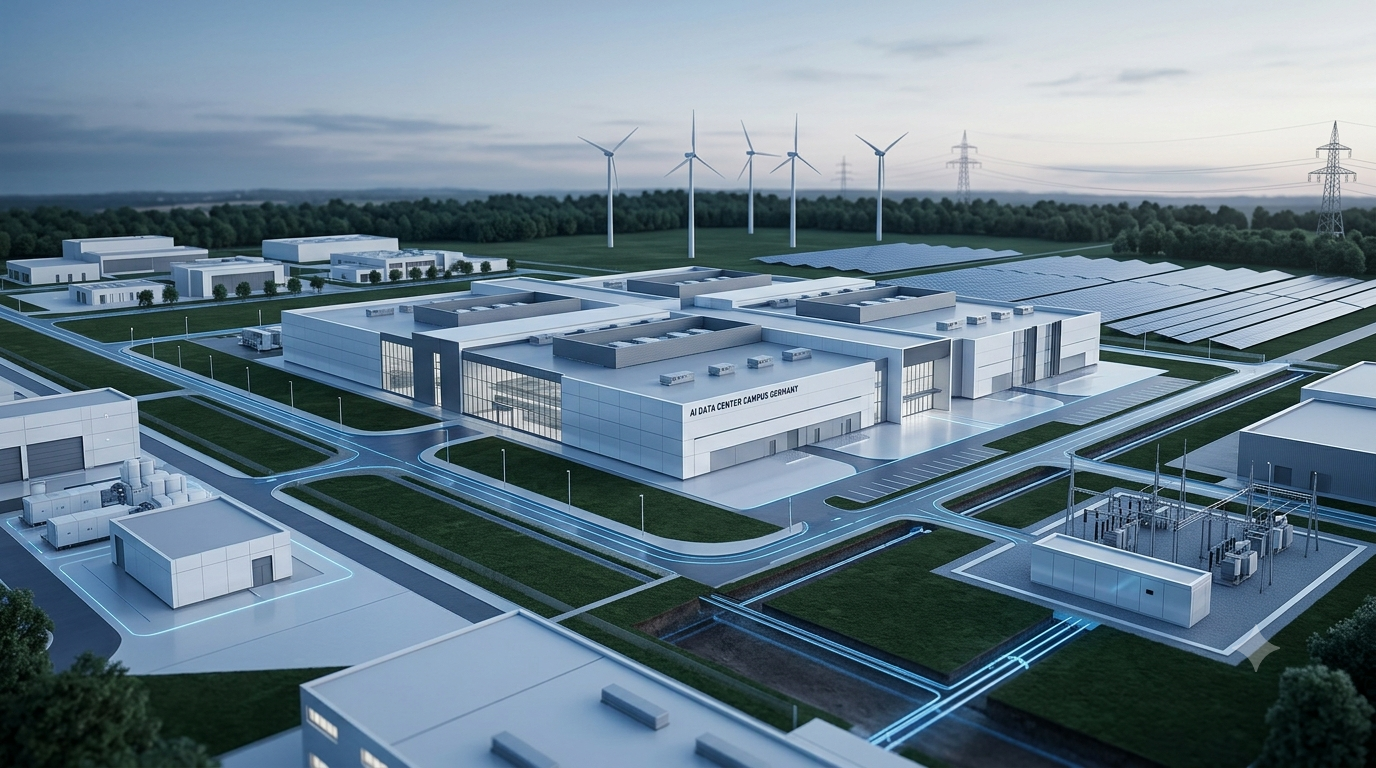
Microsoft is strengthening its artificial intelligence infrastructure strategy in Germany. The company has signed a conditional land purchase agreement in Grevenbroich, North Rhine-Westphalia. The proposed site could become another major data center supporting Microsoft’s expanding cloud and AI operations. Moreover, the investment reinforces Germany’s growing importance within Microsoft’s European infrastructure strategy. The project also highlights continued demand for regional AI capacity across the continent. However, development will proceed only after local authorities complete the required zoning process. The announcement arrives as hyperscale providers continue expanding European infrastructure. AI adoption continues driving demand for cloud computing, enterprise workloads, and high-performance computing resources. Consequently, technology companies are investing aggressively in new campuses across strategic markets. Microsoft views North Rhine-Westphalia as one of Europe’s most important cloud and AI regions. Therefore, the company continues increasing its long-term presence throughout the area.
Grevenbroich Joins Microsoft’s Regional Expansion
Microsoft confirmed it has signed a conditional agreement to purchase land in Grevenbroich. However, the acquisition depends on approval of the city’s development and zoning plans. Company officials have not disclosed the site’s exact location or future capacity. Likewise, Microsoft has not revealed construction timelines or investment figures for the proposed facility. Grevenbroich sits northwest of Cologne and southwest of Düsseldorf. Its location places the city within one of Germany’s fastest-growing digital infrastructure corridors. Consequently, the region offers strong connectivity and access to surrounding industrial centers. Microsoft believes the location will complement its existing cloud infrastructure across western Germany. As a result, the company continues building a broader AI ecosystem throughout the region. Agnes Heftberger, Chairwoman of Microsoft’s Germany management board, described North Rhine-Westphalia as a strategically important cloud and AI region. She added that expanding into Grevenbroich would strengthen Microsoft’s regional AI cluster. Furthermore, the investment aims to support local infrastructure while creating opportunities for residents and businesses. Microsoft also plans to work closely with city officials throughout the project’s development.
Local Leaders See Economic Opportunity
City officials welcomed Microsoft’s proposed investment as an important milestone for regional economic transformation. Grevenbroich continues adapting following structural changes affecting the Rhenish mining region. Therefore, local leaders believe digital infrastructure can support long-term economic diversification. Mayor Klaus Krützen said the project sends a strong signal for both the city and the wider region. He emphasized that new digital infrastructure can attract businesses while creating additional economic value. Moreover, the proposed facility could encourage further investment beyond its immediate location. Officials expect the project to strengthen Grevenbroich’s role within Germany’s expanding technology landscape. Meanwhile, Microsoft’s collaboration with local authorities remains essential for moving the project forward. Both parties intend to maintain close dialogue throughout the planning process. That cooperative approach could help accelerate future development once zoning approvals receive final authorization.
North Rhine-Westphalia Becomes Microsoft’s AI Hub
The Grevenbroich proposal builds upon Microsoft’s broader expansion across North Rhine-Westphalia. The company already develops several large-scale data center projects around Cologne. Consequently, the region has emerged as one of Microsoft’s fastest-growing European infrastructure markets. Microsoft announced two additional facilities in November 2024. One campus is located in Bergheim within the INKA: terra nova industrial park. The project spans approximately 270,650 square feet across a 20-hectare site. Construction officially began during March 2026 following earlier planning activities. Additionally, Microsoft is developing another campus in Bedburg. That facility occupies an 18-hectare site within the BEB61 industrial estate. Earlier, during September 2025, the company also announced plans for a third location in Elsdorf. Together, these projects create an interconnected regional cloud and AI infrastructure network supporting future enterprise demand.
Germany Remains Central to Microsoft’s AI Strategy
Microsoft’s latest expansion aligns with its previously announced commitment to Germany’s digital economy. Early in 2024, the company pledged to invest €3.2 billion, equivalent to approximately $3.44 billion. That investment aims to double Microsoft’s AI infrastructure and cloud computing capacity throughout Germany. Artificial intelligence continues reshaping infrastructure investment priorities worldwide. Enterprise customers increasingly require advanced computing resources for generative AI, analytics, and cloud-native applications. Consequently, hyperscale providers continue expanding regional capacity closer to customers. Germany remains particularly attractive because of its industrial base, strong connectivity, and growing enterprise AI adoption. Furthermore, North Rhine-Westphalia complements Frankfurt’s established position as Germany’s largest data center market. Although Frankfurt remains Microsoft’s existing cloud region, surrounding areas increasingly attract new infrastructure investments. This regional diversification helps distribute computing capacity while supporting broader customer demand across western Germany.
Market Outlook
Microsoft’s planned Grevenbroich facility represents another step in its long-term European AI infrastructure strategy. Although the project remains subject to zoning approval, the agreement demonstrates continued confidence in Germany’s digital future. Moreover, expanding beyond traditional hubs reflects changing infrastructure priorities driven by AI workloads. Demand for cloud computing and AI services continues accelerating across Europe. Consequently, hyperscale operators increasingly seek locations offering long-term scalability and regional connectivity. Microsoft’s growing presence across North Rhine-Westphalia positions the company to meet that demand while supporting enterprise digital transformation. Looking ahead, projects like Grevenbroich could strengthen Germany’s role within Europe’s AI ecosystem. As infrastructure investments continue expanding, regional cloud clusters may become increasingly important for supporting future innovation, economic growth, and large-scale artificial intelligence deployment.