 Skip to content
Samsung and SK hynix lead a record semiconductor expansion as Seoul strengthens its AI infrastructure strategy
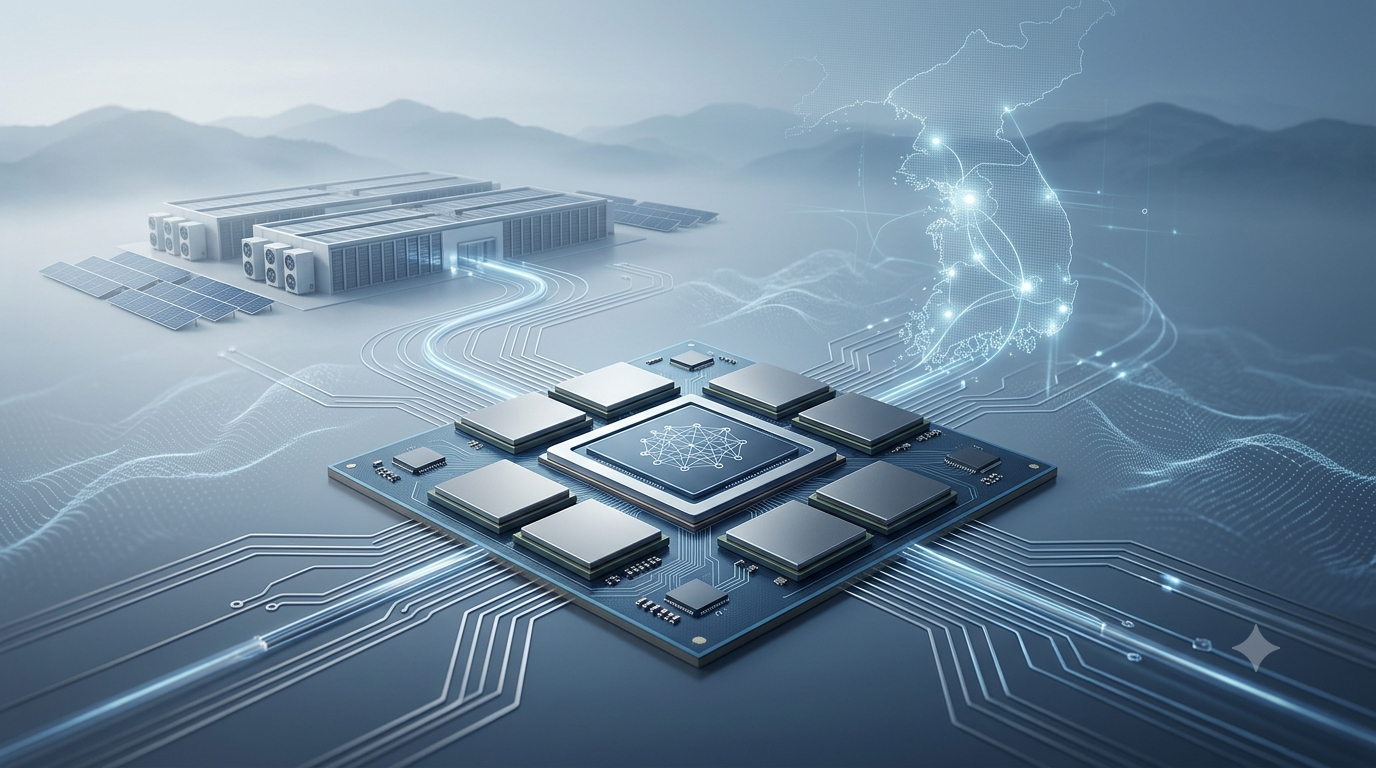
South Korea has unveiled one of the world’s largest semiconductor investment plans, committing more than 800 trillion won ($518 billion) to expand memory chip manufacturing as artificial intelligence reshapes global computing demand. The initiative, led by Samsung Electronics and SK hynix, aims to strengthen the country’s leadership in memory chips while preventing what industry observers increasingly describe as “RAMageddon”—a prolonged shortage of high-performance memory required for AI infrastructure. The announcement forms part of a broader national strategy that extends well beyond semiconductor fabrication. Alongside the new memory facilities, South Korea plans significant investments in high-bandwidth memory (HBM) packaging, AI data centers, and semiconductor research, positioning the country as a long-term AI infrastructure powerhouse rather than simply a chip manufacturing hub

Four New Memory Fabs Anchor the Expansion
At the center of the strategy is the construction of four advanced memory fabrication plants in South Korea’s southwestern region. Samsung Electronics and SK hynix will each build two facilities, marking a strategic shift away from their traditional manufacturing concentration around Gyeonggi Province near Seoul. The move reflects the government’s ambition to distribute high-tech manufacturing across the country while creating a new semiconductor corridor outside the capital region. Officials believe the expansion will stimulate regional economic growth while supporting the next wave of AI infrastructure investments.
AI Is Driving the Memory Boom
Demand for memory has accelerated dramatically as hyperscalers deploy increasingly powerful AI clusters. Modern AI servers require far more DRAM, NAND, and especially High-Bandwidth Memory (HBM) than conventional enterprise systems. Unlike traditional cloud workloads, generative AI training and inference consume enormous amounts of memory bandwidth. Consequently, memory has emerged as one of the biggest bottlenecks in AI infrastructure expansion worldwide. Samsung and SK hynix already dominate the global memory market and together control a substantial share of advanced HBM production, making the companies central suppliers for AI accelerators deployed by cloud providers worldwide.
Building an AI Infrastructure Ecosystem
South Korea’s ambitions extend beyond chip fabrication. The government’s roadmap also includes approximately 550 trillion won in investments across AI data centers, advanced packaging facilities, and next-generation semiconductor technologies through 2035. Major technology and energy companies, including SK Group, GS Group, and Naver, are expected to participate in expanding the country’s AI infrastructure footprint. Additionally, the strategy allocates funding for an HBM packaging hub and long-term semiconductor research to strengthen domestic capabilities across the entire AI hardware value chain. Officials view these complementary investments as essential for maintaining competitiveness as AI systems continue growing in complexity.

Supporting the Next Wave of AI Data Centers
The investment arrives as hyperscalers, cloud providers, and AI developers compete for limited supplies of advanced memory. Every large AI cluster requires thousands of GPUs paired with high-capacity memory, making DRAM and HBM critical components of next-generation data centers. By expanding manufacturing capacity, South Korea hopes to ease future supply constraints while supporting the global buildout of AI infrastructure spanning cloud computing, autonomous systems, robotics, and enterprise AI platforms. The strategy also aligns with growing international demand for resilient semiconductor supply chains as governments increasingly view AI hardware as strategic national infrastructure.
Challenges Remain Despite the Scale
Although the investment plan represents an unprecedented commitment, execution will require overcoming several infrastructure hurdles. New fabrication facilities demand reliable electricity, significant water resources, advanced logistics, and a highly skilled workforce. Officials acknowledge these challenges but argue that the southwestern region offers strong renewable energy potential and sufficient room for long-term industrial expansion. Meanwhile, analysts continue monitoring whether such aggressive capacity expansion could eventually create oversupply if AI demand slows. However, current market conditions suggest demand for advanced memory will remain strong as AI adoption accelerates globally.
A Strategic Bet on AI Leadership
Rather than responding only to today’s memory shortages, South Korea is positioning itself for the next decade of AI infrastructure growth. The combination of new fabs, advanced packaging, AI data centers, and semiconductor R&D demonstrates a coordinated effort to reinforce the country’s leadership across the AI hardware ecosystem. As global spending on AI infrastructure continues to rise, South Korea’s $550 billion-plus semiconductor expansion could play a decisive role in ensuring future AI systems have the memory capacity required to power increasingly sophisticated models, hyperscale data centers, and emerging intelligent applications worldwide.












