
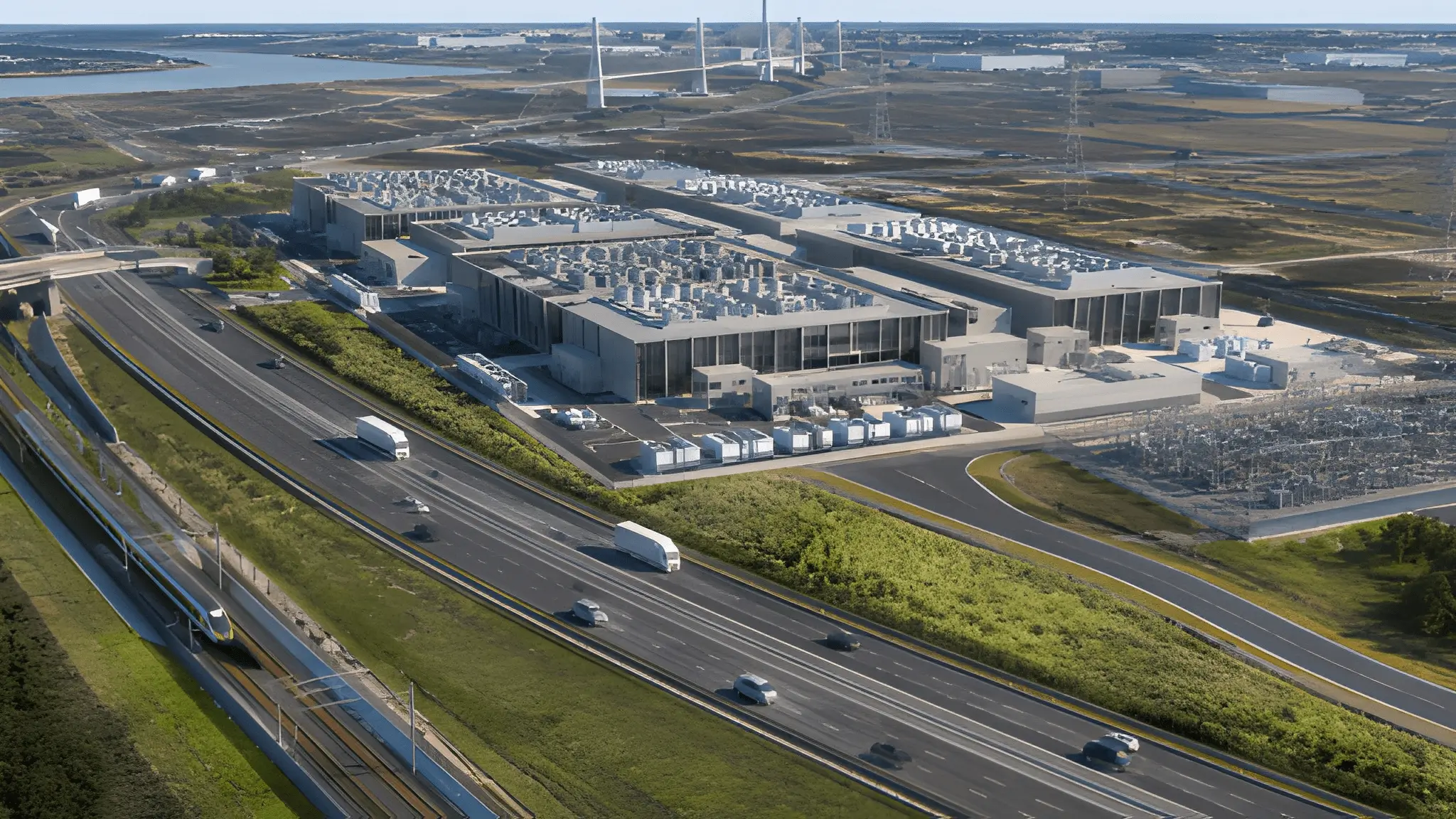
UK infrastructure developer Clearstone has outlined plans to build a 300 MW artificial intelligence data center campus at Ebbsfleet, marking one of the country’s largest proposed AI infrastructure developments. The project spans 145 acres near Dartford on the London-Kent border and targets commercial operations by 2030. As AI workloads continue to reshape digital infrastructure requirements, the company is positioning the site as a long-term compute hub capable of supporting future generations of high-performance computing. The announcement also reinforces growing investment in UK-based AI infrastructure as developers compete for sites with reliable power, transport links, and connectivity.

The planned campus sits roughly two kilometers south of Ebbsfleet International railway station, adjacent to the HS1 rail corridor and the A2 motorway. Clearstone said the location offers the combination of available land, transmission-level electricity access, fiber connectivity, and workforce availability increasingly required by hyperscale AI deployments. The company expects these characteristics to support large-scale compute operations while improving accessibility for future expansion. The development also reflects a broader shift toward locating AI campuses outside traditional metropolitan data center clusters while maintaining close proximity to major economic centers.
300 MW Design Centers On Modular Compute Delivery
Clearstone plans to develop approximately 60,000 square meters of building space through a modular campus design that distributes compute capacity across multiple facilities. Instead of concentrating infrastructure within a single building, the company will add compute capacity in phases as customer demand grows. Clearstone is carrying out land assessments and ecological surveys to finalize the campus layout and map cable routes to the Northfleet East substation. These early-stage studies will guide the engineering design before construction begins.
National Grid will supply electricity to the campus through a connection to the UK’s national electricity transmission network. AI-focused data center projects now depend on transmission-level power access as operators pursue larger power allocations than conventional enterprise facilities require. The planned grid connection strengthens the project’s long-term infrastructure strategy and supports future compute expansion across the campus. Meanwhile, the modular design gives Clearstone greater operational flexibility as AI demand evolves over the coming years.

Project Advances Under UK’s National Infrastructure Planning Framework
The Ebbsfleet campus could become one of the first AI data center developments to move through the UK’s Nationally Significant Infrastructure Project (NSIP) planning framework. Clearstone applied for a direction under Section 35 of the Planning Act 2008, enabling the project to seek approval through the NSIP regime instead of conventional local planning channels. The Secretary of State for Levelling Up, Housing and Communities granted that direction on July 1, 2026, allowing the proposal to advance under the nationally significant infrastructure process. The project will now require a Development Consent Order before construction begins.
Governments typically reserve the NSIP pathway for infrastructure that plays a strategic role in the country’s long-term economic development. Applying the framework to an AI-focused data center campus highlights the growing policy importance of digital infrastructure within the UK’s national growth agenda. The framework can also give developers a more coordinated planning process for projects that extend beyond local economic impact and contribute to national infrastructure objectives. The Ebbsfleet proposal therefore marks an early example of AI infrastructure entering the same regulatory category as other major infrastructure investments.
Community Engagement Forms Part Of Long-Term Development Strategy
Clearstone said it has begun engagement with stakeholders including Kent County Council, Dartford Borough Council, town and parish councils, local residents, and community organizations as planning activities progress. The outreach comes as large-scale data center developments face increasing scrutiny over land use, electricity demand, and local infrastructure impacts across several international markets. The company is seeking to establish dialogue before construction planning advances further. Additionally, the engagement process is expected to inform aspects of site design and community integration throughout project development.
Construction is projected to support an average workforce of around 750 people annually during a three-year building period. Clearstone said it intends to recruit as many as 650 workers locally where skills availability allows, creating opportunities across construction trades and supporting industries. Following completion, the campus is expected to generate approximately 420 permanent positions covering operations, maintenance, security, facilities management, and other support services. Those employment estimates position the development as a significant regional infrastructure investment extending beyond digital capacity alone.
Global Partners Support Delivery Of AI Infrastructure
Clearstone has appointed Gensler as architectural partner and AECOM as infrastructure and engineering consultant for the project. The two firms will support campus planning, design, and technical delivery as the development progresses through regulatory approvals and engineering design. Their involvement brings experience from large-scale international infrastructure and mission-critical facility projects, aligning with the complexity of hyperscale AI campuses.
The Ebbsfleet proposal arrives as governments and infrastructure developers increasingly compete to secure locations capable of supporting AI-driven compute demand. Access to transmission power, transport connectivity, planning certainty, and skilled labor has become central to site selection decisions across Europe. Clearstone’s investment signals confidence that these assets can position the London-Kent corridor as an important destination for future AI infrastructure growth. If delivered on schedule, the campus would become one of the UK’s largest AI-focused data center developments entering the next decade.











