 Skip to content
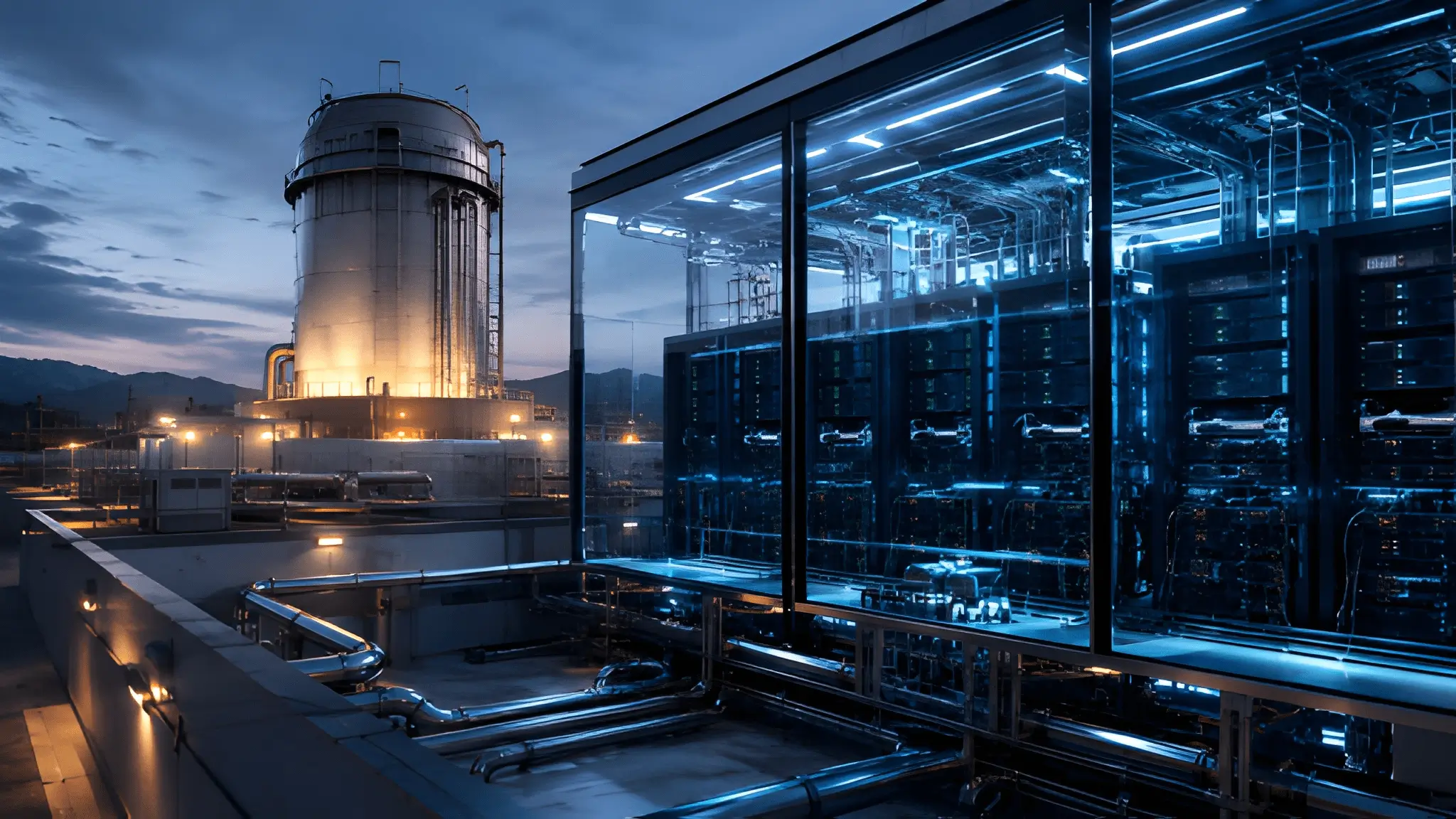
Artificial intelligence infrastructure has pushed energy and water consumption into the spotlight, forcing developers to rethink how future computing campuses should operate. Valar Atomics believes the answer may lie in advanced nuclear technology paired with water-efficient data center designs. The California-based startup has now partnered with Nvidia to demonstrate how small nuclear reactors could support next-generation AI infrastructure while dramatically reducing freshwater demand. The collaboration signals a broader shift as the AI industry searches for power sources that can deliver reliability without placing additional strain on public utilities.

Utah Demonstration Combines Nuclear Microreactor With Nvidia Blackwell
Valar Atomics announced Wednesday that it is working with Nvidia to develop a small-scale data center in Utah designed to demonstrate water-conserving AI infrastructure. The announcement came from the site of Valar’s microreactor project, where the companies also conducted a live demonstration powering Nvidia’s Blackwell AI architecture. According to both companies, the event marked the first time a small nuclear reactor supplied electricity directly to a data center environment. The demonstration positions advanced nuclear technology as a potential foundation for future AI computing facilities that prioritize both power resilience and resource efficiency. The milestone arrives as AI developers increasingly evaluate alternatives to conventional grid power. Growing compute demand has intensified pressure on electricity networks while raising concerns about the water required for large-scale cooling systems. The Utah project reflects that broader transition toward integrated energy and cooling strategies.
Water has rapidly become one of the defining infrastructure challenges facing hyperscale AI deployments. Modern accelerated computing clusters require significant cooling capacity, particularly as rack densities continue to increase with more powerful processors. Consequently, operators are investing in cooling technologies that reduce dependence on freshwater while maintaining consistent thermal performance. Nvidia recently introduced its latest DSX data center architecture featuring closed-loop liquid cooling. According to the company, the design can reduce facility cooling water consumption from approximately 2.6 million gallons per megawatt annually to nearly zero by continuously recirculating coolant instead of relying on large volumes of fresh water. That strategy complements Valar’s reactor technology, which replaces traditional water cooling with helium, creating an energy-and-cooling combination designed to minimize overall water use across AI facilities.
Nuclear Startups Gain Momentum as AI Power Demand Accelerates
The rapid expansion of AI computing has created unprecedented electricity requirements across global data center markets. Developers are increasingly pursuing private, behind-the-meter power generation that allows facilities to operate independently from traditional utility interconnection timelines and permitting processes. Much of that investment has centered on natural gas generation, but advanced nuclear technologies are emerging as another long-term option for continuous, carbon-free electricity. Valar Atomics is among roughly ten nuclear startups participating in the U.S. Department of Energy’s reactor pilot initiative. The program aims to demonstrate three small reactors reaching criticality, the stage at which a controlled nuclear chain reaction becomes self-sustaining by July 4. Achieving that milestone would represent an important technical step toward commercial deployment of advanced microreactors capable of supporting industrial applications, including AI infrastructure.
As AI clusters continue expanding, technology companies are exploring new infrastructure models that combine dedicated power generation with advanced computing platforms. Behind-the-meter energy systems have gained attention because they can reduce dependence on constrained transmission networks while providing predictable electricity for high-density AI workloads. These systems are increasingly viewed as one possible solution to mounting power bottlenecks affecting data center development.
“Through this work with Valar Atomics, Nvidia is exploring how behind-the-meter, waterless advanced nuclear systems could support future AI factories built for the scale and reliability accelerated computing requires,” said John Josephakis, an Nvidia global vice president. The partnership illustrates Nvidia’s broader interest in pairing accelerated computing with emerging energy technologies capable of supporting increasingly power-intensive AI deployments. Reliable electricity and efficient cooling have become strategic considerations alongside processor performance as infrastructure operators evaluate future campus designs.

Valar Pushes Faster Nuclear Deployment and Regulatory Reform
Valar founder Isaiah Taylor has positioned the company around accelerating nuclear deployment timelines that have traditionally slowed reactor commercialization. The startup says its high-temperature reactor uses helium cooling instead of water, a design intended to simplify operations while supporting water-efficient energy production. Faster construction and streamlined deployment remain central objectives as advanced nuclear developers compete to supply future AI infrastructure. Valar founder Isaiah Taylor said the startup is attempting to demonstrate that nuclear projects, which often face long regulatory hurdles, can be done quickly. Valar says its high-temperature reactor is cooled with helium instead of water.
Beyond reactor development, Valar has also become involved in the policy debate surrounding advanced nuclear regulation. Last year, the company joined litigation alongside the states of Texas and Utah challenging the U.S. Nuclear Regulatory Commission’s authority over certain nuclear microreactors and small modular reactors. The legal effort argues that oversight for some advanced reactor technologies should shift to individual states rather than remain exclusively under federal licensing authority. The Utah demonstration represents more than a technical proof of concept. It highlights how AI infrastructure developers are beginning to treat energy generation, cooling technology, and resource conservation as interconnected engineering decisions rather than separate operational challenges. Nuclear-powered, water-efficient campuses remain years away from widespread deployment, yet partnerships like this indicate where infrastructure investment is heading as AI demand continues to reshape the economics of electricity, water, and compute.












