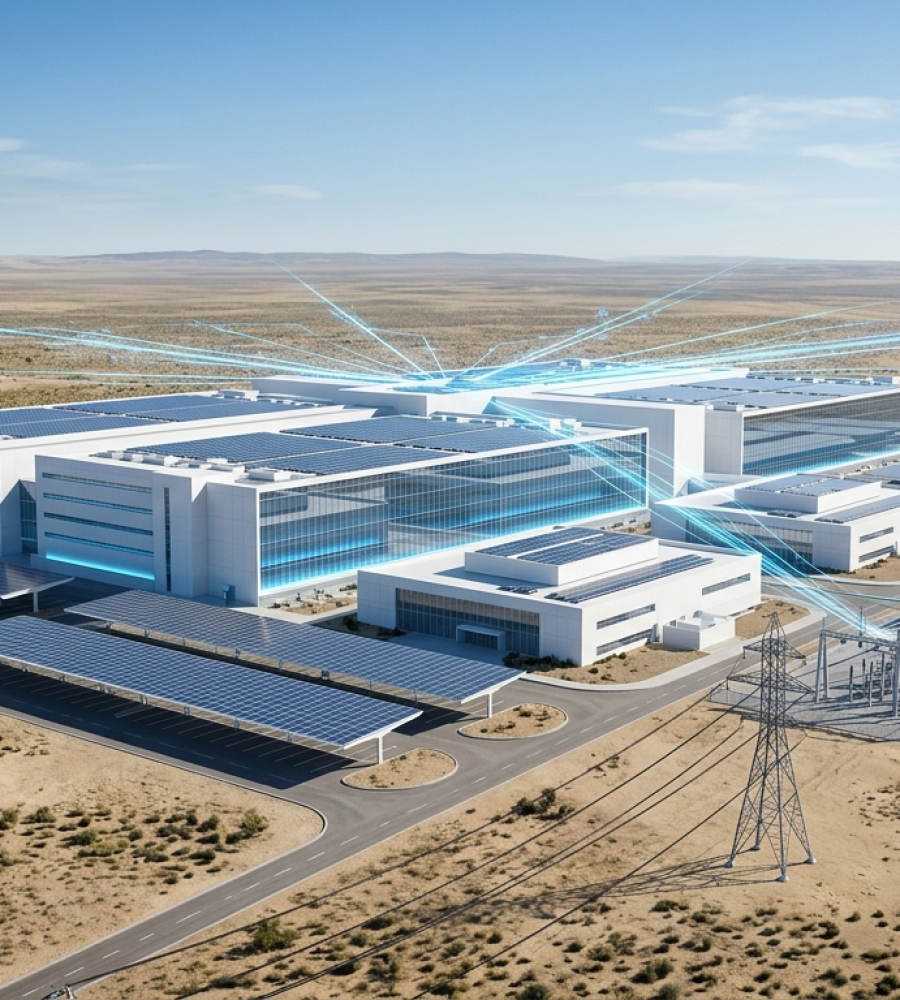

The race to secure electricity for hyperscale digital infrastructure continues to reshape the U.S. energy landscape, and Leeward Renewable Energy (LRE) has made its latest move with a $1.5 billion investment across Oklahoma. The company has completed a 725-megawatt solar portfolio designed to strengthen regional electricity supplies while supporting Google’s expanding operations in the state. The investment reflects a broader shift where renewable energy projects increasingly serve as strategic infrastructure for cloud computing and data center growth rather than standalone clean energy assets. The development also reinforces Oklahoma’s growing role in attracting long-term technology investment supported by dependable power generation.
LRE formally highlighted the portfolio during a ribbon-cutting ceremony, positioning the projects as a foundation for future economic development and digital infrastructure expansion. Company executives said reliable electricity availability has become a decisive factor for businesses making large-scale investment decisions. The completed solar assets are intended to improve grid reliability while supplying renewable generation capable of supporting sustained industrial and technology-sector demand. Additionally, the announcement illustrates how renewable generation is becoming closely linked with hyperscale computing expansion across the United States.
Solar Portfolio Built to Support Regional Growth and Google’s Operations
The Oklahoma portfolio consists of multiple utility-scale solar developments distributed across the state. The completed assets include Salt Branch Solar 1 & 2 with 145 MW of capacity, Huckleberry Solar at 125 MW, Mayes Solar at 102 MW, and Twelvemile Solar 1 & 2 with a combined capacity of 153 MW. The portfolio also includes the 200-MW Twelvemile 3 Solar Project, which remains under construction. Together, these projects create a diversified renewable generation network designed to meet rising regional electricity consumption while supporting Google’s operations.
The buildout reflects the increasing coordination between renewable developers and technology companies seeking long-term energy stability. Instead of serving isolated industrial loads, these facilities have become part of the infrastructure supporting cloud services, enterprise computing, and digital workloads. As electricity demand accelerates alongside AI adoption and expanding data center capacity, developers are prioritizing projects capable of supplying dependable renewable generation at scale. The Oklahoma portfolio demonstrates how clean energy investments are increasingly being aligned with long-term digital infrastructure strategies.
LRE Positions Renewable Infrastructure as an Economic Development Engine
LRE says the portfolio extends beyond electricity production by delivering measurable economic benefits throughout Oklahoma. Construction of the projects created more than 2,000 jobs, providing employment across engineering, construction, logistics, and supporting industries. The company also projects that the developments will generate approximately $148.8 million in state and local tax revenue over their operating lifetimes. Those revenues are expected to support public services and local communities while strengthening the state’s long-term economic base. Jason Allen, LRE’s CEO, stated, “This portfolio represents a major investment in Oklahoma’s energy future and demonstrates the scale of infrastructure required to support rising electricity demand and long-term economic growth.” He highlighted the collaborative efforts with local communities, landowners, and utilities to ensure reliable and cost-effective energy delivery.
Environmental Design Extends Beyond Power Generation
The solar portfolio incorporates ecological restoration alongside energy production. LRE said the developments span 7,712 acres and include pollinator-friendly vegetation intended to improve habitat restoration and strengthen ecosystem resilience throughout the project sites. Such land management strategies are becoming increasingly common among utility-scale renewable projects as developers seek to balance energy production with environmental stewardship. The approach also reflects evolving expectations from local communities and project stakeholders regarding long-term land use.
The projects originated through collaboration with Red River Renewable Energy, a joint venture between SunChase Power and Eolian. Planning for the developments began more than a decade ago, illustrating the extended timelines often required to deliver large-scale energy infrastructure. Site selection, permitting, transmission planning, and community engagement collectively shaped the portfolio before construction reached its current stage. Meanwhile, those long development cycles have become increasingly important as utilities and technology companies seek new sources of reliable electricity.
Technology Companies Continue Driving Utility-Scale Renewable Investments
The Oklahoma portfolio underscores how large technology companies are becoming anchor customers for new renewable energy developments. Google’s presence in the region has created sustained demand for electricity capable of supporting expanding digital infrastructure while advancing corporate sustainability objectives. Long-term renewable procurement agreements increasingly provide developers with financial certainty while helping technology firms diversify their electricity supply. The model continues to influence investment decisions across major U.S. energy markets. Aaron Zubaty, CEO of Eolian, remarked on the strategic location of these energy infrastructures, which are essential for meeting the increasing electricity demand and enhancing grid reliability. JT Tolliver, Google Data Center Operations Lead for Oklahoma and Missouri, expressed that the partnership with LRE will contribute to a more robust and reliable energy system for the region, aligning with Google’s commitment to sustainable growth.
Large renewable portfolios are increasingly serving as foundational infrastructure for the next phase of AI and cloud expansion rather than operating solely as power generation assets. Data center developers now evaluate electricity availability with the same strategic importance as land acquisition, network connectivity, and computing hardware. Utility-scale solar, transmission planning, and grid modernization have become interconnected components supporting hyperscale infrastructure investments. LRE’s Oklahoma deployment reflects that structural shift, demonstrating how renewable energy projects are evolving into long-term enablers of digital economy growth while strengthening regional power resilience.