 Skip to content
California could soon add another large-scale digital infrastructure project to its growing data center pipeline. Developers have proposed a 99MW AI-ready data center in Kern County, highlighting continued demand for high-capacity computing infrastructure across the United States. However, the project has already sparked debate among local communities, illustrating the increasing challenge of balancing AI expansion with regional concerns. As artificial intelligence drives unprecedented infrastructure investment, developers must now navigate both technical and community considerations. The proposed RB Inyokern Data Center would bring significant computing capacity to eastern Kern County. Moreover, the project reflects a broader trend toward developing AI infrastructure beyond traditional metropolitan hubs. Developers increasingly seek locations offering available land, scalable power, and room for future expansion. Consequently, rural regions continue attracting new hyperscale and AI-ready facilities.

AI Infrastructure Heads to Eastern Kern County
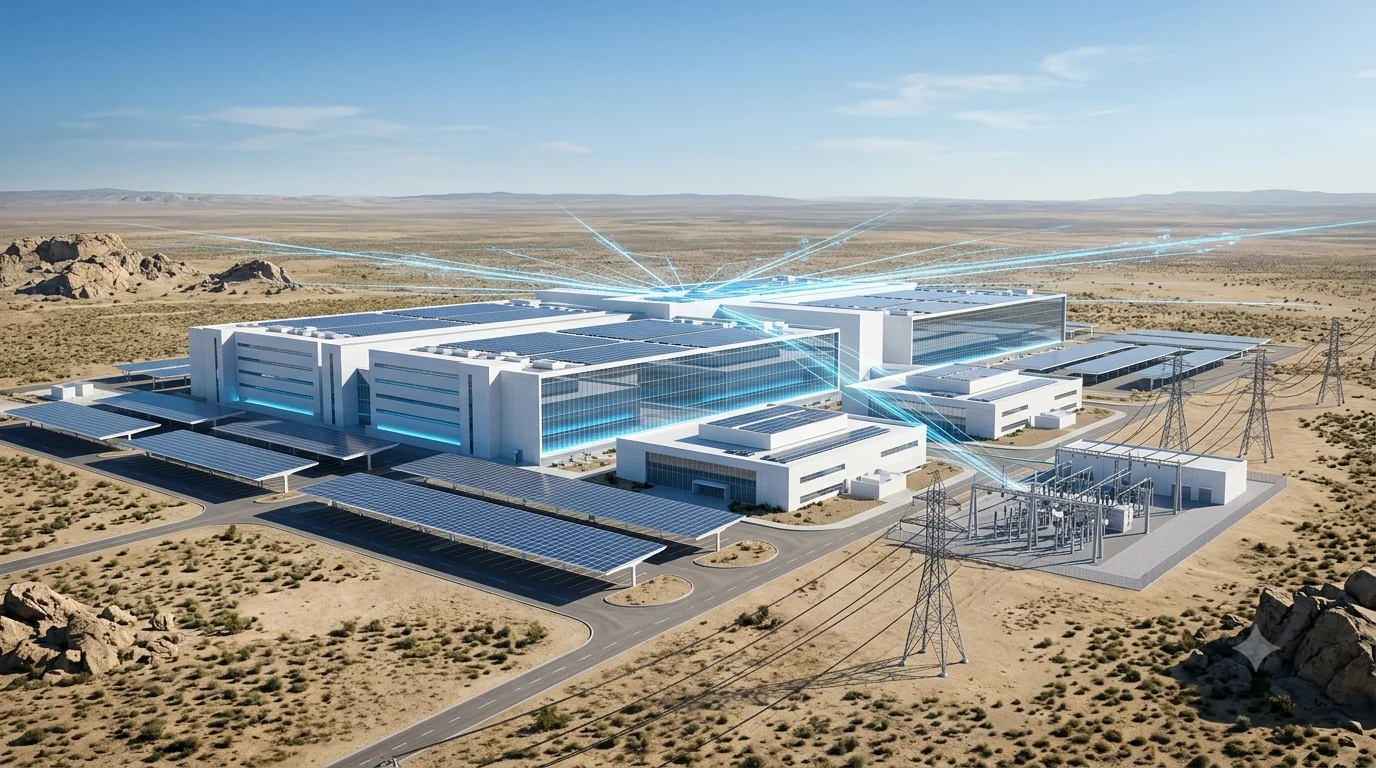
The proposed campus would occupy approximately 50 acres near the intersection of US Highway 395 and State Route 178 in Inyokern, an unincorporated community in Kern County. The facility would feature a 238,000-square-foot, single-story building designed specifically for modern AI and cloud workloads. Developers plan to construct six data halls capable of supporting both traditional enterprise computing and next-generation AI infrastructure. Furthermore, the campus would combine liquid cooling and air cooling technologies to support increasingly dense server deployments. The project would also include an on-site electrical substation, ensuring sufficient power delivery for high-performance computing operations. Consequently, the development aims to provide reliable infrastructure capable of supporting future AI growth across multiple industries. Construction remains subject to regulatory approvals. If approved, developers expect work to begin in April 2027, with operations targeted for November 2028. The initial development phase would deliver 60MW, while the completed campus would provide 99MW of total capacity.
Power Infrastructure Supports Future Growth
Plans include 40 diesel-powered emergency generators, each rated at 3MW. Together, these systems would provide backup generation capable of supporting up to 99MW during utility disruptions. Developers emphasize these generators would operate primarily during emergency situations rather than continuous production. Additionally, the campus would feature parking lot canopy solar installations to supplement on-site energy resources. Although renewable generation would not power the entire facility, the inclusion demonstrates growing interest in integrating sustainable energy features into modern data center developments. Meanwhile, AI workloads continue driving higher rack densities and greater electricity consumption. Consequently, developers increasingly design campuses around both operational resilience and future scalability.
Community Opposition Continues to Grow
Despite the economic potential, the proposed project faces organized local opposition. Community concerns have emerged regarding environmental impacts, infrastructure demands, and compatibility with surrounding land uses. A Change.org petition opposing the development has attracted more than 1,140 signatures. Residents and local organizations continue raising questions regarding the project’s long-term effects on the surrounding community. Furthermore, several organizations have submitted formal objections during the regulatory review process. These include the Eastern Kern County Resource Conservation District, the City of Ridgecrest, the China Lake Naval Base, and the Sierra Sands Unified School District. Additionally, the Indian Wells Valley Airport, also known as Inyokern Airport, has requested an aviation impact analysis before construction proceeds. These reviews will help determine whether the proposed facility could affect nearby aviation operations. The project therefore reflects a growing trend across the United States. Large AI infrastructure developments increasingly face detailed public scrutiny before receiving final approval.
Industry Groups Support the Development
While opposition continues, several organizations have formally endorsed the proposed facility. Industry supporters argue the project could strengthen regional economic development while creating long-term employment opportunities. The State Building and Construction Trades Council of California has expressed support for the development. Likewise, the Kern, Inyo, & Mono Counties Building and Construction Trades Council has endorsed the proposal. Moreover, the Kern Economic Development Corporation supports the project, highlighting its potential contribution to regional investment and digital infrastructure expansion. Supporters believe the campus could attract additional technology investment into eastern California. Consequently, the proposed facility may help diversify the local economy beyond traditional industries. Developers also emphasize that AI-ready infrastructure continues becoming increasingly important as enterprise computing demand expands across multiple sectors.
Market Outlook
At the same time, community engagement has become an increasingly important part of infrastructure planning. Environmental reviews, public consultations, and local stakeholder involvement now influence project timelines alongside engineering considerations. If approved, the Kern County campus would add another significant AI-ready facility to California’s expanding digital infrastructure landscape. More broadly, the proposal highlights how future data center development will require balancing technological growth with regional priorities as AI adoption continues accelerating.













