
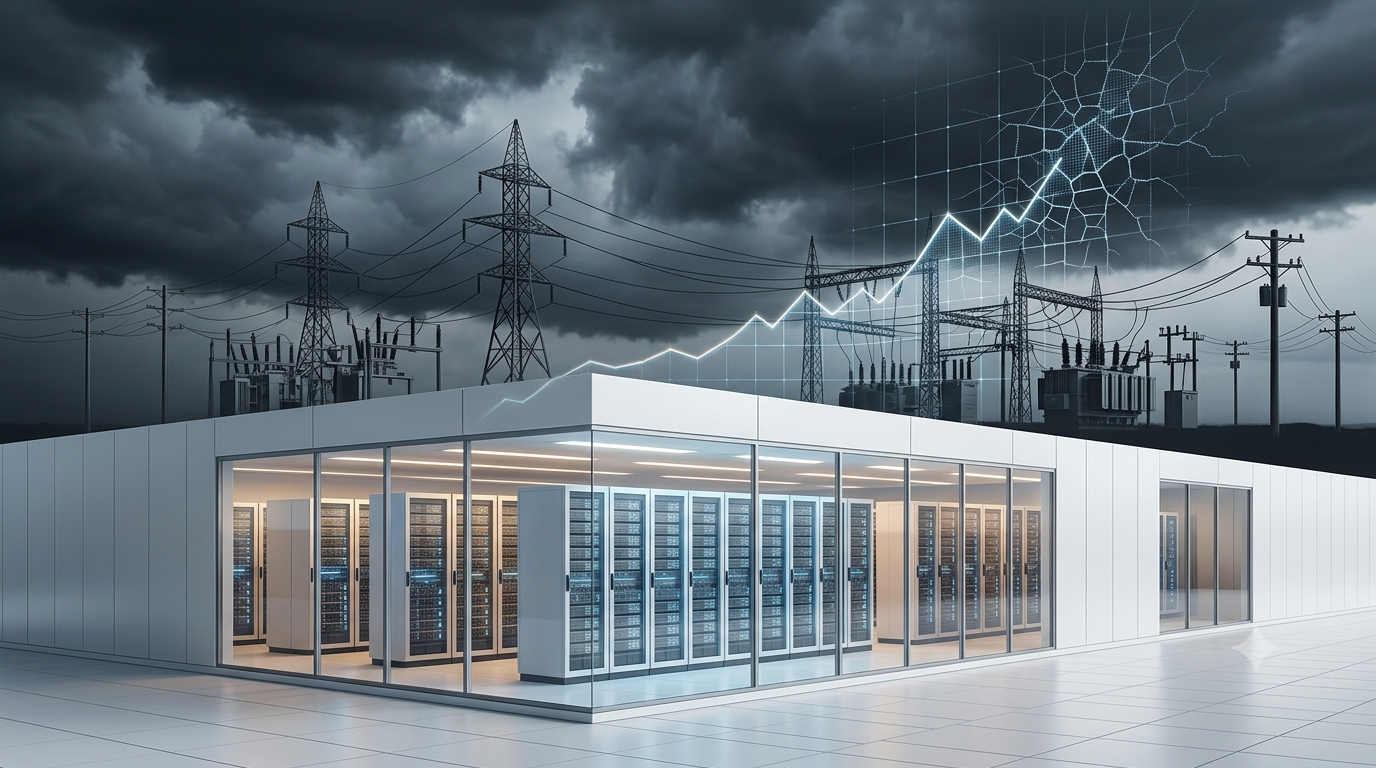
Oracle has emerged as one of the biggest beneficiaries of the global AI infrastructure race. The company has committed billions of dollars to expand cloud capacity, build new data centers, and support hyperscale AI workloads. However, Oracle now acknowledges that this aggressive expansion also exposes the company to significant financial and operational risks. The warning extends far beyond Oracle itself. It offers a glimpse into the challenges confronting the entire AI infrastructure industry. Every major cloud provider is investing unprecedented sums into AI capacity. At the same time, each faces uncertainty around demand, financing, energy availability, and customer spending. Oracle’s latest disclosures illustrate how quickly the economics of AI infrastructure can shift. Although long-term demand remains strong, companies must carefully balance investment timing with market realities.

Massive AI Investments Raise Financial Stakes
Oracle continues expanding its cloud infrastructure to meet soaring demand for artificial intelligence services. New facilities require enormous investments in land, construction, networking equipment, cooling systems, and advanced computing hardware. Those projects also demand years of planning before generating meaningful returns. Consequently, Oracle faces increasing exposure if customer demand slows or deployment timelines slip. Large infrastructure projects tie up significant capital long before revenue begins flowing. Any mismatch between investment and customer adoption could pressure profitability across multiple business segments. Furthermore, financing costs remain higher than they were only a few years ago. Companies investing aggressively must therefore generate consistent customer growth to justify expanding infrastructure at such a rapid pace. Oracle recognizes that maintaining this balance will become increasingly challenging as projects grow larger. Although AI demand continues rising, infrastructure investments require long planning horizons. Predicting customer requirements several years into the future remains difficult, even for leading cloud providers.
Demand Must Keep Pace With Supply
AI adoption has accelerated across nearly every industry. Enterprises continue deploying generative AI applications, digital assistants, software development tools, and automation platforms. Those workloads require expanding compute capacity and increasingly sophisticated infrastructure. Nevertheless, future demand remains difficult to forecast with precision. Businesses continue evaluating AI spending while measuring commercial returns from early deployments. Some organizations may delay projects if economic conditions weaken or technology priorities change. Oracle acknowledged that slower customer adoption could affect returns on newly constructed infrastructure. Data centers represent long-term assets that depend on sustained utilization over many years. Lower occupancy rates would reduce operating efficiency while extending investment payback periods. Similarly, enterprise customers increasingly seek flexibility when purchasing AI services. Rather than committing immediately to large contracts, many organizations prefer phased deployments that align with evolving business needs. This approach could influence future infrastructure expansion plans across the industry.
Power Availability Shapes Future Growth
Electricity has become one of the biggest constraints facing AI infrastructure worldwide. Modern AI clusters consume dramatically more power than traditional cloud workloads. Every new hyperscale campus therefore requires reliable access to large amounts of electricity before operations can begin. Oracle’s risk assessment reflects these growing energy challenges. Securing sufficient power has become increasingly difficult across several established data center markets. Grid limitations, transmission delays, and permitting requirements continue affecting deployment schedules globally. Meanwhile, renewable energy availability now plays a larger role in infrastructure planning. Many enterprise customers expect cloud providers to support sustainability objectives alongside computing performance. As a result, operators increasingly compete for locations offering both abundant electricity and renewable generation capacity. Power shortages could delay new projects while increasing operating expenses. Consequently, infrastructure planning now extends well beyond buildings and servers. Energy strategy has become equally important to long-term AI expansion.
Supply Chains Remain Under Pressure
Building AI infrastructure requires access to advanced semiconductors, networking equipment, electrical systems, and cooling technologies. Many of these components continue experiencing strong global demand as hyperscale providers expand simultaneously. Oracle highlighted supply chain disruptions as another significant risk. Delays affecting critical equipment could postpone facility construction and customer deployments. Such interruptions may also increase project costs while complicating long-term planning. Competition for advanced AI hardware has intensified over the past two years. Cloud providers increasingly compete for graphics processors, networking components, and specialized infrastructure equipment. Any shortages across these markets could influence deployment schedules throughout the industry. Additionally, construction materials, skilled labor, and engineering expertise remain in high demand. These factors continue placing upward pressure on infrastructure development costs as companies pursue increasingly ambitious expansion strategies.
Competition Continues Intensifying
Oracle does not operate in isolation. Amazon Web Services, Microsoft Azure, Google Cloud, and several emerging providers continue investing aggressively in AI infrastructure. Every major company seeks to secure customers before enterprise AI adoption reaches full scale. That competitive environment creates additional challenges. Providers must expand rapidly enough to meet demand without overspending on infrastructure that remains underutilized. Achieving this balance becomes increasingly difficult as investment requirements continue growing. Moreover, technological change occurs at an extraordinary pace. Infrastructure designed today must remain competitive several years into the future. Companies therefore face ongoing pressure to upgrade hardware while controlling capital expenditures. Customer expectations also continue evolving. Enterprises increasingly demand lower latency, greater reliability, stronger security, and better AI performance. Meeting these requirements requires continuous investment across both physical infrastructure and cloud platforms.

Industry Outlook
Oracle’s warning reflects a broader reality rather than an isolated concern. The global AI boom continues creating enormous opportunities across cloud computing and digital infrastructure. However, it also introduces unprecedented financial and operational risks for companies investing at scale. Future success will depend on more than building additional data centers. Operators must carefully align infrastructure expansion with customer demand, electricity availability, supply chain resilience, and long-term financial discipline. The AI infrastructure race remains far from over. Yet Oracle’s outlook demonstrates that winning will require careful execution as much as aggressive investment. Companies that balance growth with operational resilience are likely to emerge as long-term leaders in the evolving AI economy.











