 Skip to content
The Social License Is Becoming Critical Infrastructure
For years, data center development focused primarily on land availability, fiber connectivity, electricity capacity, and tax incentives. Community engagement often entered the conversation only after project announcements reached local residents. That sequence is now changing as public opposition increasingly influences whether large infrastructure projects move forward. Across North America and Europe, developers are discovering that technical readiness alone no longer guarantees successful deployment. Building public trust has become an essential component of modern data center development rather than an afterthought during project execution. The shift reflects broader changes in how communities perceive digital infrastructure. Data centers have evolved from relatively obscure industrial facilities into highly visible assets supporting artificial intelligence, cloud computing, and digital services. Residents now ask detailed questions about electricity demand, water consumption, environmental impact, traffic, and long-term economic value before supporting new developments. Local governments are also demanding stronger accountability as infrastructure projects grow larger and consume greater public resources. These expectations are forcing developers to rethink how they approach community relationships from the earliest planning stages.

Opposition Has Become A Global Development Challenge
Community resistance is no longer limited to isolated projects. Some of the world’s largest data center markets have experienced delays, zoning disputes, legal challenges, and project cancellations as residents question whether infrastructure benefits justify local impacts. Northern Virginia, Dublin, Amsterdam, and several U.S. metropolitan regions have all witnessed growing debates over electricity consumption, land use, and environmental sustainability. These disputes demonstrate that infrastructure expansion increasingly depends on public acceptance alongside engineering feasibility. Artificial intelligence has intensified these discussions because AI facilities demand significantly higher power densities than conventional enterprise data centers. Larger campuses often require dedicated substations, transmission upgrades, extensive cooling systems, and expanded transportation infrastructure. Communities therefore evaluate projects not only as technology investments but also as long-term changes to regional development patterns. Developers increasingly recognize that ignoring local concerns during planning stages can create delays that ultimately prove more expensive than proactive engagement.
Developers Are Engaging Communities Much Earlier
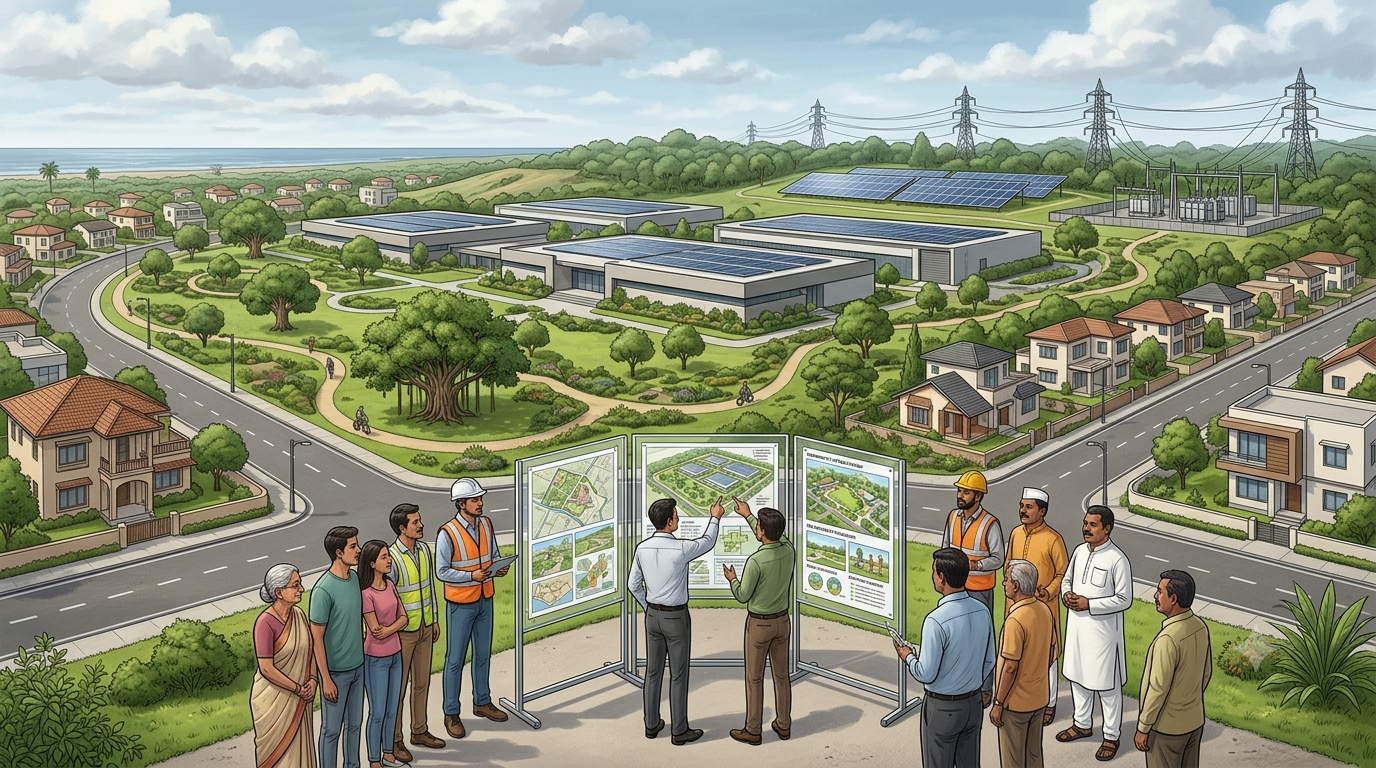
Many operators now begin community engagement months before submitting formal planning applications. Public meetings, neighborhood workshops, open houses, and consultation sessions allow residents to understand proposed developments while providing opportunities to raise concerns before designs become final. Early engagement also enables developers to modify project plans in response to local priorities rather than defending completed proposals against public criticism. This collaborative approach is gradually replacing the traditional announcement-driven development model. Communication strategies have also become more transparent. Instead of emphasizing only economic investment, developers increasingly explain electricity requirements, cooling technologies, backup power systems, construction timelines, and environmental mitigation measures. Many companies now publish sustainability commitments, emissions targets, and operational performance metrics that local stakeholders can evaluate independently. Greater transparency helps reduce misinformation while allowing technical discussions to focus on measurable facts rather than speculation.
Economic Benefits Require Greater Transparency
One of the most common criticisms surrounding data centers involves perceived differences between investment announcements and local economic outcomes. Construction phases create substantial employment, but operational facilities typically require fewer permanent workers than manufacturing plants or distribution centers. Communities increasingly seek detailed explanations regarding long-term employment opportunities, tax revenues, and secondary economic activity before supporting new developments. Developers have responded by presenting more comprehensive economic impact assessments during public consultations.
Companies are also highlighting indirect economic benefits generated through local suppliers, maintenance contractors, electrical services, security providers, telecommunications companies, and construction businesses. Educational partnerships with universities and technical colleges have become another important component of community engagement strategies. Workforce development initiatives help demonstrate that digital infrastructure can create broader regional opportunities beyond the facilities themselves. Local hiring commitments further strengthen confidence that investments will generate measurable community value.
Infrastructure Investments Extend Beyond Data Centers
Modern data center developments increasingly include broader infrastructure improvements that directly benefit surrounding communities. Road expansions, utility upgrades, water infrastructure modernization, broadband improvements, and electrical grid investments frequently accompany major campus developments. While these improvements primarily support new facilities, they can also enhance public infrastructure serving nearby residents and businesses. Developers increasingly emphasize these shared benefits during project planning discussions.
Grid modernization has become particularly important as utilities prepare for increasing electricity demand driven by AI workloads. New substations, transmission investments, and energy management technologies often strengthen regional electrical resilience beyond individual projects. Some operators also participate in demand response programs that help utilities balance electricity supply during periods of peak demand. These partnerships position data centers as active participants in regional energy systems rather than passive electricity consumers.

Environmental Concerns Are Driving Design Changes
Water consumption remains one of the most closely examined aspects of new data center proposals. Communities located in water-stressed regions increasingly request detailed information about cooling technologies, water recycling, and long-term resource management before approving projects. Developers have responded by adopting closed-loop cooling systems, recycled water programs, air-assisted cooling technologies, and direct liquid cooling systems that reduce freshwater dependence for high-density AI workloads. Environmental performance is becoming an increasingly visible factor in community acceptance.
Noise reduction has also emerged as an important design consideration. Backup generators, mechanical cooling equipment, and rooftop infrastructure can generate concerns among nearby residents, particularly in suburban environments. Modern facilities increasingly incorporate acoustic barriers, architectural screening, landscaping, and equipment placement strategies that reduce operational noise while improving visual integration with surrounding neighborhoods. These modifications demonstrate how community feedback increasingly influences engineering decisions rather than simply public relations messaging.
Community Benefits Are Becoming Formal Commitments
Several developers have moved beyond voluntary engagement by negotiating formal Community Benefit Agreements with municipalities and local organizations. These agreements typically outline commitments related to workforce training, educational investments, environmental initiatives, infrastructure improvements, and local procurement programs. Rather than relying solely on economic forecasts, such agreements establish measurable obligations that communities can monitor throughout the project’s lifecycle. Formal commitments also help strengthen accountability between developers and local governments.
Increasingly, companies are supporting local schools, funding STEM education programs, investing in digital literacy initiatives, and partnering with nonprofit organizations. These activities extend community engagement beyond project approvals into long-term regional development strategies. Developers recognize that maintaining positive relationships throughout operational lifecycles may become just as important as securing initial planning permission. Continuous engagement is gradually replacing transactional interactions focused exclusively on construction phases.
AI Is Raising The Stakes For Public Acceptance
Artificial intelligence has changed the economics of data center development, but it has also changed public expectations. AI facilities require significantly more electricity, higher rack densities, advanced cooling systems, and larger campuses than many legacy data centers. Residents therefore view new projects through a different lens than they did only a few years ago. Questions about grid reliability, renewable energy sourcing, and long-term resource availability now dominate public consultations. Developers increasingly recognize that AI infrastructure must demonstrate broader community value if projects are to secure long-term public support.
The conversation has also shifted from whether communities need data centers to how those facilities should be integrated into local development plans. Citizens increasingly expect operators to participate in discussions about energy planning, sustainability, workforce development, and public infrastructure rather than focusing solely on private investment. This broader dialogue reflects the growing role of data centers as essential infrastructure supporting national digital economies. Companies that actively contribute to regional planning are finding stronger public engagement than those relying only on traditional development processes.
Secondary Markets Offer More Than Available Land
As opposition increases in established hyperscale regions, developers are exploring secondary markets with stronger infrastructure potential and greater community openness. Locations across the Midwest, southern United States, Nordic countries, and parts of Asia are attracting investment because they combine available land, renewable energy resources, and growing digital economies. These markets also provide opportunities to establish community partnerships before infrastructure expansion reaches the scale seen in mature hubs. Early engagement can help prevent conflicts that have emerged elsewhere.
However, moving into secondary markets does not eliminate the need for public engagement. Smaller communities often demand even greater transparency because large infrastructure projects can significantly influence local development. Residents expect developers to explain how projects will affect transportation, housing, employment, and environmental resources over several decades. Companies entering these regions increasingly invest in local outreach teams and long-term stakeholder engagement before construction begins. Building trust early is proving just as important as securing suitable land and utility capacity.
Trust Is Becoming A Competitive Advantage
Competition for suitable development sites continues to intensify as AI investment accelerates worldwide. Access to electricity, fiber connectivity, and skilled labor remains essential, but community relationships are emerging as another differentiating factor. Developers with established records of transparency, environmental stewardship, and local investment often encounter fewer delays during planning processes. Positive reputations can shorten approval timelines while strengthening relationships with regulators, utilities, and municipal governments. Community trust is gradually becoming an operational asset rather than an intangible public relations objective.
Institutional investors are also paying closer attention to social performance alongside environmental metrics. Environmental, Social, and Governance (ESG) considerations increasingly influence infrastructure financing, particularly for large-scale digital projects. Community engagement, workforce development, and responsible resource management contribute directly to broader sustainability assessments. Companies that demonstrate measurable social outcomes may strengthen both investor confidence and long-term project resilience. Social performance is becoming increasingly intertwined with infrastructure strategy.
Source: https://www.mckinsey.com/industries/private-capital/our-insights/infrastructure
The Future Of Data Centers Depends On Public Confidence
The rapid expansion of artificial intelligence has transformed data centers into one of the world’s most important infrastructure sectors. Their continued growth will require enormous investments in electricity, land, cooling technologies, and network connectivity. Yet technical capability alone will not determine where future facilities are built. Public acceptance is emerging as a critical factor shaping investment decisions, permitting timelines, and regional competitiveness. Communities increasingly expect infrastructure developers to deliver lasting value beyond digital services.
The industry’s response suggests that community engagement is evolving into a core component of infrastructure planning. Developers are engaging residents earlier, increasing operational transparency, investing in workforce development, improving environmental performance, and supporting broader regional infrastructure. These initiatives reflect a recognition that long-term success depends on partnership rather than persuasion. As AI drives another generation of data center expansion, the companies that build durable community relationships may secure an advantage that extends well beyond individual project approvals.












