Skip to content
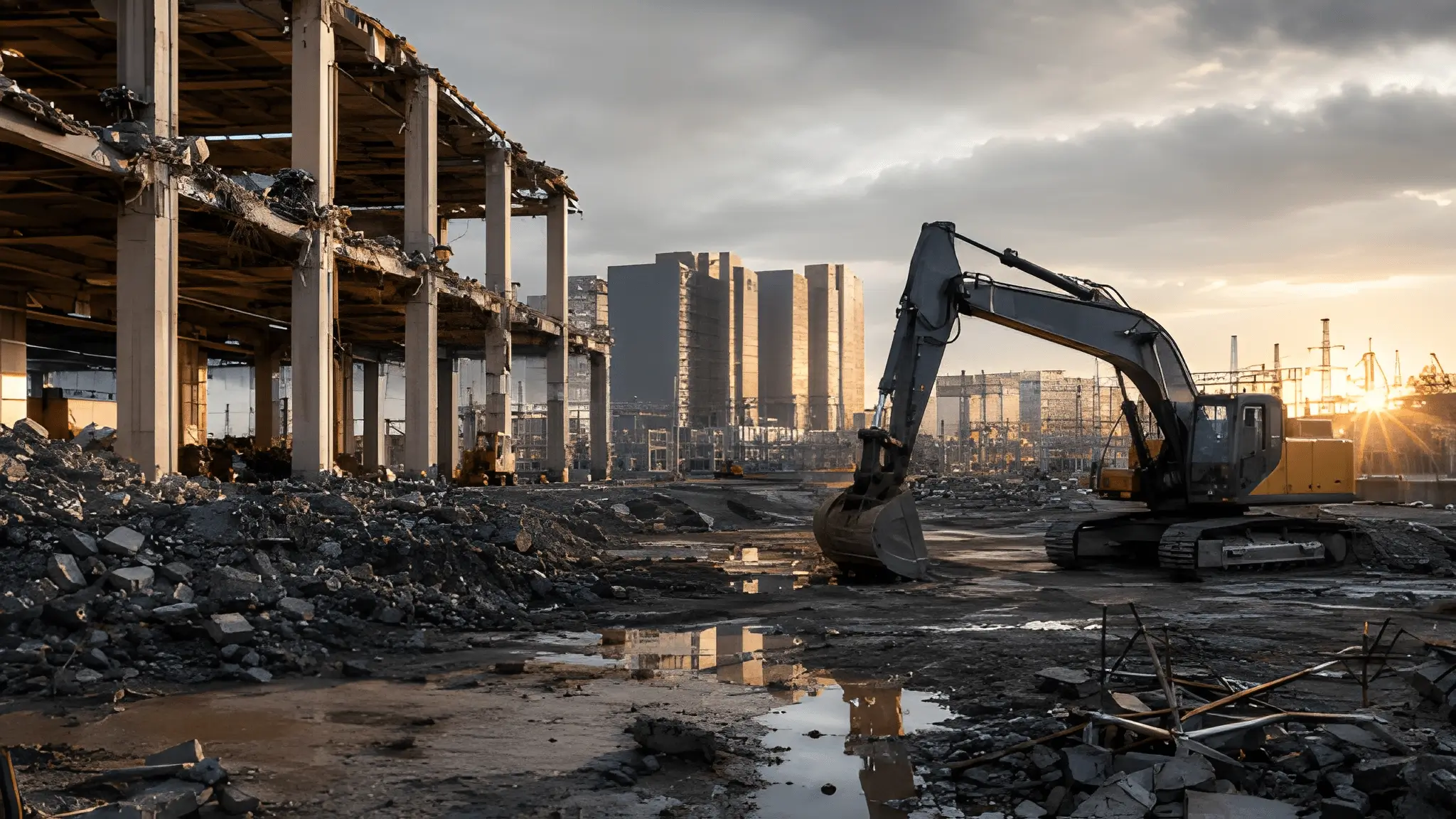
A construction site rarely becomes an engineering case study before the first production workload reaches the racks. Temple, Texas changed that expectation without intending to become an industry reference point. What appeared to be another hyperscale expansion instead exposed a deeper question about how digital infrastructure should evolve when compute architecture changes faster than physical assets can mature. The demolition of partially completed structures demonstrated that decommissioning is no longer only an end-of-life consideration, because infrastructure risk can emerge while concrete is still curing. Design assumptions that appeared technically reasonable during project approval lost relevance before the buildings reached operational readiness. Every stage of infrastructure planning now faces a different planning horizon because rapid advances in AI hardware and supporting infrastructure have shortened planning horizons for many large-scale data center projects, creating situations where construction timelines and technology roadmaps increasingly evolve on different schedules.

This story extends beyond one construction project because similar design pressures now influence nearly every large-scale AI campus under development across global infrastructure markets. Engineers increasingly face situations where electrical topology, cooling distribution, structural loading, and mechanical systems may require reassessment before facilities complete their original construction schedules. Investment discussions therefore cannot separate hardware evolution from civil engineering because both disciplines now operate on overlapping innovation timelines. Every permitting decision, procurement contract, and structural specification influences the future adaptability of infrastructure that may encounter radically different workloads before reaching operational maturity. Temple ultimately offers less of a cautionary tale about demolition itself than about the growing mismatch between permanent construction practices and temporary assumptions regarding computational demand.
When Blueprints Become Liabilities
Infrastructure planning traditionally rewards predictability because design teams seek to eliminate uncertainty before excavation begins. Architectural blueprints usually represent years of engineering coordination across structural, electrical, mechanical, environmental, and operational disciplines before the first foundation is poured. That methodology functions effectively when technological evolution progresses more slowly than construction timelines and depreciation schedules. AI infrastructure no longer follows that historical rhythm because processor architectures, networking fabrics, rack densities, and cooling methods continue changing while projects remain under construction. Temple highlighted this divergence after Meta paused work during 2022 to redesign the campus around emerging AI requirements before later resuming construction using an entirely different building concept. The important lesson does not rest solely in the redesign because it illustrates how infrastructure assumptions may require reassessment during long procurement and construction programs as AI computing requirements continue to evolve.
Blueprint Certainty Meets AI Velocity
Earlier generations of hyperscale campuses optimized for cloud expansion through repeatable construction modules that emphasized operational consistency across geographically distributed sites. Those designs generally prioritized standardized rack layouts, predictable airflow management, modular electrical systems, and incremental capacity expansion within established engineering parameters. AI clusters introduced substantially different infrastructure requirements because dense accelerator deployments altered thermal profiles, power delivery architecture, network topology, and equipment footprints simultaneously. Building envelopes originally intended for cloud computing therefore encountered limitations unrelated to structural quality because the computational model itself had fundamentally changed. Demolition under those conditions reflected an engineering response to changing design objectives instead of evidence that construction quality had failed. Future infrastructure planning increasingly requires design frameworks capable of accommodating computational uncertainty rather than assuming architectural permanence from the outset.

Infrastructure professionals often describe flexibility as an operational advantage, and recent AI infrastructure developments increasingly place greater emphasis on adaptable structural and utility design during project planning. Design documentation traditionally locks major engineering decisions early because procurement, permitting, financing, and construction sequencing depend upon stable technical specifications. AI development compresses innovation cycles enough that these fixed assumptions increasingly collide with new compute architectures before buildings achieve mechanical completion. Structural adaptability therefore deserves consideration alongside redundancy, resilience, and maintainability during conceptual design rather than appearing later as a retrofit objective. Engineering organizations that continue treating flexibility as secondary may discover that their greatest infrastructure constraint originates from the certainty embedded inside their original blueprints instead of any physical limitation imposed by the construction itself.
Designing for Revision Instead of Completion
Traditional project governance measures success through milestone completion because every completed stage reduces uncertainty and increases investment confidence. AI infrastructure introduces a different engineering philosophy where revision may represent stronger technical governance than rigid adherence to an outdated design. Temple illustrates this distinction because redesign occurred before operational deployment rather than after years of inefficient service. That sequence prevented the organization from operating infrastructure fundamentally misaligned with evolving computational priorities despite creating immediate construction disruption. Engineering maturity increasingly depends upon recognizing when design assumptions require replacement rather than protecting decisions made under earlier technological conditions. Modern infrastructure programs therefore need governance structures capable of rewarding informed redesign instead of automatically treating every deviation from the original plan as project failure. Future site planning consequently shifts toward architectural optionality rather than architectural completeness during initial design development.
Modular utility corridors, expandable structural grids, configurable equipment galleries, and scalable thermal distribution systems represent examples of infrastructure intended to accommodate unknown computational futures. Those design principles require greater coordination across engineering disciplines because flexibility cannot emerge from isolated system upgrades after construction concludes. Infrastructure resilience consequently becomes less dependent upon surviving physical disruption than remaining technically relevant across multiple generations of compute architecture. Temple therefore encourages a broader reconsideration of what infrastructure maturity actually represents during the AI era. Long asset lifecycles remain valuable only when those assets retain the capacity to evolve alongside changing computational requirements instead of resisting them through rigid physical constraints. Every blueprint now carries an implicit forecast regarding future processor design, cooling technology, electrical density, and workload distribution even when those assumptions remain unstated. Engineering organizations increasingly need mechanisms that identify when those forecasts lose validity before construction decisions become irreversible.
The Cost of Certainty in a 6-Month Chip Cycle
For decades, infrastructure economics rested on the assumption that buildings would outlast several generations of hardware without requiring structural reconsideration. Servers reached end-of-life, storage arrays disappeared from production environments, and network switches gradually moved through scheduled refresh cycles while the surrounding facility remained fundamentally unchanged. Depreciation models therefore reflected a relatively stable relationship between physical infrastructure and information technology because each evolved at a predictable pace. AI infrastructure has altered that relationship by introducing compute platforms whose electrical, thermal, and spatial requirements shift much faster than traditional construction programs can accommodate. Temple illustrated how the physical asset itself may become technologically constrained before the building reaches operational maturity, creating a disconnect between financial planning and engineering reality. Investment discipline therefore requires a revised understanding of infrastructure value because computational capability increasingly determines whether a facility remains economically relevant rather than the remaining service life of its structural components.
Capital Lifecycles No Longer Match Compute Lifecycles
Traditional depreciation schedules also assume that hardware evolves independently from the facility supporting it, allowing organizations to refresh technology while preserving the surrounding infrastructure investment. AI clusters disrupt that separation because processor evolution increasingly influences cooling architecture, power distribution, rack configuration, cable management, and mechanical system design simultaneously. Every new accelerator generation places additional demands on supporting infrastructure, making hardware refresh decisions inseparable from building capability. Financial planning therefore encounters a growing mismatch where accounting recognizes the building as a durable asset while engineering evaluates it against rapidly changing computational requirements. Infrastructure valuation increasingly considers whether existing facilities can efficiently support contemporary compute architectures alongside traditional measures such as asset condition, operational performance, and remaining service life.
Construction timelines further complicate this challenge because civil engineering cannot accelerate at the same pace as semiconductor development. Foundation systems require geotechnical validation, permitting reviews, material procurement, structural sequencing, inspection cycles, and commissioning activities that collectively follow established engineering practices rather than technology release schedules. Processor roadmaps continue evolving throughout the planning and construction phases of many large-scale campuses, requiring infrastructure teams to periodically reassess whether original engineering assumptions remain appropriate for future deployment requirements. Design certainty therefore becomes progressively difficult to maintain because every engineering milestone depends upon assumptions that may evolve before the project advances into the next construction phase. Temple demonstrated that this timing mismatch affects strategic planning rather than project execution because infrastructure relevance can change without any failure occurring during construction itself.
Hardware Density Now Influences Civil Engineering
Rack density once represented an operational planning variable that infrastructure teams could address through incremental electrical upgrades and airflow optimization. Contemporary AI deployments increasingly require electrical capacity, liquid cooling distribution, structural loading considerations, and equipment clearances that influence the building itself rather than only the installed hardware. Engineering teams therefore evaluate future processor roadmaps while designing foundations, floor systems, and utility corridors because later modifications become progressively more disruptive after construction concludes. Civil engineering consequently enters technology forecasting in ways rarely required during earlier generations of hyperscale expansion. Temple reinforces that observation because the redesign addressed infrastructure suitability rather than equipment procurement alone, demonstrating how hardware evolution now reaches into the earliest phases of site development. Earlier cloud environments generally expanded through repeatable electrical modules that balanced resilience with predictable server demand across standardized deployment patterns.
Infrastructure designers increasingly evaluate adaptability as an engineering objective because fixed electrical geometry may become a stronger limitation than available land or building area. Financial planning has traditionally favored clearly defined project scopes, while recent AI infrastructure projects increasingly incorporate adaptable engineering strategies to accommodate evolving technology requirements throughout long construction timelines. AI infrastructure increasingly rewards controlled uncertainty because adaptable engineering preserves future technical relevance even when exact computational requirements remain unknown during project approval. Flexible utility corridors, scalable power distribution, configurable cooling systems, and modular equipment spaces often appear less optimized during initial construction, yet they preserve engineering options throughout successive hardware generations. Temple therefore suggests that infrastructure value increasingly depends upon preserving future design choices instead of maximizing present-day optimization against assumptions that may quickly lose relevance. Economic resilience consequently shifts from protecting completed construction toward protecting the ability to accommodate technologies that remain undefined at groundbreaking.
Zoning for the Unknown: Land Use Clauses That Backfire
Land entitlement processes typically focus on creating certainty between developers and reviewing authorities before large-scale construction begins. Site plans establish building footprints, access roads, utility corridors, drainage systems, parking layouts, environmental buffers, and setback distances that collectively define how the property may develop over time. Those approvals generally reflect the best available engineering assumptions at the moment permits receive authorization, making predictability the central objective throughout the review process. AI infrastructure introduces a different challenge because future compute requirements may require changes that extend beyond equipment replacement into the approved building envelope itself. Temple highlights this tension because significant infrastructure redesign may require reconsideration of previously approved development plans when evolving technical requirements extend beyond the assumptions used during the original planning process.
Land Approvals Often Freeze Future Engineering Choices
Planning approvals frequently distinguish between major structural changes and operational modifications because each carries different review requirements. Mechanical equipment replacements often proceed through established administrative pathways, while changes affecting building dimensions, utility demand, or circulation patterns may require additional review depending on local planning frameworks. AI infrastructure increasingly blurs that distinction because higher-density computing sometimes necessitates expanded cooling infrastructure, revised electrical distribution, or modified equipment halls that interact with previously approved site layouts. Engineering flexibility therefore depends not only upon structural capability but also upon whether the original approvals permit meaningful adaptation without restarting complex planning processes. Land use decisions consequently become long-term technical variables rather than purely administrative milestones completed before construction begins.
Infrastructure projects historically benefited from highly specific planning documentation because detailed approvals reduced ambiguity throughout procurement and construction. AI-era development increasingly requires planning frameworks capable of accommodating technical evolution without undermining environmental review, safety standards, or community commitments established during the approval process. Flexible development envelopes, adaptable utility corridors, phased infrastructure zones, and expandable service areas may therefore become more valuable than highly optimized layouts tied to a single technology assumption. Temple demonstrates that engineering uncertainty does not disappear after permitting because technological evolution continues regardless of regulatory timelines. Planning approaches increasingly consider preserving adaptation capacity alongside long-term development certainty as AI infrastructure requirements continue evolving.
Adaptive Reuse Begins Before Construction
Adaptive reuse has traditionally focused on extending the usefulness of existing buildings, while recent AI infrastructure planning increasingly evaluates future adaptability during the earliest stages of project development. Engineers increasingly evaluate whether structural systems, utility corridors, mechanical spaces, and circulation pathways can accommodate technologies that have not yet entered commercial deployment. This approach changes the purpose of design flexibility because the objective extends beyond extending building life into preserving engineering relevance throughout successive compute generations. Temple demonstrates that future adaptability cannot rely upon retrofit alone because redesign pressures may emerge before a campus completes its original construction sequence. Infrastructure planning therefore benefits from treating adaptive reuse as an initial design objective rather than a recovery strategy reserved for aging assets. Site master planning increasingly reflects this philosophy through modular development zones capable of evolving independently as technology changes across the campus lifecycle.
Planning documentation may therefore shift toward performance-based criteria rather than prescribing narrowly defined equipment arrangements that become obsolete as processor architectures evolve. Temple reinforces that possibility because the underlying engineering challenge centered on future suitability rather than correcting deficiencies in construction execution. Technical optionality consequently becomes an infrastructure asset with measurable long-term value rather than an abstract architectural preference. Planning frameworks may also require broader collaboration between civil engineers, structural designers, electrical specialists, cooling architects, and semiconductor road-mapping teams during conceptual development. Earlier project delivery models often transferred responsibility sequentially from one engineering discipline to another because infrastructure assumptions remained relatively stable throughout construction. AI infrastructure compresses those timelines sufficiently that architectural decisions increasingly depend upon anticipated compute evolution occurring years beyond the groundbreaking ceremony.
Concrete vs. Code: The New Materials Mismatch
Data center structures have historically evolved more slowly than the technologies they contain because buildings typically support several hardware generations without requiring substantial structural modification. That design philosophy worked effectively while incremental improvements in processor performance remained compatible with established rack layouts, raised floor configurations, cooling systems, and electrical distribution methods. AI infrastructure changes that relationship because computational density increasingly influences the geometry of the building itself rather than merely affecting the equipment installed within it. Structural loading, floor spans, ceiling clearances, piping routes, maintenance access, and thermal zoning now interact directly with accelerator deployment strategies that continue evolving at exceptional speed. Temple illustrates how the building envelope can become technologically constrained before operational commissioning, transforming structural design assumptions into practical engineering limitations. Infrastructure planning therefore requires closer alignment between architectural permanence and computational uncertainty than previous generations of hyperscale construction demanded.
Buildings Designed for Yesterday’s Compute
Structural engineering traditionally optimized facilities around relatively predictable equipment weights distributed across standardized rack footprints. Contemporary AI deployments increasingly concentrate higher power delivery, liquid cooling equipment, networking assemblies, and mechanical infrastructure within localized portions of the building, altering load distribution across structural systems. Engineers therefore evaluate slab capacity, support spacing, suspended utility systems, and serviceability using assumptions that may change before the project reaches mechanical completion. Material selection consequently becomes intertwined with semiconductor roadmaps because future equipment characteristics directly influence structural performance requirements. Physical durability alone no longer guarantees infrastructure usefulness when computational architecture continually redefines what the building must support.
Ceiling height provides another example of this growing interaction between permanent construction and evolving technology. Earlier hyperscale environments generally balanced mechanical access, airflow management, cable routing, and maintenance requirements using established dimensional standards that reflected cloud computing priorities at the time of design. AI infrastructure increasingly introduces liquid cooling distribution, expanded utility pathways, overhead electrical systems, and networking architectures that compete for vertical space inside equipment halls. Buildings optimized around earlier assumptions may therefore encounter spatial limitations unrelated to structural integrity because service volumes become insufficient for contemporary infrastructure systems. Temple illustrates the importance of considering long-term serviceability alongside compliance with current engineering standards when evaluating future infrastructure adaptability.
Permanent Materials Supporting Temporary Assumptions
Concrete represents permanence within infrastructure because foundations, structural frames, and floor systems often remain in service for decades after equipment has disappeared from production environments. AI infrastructure exposes an unusual contradiction where permanent materials increasingly support computational assumptions that may remain relevant only briefly. Design teams therefore face a difficult balance between creating structures capable of long operational lives while avoiding excessive optimization around hardware characteristics that continue changing rapidly. Temple demonstrates that this tension extends beyond technology procurement because structural decisions may ultimately determine whether future compute generations remain physically deployable within the completed building. Engineering permanence consequently requires greater abstraction from current hardware assumptions than traditional infrastructure methodologies typically encouraged.
Material efficiency also deserves renewed consideration because optimization often reduces adaptability when future engineering requirements remain uncertain. Narrow structural tolerances, highly specialized equipment layouts, and tightly integrated service pathways may minimize construction costs during initial delivery, yet those same characteristics can restrict future modification opportunities. Engineers increasingly evaluate reserve structural capacity, modular utility routing, and flexible equipment zones as deliberate design strategies rather than unnecessary redundancy. Those decisions rarely maximize short-term material efficiency, although they preserve significantly broader adaptation pathways throughout the infrastructure lifecycle. Technical resilience therefore emerges from carefully balancing engineering optimization against the uncertainty inherent within rapidly evolving compute architectures.
Demolition as a Design Review
Engineering disciplines have long relied on post-occupancy evaluations to understand how buildings perform under real operating conditions, yet demolition offers a different form of technical evidence because it reveals which design assumptions lost relevance before operational experience could even accumulate. Temple presents an uncommon opportunity to examine infrastructure decisions that encountered technological displacement during construction rather than after decades of service. That distinction matters because the physical systems did not deteriorate through prolonged use, deferred maintenance, or environmental exposure. The underlying challenge emerged from a shift in computational architecture that changed what the completed facility needed to support before commissioning activities reached completion. Every removed structural element represents a design decision that can now be evaluated against current infrastructure requirements rather than against the assumptions that originally justified its inclusion.
Reading Failure Without Calling It Failure
Design reviews traditionally occur before procurement because engineering teams seek to identify conflicts while modifications remain relatively inexpensive. AI infrastructure increasingly requires another category of review that compares completed construction against the current trajectory of compute architecture before major deployment begins. That evaluation does not imply that earlier engineering decisions were technically unsound because they reflected the best information available during conceptual planning. Technological evolution instead changes the criteria used to judge infrastructure suitability, making previously acceptable design choices progressively less compatible with emerging workloads. Temple illustrates why infrastructure governance now benefits from periodic technical reassessment throughout construction rather than relying exclusively on reviews performed before groundbreaking. Engineering confidence consequently depends upon maintaining alignment with evolving compute requirements instead of preserving consistency with historical design documentation.
This perspective also changes how infrastructure organizations interpret redesign activities during active construction programs. Conventional project management often treats substantial redesign as evidence of planning deficiencies because changes affect schedules, procurement sequencing, and resource allocation. AI infrastructure introduces situations where disciplined redesign protects long-term technical relevance even though it temporarily disrupts project execution. Engineering maturity therefore depends upon distinguishing avoidable design errors from necessary adaptations driven by external technological developments beyond the control of the project team. Temple ultimately demonstrates that demolition can function as an engineering feedback mechanism because removed structures provide valuable insight into which assumptions no longer align with the direction of modern computational infrastructure.
Reverse Engineering the Future Through Deconstruction
Infrastructure projects traditionally generate knowledge during planning, construction, commissioning, and operation, yet deconstruction increasingly represents another valuable source of engineering insight. Every structural modification exposes the interaction between permanent construction and rapidly evolving computational requirements, allowing engineers to understand which systems constrained adaptation despite meeting original design objectives. Temple therefore encourages infrastructure teams to document demolition activities with the same rigor applied to commissioning because both processes reveal how the facility responds to engineering expectations. Lessons extracted from deconstruction can influence future structural grids, utility corridors, equipment clearances, service pathways, and modular expansion strategies before subsequent campuses enter detailed design. Engineering organizations consequently transform demolition from an endpoint into the beginning of another design cycle.
Reverse engineering also extends beyond physical components because procurement strategies, permitting documentation, sequencing plans, and design governance all contribute to long-term adaptability. Construction contracts may increasingly distinguish between permanent structural assets and replaceable infrastructure layers so future modifications require less disruptive intervention. Modular construction philosophies similarly become more valuable when critical systems can evolve independently without affecting the surrounding building envelope. Temple demonstrates that infrastructure flexibility rarely depends upon one engineering decision because adaptability emerges through coordinated choices made across every discipline participating in project development. Technical resilience therefore reflects systemic design integration rather than isolated examples of modular architecture. Future infrastructure programs may expand post-project engineering reviews to document how design decisions influence long-term adaptability, complementing existing commissioning and operational evaluation processes. Those assessments could evaluate whether structural systems remain capable of supporting foreseeable compute evolution without requiring extensive reconstruction during future technology transitions.
The Half-Life of a Hyperscale Shell
Infrastructure longevity has traditionally represented one of the strongest indicators of engineering success because durable buildings spread construction investment across decades of productive operation. AI infrastructure introduces a more nuanced reality where physical durability does not automatically guarantee continued technical usefulness. A structurally sound facility may remain perfectly serviceable while simultaneously becoming incompatible with contemporary compute architectures that require different power densities, cooling systems, equipment layouts, and service pathways. Temple illustrates that distinction because the engineering question focused on future suitability rather than structural deterioration or construction quality. Infrastructure valuation increasingly considers technical adaptability together with physical condition, operational performance, and remaining service life when assessing long-term usefulness. The practical lifespan of a hyperscale shell now depends as much upon computational compatibility as it does upon material durability.
When Buildings Outlive Their Original Purpose
Economic obsolescence consequently deserves greater attention during infrastructure planning because changing technology can reduce practical usefulness without affecting structural integrity. Conventional lifecycle models generally assume that maintenance, modernization, and equipment replacement preserve operational relevance throughout the building’s intended service life. AI infrastructure complicates that assumption because new compute architectures increasingly redefine the physical environment required for efficient deployment. Engineers therefore evaluate whether adaptation remains technically practical long before deterioration becomes an engineering concern. Temple reinforces the importance of distinguishing between physical condition and computational suitability because the two no longer evolve according to the same timeline.
Real estate strategy also changes under these conditions because land value, utility access, permitting status, and regional infrastructure may remain attractive even when existing building geometry limits future deployment options. Engineering organizations increasingly examine whether retaining selected site assets while replacing others provides stronger long-term flexibility than preserving every completed structure. Modular infrastructure layers support this approach by allowing permanent civil works to remain useful while computational environments evolve through successive redesign cycles. Temple illustrates how infrastructure planning may evaluate retaining suitable site assets while modifying or replacing other components to better align with evolving technical requirements. The useful life of the site therefore becomes independent from the useful life of every individual building occupying that location.
Allocating Stranded Infrastructure Risk
Traditional infrastructure investment assumed that stranded assets primarily resulted from declining demand, regulatory change, or unexpected market shifts after years of operation. AI infrastructure introduces another category of exposure where technological evolution can reduce the practical value of a building long before physical deterioration becomes a meaningful engineering concern. Temple illustrates that distinction because the underlying site retained strategic relevance while portions of the original construction no longer aligned with revised computational objectives. Engineering organizations therefore need methods to evaluate infrastructure exposure based not only on structural longevity but also on the probability that future compute architectures will exceed current building assumptions. Risk management consequently expands beyond construction execution and operational reliability into long-term adaptability as a measurable design characteristic.
Project governance increasingly reflects this broader perspective by considering flexibility as an engineering asset rather than treating it solely as a contingency against uncertain future requirements. Structural reserve capacity, expandable utility corridors, modular equipment galleries, accessible service pathways, and configurable electrical distribution all contribute to reducing the likelihood that infrastructure becomes technologically stranded during its intended operational life. Those features may appear underutilized immediately after commissioning, yet they preserve valuable engineering options as processor architectures, cooling strategies, and workload characteristics continue evolving. Temple illustrates that adaptable infrastructure can preserve future engineering options when technology requirements evolve during extended planning and construction timelines. Infrastructure resilience therefore depends upon sustaining relevance rather than simply extending structural endurance.
From Master Plan to Exit Plan
Master planning has traditionally concentrated on land acquisition, utility availability, phased expansion, logistics, resilience, and long-term operational growth because infrastructure programs expected buildings to remain useful throughout several generations of technology. AI infrastructure introduces a different planning horizon where technical relevance may evolve faster than the surrounding physical environment. Temple demonstrates that construction planning now benefits from considering eventual redesign, selective replacement, and decommissioning pathways before excavation begins rather than postponing those discussions until facilities approach the end of their operational lives. Recent AI infrastructure discussions increasingly encourage considering future modification and decommissioning pathways during conceptual development rather than only after facilities approach the end of their operational life. Infrastructure strategy consequently shifts toward preserving future engineering freedom alongside immediate operational capability.
Designing the End Before Construction Begins
Engineering documentation increasingly benefits from identifying which building components should remain permanent and which systems should intentionally support replacement throughout successive compute generations. Foundations, utility corridors, transportation access, stormwater systems, and site grading often represent durable infrastructure that can continue supporting future development even when computational environments require significant redesign. Mechanical equipment, cooling networks, electrical distribution assemblies, and internal deployment zones may instead benefit from modular strategies that simplify future reconfiguration without disturbing the surrounding site. Temple reinforces the importance of separating infrastructure according to functional permanence rather than treating every completed element as equally fixed throughout its lifecycle. Engineering flexibility consequently emerges through deliberate classification of assets according to their expected rate of technological change.
Exit planning also improves engineering decision-making because it forces project teams to document the assumptions supporting every major design choice before those assumptions become embedded within permanent construction. Future infrastructure reviews can then evaluate whether evolving computational requirements remain consistent with the original planning framework or whether redesign offers stronger long-term technical alignment. Governance processes therefore become more transparent because engineering decisions maintain traceable relationships with the technological expectations that justified them during conceptual design. Temple illustrates how clearly documented assumptions simplify future reassessment by providing an objective reference point instead of relying upon institutional memory after project conditions have changed. Infrastructure maturity ultimately depends upon planning for revision with the same discipline traditionally applied to planning for continuous operation.
Decommissioning as an Engineering Requirement
Decommissioning has often occupied a relatively narrow position within infrastructure planning because most attention focused on safe equipment removal, environmental compliance, and eventual site restoration after operational service concluded. Recent AI infrastructure planning increasingly considers future decommissioning and major redesign as part of broader lifecycle planning alongside traditional end-of-life management practices. Temple demonstrates that infrastructure may require selective dismantling during technological transition rather than after decades of completed service, making disassembly an operational capability instead of a distant administrative process. Design teams therefore benefit from considering accessibility, material separation, structural independence, and modular replacement throughout conceptual development. Engineering efficiency consequently improves because future interventions become less disruptive when the original building intentionally accommodates controlled modification.
Construction methods also evolve under this philosophy because assemblies increasingly prioritize reversibility alongside structural performance. Bolted structural systems, modular service corridors, prefabricated utility components, accessible equipment interfaces, and standardized connection strategies all simplify future engineering changes while preserving operational reliability during active service. Those decisions rarely diminish present-day building performance, although they significantly reduce complexity when computational requirements eventually demand redesign. Temple encourages infrastructure organizations to view dismantling capability as another dimension of engineering quality rather than interpreting it as evidence of temporary construction. Long-term adaptability therefore becomes inseparable from thoughtful detailing at every stage of project delivery. Infrastructure governance finally reaches greater maturity when decommissioning criteria receive the same level of engineering attention as uptime, resilience, maintainability, and operational availability. Every major design decision can then be evaluated according to its contribution toward future adaptability rather than solely through present-day construction efficiency.
Building to Unbuild: Lessons for 2027 and Beyond
The Temple project does not establish a universal blueprint for future infrastructure because every AI campus responds to different operational priorities, geographic conditions, electrical availability, and computational objectives. Its significance instead lies in demonstrating that infrastructure planning has entered an era where technical assumptions deserve continuous reassessment throughout construction rather than remaining fixed after design approval. Material durability remains an important foundation of infrastructure design, while long-term operational value increasingly depends on whether buildings can accommodate evolving computational architectures through adaptable engineering. Engineering organizations therefore benefit from treating adaptability as a measurable design objective alongside resilience, maintainability, safety, and operational continuity. Temple ultimately reminds the industry that successful infrastructure no longer depends upon building structures that resist change, but upon building systems that welcome it through intentional engineering flexibility.