
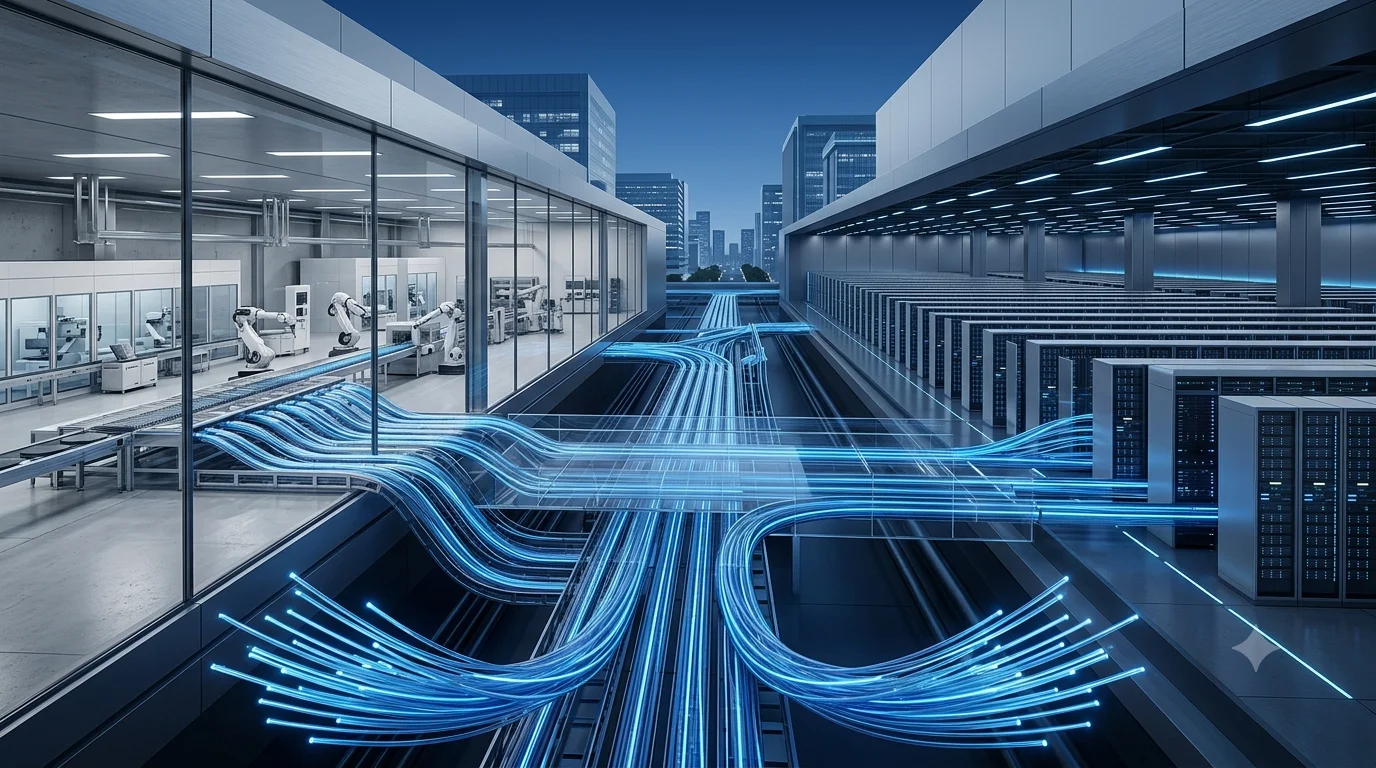
India’s digital infrastructure sector is entering a new growth phase as artificial intelligence accelerates demand for high-capacity networking solutions. HFCL has announced a ₹950 crore investment to expand its optical fiber manufacturing capabilities while unveiling its new OptiQ AI data center solutions portfolio. Moreover, the company believes AI-driven data center expansion will significantly boost demand for advanced optical connectivity over the coming years. Consequently, HFCL aims to strengthen its position across both domestic and international infrastructure markets. The investment reflects a broader industry shift. AI data centers require far greater fiber density than traditional telecom networks. Therefore, manufacturers increasingly invest in next-generation optical technologies capable of supporting high-bandwidth AI workloads. HFCL expects this trend to create substantial long-term opportunities, particularly across the United States and other rapidly expanding hyperscale markets.

AI Data Centers Fuel Optical Fiber Demand
HFCL Managing Director Mahendra Nahata identified AI as the primary driver behind the current surge in optical fiber demand. Modern AI applications generate enormous amounts of data that require rapid movement between servers, storage systems, and networking equipment. Consequently, every new hyperscale AI data center requires significantly larger optical infrastructure than previous computing facilities. Fiber optic cables now play a critical role in enabling high-speed data transmission across increasingly dense computing environments. Moreover, Nahata highlighted strong demand from the United States, where hyperscale operators continue expanding AI infrastructure. Large-scale investments by cloud providers have created sustained demand for advanced fiber optic products capable of supporting next-generation data centers. Instead of depending solely on telecom deployments, fiber manufacturers now benefit from growing investments across AI infrastructure. That transition continues reshaping the industry’s long-term growth outlook.
₹950 Crore Expansion Targets Manufacturing Capacity
HFCL plans to invest ₹950 crore over the next two years to expand multiple manufacturing operations across its optical business. The investment covers optical fiber production, optical fiber cable manufacturing, and backward integration into preform production. Approximately ₹580 crore will fund a new preform manufacturing facility. Preforms serve as the essential raw material used to manufacture optical fiber. Producing them internally should improve supply chain control while reducing dependence on external suppliers. Furthermore, HFCL will expand its optical fiber cable production capacity from 39 million fiber kilometers to 45 million fiber kilometers annually. The company also plans to increase optical fiber production capacity from 30 million route kilometers to 40 million route kilometers each year. Consequently, the investment positions HFCL to meet rising global demand while strengthening manufacturing efficiency across its optical infrastructure business.
Data Centers Redefine Network Infrastructure
Traditional telecommunications networks typically required cables containing fewer than 300 fibers. AI data centers now operate on an entirely different scale. Nahata explained that modern facilities increasingly deploy cables containing approximately 7,000 fibers to support high-density computing environments. Consequently, infrastructure suppliers must redesign products to accommodate significantly greater bandwidth requirements. HFCL has partnered with IIT Delhi to develop several next-generation optical technologies. These include hollow-core optical fiber alongside multi-core optical cables containing approximately 14,000 fibers. The company expects to complete development within approximately two years. Hollow-core fiber technology could deliver transmission speeds roughly 35 percent faster than conventional multi-core optical cables. However, commercial deployment may require additional development before widespread adoption. Meanwhile, demand for high-density multi-core fiber continues growing rapidly across AI data center projects.
Record Order Book Supports Growth Strategy
HFCL’s optical fiber cable business recorded its highest-ever order book, reaching approximately ₹13,483 crore during the previous financial year. That performance provides additional confidence as the company expands manufacturing capacity. Furthermore, management has established ambitious global objectives. HFCL aims to capture approximately 10 percent of the worldwide optical fiber cable market within the next two to three years.
Defense Applications Add Another Growth Driver
Artificial intelligence is not the only market supporting optical infrastructure demand. Defense organizations increasingly adopt fiber-based communication technologies across modern military systems. Nahata noted growing interest in fiber optic-controlled drones, which provide advantages over traditional radio-controlled systems. Fiber connections reduce vulnerability to electronic interference while improving operational reliability. Consequently, defense modernization creates an additional source of demand beyond commercial telecommunications and AI infrastructure. These multiple growth drivers diversify opportunities for optical component manufacturers. Meanwhile, governments worldwide continue investing in secure communications and advanced digital infrastructure. That trend should further strengthen long-term demand for specialized fiber optic technologies. The launch of OptiQ AI further reflects the industry’s transition toward integrated AI infrastructure solutions. Rather than supplying only individual components, companies increasingly develop comprehensive networking portfolios tailored for hyperscale data centers. Looking ahead, continued AI expansion should sustain demand for advanced optical technologies. Manufacturers capable of combining production scale with next-generation innovation will likely benefit as global investments in AI infrastructure continue accelerating.












