Skip to content
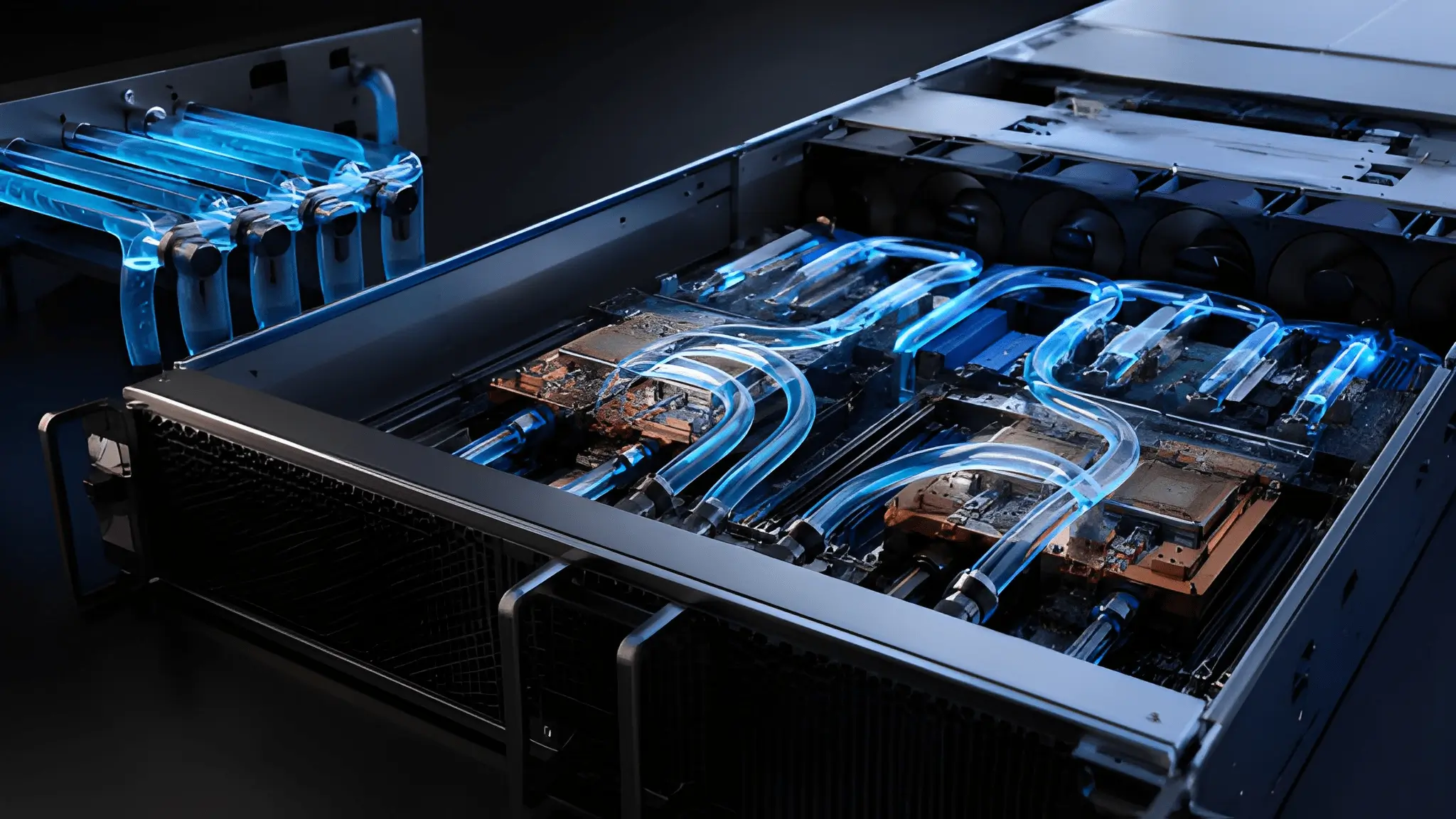
As rack power continues climbing across AI and high-performance computing (HPC) deployments, liquid cooling is becoming a core infrastructure requirement rather than a specialized option. Super Micro Computer is responding to that shift by expanding its Rear Door Heat Exchanger (RDHx) portfolio, giving operators additional pathways to deploy liquid cooling across both greenfield and existing facilities. The company announced that the expanded portfolio strengthens its Data Center Building Block Solutions (DCBBS) ecosystem by adding a broader range of rear-door heat exchangers designed for varying rack densities. The move extends Supermicro’s end-to-end liquid cooling strategy while allowing customers to introduce liquid cooling without redesigning entire facilities. The expanded offering also positions the company to address growing enterprise and hyperscale demand for scalable AI infrastructure capable of supporting increasingly power-hungry workloads.

Supermicro Expands RDHx Portfolio Across AI Data Centers
Rear Door Heat Exchangers have become an increasingly attractive option for organizations seeking higher rack densities without undertaking extensive facility upgrades. Instead of replacing existing infrastructure, operators can integrate rear-door cooling into current environments while improving thermal efficiency and supporting more demanding AI and HPC deployments. This approach reduces disruption during modernization projects and provides greater flexibility for incremental capacity expansion.
“We continue to expand our DCBBS offerings to provide our customers with unmatched customization and optimization options,” said Charles Liang, president and CEO of Supermicro. “Our expanded RDHx portfolio helps customers realize the benefits of liquid cooling, with a range from 10kW up to 120kW of cooling at the door level, with a max of 240kW of cooling capacity at the rack-level, enabling more efficient data center operations.” Supermicro adds ten RDHx models to its portfolio. Customers can deploy these models as standalone primary liquid cooling systems or pair them with Supermicro’s Direct-to-Chip (D2C) liquid cooling technologies. Consequently, customers can build cooling architectures that match specific workload requirements instead of relying on a single deployment model. Operators can also balance cooling performance, infrastructure constraints, and long-term expansion plans with greater flexibility. The expanded portfolio gives organizations more deployment choices across AI and HPC environments.
Higher Rack Density Without Major Facility Changes
Supermicro said its expanded RDHx solutions support cooling capacities ranging from 10kW to 120kW per rack, allowing organizations to deploy higher-density AI and HPC systems without extensive facility modifications. The company designed the solutions for compatibility with standard EIA, ORv3, and MGX rack architectures, enabling integration into both new data center projects and existing environments. This compatibility broadens deployment options for enterprises, cloud providers, and colocation operators seeking to increase computing capacity while preserving existing infrastructure investments.

Customers can design validated rack-scale cooling solutions based on their facility requirements, operational constraints, and workload demands. The company said these configurations improve compute density, increase cooling efficiency, and lower total cost of ownership. Organizations can also choose deployment models that align with phased infrastructure upgrades instead of pursuing large-scale facility overhauls. Supermicro delivers the RDHx solutions alongside accelerated computing systems, rack-scale integration services, power and cooling infrastructure, intelligent management software, and deployment support as part of its broader DCBBS portfolio. The company combines these capabilities into a single validated platform to simplify procurement, reduce integration complexity across AI infrastructure projects, and accelerate deployment. Supermicro also said the approach helps customers shorten Time-to-Online (TTO) for new deployments.
DCBBS Strategy Extends Beyond Cooling Hardware
The RDHx expansion reflects Supermicro’s broader strategy of delivering modular AI infrastructure built from validated components that can scale from individual servers to full data center deployments. Rather than focusing solely on hardware, the DCBBS framework combines compute systems, networking, rack integration, software, facility infrastructure, and deployment services into a unified architecture. This integrated approach is designed to help organizations accelerate AI infrastructure rollouts while reducing operational uncertainty during deployment.
As AI models continue demanding higher compute density and greater power consumption, infrastructure vendors are increasingly competing on their ability to deliver complete deployment ecosystems instead of standalone products. Cooling technologies have become a critical part of that value proposition because they directly influence rack density, operational efficiency, and long-term infrastructure economics. Supermicro’s expanded RDHx portfolio reinforces that industry direction by extending liquid cooling options across a wider range of AI and HPC environments while supporting both modern data center builds and legacy facility upgrades.