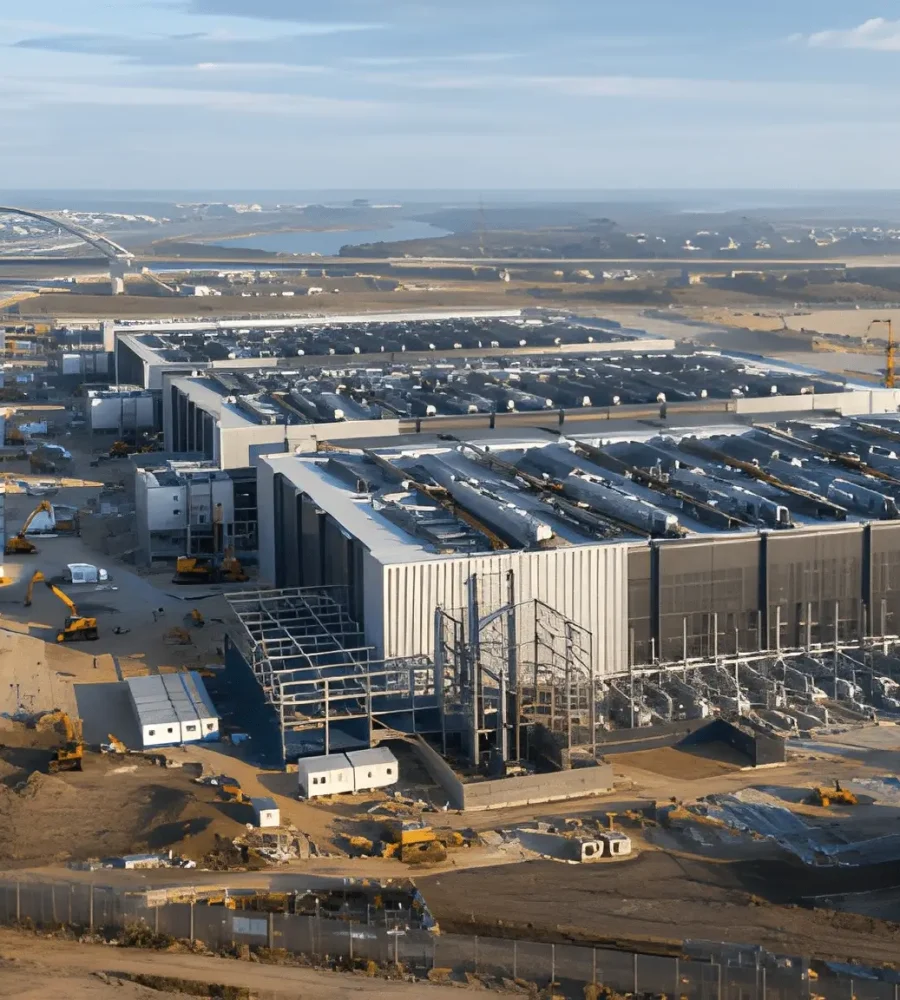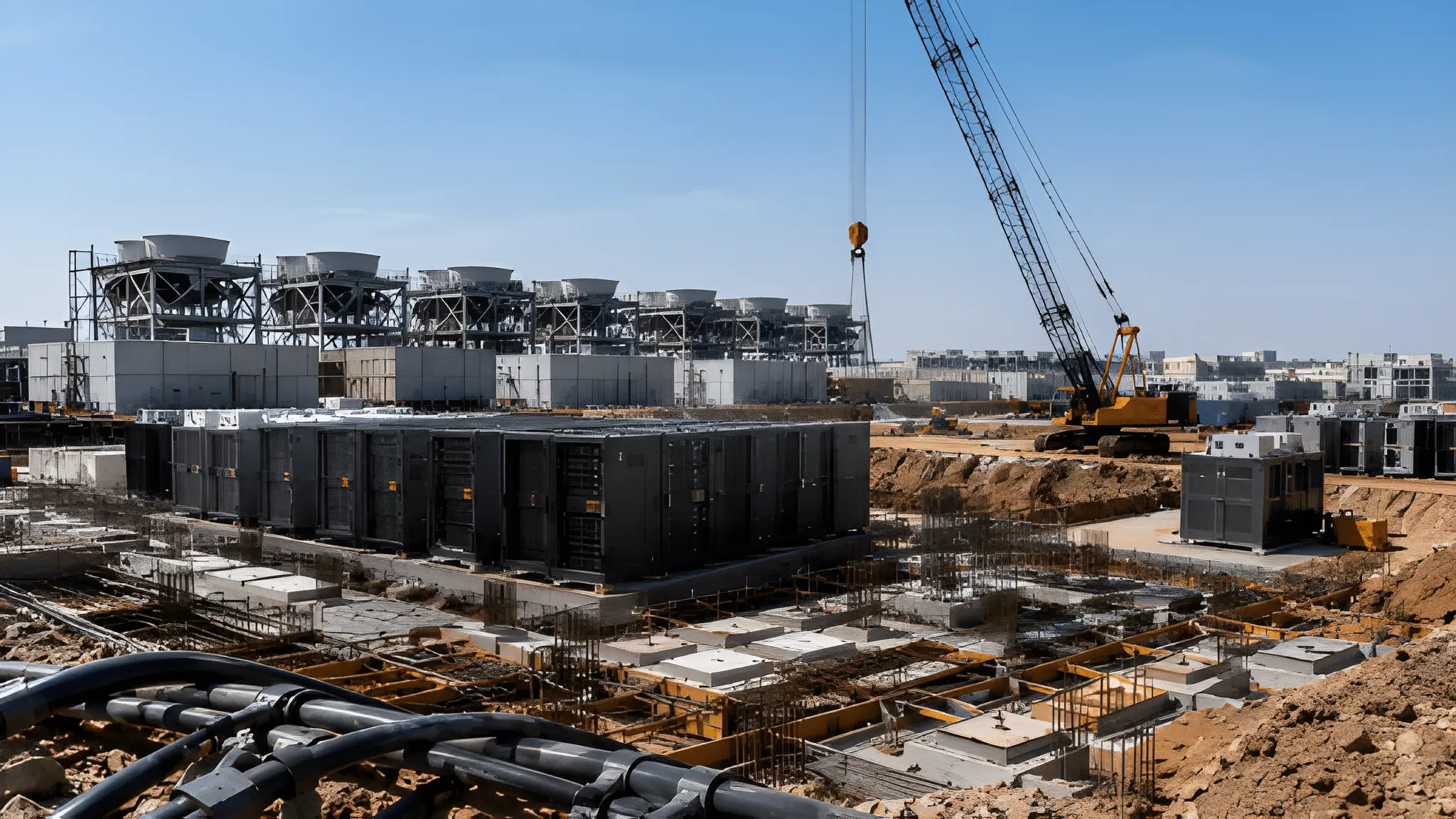
Amazon Web Services (AWS) has officially begun construction of its flagship data center campus in Telangana, marking another major milestone in India’s rapidly expanding digital infrastructure landscape. Telangana Chief Minister A. Revanth Reddy laid the foundation stone for the project this week at Bharat Future City on the outskirts of Hyderabad. The development signals AWS’ long-term commitment to scaling cloud and AI infrastructure in one of India’s fastest-growing technology hubs. The investment also reinforces Telangana’s ambitions to position itself as a national destination for hyperscale digital infrastructure.
The project marks the first phase of a multi-stage development that will transform a significant portion of Bharat Future City into one of the country’s most important cloud infrastructure locations. According to reports, AWS will invest approximately Rs 60,000 crore (US$6.23 billion) throughout the project lifecycle. AWS expects to complete the first phase within the next two years and plans to execute the remaining phases over the following decade. The extended construction timeline reflects the scale of infrastructure required to support long-term enterprise cloud and AI demand.
Multi-Phase Campus Expands AWS’ Long-Term Presence in India
The campus will occupy 202 acres inside Bharat Future City along with another 98 acres in Chandanvelly. AWS has not disclosed how many data center facilities will be constructed or the total IT capacity planned for the development. Those specifications will likely emerge as construction advances through successive phases. Even without those details, the land allocation places the project among the largest announced hyperscale developments in India’s digital infrastructure sector. The Hyderabad expansion follows AWS’ broader strategy of strengthening regional cloud capacity as enterprise AI adoption accelerates across India. Demand for low-latency cloud services, AI model deployment, and enterprise workloads continues to drive investment into large-scale infrastructure. As organizations increasingly prioritize domestic cloud availability, providers are expanding physical infrastructure alongside managed services. Therefore, the Telangana campus serves both regional enterprise demand and AWS’ longer-term cloud growth strategy across the country.
Telangana Positions Itself as India’s AI and Cloud Infrastructure Hub
The state government views the investment as validation of its efforts to build an ecosystem capable of attracting global hyperscale operators. Telangana has steadily promoted itself through industrial policies, infrastructure development, and digital economy initiatives designed to support long-term technology investments. “Amazon Web Services’ decision to significantly expand its data center footprint in Telangana is a strong endorsement of our vision to make the state India’s AI and cloud capital. As AI transforms every sector, data centers have become the foundational infrastructure of the digital economy,” said Shri D. Sridhar Babu, Minister for Information Technology and Industries, Government of Telangana. “Telangana has created an ecosystem where progressive policies, reliable infrastructure, abundant clean energy, world-class talent and ease of doing business come together to enable global-scale investments.
“Hyderabad is not only serving India’s growing digital economy but is increasingly powering global innovation. We welcome AWS’s continued confidence in Telangana and remain committed to building the country’s most future-ready digital infrastructure ecosystem.” The announcement reflects a wider competition among Indian states to secure hyperscale investments as AI computing requirements increase. Infrastructure readiness, power availability, skilled workforce, and policy stability have become critical differentiators in attracting cloud providers planning multi-billion-dollar regional expansions.
Bharat Future City Designed Around AI and Net Zero Development
AWS’ campus will become part of Bharat Future City, a planned 30,000-acre urban development in southern Hyderabad. The project has been conceived as an integrated smart city built around Net Zero principles while supporting next-generation digital industries. Within the master plan, the government has earmarked a dedicated AI City focused on artificial intelligence innovation, machine learning research, and hyperscale data center development. The combination of urban planning and digital infrastructure highlights how Indian states are integrating cloud capacity into broader economic development strategies. Rather than functioning solely as an industrial zone, Bharat Future City aims to establish an ecosystem capable of supporting AI research, enterprise technology companies, advanced computing infrastructure, and supporting services. The presence of hyperscale operators such as AWS is expected to strengthen the attractiveness of the broader development for future technology investments.
AWS Expands Multi-Billion-Dollar Cloud Investment Across India
The Telangana project forms part of AWS’ much larger investment roadmap across India. The company has committed to investing US$48 billion across its Indian businesses, with US$21 billion allocated specifically toward expanding cloud and artificial intelligence infrastructure. This represents one of the largest long-term technology infrastructure commitments announced in the country. AWS launched its Hyderabad cloud region in 2022 and strengthened its regional ambitions in December 2025 by announcing a US$7 billion expansion of its data center footprint in Telangana. The latest national investment commitment indicates those earlier plans have since expanded within AWS’ broader India strategy.
Meanwhile, Hyderabad continues to evolve into one of the company’s most important regional cloud markets. AWS’ investment strategy also extends to western India through its Mumbai cloud region, which entered service in 2016. Between 2016 and 2022, AWS invested approximately US$3.7 billion into the Mumbai region before committing an additional US$8.3 billion for further expansion at the beginning of 2025. Those investments have similarly become part of the company’s larger US$48 billion nationwide commitment.
Compute Forecast Analysis
The Telangana campus represents more than another hyperscale data center announcement. It demonstrates how global cloud providers are shifting from incremental regional expansion toward decade-long infrastructure commitments designed around AI computing demand. Large land acquisitions, phased development schedules, and integration into AI-focused economic zones suggest infrastructure planning is increasingly aligning with national digital competitiveness rather than conventional cloud capacity growth.
For India, projects of this scale strengthen domestic cloud resilience while supporting the country’s ambition to become a global AI infrastructure destination. As hyperscalers continue expanding across multiple states, competition will increasingly depend on power availability, grid reliability, permitting efficiency, and ecosystem maturity rather than land alone. AWS’ latest development indicates that India’s next phase of cloud growth will be defined not simply by additional regions, but by strategically planned digital infrastructure campuses capable of supporting AI workloads at national scale.