
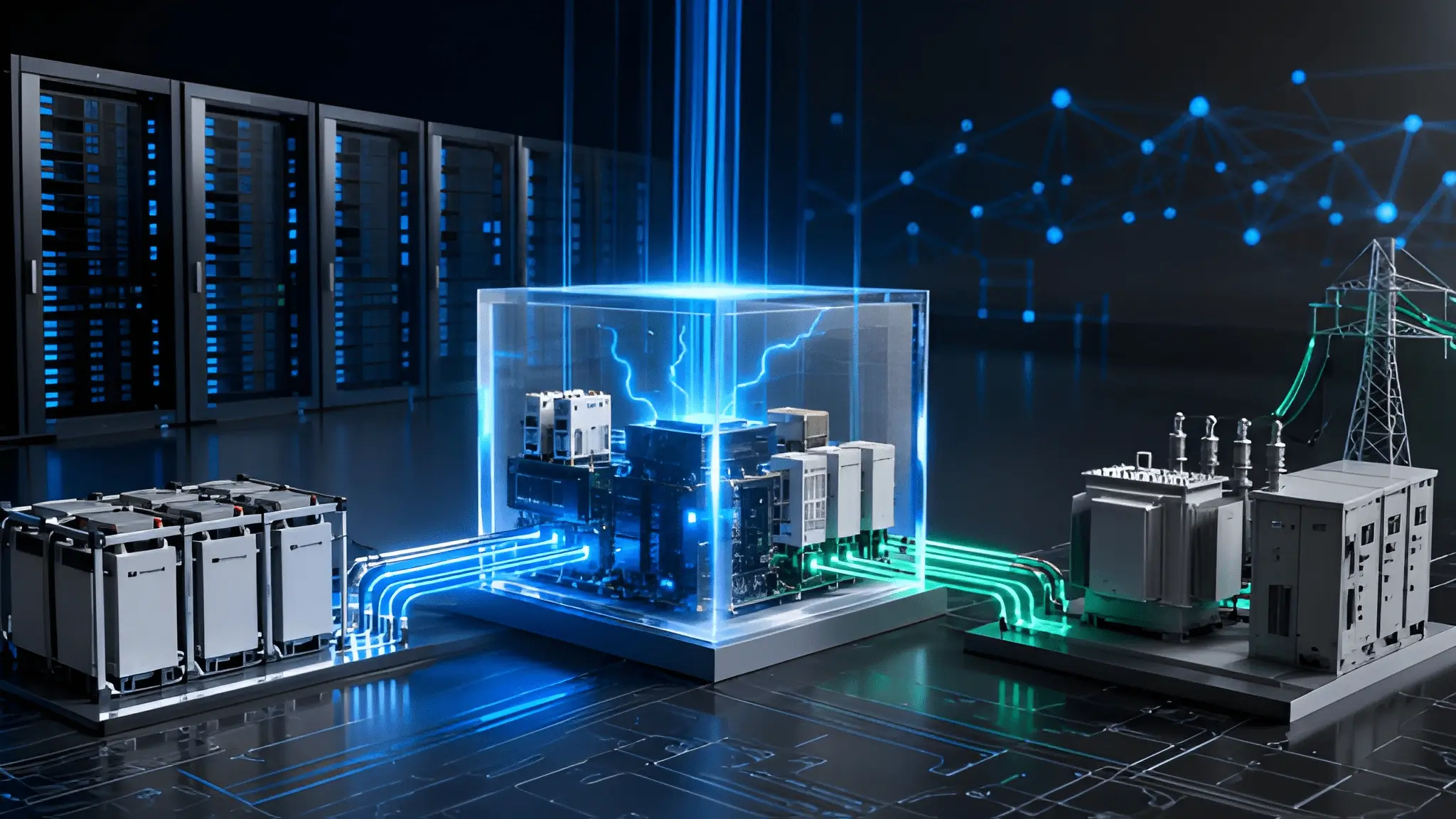
As AI clusters continue scaling, operators are searching for electrical architectures capable of delivering higher efficiency while reducing conversion losses across increasingly power-intensive environments. Against that backdrop, Infineon Technologies and LS ELECTRIC have signed a Memorandum of Understanding (MoU) to jointly develop high-efficiency direct current (DC) power infrastructure solutions for AI data centers and next-generation power grids. The partnership reflects a broader industry movement toward modern electrical systems that can better support future computing demand while strengthening energy performance.

Growing AI deployments are placing unprecedented pressure on electrical networks that already face rising demand from digital infrastructure, industrial electrification and distributed energy resources. Conventional alternating current architectures remain dominant across most facilities, yet the industry is increasingly evaluating DC-based designs to reduce inefficiencies created through repeated power conversion stages. As utilities modernize grids into more distributed and digitally managed systems, next-generation power infrastructure requires technologies that improve scalability alongside operational resilience. The agreement positions both companies to jointly address these evolving infrastructure requirements through semiconductor-driven innovation and system integration.
Companies Target Core Technologies Behind Next-Generation DC Systems
The collaboration will concentrate on several critical technologies that form the backbone of advanced DC power infrastructure. These include power conversion systems for energy storage systems, solid-state transformers (SSTs) and solid-state circuit breakers (SSCBs), all of which are becoming increasingly important as AI facilities demand greater electrical efficiency and reliability. Together, these technologies are expected to improve power conversion performance while strengthening voltage management across high-density computing environments. The initiative also supports infrastructure architectures capable of expanding alongside future AI workloads without compromising operational stability.
Solid-state transformers represent one of the most significant technologies within the agreement because they replace conventional transformer designs with semiconductor-based power conversion. Compared with traditional copper and iron transformers, SSTs can be up to 30 percent smaller and lighter while delivering higher operating efficiency. That combination makes them particularly attractive for AI campuses where equipment density, available space and energy performance directly influence infrastructure economics. Their ability to support flexible power management also aligns with the industry’s transition toward digitally controlled electrical systems.

Solid-state circuit breakers bring another layer of modernization to electrical protection systems inside advanced facilities. Instead of relying on conventional mechanical switching, SSCBs use semiconductor technologies together with intelligent algorithms to detect and interrupt electrical faults within microseconds. Faster interruption helps protect critical infrastructure from overloads and short circuits while improving system stability across complex power environments. As AI computing density continues rising, these capabilities are becoming increasingly valuable for maintaining reliable operations under demanding workloads.
Semiconductor Expertise Meets Industrial Power Integration
Under the terms of the MoU, Infineon will contribute its extensive semiconductor portfolio to support the development of high-efficiency, high-performance DC power infrastructure systems. Its technologies span power semiconductors, microcontrollers and power control solutions designed for industrial and energy applications. These components form the electronic foundation needed to improve power conversion efficiency across modern electrical infrastructure. Meanwhile, LS ELECTRIC will apply its expertise in industrial automation and power systems to integrate these technologies into deployable infrastructure solutions.
The agreement also establishes a framework for both companies to align long-term technology roadmaps while advancing joint development activities. Rather than focusing solely on component innovation, the partnership extends across system-level implementation aimed at supporting future infrastructure deployment. This collaborative approach reflects growing recognition that AI-scale electrical systems require close coordination between semiconductor innovation and power engineering. By combining complementary capabilities, both companies intend to pursue expanding opportunities emerging across the next generation of global energy infrastructure.
Executives See DC Architectures Becoming Central To AI Growth
“The increasing electricity demand, especially from AI data centers, is reshaping the way power is generated, distributed and consumed,” said Andreas Weisl, Executive Vice President and Chief Sales Officer of Industrial & Infrastructure at Infineon. “High-efficiency DC architectures will play a key role in addressing increased energy demand while improving overall system performance and sustainability. By combining Infineon’s semiconductor expertise with LS ELECTRIC’s strength in system integration, we are well positioned to accelerate the development and deployment of next-generation DC power infrastructure.”
“The importance of high-efficiency DC power technologies is growing more than ever with the expansion of AI data centers and next-generation power grids,” said Kil Young Ahn, Vice President and Head of Production and R&BD at LS ELECTRIC. “Through our collaboration with Infineon, which possesses worldwide-leading power semiconductor technologies, we will strengthen our competitiveness in core DC power infrastructure solutions and will evolve into a total solutions provider leading the global AI data center market and future power markets.”
Strategic Partnership Reflects The Industry’s Next Infrastructure Phase
The agreement arrives as AI infrastructure investment increasingly shifts beyond servers and accelerators toward the electrical systems that sustain continuous computing operations. Power availability, conversion efficiency and grid compatibility have become strategic considerations alongside processor performance and cooling capacity. Consequently, partnerships that combine semiconductor innovation with industrial power engineering are gaining greater importance as operators prepare for larger AI campuses and increasingly sophisticated energy networks. Infineon and LS ELECTRIC’s collaboration reflects that broader evolution, positioning direct current infrastructure as a foundational technology for the next generation of AI data centers and modern power grids.











