
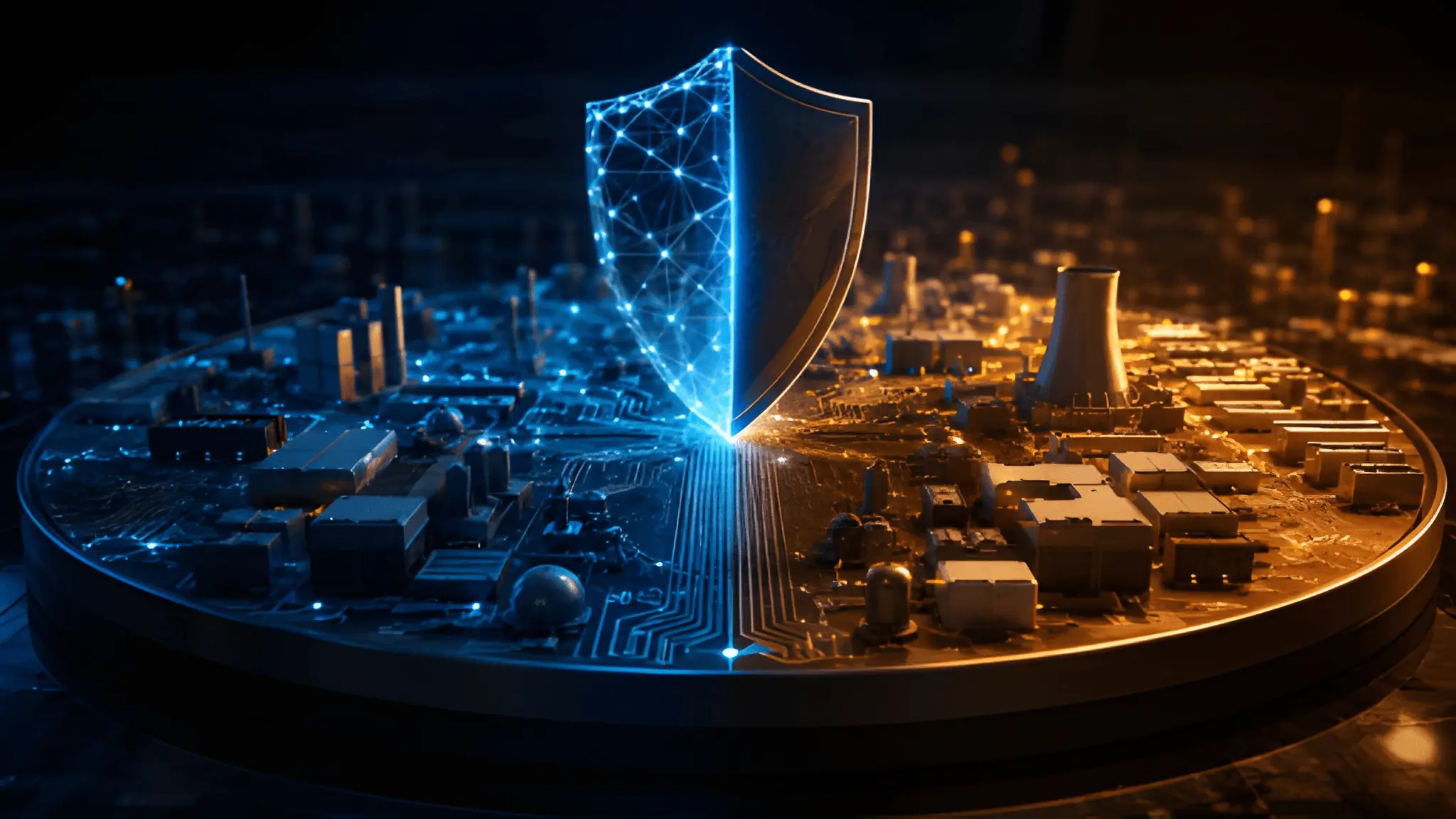
Every major AI announcement tends to emphasize graphics processors, cloud capacity, or multi-billion-dollar data center investments. Much less attention goes to the electrical infrastructure that enables those systems to operate continuously. Yet the transformers, protection relays, industrial controllers, monitoring platforms, and software managing electricity increasingly determine whether AI infrastructure remains dependable during periods of economic uncertainty or geopolitical tension.

Electricity networks now serve as the operational foundation of national AI ambitions. They no longer function solely as engineering systems designed to distribute power efficiently. They have evolved into digitally connected environments where software updates, remote diagnostics, cybersecurity controls, and supply chain relationships influence long-term resilience. Technical specifications remain important, but they represent only one part of the procurement equation. Decision-makers increasingly need to ask who develops the software, who maintains the hardware, where updates originate, how vulnerabilities are disclosed, and whether strategic interests remain aligned throughout the equipment’s operational life.
AI Infrastructure Depends On More Than Electricity
Artificial intelligence consumes enormous amounts of electrical power, but reliable electricity alone cannot guarantee reliable AI. Every layer supporting modern power systems has become more intelligent. Digital substations exchange operational data continuously. Grid management platforms automate balancing decisions. Sensors report equipment conditions in real time. Predictive maintenance software influences operational planning long before physical inspections occur.
Digital intelligence improves efficiency across the grid. It also expands the number of systems that require long-term trust. Infrastructure owners traditionally selected equipment based on cost, delivery timelines, lifecycle performance, and technical compatibility. Those priorities remain relevant, yet AI infrastructure introduces another consideration: strategic confidence in the organizations that build and maintain essential technologies. Unlike conventional mechanical equipment, digitally managed infrastructure evolves throughout its operating life. Software receives updates. Security patches address newly discovered vulnerabilities. Communication protocols change. Cloud-connected monitoring platforms expand functionality over time. Ownership therefore extends beyond the initial purchase. Operational influence often continues for decades.

Trust Is Becoming A Core Infrastructure Requirement
Modern infrastructure increasingly depends on continuous digital relationships rather than one-time equipment transactions. Organizations responsible for critical electricity systems must maintain confidence that software updates remain secure, maintenance support remains available, cybersecurity practices remain transparent, and operational governance aligns with national resilience objectives. Trust cannot rely on assumptions. It requires procurement frameworks that evaluate technical capability alongside governance, supply chain visibility, cybersecurity maturity, and long-term accountability.
This principle does not target any individual manufacturer or country. Instead, it reflects a broader reality affecting every globally connected technology ecosystem. Digital infrastructure has become inseparable from strategic policy. The AI economy amplifies that reality because disruptions affecting electricity systems now create consequences extending far beyond energy markets. They influence cloud availability, manufacturing productivity, financial services, telecommunications, healthcare operations, and increasingly the AI platforms supporting all of them. Infrastructure trust therefore becomes an economic multiplier rather than a compliance exercise.
Strategic Dependencies Often Develop Gradually
Critical infrastructure rarely becomes strategically dependent through a single procurement decision. Dependencies usually emerge through years of incremental modernization. One software platform replaces another. Maintenance contracts expand. Remote monitoring services become standardized. Replacement components originate from familiar suppliers. System integrations increase operational convenience. Individually, each decision appears commercially reasonable.
Collectively, those decisions can concentrate operational dependence in ways that become visible only during periods of political instability, trade restrictions, cybersecurity incidents, or supply chain disruption. The AI economy increases the cost of those dependencies. As governments encourage domestic AI development, every interruption affecting electrical infrastructure can slow data center deployment, delay industrial modernization, and reduce confidence among investors seeking stable digital ecosystems. Infrastructure resilience therefore depends on diversification as much as technological sophistication.
National Competitiveness Now Includes Infrastructure Governance
Governments increasingly compete to attract AI investment through favorable regulation, energy availability, skilled talent, and digital connectivity. Another competitive factor deserves equal attention. Investors evaluating long-term AI projects increasingly examine whether electrical infrastructure can support continuous expansion without introducing unnecessary operational uncertainty. Infrastructure governance contributes directly to that confidence.
Transparent procurement standards, diversified technology ecosystems, cybersecurity oversight, domestic engineering capability, and resilient maintenance networks strengthen perceptions of long-term stability. Countries that integrate those considerations into infrastructure planning may become more attractive destinations for AI investment. The discussion extends beyond protecting existing assets. It also concerns creating environments where developers, hyperscalers, manufacturers, and institutional investors believe digital infrastructure can operate predictably despite changing geopolitical conditions. Reliability increasingly includes strategic resilience.
Procurement Policies Are Becoming Technology Policies
Infrastructure procurement once belonged primarily to engineering departments and financial planning teams. Every procurement framework shapes future technology ecosystems. Selecting equipment determines software compatibility, maintenance practices, cybersecurity architecture, workforce training, and supply chain relationships that may persist for several decades. Consequently, infrastructure purchasing increasingly resembles industrial policy. Governments seeking technological sovereignty cannot evaluate AI competitiveness independently from the physical infrastructure supporting digital growth. Electricity systems now influence semiconductor manufacturing, cloud computing, advanced research, autonomous systems, and national productivity. The hardware powering those systems deserves the same strategic attention policymakers already devote to chips, communications networks, and artificial intelligence itself.
Resilience Requires Diversity Rather Than Isolation
Strategic resilience should not become synonymous with technological isolation. Global supply chains remain essential to infrastructure development, and international collaboration continues driving innovation across energy technologies. The objective instead involves reducing single points of strategic dependence. Diversified supplier ecosystems, transparent security standards, interoperable technologies, rigorous certification processes, and continuous risk assessments create stronger infrastructure regardless of supplier origin. Competition benefits resilience when procurement emphasizes accountability alongside performance. This balanced approach avoids unnecessary protectionism while recognizing that critical infrastructure carries responsibilities extending beyond commercial efficiency. AI infrastructure will benefit from openness supported by robust governance rather than unrestricted dependence.
Public conversations surrounding artificial intelligence frequently focus on computational scale. That narrative overlooks an equally important foundation. Confidence in infrastructure determines whether computational capacity remains available when societies depend upon it most. Electricity networks supporting AI must withstand cyber threats, geopolitical uncertainty, supply chain disruption, and rapidly changing operational requirements without compromising reliability. Meeting that standard requires viewing infrastructure as a strategic capability rather than simply a collection of engineered assets. The countries that approach power infrastructure through this broader lens may discover that trust becomes one of their strongest competitive advantages.
AI leadership will ultimately depend on more than advanced processors, larger campuses, or faster model development. It will depend on whether the infrastructure beneath those achievements reflects resilience, transparency, diversified governance, and long-term strategic confidence. Powering artificial intelligence has become inseparable from protecting the systems that sustain national economic resilience. The most successful AI economies may therefore emerge not from those building the largest digital infrastructure, but from those building infrastructure that remains trusted under every circumstance.











