
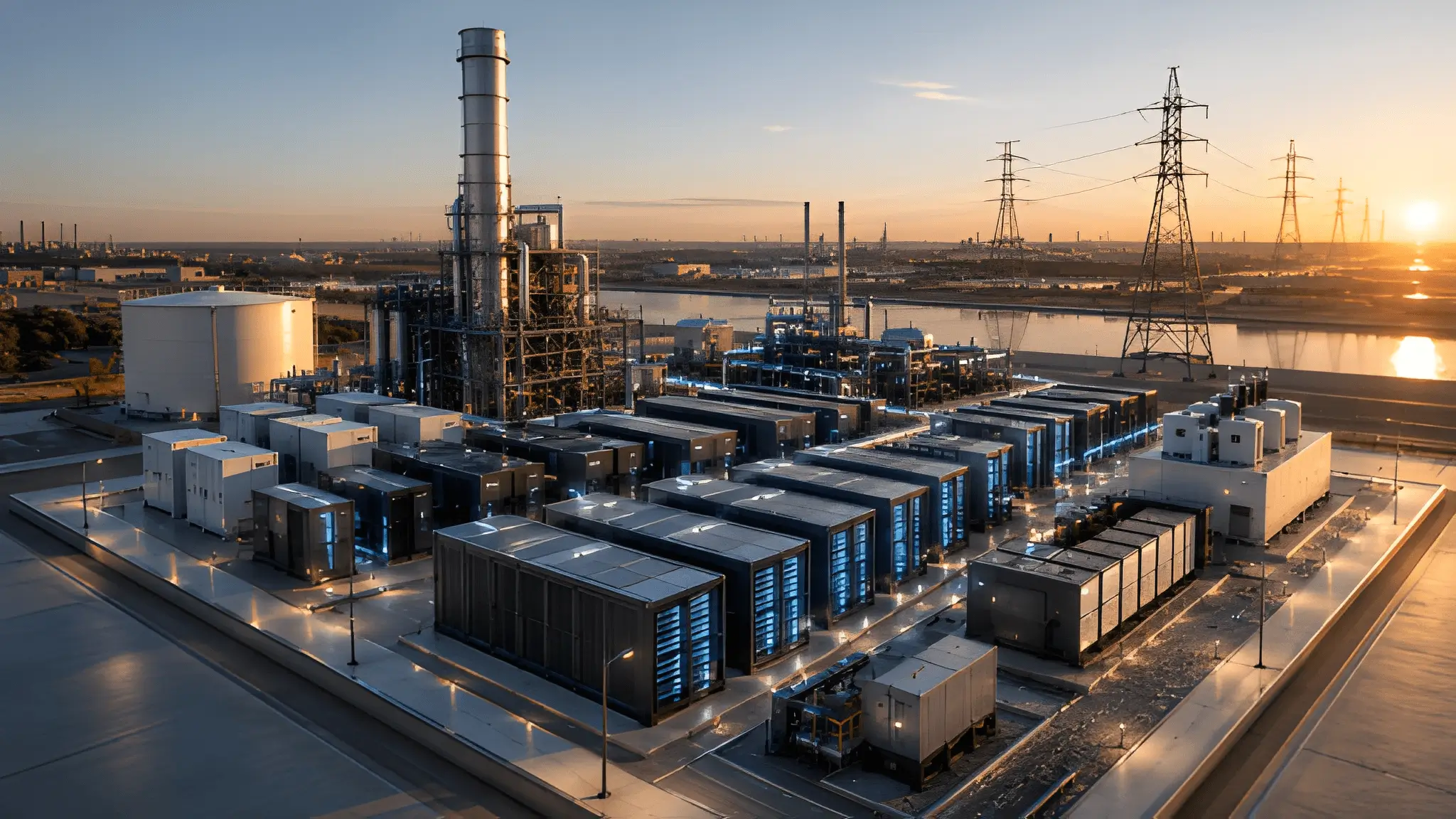
Germany’s energy transition is increasingly creating opportunities beyond electricity generation. Utilities are beginning to reposition retired thermal power assets as strategic locations for digital infrastructure, where existing transmission networks and industrial land can accelerate deployment timelines. Uniper is now extending that strategy with a major redevelopment project in Hesse that combines computing capacity with modern energy infrastructure. The German energy company has unveiled plans to develop a new data center hub at its Staudinger power plant in Großkrotzenburg, Hesse. The project will repurpose land currently occupied by a coal-fired generating station that is undergoing demolition, replacing conventional power infrastructure with facilities designed to support growing digital demand while maintaining grid stability.

Former Coal Power Plant Site Set for Digital Infrastructure Redevelopment
The planned campus will occupy a substantial section of the existing Staudinger power plant property, where the cooling towers once stood. According to local reports, the redevelopment will span approximately 459,000 square meters (4.94 million square feet), creating one of the region’s significant brownfield digital infrastructure opportunities. The site benefits from established industrial zoning and existing power infrastructure, factors that continue to attract large-scale data center investment across Europe.
Alongside the data center facilities, Uniper intends to build a battery energy storage system (BESS) and a new gas-fired power plant to strengthen operational resilience and support future electricity requirements. However, the company has not disclosed the expected compute capacity or the total number of data centers planned for the location. Discussions with investors remain underway as the project advances toward the next development phase. A nearby transmission substation is also undergoing expansion by grid operator Tennet to support future power requirements associated with the campus. The upgraded electrical infrastructure is expected to strengthen long-term grid connectivity for the development while improving regional transmission capacity.
Energy Assets Become Competitive Advantage for Future Data Centers
Rather than developing on undeveloped land, Uniper is leveraging existing energy infrastructure that already possesses valuable grid connectivity and industrial-scale utilities. That approach reflects a broader shift across Europe, where utilities increasingly view former power generation sites as ideal locations for next-generation digital infrastructure. Earlier this month, Uniper announced plans to invest €5 billion ($5.73 billion) in energy infrastructure between 2025 and 2030. The company also identified at least ten power plant locations where nearby data center developments could become commercially viable. Three projects are already under active development, while another has reached completion in the United Kingdom.

The company has also indicated it is evaluating commercial opportunities with data center operators through power purchase agreements (PPAs), creating additional revenue streams alongside traditional energy operations. Meanwhile, integrating power generation with large computing campuses may help operators secure more reliable electricity supplies as AI workloads continue increasing demand across European grids.
Germany’s Established Market Faces New Development Challenges
Hesse remains one of Germany’s strongest data center markets, particularly because of its proximity to Frankfurt, Europe’s largest internet exchange hub. Industry figures from DataCenters.com show the state currently hosts 173 operational data centers, reinforcing its position as a major digital infrastructure cluster. Despite that maturity, new developments have encountered increasing obstacles. Political uncertainty surrounding future data center expansion recently contributed to the cancellation of a proposed Stack Infrastructure project in Babenhausen, southeast of Frankfurt. Separately, EdgeConneX temporarily halted work on a planned facility near Maintal after delays securing a suitable grid connection. Those developments highlight a growing reality across Europe’s largest digital markets. Access to land alone no longer determines project viability; grid availability, transmission upgrades, regulatory certainty, and long-term power strategies have become equally critical for hyperscale expansion.
Uniper’s latest project illustrates how traditional energy companies are repositioning themselves within Europe’s rapidly expanding AI infrastructure ecosystem. Instead of treating retiring thermal assets as stranded infrastructure, utilities are increasingly converting them into platforms capable of supporting high-density digital workloads. The combination of power generation, battery storage, transmission upgrades, and future computing facilities demonstrates a model that aligns energy security with digital infrastructure growth. Consequently, projects like the Hesse redevelopment could become increasingly common as utilities seek new commercial value from legacy power plant locations while helping meet accelerating demand for AI-ready capacity. For Germany, where electricity availability has become one of the defining constraints on data center expansion, developments that integrate energy infrastructure directly with computing campuses may offer a more resilient path toward future digital growth.











