 Skip to content
As grid delays continue to slow hyperscale deployments, infrastructure developers are increasingly evaluating alternative energy systems that can deliver dependable power without locking facilities into higher-carbon fuel sources. Against that backdrop, hydrogen technology company Amogy and German energy specialist 2G Energy have completed a successful ammonia-to-power demonstration designed specifically around future data center requirements.
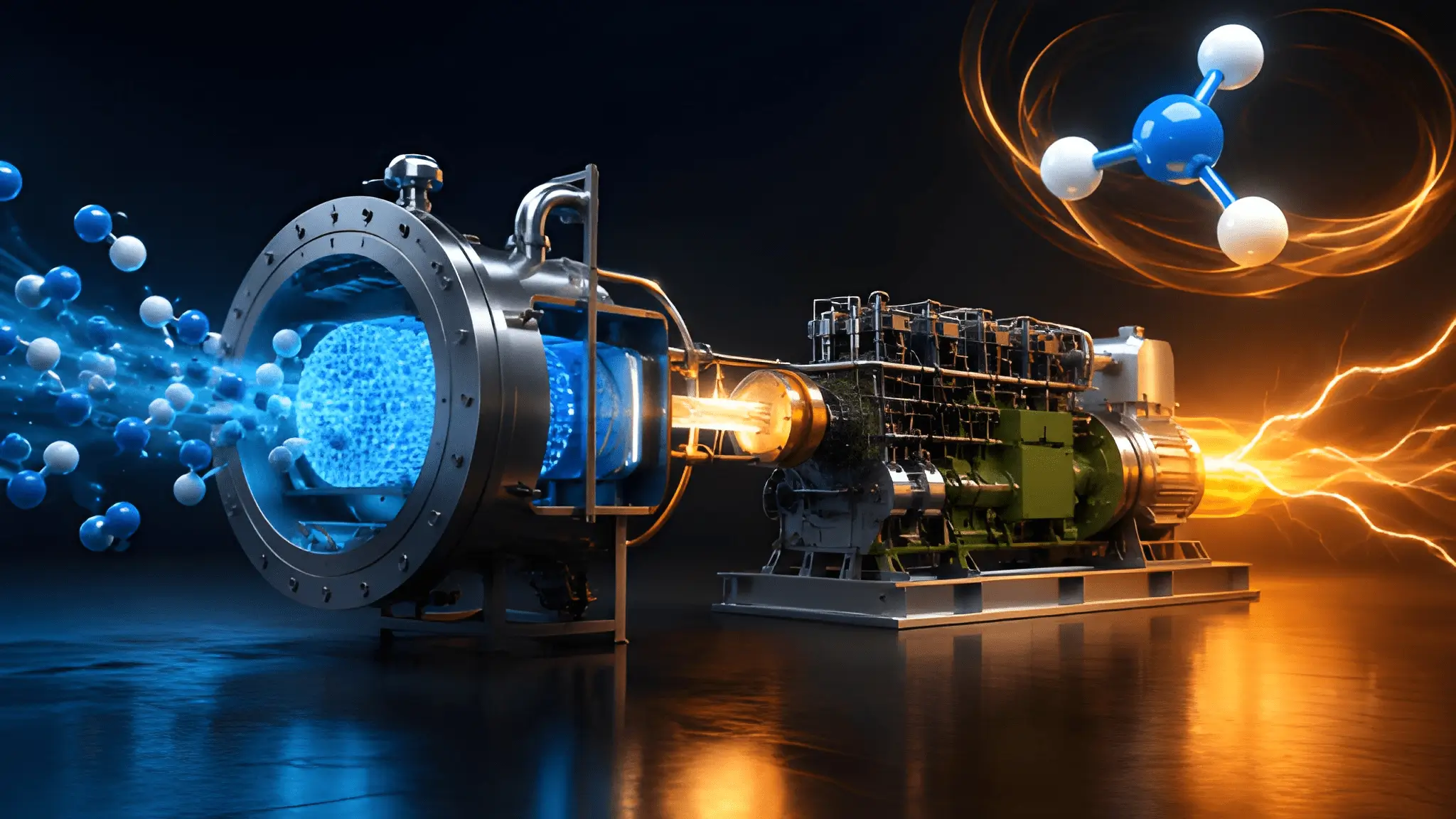
The demonstration took place at Amogy’s Houston facility, where both companies tested their jointly developed AMMDrive solution. The platform combines Amogy’s ammonia reformer with a 2G Agenitor 412 reciprocating engine-generator, creating a modular system capable of generating electricity using either conventional natural gas or ammonia-derived hydrogen. The companies believe the approach can help operators address near-term electricity shortages while creating a transition toward lower-carbon power generation as ammonia supply chains mature.
Ammonia Reformer Successfully Powered Commercial-Scale Engine
During the demonstration, Amogy’s reformer converted ammonia into a hydrogen-rich reformate stream before feeding it directly into the 2G engine-generator. According to both companies, the integrated system generated electricity at commercially viable operating levels, providing an important technical validation for ammonia-based distributed generation. Rather than positioning ammonia as an immediate replacement for existing fuels, the architecture allows operators to deploy capacity in stages. The modular design enables additional generation units to be installed alongside expanding data center campuses, allowing available power to scale with construction timelines instead of requiring full capacity on day one. Moreover, this approach could reduce the mismatch between infrastructure development schedules and increasingly constrained utility connections.
“This successful test is an important proof point for Amogy’s ammonia-to-power platform and for customers seeking flexible, reliable power,” said Seonghoon Woo, CEO of Amogy. “Customers need solutions that can meet today’s power constraints without limiting future opportunities. By integrating our reformer with 2G’s engine technology, we’re giving customers a practical way to meet immediate power needs while creating a pathway to incorporate ammonia to support longer-term decarbonization strategies.”
Following the successful trial, both companies plan to further optimize the integration between Amogy’s reforming technology and 2G’s engine platform before moving toward future commercial deployments. “This collaboration demonstrates the adaptability of 2G’s engine platform and its ability to support a broad range of fuel pathways, including ammonia-derived hydrogen,” said Pablo Hofelich, CEO of 2G Energy. “Our modular engine technology is designed to deliver reliable power while adapting to evolving customer requirements. Together with Amogy, we’re expanding the potential for practical, fuel-flexible, lower-carbon power solutions across a range of commercial applications.”
Energy Firms Position Ammonia for Emerging Data Center Demand
Brooklyn-based Amogy has similarly identified data centers as one of the most promising commercial markets for its ammonia technology. The company has steadily expanded partnerships aimed at demonstrating how ammonia could become part of future energy strategies for digital infrastructure rather than remaining limited to shipping or industrial applications. Last year, Amogy partnered with UK-based Kinetics, a subsidiary of Turkish energy company Karpowership, to develop offshore platforms that combine power generation with floating data center infrastructure. Separately, it has also been working with Singapore’s Agency for Science, Technology and Research (A*Star) to study how ammonia-based power systems could support the city-state’s rapidly expanding data center sector.
Ammonia cracking converts ammonia into hydrogen and nitrogen using heat and specialized catalysts. The resulting hydrogen can fuel engines, supply fuel cells, blend with existing fuels, or undergo further purification for industrial processes. Supporters argue that ammonia offers one of the most practical methods for transporting hydrogen over long distances because it is easier to store and ship than compressed hydrogen itself. Despite those advantages, the technology continues to face significant engineering hurdles before reaching broad commercial deployment. Producing hydrogen through ammonia cracking requires considerable energy input, catalyst efficiency remains an active area of development, and maintaining hydrogen purity can prove challenging for applications that demand exceptionally clean fuel streams. These factors continue to influence deployment economics across different industries.
Data Centers Continue Exploring Alternative Power Pathways
Industry exploration has been gradual. In 2022, Fujitsu indicated that ammonia could eventually become a viable fuel source for future data centers while pursuing cleaner production methods for the ammonia required during the cracking process. Meanwhile, demonstrations such as the latest collaboration between Amogy and 2G move the discussion beyond theoretical research by validating integrated power systems under commercial operating conditions. For the digital infrastructure sector, the Houston demonstration represents more than a technology milestone. It reflects a broader shift in how power resilience is being designed for AI-era facilities, where flexibility, modular deployment, and fuel diversity are increasingly becoming strategic considerations alongside capacity itself.












