
Campinas Becomes a New AI Infrastructure Battleground
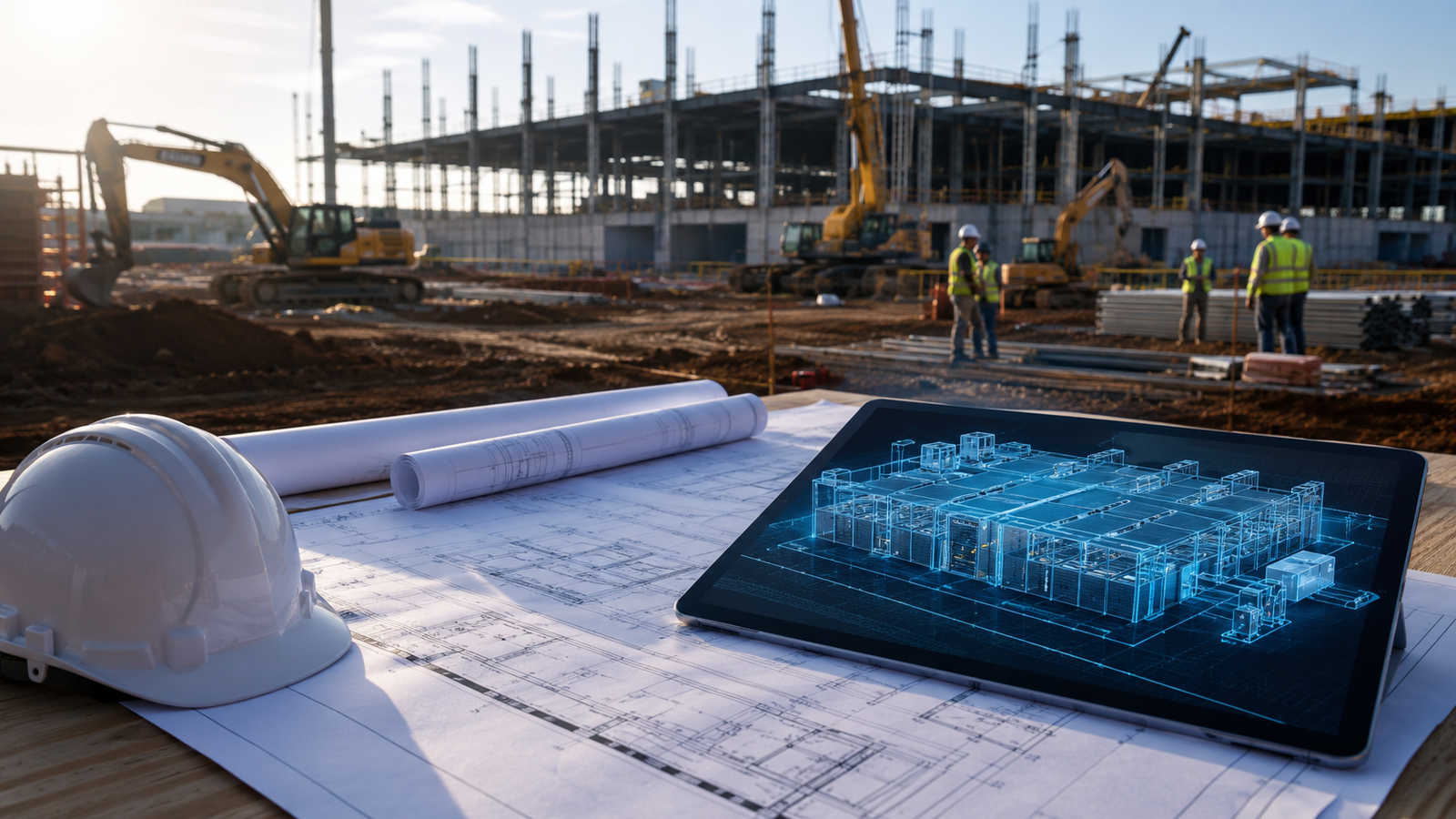
TERRANOVA has started construction on Campus Campinas, a large-scale data center development in Barão Geraldo, Campinas, in Brazil’s São Paulo state. The project begins with 216MW of IT capacity and positions the company to serve the increasingly power-intensive requirements of artificial intelligence and hyperscale cloud computing. Construction started on Aug. 20, according to the company and industry reports, marking TERRANOVA’s first major data center project in Brazil. The development also gives the relatively new hyperscale platform a significant physical presence in one of Latin America’s most important technology markets.

TERRANOVA launched in December 2025 as an Actis-backed hyperscale data center platform focused on Latin America, with Brazil, Mexico and Chile among its target markets. Actis said at launch that TERRANOVA planned to invest $1.5 billion over three years to develop a portfolio of modern campuses, with the Campinas site identified as a future Brazilian development. The speed from platform launch to construction highlights the scale of the infrastructure opportunity the company sees in regional AI and cloud demand. Campinas now becomes a key test of that strategy as operators compete for power, land, connectivity and customers across the region.
The Campus Campinas site covers roughly 944,000 square meters, while about 115,000 square meters will accommodate the built infrastructure. The first phase carries an investment of more than $500 million, with further capital planned through subsequent development stages extending to 2029. The LinkedIn announcement that triggered the latest industry attention puts the eventual full buildout at about $3.9 billion, although TERRANOVA and Actis have publicly emphasized the more than $500 million initial construction investment. That distinction matters because the campus is being developed as a long-duration infrastructure platform rather than a single data hall project.
216MW of IT Capacity Anchors the First Phase
The initial 216MW figure represents the IT load planned for the first stage of Campus Campinas. TERRANOVA has reserved capacity for additional development that could take the campus to 386MW of IT load as later phases come online. That gives the project room to accommodate higher-density AI environments without requiring the entire planned footprint to operate from day one. For hyperscalers and AI infrastructure customers, the expansion path may prove as important as the initial capacity because demand for accelerated computing continues to reshape data center design.
The electrical architecture provides another indication of the project’s intended scale. A new substation will initially provide 300MW of capacity, with infrastructure designed to support a potential expansion to as much as 1GW. The first major power milestone is scheduled for December 2027, when the substation is expected to be energized. That schedule places grid readiness at the center of the campus development timeline, since the availability of usable power will ultimately determine how quickly the planned IT capacity can translate into operating infrastructure.
For AI facilities, the relationship between electrical capacity and IT load has become increasingly strategic. Modern accelerator-heavy deployments create far greater rack-level power densities than many conventional enterprise workloads, making substations, distribution systems and cooling architecture central elements of the investment case. TERRANOVA is therefore building more than additional server space in Campinas; it is assembling the power and thermal infrastructure required to support a new generation of compute-intensive workloads. The potential 1GW electrical envelope also gives the site a long-term development option that extends well beyond the first 216MW phase.

Liquid Cooling Targets AI’s Thermal Challenge
Cooling is one of the defining technical features of Campus Campinas. TERRANOVA plans to use liquid cooling through a closed water circuit, which the company describes as the first deployment of this technology at scale in the Campinas region. The design aims to reduce electricity consumption and virtually eliminate water use for processor cooling, addressing one of the operational pressures created by high-density AI computing. The company says the approach provides a technical and environmental distinction from conventional data center cooling systems.
The significance of that choice extends beyond the cooling loop itself. AI accelerators concentrate substantial amounts of heat in comparatively small physical spaces, increasing the importance of thermal management as operators move toward higher rack densities. A closed-loop liquid system can improve how heat moves away from processors, while the broader facility still needs a reliable method to reject that heat from the building. TERRANOVA’s emphasis on energy efficiency suggests that cooling architecture will form part of the campus’s wider operating-cost and sustainability strategy.
TERRANOVA’s public description is careful to frame the water benefit around processor cooling rather than suggesting that the entire facility has no water-related requirements. That distinction matters as AI campuses face growing scrutiny over their overall resource footprint, particularly in regions where electricity generation and water availability intersect. The Campinas project therefore places the efficiency of the IT cooling loop alongside the broader questions of heat rejection, power sourcing and site infrastructure. For the industry, the more consequential benchmark will be how the system performs once high-density AI workloads begin operating at scale.
TERRANOVA Positions Campinas for Hyperscale Demand
Mauricio Giusti, managing director of Actis and interim CEO of TERRANOVA, described the construction start as a strategic milestone for the company and Latin America’s digital infrastructure.
“The start of construction represents a historic step for TERRANOVA and for digital infrastructure in Latin America. We are building a data center complex designed specifically for the AI era, providing maximum processing capacity for global hyperscalers and using innovative sustainability technologies.”
That statement points directly to the customer segment TERRANOVA wants to attract. The campus is being designed around the requirements of global hyperscalers and AI workloads rather than as a conventional colocation facility with incremental capacity additions. The combination of a 216MW initial IT load, a 300MW substation and a possible 1GW electrical expansion gives the platform a scale proposition that can support large deployments over multiple development stages. The commercial question now shifts toward which hyperscalers, cloud providers or AI infrastructure customers ultimately commit to the site, since public reporting has not identified named customers or disclosed specific hyperscale agreements.
TERRANOVA’s wider strategy also makes Campinas strategically important. The company entered the Latin American market with an explicit focus on energy-efficient infrastructure for AI and cloud demand, giving the Brazilian campus a role beyond local capacity growth. Brazil offers a large domestic technology market while São Paulo has already attracted multiple large data center developments, creating a competitive environment for land, grid access and specialist infrastructure suppliers. The concentration of projects around the São Paulo region suggests that Campinas will compete within a rapidly expanding ecosystem rather than operate as an isolated development.
Brazil’s Data Center Race Moves Deeper Into São Paulo
Campus Campinas arrives as other operators pursue large-scale developments across the São Paulo data center market. The referenced industry update highlights CloudHQ’s planned 288MW campus in nearby Paulínia and Scala Data Centers’ planned 450MW Barueri campus, while Ascenty continues to develop projects in Sumaré and Vinhedo. These developments indicate that Brazil’s next phase of data center expansion is increasingly defined by very large power requirements rather than conventional enterprise-scale facilities. The result is a market where access to electrical infrastructure can become a stronger competitive differentiator than physical proximity to traditional technology clusters.
Campinas has several characteristics that support its emergence as a strategic digital infrastructure location. The city sits within São Paulo state’s established technology and research ecosystem, while the PIDS development framework is intended to connect companies with universities and research institutions. TERRANOVA is the first company to receive a fiscal incentive to establish itself within the PIDS, according to local reporting. The campus therefore links a major infrastructure investment with a broader attempt to strengthen Campinas as a technology and innovation center.
The construction phase is also expected to have a material local employment impact. TERRANOVA estimates that around 3,000 workers could be involved directly and indirectly at the peak of construction, while the company expects the operational campus to require about 650 specialized professionals over a five-year horizon. Plans to work with universities and local research and training centers could help develop the technical workforce required for AI infrastructure operations. That workforce dimension will become increasingly important as Brazil builds more sophisticated facilities that require expertise across electrical engineering, thermal systems, networking, automation and high-performance computing.
The Real Test Starts With Power and Customers
The headline capacity of 216MW makes Campus Campinas one of the more significant new AI infrastructure projects announced in Brazil, but the project’s execution will depend on several milestones beyond construction progress. The December 2027 energization target will be critical because a completed building without sufficient grid power cannot deliver the compute capacity promised to customers. The later expansion from 216MW toward 386MW of IT load will require continued coordination between electrical infrastructure, cooling systems, construction schedules and customer demand. The potential 1GW electrical ceiling creates substantial optionality, but it also raises the scale of the infrastructure challenge that will accompany each additional phase.
The commercial trajectory will matter just as much. TERRANOVA has positioned the campus around global hyperscalers and AI workloads, yet the company has not publicly identified the customers expected to occupy the facility. That leaves future leasing commitments, equipment deployments and power utilization as important indicators for assessing how quickly the project can convert its physical scale into revenue-generating capacity. In a market where AI data center announcements increasingly feature hundreds of megawatts, the ability to secure and energize capacity may ultimately distinguish viable projects from merely ambitious ones.
TERRANOVA’s Campinas project reflects a broader shift in Latin American digital infrastructure toward campuses designed around AI from the outset. The combination of high-density compute, liquid cooling, dedicated electrical infrastructure and phased expansion changes the economics of data center development and pushes operators closer to the infrastructure requirements of hyperscale AI platforms. For Brazil, the project adds another major investment to an increasingly competitive São Paulo market and strengthens Campinas’ claim as a destination for next-generation computing infrastructure. The immediate milestone is construction, but the larger story will be whether TERRANOVA can turn 216MW of planned IT capacity into one of the region’s durable AI infrastructure platforms.











