 Skip to content

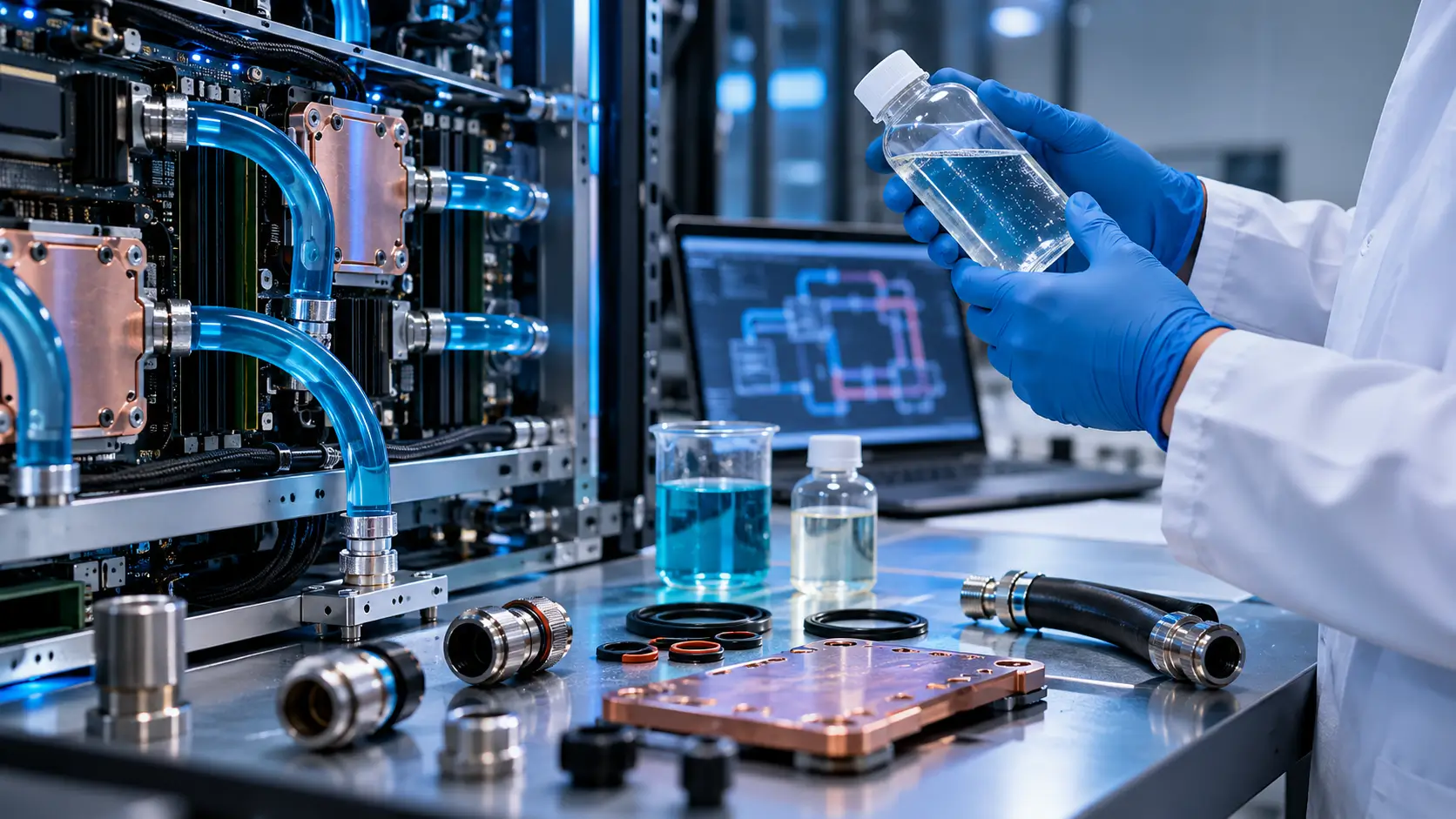
A cooling loop can satisfy its temperature targets while quietly developing a problem that its monitoring system cannot immediately identify. The coolant may circulate normally, the pumps may maintain their expected flow rates, and the accelerator temperatures may remain within operating limits. Yet the same fluid could interact differently with seals, metals, coatings or internal surfaces across the cooling circuit. That possibility deserves more attention as AI hardware buyers evaluate liquid-cooled infrastructure for increasingly dense compute deployments. Procurement evaluations can place substantial emphasis on thermal capacity, rack density, power availability and equipment delivery schedules. When coolant chemistry receives insufficient attention during these evaluations, buyers may discover unresolved compatibility requirements during system integration or commissioning. This creates an uncomfortable question for buyers who expect their hardware investments to remain productive across several upgrade cycles. Should coolant compatibility become a mandatory procurement test rather than a technical detail left to equipment commissioning?

Cooling Performance Alone Cannot Establish Hardware Compatibility
Liquid cooling has become an important design consideration for AI infrastructure because high-density processors concentrate substantial heat within relatively small physical spaces. Direct-to-chip cooling systems move heat through cold plates and liquid circuits, reducing the amount of heat that facility air systems must remove. Their effectiveness depends on several operating variables, including coolant flow, inlet temperature, pressure conditions and thermal resistance. However, a cooling system that achieves its thermal targets during commissioning has not necessarily demonstrated long-term material compatibility. Coolant formulations can differ in corrosion inhibitors, additives, electrical properties and other chemical characteristics that influence their suitability for particular components. Material selection also matters because a cooling circuit may contain several metals, elastomers, polymers and surface treatments. Buyers who evaluate only cooling capacity could overlook interactions that affect reliability after prolonged operation. The procurement challenge involves establishing whether the selected fluid and the complete wetted circuit can operate together under documented conditions.
The Real Compatibility Question Extends Beyond the Cold Plate
The cold plate receives considerable attention because it transfers heat directly from the processor package into the coolant circuit. Its thermal design matters, but its compatibility with the coolant represents only one part of the broader engineering assessment. A liquid-cooling installation may include manifolds, flexible hoses, quick-disconnect fittings, pumps, valves, filters and heat exchangers. Each component introduces materials and operating conditions that can influence the behavior of the circulating fluid. Certain combinations of dissimilar metals can create galvanic corrosion risks when an electrically conductive fluid provides an appropriate pathway. Elastomers may also respond differently to particular coolant formulations, potentially affecting their mechanical properties or sealing performance. Buyers therefore need compatibility evidence that covers the materials exposed to coolant throughout the intended circuit, not simply the processor cooling assembly. A supplier’s approval of one component does not automatically establish compatibility across every connected subsystem.
The Missing Test Could Become a Procurement Liability
AI hardware buyers increasingly encounter infrastructure packages that combine equipment from several manufacturers and system integrators. A server supplier may specify one set of coolant requirements, while a cooling distribution unit manufacturer defines another operating envelope. Facility engineers must reconcile those requirements with the materials and fluid management practices used in the broader cooling system. Problems can arise when procurement teams treat each supplier’s individual specification as sufficient evidence for the assembled installation. A fluid that meets one component manufacturer’s requirements may still require additional validation before use with other wetted materials. Compatibility documentation also needs to distinguish between approved coolant formulations and general fluid categories that share similar descriptions. Without that distinction, buyers may struggle to determine whether a proposed substitution falls within the original qualification. The commercial concern is straightforward: buyers should establish responsibility for system-level compatibility because individual component specifications may not address every interaction within the assembled installation.

Laboratory Evidence Should Reflect Actual Operating Conditions
A meaningful compatibility assessment should examine how materials behave when exposed to the intended coolant under representative operating conditions. Depending on the materials and risks involved, testing may evaluate corrosion behavior, mass changes, dimensional stability, mechanical properties or changes in fluid chemistry. Temperature and exposure duration matter because short laboratory observations cannot automatically establish performance throughout a system’s operating life. Coolant concentration, dissolved oxygen, contamination and water quality may also influence the relevance of a particular test result. Buyers should ask whether qualification data reflects the actual fluid formulation and material combinations proposed for deployment. They should also distinguish standardized material screening from full-system validation, since these approaches answer different engineering questions. A favorable laboratory result can support a compatibility decision without eliminating the need for operating controls and periodic inspection. Procurement teams need evidence that identifies the test conditions, acceptance criteria and limitations rather than relying on an unrestricted compatibility claim.
Fluid Substitution Deserves the Same Scrutiny as Hardware Replacement
Hardware procurement rarely remains static throughout the operating life of an AI installation. Maintenance teams replace components, operators expand cooling circuits, and suppliers may introduce revised products or approved service materials. Coolant replacement creates a similar change-management requirement because different formulations can use different inhibitor packages or additive concentrations. Mixing fluids without appropriate validation may alter the chemical balance that the original cooling design assumed. Even products within the same broad coolant category should not receive automatic approval for interchangeability. Buyers should require suppliers to document acceptable formulations, concentration ranges, water-quality requirements and restrictions on mixing or substitution. Maintenance contracts should identify who evaluates proposed fluid changes and who authorizes their use in the operating environment. The issue is not whether every substitution will cause damage, but whether procurement agreements establish a defensible process for controlling that risk.
Warranty Language Must Match the Approved Cooling Environment
Warranty discussions often focus on hardware defects, replacement timelines and service response commitments. Liquid-cooled infrastructure introduces another dimension because equipment manufacturers may attach operating conditions to their warranty coverage. Depending on the manufacturer and equipment configuration, warranty or operating documentation may specify approved coolants, water-quality limits, maintenance practices or contamination restrictions. Buyers should review the actual contractual language rather than assume that a general system warranty covers every coolant-related failure. The distinction becomes important when several suppliers share responsibility for the cooling loop and its components. If a fluid-related problem develops, investigators may need operating records, maintenance histories and coolant analysis to determine the cause. Clear documentation cannot prevent every disagreement, but it can establish the responsibilities and evidence requirements before an incident occurs. Procurement teams should therefore treat coolant approval records and warranty conditions as connected elements of the same commercial decision.
Long-Term Reliability Requires More Than a One-Time Approval
A compatibility test provides evidence about the conditions examined during qualification, not an unconditional guarantee of future performance. Coolant properties can change during operation through contamination, chemical depletion or interaction with materials in the system. Maintenance activity may introduce additional variables when technicians replace components, replenish fluid or open sections of the cooling circuit. These changes make fluid monitoring an important part of long-term reliability management. Operators can use appropriate sampling and analysis to track selected chemical and physical properties against supplier-defined operating limits. The relevant measurements depend on the coolant formulation and equipment requirements rather than a universal testing checklist. Buyers should establish sampling responsibilities, review intervals, corrective-action thresholds and record retention requirements before accepting the installation. Such provisions help transform compatibility from a commissioning exercise into a controlled operational requirement.
AI Hardware Buyers Need Evidence They Can Actually Use
Procurement teams do not need to become chemical laboratories to make informed cooling decisions. They do need access to technical documentation that explains which fluids and materials have received qualification under defined conditions. The most useful evidence connects the proposed coolant formulation with the actual equipment configuration and its expected operating envelope. Buyers should also request clear instructions for fluid handling, storage, replacement and contamination control. Where suppliers provide different compatibility requirements, the system integrator should explain how the proposed installation satisfies all applicable conditions. Independent testing may offer additional assurance when existing qualification evidence does not adequately cover a specific material combination or operating scenario. The objective is not to impose unnecessary testing on every installation, but to close material gaps before equipment enters service. That approach gives buyers a stronger basis for evaluating technical risk without confusing supplier assurances with comprehensive system validation.
Coolant Compatibility Should Influence the Final Buying Decision
The commercial importance of liquid cooling extends beyond the initial price of cold plates, pumps and distribution equipment. Buyers also inherit maintenance obligations, operational constraints and potential downtime exposure throughout the equipment’s service life. A cooling system with attractive thermal specifications may present additional ownership risks if its fluid requirements remain poorly documented. Compatibility evidence should therefore influence procurement decisions alongside thermal performance, serviceability, energy requirements and supplier support. Contracts can identify the approved coolant, qualified materials, operating limits, monitoring obligations and responsibilities for future changes. These provisions give operators a clearer framework for managing the cooling environment as hardware configurations evolve. They also encourage suppliers and integrators to resolve compatibility questions before those questions become operational disputes. For AI hardware buyers, the test worth insisting on is not merely whether the coolant removes heat, but whether the entire cooling circuit can reliably accommodate that fluid under its intended operating conditions.










