
NVIDIA H200 shipments delayed to Q3  · BREAKING: Microsoft confirms 3GW data centre expansion in Asia-Pacific ·  AWS announces new sovereign cloud regions in India and UAE  · Arm-based servers now 24% of hyperscale deployments ·  EU AI Act enforcement enters phase two  · Global data centre investment hits $612B in 2026 ·  TSMC Arizona yields improve to 68% on 3nm process  · OpenAI valuation reaches $400B after latest funding round ·  NVIDIA H200 shipments delayed to Q3  · BREAKING: Microsoft confirms 3GW data centre expansion in Asia-Pacific ·  AWS announces new sovereign cloud regions in India and UAE  · Arm-based servers now 24% of hyperscale deployments ·  EU AI Act enforcement enters phase two  · Global data centre investment hits $612B in 2026

The $650 Billion Question: Is Big Tech Building Too Much AI Infrastructure or Not Enough

The wrong question is dominating the conversation about Big Tech’s 2026 AI infrastructure commitments. Meta’s stock fell 6% yesterday when

Share
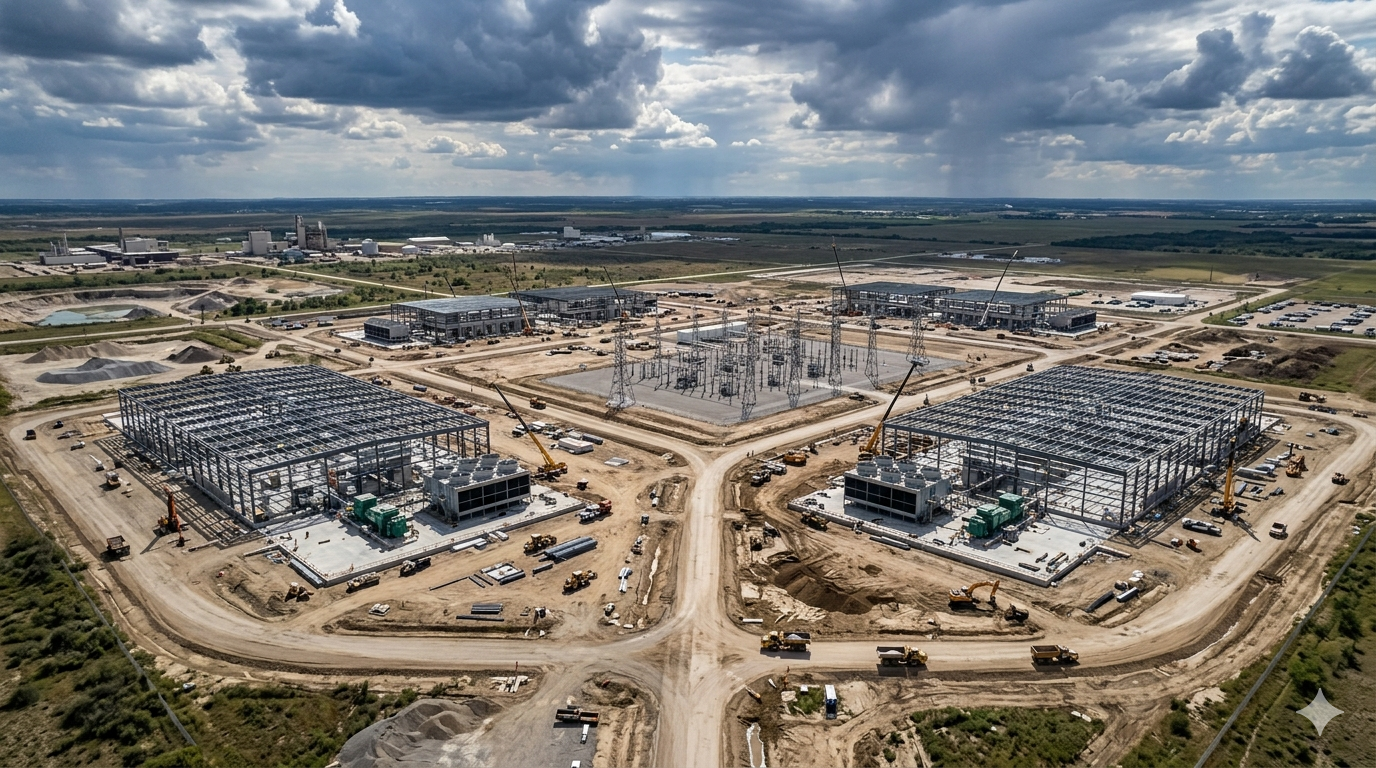
AI infrastructure spending 650 billion Big Tech hyperscaler capex 2026

The wrong question is dominating the conversation about Big Tech’s 2026 AI infrastructure commitments. Meta’s stock fell 6% yesterday when it raised its capex guidance to $145 billion, and the reaction was, in fact, immediate. Financial media immediately framed the question as: is this too much? Investors who sold clearly thought so. The bulls, however, disagreed. The bulls countered that $650 billion across five hyperscalers is not enough given the scale of AI demand. Both sides are, however, ultimately arguing about the wrong variable.

The right question is not whether $650 billion is too much or too little. It is how much of it will reach operational capacity within the timeframe the financial models assume. That is, consequently, a very different and much less comfortable question.

The Announced vs Delivered Problem Does Not Disappear at $650 Billion

The same structural constraints that produce the announced vs built gap in developer-owned projects apply, in modified form, to hyperscaler-owned infrastructure. Transformer lead times are 18 to 36 months. Grid interconnection timelines in key markets extend five to seven years for large loads. Permitting processes are growing more complex, not less, in every major US market. Capital commitments do not, however, resolve those constraints. Time, relationships, and supply chain positioning resolve them.

Meta’s own explanation for its capex raise is, specifically, an admission that supply chain constraints are already affecting its plans. Higher component pricing, as the company’s CFO cited, is a supply signal. When demand exceeds supply, prices rise. Meta pays more for the same components it needed anyway. That is not a sign of a well-functioning supply chain absorbing $650 billion smoothly. It is, rather, a sign of a supply chain that was not designed for this level of demand and is now under structural stress. As we have covered in our analysis of the announced vs built gap in AI infrastructure, the gap between committed capital and delivered capacity is the most consequential and least discussed number in AI infrastructure right now.

The Bull Case Is Not Wrong, Just Incomplete

The bull case is, however, coherent in its own terms. AI demand is real, accelerating, and generating measurable revenue returns. Meta’s Q1 results showed AI tools boosting ad conversion rates by over 6%. Microsoft Azure demand continues to exceed supply. AWS revenue is growing at 28% year-over-year. These are not speculative demand signals. They are current revenue numbers from the largest technology companies on earth. If anything, the infrastructure is, in fact, already behind the demand curve in several markets.

The problem is, however, that it measures demand correctly but misframes the response. More committed capital does not equal more delivered capacity on the timescales that financial models assume. A $10 billion increase in Meta’s capex guidance does not, in other words, translate into $10 billion more of operational data center capacity in 2026. It translates into procurement commitments, equipment orders, and site agreements that will become operational capacity in 2027, 2028, or 2029. As we have covered in our analysis of the $700 billion question of whether AI infrastructure spending can justify itself, the return on that investment is dependent not on the commitment date but on the delivery date, and those two dates are not the same.

What the Market Is Actually Pricing

The 6% sell-off in Meta’s stock is not, therefore, evidence that the market thinks $650 billion is too much. It reflects, rather, the market’s concern about the timing of returns. Total expenses grew 35% year-over-year in Q1 2026, outpacing revenue growth of 33%. That spread is, notably, not sustainable indefinitely. Operating margin compressed from 48% at its Q4 2024 peak to 41% in Q1 2026. The capex raise adds $107 billion in new contractual infrastructure commitments from Q1 alone.

Free cash flow is, consequently, under pressure. Those are not, specifically, signs of a company over-investing relative to its competitive position. They are signs of a company investing ahead of the revenue curve and asking investors to trust that the curve arrives on schedule. That is a reasonable ask given Meta’s track record. It is not, however, a guaranteed one. The investors who sold were not, specifically, arguing that AI demand is overhyped. They were arguing that the gap between investment and return is wider than the current multiple implies. That is a much more precise and defensible concern. As we have covered in our analysis of how investors are rethinking data center valuation, the methodology for evaluating AI infrastructure investment is evolving rapidly. The market is not wrong to ask the timing question. It is asking it, however, in the wrong frame. The question is not too much or too little. It is whether delivery will match commitment. On the current evidence, the honest answer is: not entirely, not on schedule, and the degree of the gap will define which companies emerge from this cycle with sustainable competitive positions and which do not.


[simple-author-box]

More from AI Infrastructure

Every major AI announcement tends to emphasize graphics processors, cloud capacity, or multi-billion-dollar data

The conversation surrounding every major power disruption follows a familiar pattern. Engineers examine protective

Singapore rarely enters energy conversations as a country defined by what exists beneath its

COMPUTE WEEKLY

The briefing that 40,000+ tech leaders read every Monday. Sharp, fast, essential.

Great! We’ve received your information.

We couldn’t process your submission. Please retry

Building an AI Startup Without Owning GPUs

Not owning GPUs has become the default, deliberate strategy for building an AI company — not a compromise founders accept reluctantly. H100 rental rates fell 64-75% in fifteen months, a dense ecosystem of neoclouds and inference-as-a-service providers now lets startups skip infrastructure entirely, and credit programs can fund a company’s first year before a founder writes a check
Most Read

Infrastructure planning discussions often prioritize engineering, construction, and utility considerations before examining how end

AI infrastructure deployment schedules depend on coordinated progress across hardware availability, electrical infrastructure, cooling

Artificial intelligence has transformed the economics of digital infrastructure. Every new AI model requires

Data centers do not visibly smoke. They have no smokestacks, no visible exhaust, and

Artificial intelligence has transformed the economics of digital infrastructure. Companies once competed by acquiring

Disruptor Spotlight

Cerebras Systems

The chip that makes Nvidia nervous. Cerebras’ Wafer Scale Engine is rewriting the rules of AI inference at scale.
Faster
0 x
YoY Revenue
0 x
Transistors
0 T
Market Pulse
NVDA
$924.60
-2.11%
MSFT
$421.30
-2.94%
AMZN
$192.80
-4.87%
AMD
$924.60
-2.40%
TSMC
$924.60
-2.32%
Indicative only · Not financial advice
Upcoming Events
SEP
The AI Infrastructure Race (India)
WEBINAR · ONLINE
The AI Infrastructure Race: Won on Power, Land and Trust — Not Capital
MAY
0
AI Infrastructure Summit
DUBAI · IN PERSON
MEA’s premier AI infrastructure event.
JUN
0 0
Compute Forecast Summit
SINGAPORE · IN PERSON
Our flagship APAC event. Early bird open.
Latest Moves
Live
ecolab
Ecolab Deepens Cooling Strategy With $4.75B CoolIT Acquisition
Ecolab is making one of its biggest moves yet into AI infrastructure after completing its $4.75 billion acquisition of liquid cooling specialist CoolIT Systems
Pure DC AVK Europe data center microgrid Dublin 110MW AI infrastructure Ireland 2026
Pure DC and AVK Deploy Europe’s First 110 MW Data Center Microgrid in Dublin
The Pure DC Dublin microgrid has made history as Europe’s first large-scale on-site data center microgrid, launched in partnership with power solutions provider AVK at Pure DC’s campus in Ireland.
Pace Digitek
Pace Digitek Partners With MEGMEET to Expand AI Data Center Power Business
India’s AI infrastructure ecosystem continues to mature as domestic technology manufacturers move beyond traditional telecommunications and industrial markets toward high-growth digital infrastructure opportunities
Follow Compute Forecast
11K followers
1200 followers
Companies to Watch
CW
CoreWeave
Neo Cloud · $19B · IPO Watch
CB
Cerebras Systems
AI Hardware · $4.25B · Pre-IPO
G42
G42
Sovereign AI · Abu Dhabi
H
Humain
Saudi AI · $40B Fund
Latest Podcast
AI Capex, Cloud Margins & the Nuclear Bet
48 MIN · 25 APR 2026

The $650 Billion Question: Is Big Tech Building Too Much AI Infrastructure or Not Enough

The wrong question is dominating the conversation about Big Tech’s 2026 AI infrastructure commitments. Meta’s stock fell 6% yesterday when

Share
AI infrastructure spending 650 billion Big Tech hyperscaler capex 2026
21
847 SHARES

0
SHARES

[simple-author-box]

More from AI Infrastructure

Infrastructure planning discussions often prioritize engineering, construction, and utility considerations before examining how end

AI infrastructure deployment schedules depend on coordinated progress across hardware availability, electrical infrastructure, cooling

Artificial intelligence has transformed the economics of digital infrastructure. Every new AI model requires

Data centers do not visibly smoke. They have no smokestacks, no visible exhaust, and

COMPUTE WEEKLY

The briefing that 40,000+ tech leaders read every Monday. Sharp, fast, essential.

Great! We’ve received your information.

We couldn’t process your submission. Please retry

Global AI Infrastructure Outlook 2026

The briefing that 40,000+ tech leaders read every Monday. Sharp, fast, essential.
Download Free
Most Read

Infrastructure planning discussions often prioritize engineering, construction, and utility considerations before examining how end

AI infrastructure deployment schedules depend on coordinated progress across hardware availability, electrical infrastructure, cooling

Artificial intelligence has transformed the economics of digital infrastructure. Every new AI model requires

Data centers do not visibly smoke. They have no smokestacks, no visible exhaust, and

Artificial intelligence has transformed the economics of digital infrastructure. Companies once competed by acquiring

Disruptor Spotlight

Cerebras Systems

The chip that makes Nvidia nervous. Cerebras’ Wafer Scale Engine is rewriting the rules of AI inference at scale.
Faster
0 x
YoY Revenue
0 x
Transistors
0 T
Market Pulse
NVDA
$924.60
+2.4%
MSFT
$421.30
+1.1%
AMZN
$192.80
-0.6%
NVDA
$924.60
+2.4%
NVDA
$924.60
+2.4%
Indicative only · Not financial advice
Upcoming Events
MAY
0 0
DCD Global — London
LONDON · IN PERSON
World’s largest DC event. CF is media partner.
MAY
0
AI Infrastructure Summit
DUBAI · IN PERSON
MEA’s premier AI infrastructure event.
JUN
0 0

Compute Forecast Summit

SINGAPORE · IN PERSON
Our flagship APAC event. Early bird open.
Latest Moves
  • Live
Sam Altman
OpenAI appoints new Chief Infrastructure Officer to lead $100B DC programme
27 APR · OPENAI
Sam Altman
OpenAI appoints new Chief Infrastructure Officer to lead $100B DC programme
27 APR · OPENAI
Sam Altman
OpenAI appoints new Chief Infrastructure Officer to lead $100B DC programme
27 APR · OPENAI
Follow Compute Forecast
18.4K followers
12.1K followers
9.3K subscribers
41 episodes
Companies to Watch
CW
CoreWeave
Neo Cloud · $19B · IPO Watch
CB
Cerebras Systems
AI Hardware · $4.25B · Pre-IPO
G42
G42
Sovereign AI · Abu Dhabi
CW
Humain
Saudi AI · $40B Fund
Latest Podcast
AI Capex, Cloud Margins & the Nuclear Bet
48 MIN · 25 APR 2026
Scroll to Top








