
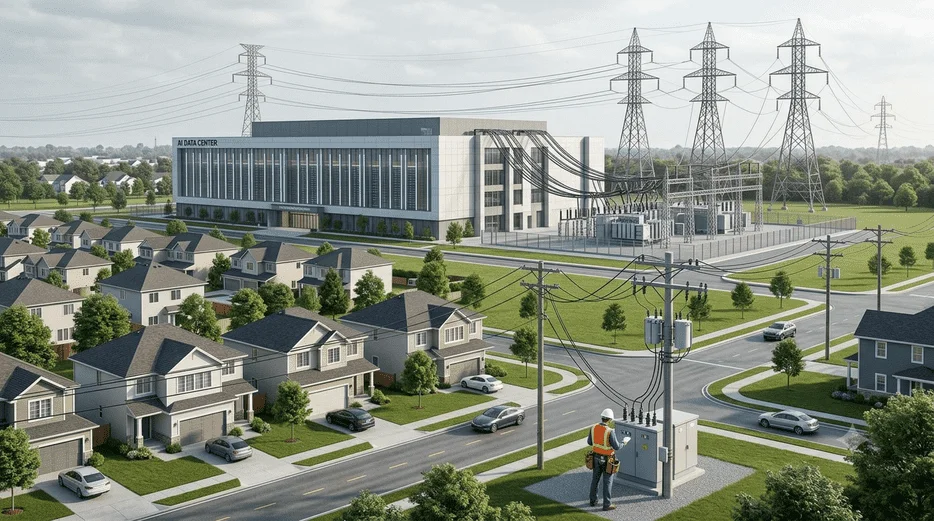
AI’s Electricity Appetite Is Reshaping The Grid
Artificial intelligence has transformed from a software breakthrough into one of the largest infrastructure stories of the decade. Every new AI model depends on vast computing clusters operating inside power-hungry data centers. Those facilities require continuous electricity, high-capacity transmission lines, advanced substations, and reliable backup systems. As AI adoption accelerates, utilities across the United States are preparing for demand levels they did not anticipate only a few years ago. The challenge extends far beyond supplying electricity because the grid itself must expand to support this new wave of digital infrastructure. The numbers illustrate why utilities are paying close attention. The International Energy Agency estimates that global data center electricity consumption could more than double by 2030, driven largely by artificial intelligence workloads. In the United States, many of the largest AI campuses require hundreds of megawatts of continuous power, with several proposed projects targeting gigawatt-scale capacity. Such facilities consume electricity comparable to medium-sized cities once fully operational. Utilities therefore face mounting pressure to strengthen transmission networks, generation assets, and local distribution infrastructure before those campuses become operational.

The Grid Was Not Built For AI
America’s electrical grid evolved around predictable patterns of residential, commercial, and industrial demand. AI data centers introduce a very different consumption profile because they operate continuously and draw enormous amounts of electricity every hour of the day. Unlike seasonal demand spikes caused by weather, AI infrastructure creates permanent growth that utilities must accommodate for decades. Building enough capacity requires years of planning, regulatory approvals, engineering work, and capital investment. Those projects often begin long before data centers receive their first servers. Expanding grid capacity involves far more than constructing additional power plants. Utilities must install higher-capacity transmission lines, build new substations, reinforce local distribution networks, and deploy sophisticated control systems capable of managing larger electrical loads. Every component requires billions of dollars in long-term investment across many regions experiencing rapid AI development. Northern Virginia, Texas, Arizona, Georgia, and Ohio have all announced significant infrastructure expansions to accommodate growing data center demand. Similar investments are beginning to appear in several emerging AI markets across the country.
Understanding How Utilities Recover Costs
Electric utilities operate under regulated business models that differ from most industries. Before recovering investments through customer bills, utilities generally seek approval from state public utility commissions. Regulators examine whether proposed infrastructure projects are necessary, how much they will cost, and whether those investments provide long-term public value. After approval, utilities gradually recover eligible costs through electricity rates paid by customers over many years. This process has existed for decades and finances much of America’s electrical infrastructure. The rapid expansion of AI infrastructure has introduced new questions into this regulatory framework. Consumer advocates increasingly ask whether residential customers should contribute toward infrastructure primarily built to serve hyperscale technology companies. Utilities respond that stronger transmission networks and generation capacity improve overall grid reliability while supporting broader economic development. Regulators now face difficult decisions about allocating costs fairly without discouraging investment or delaying critical infrastructure upgrades. These debates are becoming more frequent as AI projects grow larger across multiple states.
The Debate Is Moving Into State Regulatory Hearings
Electricity pricing has become one of the most closely watched policy issues surrounding artificial intelligence infrastructure. Several utilities have requested billions of dollars for transmission upgrades, new substations, and additional generating capacity linked partly to projected data center demand. Consumer organizations, business groups, and technology companies increasingly participate in public hearings to influence how those investments should be financed. These proceedings have transformed AI infrastructure into a significant public policy discussion rather than simply a technology industry issue. Virginia provides one of the clearest examples because it hosts the world’s largest concentration of data centers. Rapid infrastructure expansion has prompted growing discussions about electricity costs, grid planning, and future investment priorities. Policymakers continue examining whether current regulatory structures distribute costs appropriately as digital infrastructure expands. Similar conversations are emerging across other high-growth markets where utilities expect substantial increases in electricity demand from AI facilities during the coming decade. The outcome of these debates could influence how future infrastructure projects are financed nationwide.
Hyperscalers Argue The Grid Benefits Everyone
Technology companies maintain that new grid investments should not be viewed solely as costs created by AI. Many argue that stronger transmission networks, modern substations, and additional generating capacity improve overall grid resilience for households and businesses alike. Utilities also point to the economic benefits associated with large data center developments, including construction employment, long-term tax revenue, and investment in local infrastructure. Supporters believe these projects strengthen regional economies while improving electricity systems that serve many different users. Major cloud providers are also investing directly in energy infrastructure rather than relying entirely on existing utilities. Companies including Amazon, Microsoft, Google, and Meta have signed long-term renewable energy agreements, invested in battery storage, explored nuclear partnerships, and supported grid modernization initiatives. These investments reduce pressure on conventional electricity supplies while helping utilities expand cleaner generation capacity. Even so, the pace of AI deployment continues to outstrip the speed at which new energy infrastructure can be built.
Consumer Groups Want A Different Cost Model
Consumer advocates acknowledge the economic importance of AI but question whether households should absorb infrastructure costs created by exceptionally large industrial customers. Several organizations argue that utilities should design electricity tariffs reflecting the unique demands of hyperscale facilities rather than spreading expenses broadly across customer classes. Their concern centers on fairness rather than opposition to AI itself. Policymakers increasingly recognize that electricity pricing will influence public acceptance of future AI infrastructure investments. The debate has encouraged regulators to consider new approaches for allocating infrastructure costs. Some proposals would require large data center operators to contribute more toward transmission upgrades through dedicated connection fees or specialized rate structures. Others encourage long-term contracts that guarantee infrastructure investments remain financially sustainable before construction begins. These discussions remain active across several states, reflecting the rapid evolution of electricity policy as AI demand continues expanding.

States Are Beginning To Respond
Several state governments are reviewing electricity policies as AI development accelerates. Regulators must balance competing priorities that include attracting investment, protecting consumers, maintaining grid reliability, and supporting long-term economic growth. Each state faces different circumstances because electricity markets, utility structures, and infrastructure needs vary considerably across the country. Consequently, no single policy solution is likely to apply nationwide. Regional approaches will probably continue shaping how AI infrastructure develops over the coming decade. Some utilities are already developing new customer categories specifically for hyperscale data centers. These structures seek to align infrastructure investments more closely with the customers creating additional demand while preserving broader grid reliability. Industry observers expect more utilities to explore similar frameworks as gigawatt-scale AI campuses become increasingly common. Such changes could reshape how future electricity infrastructure is financed without slowing digital infrastructure investment.
The Economics Extend Beyond Electricity Bills
Electricity represents only one part of the broader infrastructure equation. Building new AI campuses requires transmission lines, substations, water systems, fiber networks, transportation improvements, and skilled labor. These investments often generate wider economic activity that benefits surrounding communities through employment, supplier contracts, and public revenue. Supporters therefore argue that evaluating electricity costs without considering these broader economic effects presents an incomplete picture. Both costs and benefits deserve careful consideration within public policy discussions. At the same time, delaying grid investment carries its own economic risks. Insufficient electrical capacity could slow AI deployment, discourage manufacturing investment, and limit broader digital transformation across multiple industries. Utilities therefore face the difficult task of expanding infrastructure quickly while ensuring costs remain reasonable for all customers. Achieving that balance may become one of the defining infrastructure challenges of the AI era. Future regulatory decisions will influence both economic competitiveness and consumer affordability.
America’s AI Power Boom
The Real Question Is Not Whether AI Needs More Power
Few experts dispute that artificial intelligence will require substantially more electricity during the coming decade. The larger question concerns how those infrastructure costs should be distributed across utilities, hyperscale operators, businesses, and residential consumers. That conversation has already moved beyond engineering into economics, regulation, and public policy. Decisions made during the next several years will shape how future AI infrastructure is financed across the United States. The outcome could influence investment strategies well beyond the technology sector. Rather than viewing AI as the sole cause of rising electricity costs, policymakers increasingly recognize a more complex reality. Aging infrastructure, growing electrification, renewable energy integration, and rapidly expanding data center demand all contribute to the need for significant grid investment. The challenge lies in creating funding models that encourage innovation while protecting consumers from unnecessary financial burdens. As AI infrastructure continues expanding, the debate over who pays for the next generation of America’s electrical grid will become increasingly important.











