
The Efficiency Breakthrough That Reframes the Industry’s Limits
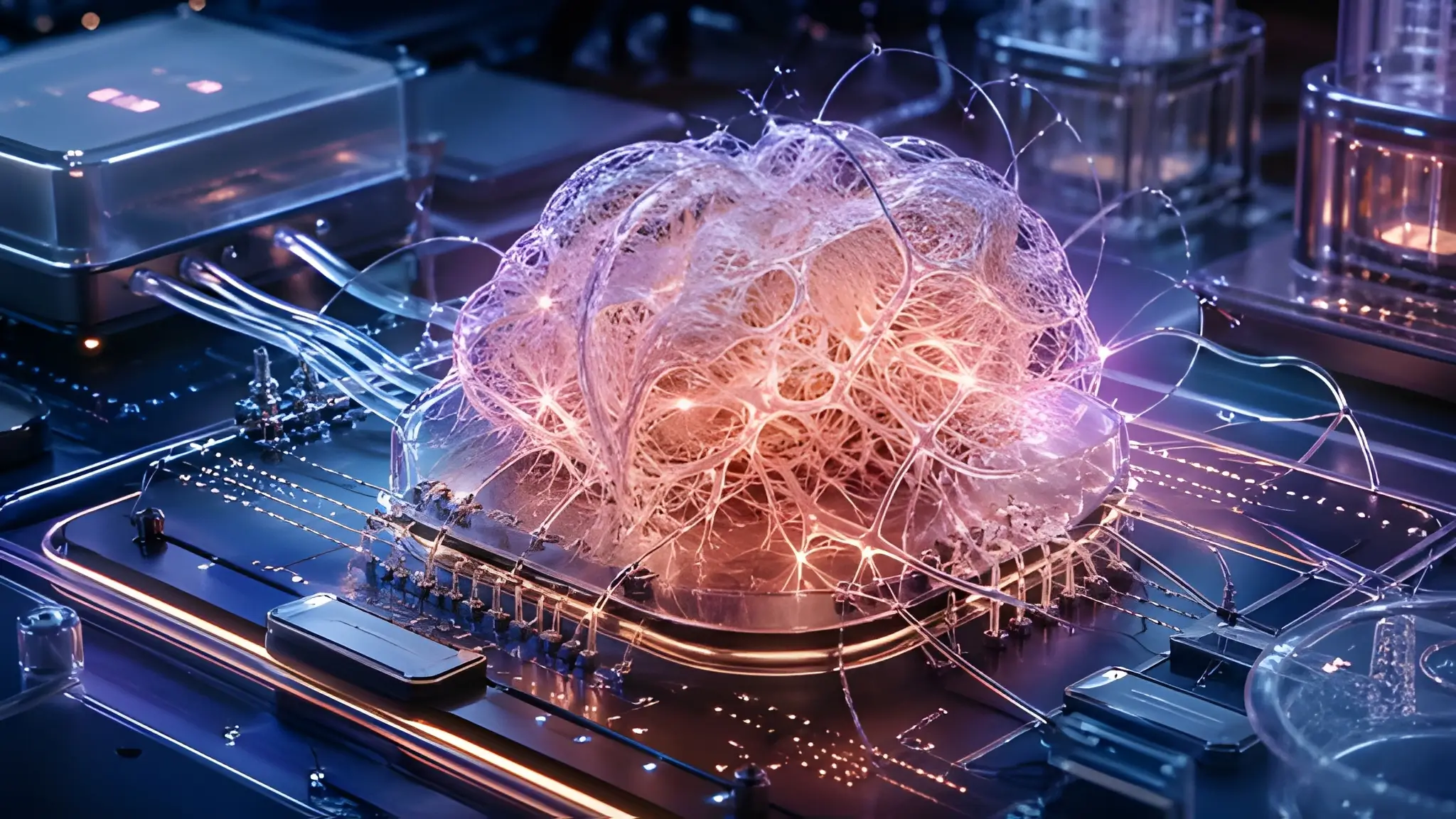
The next phase of artificial intelligence is no longer being defined solely by silicon. Researchers are now integrating human brain cells, grown as organoids into computing systems, positioning biology as a functional component of modern infrastructure.

The premise is direct: neurons process, learn and adapt using significantly less energy than traditional chips. In an era where AI workloads are scaling faster than power grids can accommodate, efficiency has become the industry’s most binding constraint.
This development does not emerge in isolation. Data centers are already under pressure from escalating energy demands tied to large-scale AI training and inference. GPU clusters continue to expand, but their efficiency gains have not kept pace with computational requirements. As a result, alternative paradigms are moving from theoretical exploration into applied experimentation.
Biological computing, once confined to speculative research, is now being tested as a viable supplement to silicon-based systems. Organoids, clusters of human neurons grown in controlled environments demonstrate the ability to process signals and adapt over time. Their appeal lies in their architecture: unlike static circuits, neurons reconfigure dynamically, learning through interaction rather than explicit programming.

The industry’s interest in this model signals a deeper issue. The traditional scaling path smaller transistors, denser chips, higher throughput is encountering diminishing returns. Efficiency gains are no longer sufficient to offset exponential demand. In that context, biology is not being explored as an enhancement. It is being positioned as a workaround.
When Infrastructure Starts Borrowing From Biology
The integration of brain cells into computing systems introduces a structural shift in how infrastructure is conceptualized. Data centers have historically been defined by predictability, hardware components operate within deterministic frameworks, governed by engineered constraints. Biological systems do not follow the same logic.
Neurons operate through probabilistic signaling. They adapt based on stimuli, reorganize connections and exhibit forms of emergent behavior. When embedded into computational loops, these characteristics challenge the rigid boundaries that have defined computing for decades.
This creates a hybrid model. Silicon handles deterministic tasks, while biological components manage adaptive processes. The distinction is not merely technical; it alters the operational philosophy of computing systems. Machines are no longer confined to executing instructions. They begin to exhibit forms of learning that are intrinsic rather than programmed.
That shift carries implications for system design. Monitoring, debugging and optimization become more complex when part of the system behaves biologically. Traditional metrics latency, throughput, error rates may not fully capture the performance of hybrid architectures. New frameworks will be required to evaluate systems that do not operate entirely within engineered constraints.
The Energy Argument Driving Adoption
Energy efficiency remains the primary driver behind this exploration. AI models continue to grow in size and complexity, with training processes consuming vast amounts of electricity. Even incremental improvements in efficiency can translate into significant cost and sustainability benefits at scale.
Neurons offer a compelling contrast. The human brain operates on roughly 20 watts of power while performing tasks that exceed the capabilities of many AI systems. This disparity has positioned biological computing as a potential solution to the industry’s energy bottleneck.
However, the comparison is not straightforward. Translating biological efficiency into scalable infrastructure presents challenges. Organoids require controlled environments, including nutrient supply and temperature regulation. Integrating these requirements into data center operations introduces new layers of complexity.
Despite these challenges, the direction is clear. The industry is exploring any pathway that can reduce energy consumption without compromising performance. Biological systems, with their inherent efficiency, represent one of the few avenues that offer a fundamentally different approach rather than incremental improvement.
The Philosophical Line the Industry Is Crossing
The technical narrative does not fully capture the significance of this development. The integration of human brain cells into computing systems introduces questions that extend beyond engineering.
At its core, this approach blurs the boundary between tool and entity. Traditional computing systems are inert. They execute instructions without any form of intrinsic behavior. Biological components, even in simplified forms like organoids, introduce elements of responsiveness and adaptation that challenge this definition.
If these systems learn and adapt, the distinction between programmed behavior and emergent behavior becomes less clear. This raises questions about control, accountability and classification. Are these systems still tools, or do they represent a new category of computational entity?
The industry has not yet established a framework to address these questions. Current discussions remain focused on technical feasibility and efficiency gains. Ethical considerations are present but not fully integrated into development strategies.
This gap reflects a broader pattern. Technological advancement often outpaces the frameworks designed to govern it. In this case, the pace of innovation is being driven by necessity. The demand for AI capabilities continues to grow, and the limitations of existing infrastructure are becoming increasingly apparent.
A Signal of Constraint, Not Just Innovation
The move toward biological computing should not be interpreted solely as a breakthrough. It is also a signal of constraint. When established pathways reach their limits, the industry does not slow down. It seeks alternatives, even if they redefine foundational assumptions.
Silicon has been the cornerstone of computing for decades. Its limitations are now shaping the trajectory of innovation. The exploration of biological systems indicates that the industry is willing to move beyond traditional boundaries to sustain progress.
This does not imply that silicon will be replaced. Instead, a layered approach is emerging. Hybrid systems that combine deterministic and adaptive components may become a standard model for future infrastructure. This would represent a shift from uniform architectures to heterogeneous systems designed to leverage the strengths of different paradigms.
Such a transition will require new standards, tools and methodologies. It will also require a reassessment of how computing systems are defined and managed. The integration of biology introduces variables that cannot be fully controlled through engineering alone.
The Data Center as a Living System
If biological computing scales, the concept of the data center will evolve. Facilities that currently house rows of servers and cooling systems could incorporate environments designed to sustain living components. This would transform data centers from purely mechanical systems into hybrid ecosystems.
This shift would have operational implications. Maintenance protocols, monitoring systems and infrastructure design would need to accommodate biological processes. The distinction between hardware and environment would become less defined.
The idea of a “living” data center is not a metaphor in this context. It reflects a potential reality where biological and mechanical systems coexist within the same infrastructure. This would represent a fundamental departure from current models.
Redefining the Boundaries of Intelligence
The integration of human brain cells into computing systems also reframes the concept of intelligence in technology. AI has traditionally been understood as a simulation of cognitive processes. Biological computing introduces elements of actual biological function into this framework.
This does not equate to consciousness or sentience. Organoids are simplified systems that do not replicate the complexity of a human brain. However, their ability to learn and adapt introduces a new dimension to computational systems.
The industry is not just building systems that mimic intelligence. It is incorporating components that exhibit forms of it. This distinction, while subtle, carries significant implications for how AI is perceived and developed.
The Industry’s Next Inflection Point
The exploration of biological computing marks a critical moment for the AI industry. It highlights both the ambition driving innovation and the constraints shaping it. The pursuit of efficiency has led to a reconsideration of what constitutes a computing system.
This development is not an endpoint. It represents an inflection point. The outcomes will depend on how effectively the industry can integrate biological components into scalable, reliable infrastructure. It will also depend on how ethical and philosophical considerations are addressed as these systems evolve.
The trajectory is uncertain, but the direction is evident. The boundaries between computing, biology and intelligence are becoming increasingly fluid. As these lines blur, the industry will need to redefine not only its technologies but also its frameworks for understanding them.











