
NVIDIA H200 shipments delayed to Q3  · BREAKING: Microsoft confirms 3GW data centre expansion in Asia-Pacific ·  AWS announces new sovereign cloud regions in India and UAE  · Arm-based servers now 24% of hyperscale deployments ·  EU AI Act enforcement enters phase two  · Global data centre investment hits $612B in 2026 ·  TSMC Arizona yields improve to 68% on 3nm process  · OpenAI valuation reaches $400B after latest funding round ·  NVIDIA H200 shipments delayed to Q3  · BREAKING: Microsoft confirms 3GW data centre expansion in Asia-Pacific ·  AWS announces new sovereign cloud regions in India and UAE  · Arm-based servers now 24% of hyperscale deployments ·  EU AI Act enforcement enters phase two  · Global data centre investment hits $612B in 2026

The Colocation Industry Is Not Ready for What AI Is About to Ask of It

The colocation industry has had a good run. For two decades, it sold a proposition that worked. Take enterprise IT

Share
Colocation AI infrastructure data center power density gap 2026

The colocation industry has had a good run. For two decades, it sold a proposition that worked. Take enterprise IT off-premise. Put it in a professionally managed, carrier-neutral facility. Let the customer focus on running its business rather than running data centers. That proposition created a multi-hundred-billion-dollar industry. It also created an industry whose physical infrastructure, commercial models, and operational assumptions AI is, in turn, rendering obsolete.

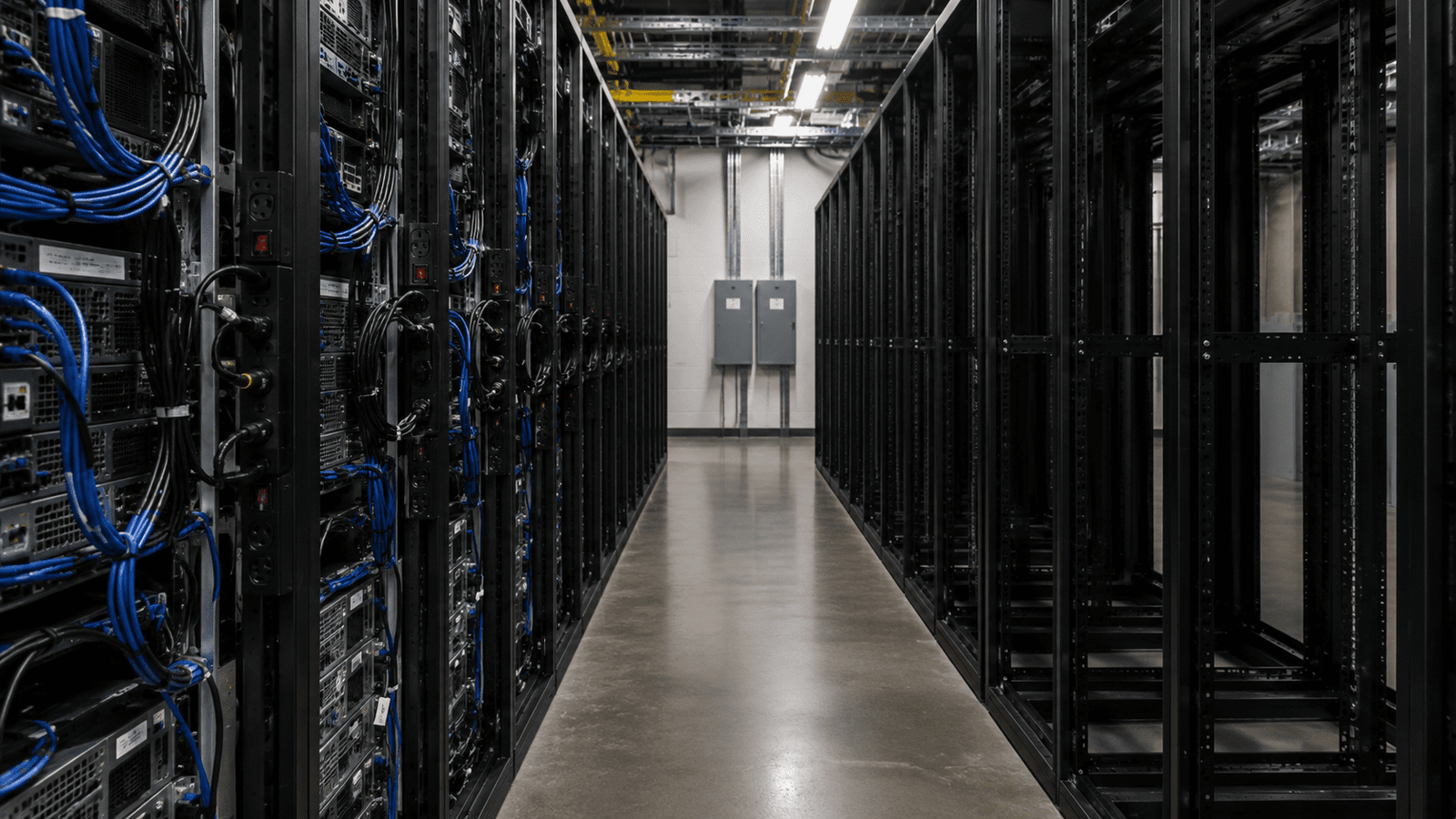
The challenge is not that colocation operators have been caught off guard. Most of the major operators have announced AI-ready product lines, high-density zones within their campuses, and partnerships with GPU vendors. Those announcements are, however, in many cases grafted onto facilities and commercial structures built for workloads drawing 5 to 10 kilowatts per rack. Genuine AI infrastructure requires 100 kilowatts per rack and above. The gap between what most colocation facilities can deliver and what AI customers require is, consequently, wider than the industry’s marketing language suggests.

What AI Actually Requires From a Colocation Provider

AI training and inference workloads have physical requirements that differ from traditional enterprise IT in ways that go beyond power density. The power distribution architecture of a legacy colocation facility cannot simply be upgraded to serve racks drawing 100 kilowatts or more. Legacy facilities targeted racks drawing a few kilowatts each. The electrical infrastructure, busway systems, UPS configurations, and cooling infrastructure all need fundamental redesign. Incremental upgrade does not, in turn, get you there. A facility that installs a high-density zone in a corner of a campus built for 10-kilowatt racks is, specifically, not an AI data center.

Cooling is the most visible constraint. Air cooling becomes progressively less effective above 30 to 40 kilowatts per rack. The heat density that AI GPUs generate at 100 kilowatts per rack requires liquid cooling. Direct-to-chip, rear-door heat exchangers, and full immersion are the three main approaches. Retrofitting liquid cooling into a facility built for air cooling is expensive and technically complex. In some cases it is physically impossible without rebuilding the raised floor and power distribution from scratch. Most colocation operators have not, however, done that work at scale. The Long Read How Colocation Is Being Redefined by AI Workload Requirements mapped this constraint in detail. What has become clearer since is that the pace of colocation retrofit is falling further behind the pace of AI demand growth.

The Commercial Model Problem Is Harder Than the Physical One

The physical infrastructure problem is, at least, solvable with capital. The commercial model problem is, however, more structurally difficult. Traditional colocation is sold on a per-kilowatt or per-cabinet basis, with power as a separate line item billed at actual consumption. AI workloads break that model in two specific ways.

First, AI training clusters require dedicated, predictable power at densities that most colocation pricing structures were not designed to accommodate. A customer deploying a 50-megawatt AI training cluster is not, in other words, buying a few cabinets. They are consuming a significant fraction of a facility’s total power capacity on a dedicated basis. Build-to-suit or lease structures are, consequently, more appropriate than traditional colocation agreements. Second, AI inference workloads have highly variable power consumption profiles. They can spike and trough dramatically as query volumes fluctuate. Colocation facilities provisioned for steady-state loads struggle, in turn, to accommodate that variability.

The operators best positioned to address this are, notably, those that have moved toward wholesale or hyperscale-style structures rather than retail colocation. The Blog Colocation in the Age of Agentic AI: Why the Mid-Tier Operator Has a Window identified a specific opportunity for operators who move fast on power density and commercial flexibility. That window is, however, narrower than it looked twelve months ago. Hyperscalers and purpose-built AI infrastructure operators have been moving faster than most colocation operators anticipated.

Who Is Actually Winning the AI Infrastructure Business

The AI infrastructure business is, in practice, not flowing to mainstream colocation operators at the scale their announcements might suggest. It is going to three types of operators. Hyperscalers building their own campuses. Purpose-built AI infrastructure operators like CoreWeave, Nebius, and Nscale that were designed from the ground up for AI density. And a small number of colocation operators who made the genuine capital commitment to rebuild for AI workloads.

The mainstream colocation operator sitting in the middle is, in turn, competing for a smaller share of the AI market than its capacity suggests. Legacy infrastructure, retail pricing models, and a higher-density zone do not, consequently, add up to a competitive AI offering. That is not, however, a reason for despair. Enterprise customers still need managed data center infrastructure for workloads that are not AI at scale. The risk is, specifically, that the AI infrastructure revenue opportunity operators have been counting on does not materialise at the margins they have modelled.

The colocation industry has, ultimately, built enough infrastructure to weather a period of AI-driven disruption. What it has not done is reckon honestly with that gap. The sooner that reckoning happens, the better positioned the industry will be to close it rather than paper over it.


[simple-author-box]

More from AI Infrastructure

Every major AI announcement tends to emphasize graphics processors, cloud capacity, or multi-billion-dollar data

The conversation surrounding every major power disruption follows a familiar pattern. Engineers examine protective

Singapore rarely enters energy conversations as a country defined by what exists beneath its

COMPUTE WEEKLY

The briefing that 40,000+ tech leaders read every Monday. Sharp, fast, essential.

Great! We’ve received your information.

We couldn’t process your submission. Please retry

Building an AI Startup Without Owning GPUs

Not owning GPUs has become the default, deliberate strategy for building an AI company — not a compromise founders accept reluctantly. H100 rental rates fell 64-75% in fifteen months, a dense ecosystem of neoclouds and inference-as-a-service providers now lets startups skip infrastructure entirely, and credit programs can fund a company’s first year before a founder writes a check
Most Read

Infrastructure planning discussions often prioritize engineering, construction, and utility considerations before examining how end

AI infrastructure deployment schedules depend on coordinated progress across hardware availability, electrical infrastructure, cooling

Artificial intelligence has transformed the economics of digital infrastructure. Every new AI model requires

Data centers do not visibly smoke. They have no smokestacks, no visible exhaust, and

Artificial intelligence has transformed the economics of digital infrastructure. Companies once competed by acquiring

Disruptor Spotlight

Cerebras Systems

The chip that makes Nvidia nervous. Cerebras’ Wafer Scale Engine is rewriting the rules of AI inference at scale.
Faster
0 x
YoY Revenue
0 x
Transistors
0 T
Market Pulse
NVDA
$924.60
-2.11%
MSFT
$421.30
-2.94%
AMZN
$192.80
-4.87%
AMD
$924.60
-2.40%
TSMC
$924.60
-2.32%
Indicative only · Not financial advice
Upcoming Events
SEP
The AI Infrastructure Race (India)
WEBINAR · ONLINE
The AI Infrastructure Race: Won on Power, Land and Trust — Not Capital
MAY
0
AI Infrastructure Summit
DUBAI · IN PERSON
MEA’s premier AI infrastructure event.
JUN
0 0
Compute Forecast Summit
SINGAPORE · IN PERSON
Our flagship APAC event. Early bird open.
Latest Moves
Live
ecolab
Ecolab Deepens Cooling Strategy With $4.75B CoolIT Acquisition
Ecolab is making one of its biggest moves yet into AI infrastructure after completing its $4.75 billion acquisition of liquid cooling specialist CoolIT Systems
Pure DC AVK Europe data center microgrid Dublin 110MW AI infrastructure Ireland 2026
Pure DC and AVK Deploy Europe’s First 110 MW Data Center Microgrid in Dublin
The Pure DC Dublin microgrid has made history as Europe’s first large-scale on-site data center microgrid, launched in partnership with power solutions provider AVK at Pure DC’s campus in Ireland.
Pace Digitek
Pace Digitek Partners With MEGMEET to Expand AI Data Center Power Business
India’s AI infrastructure ecosystem continues to mature as domestic technology manufacturers move beyond traditional telecommunications and industrial markets toward high-growth digital infrastructure opportunities
Follow Compute Forecast
11K followers
1200 followers
Companies to Watch
CW
CoreWeave
Neo Cloud · $19B · IPO Watch
CB
Cerebras Systems
AI Hardware · $4.25B · Pre-IPO
G42
G42
Sovereign AI · Abu Dhabi
H
Humain
Saudi AI · $40B Fund
Latest Podcast
AI Capex, Cloud Margins & the Nuclear Bet
48 MIN · 25 APR 2026

The Colocation Industry Is Not Ready for What AI Is About to Ask of It

The colocation industry has had a good run. For two decades, it sold a proposition that worked. Take enterprise IT

Share
Colocation AI infrastructure data center power density gap 2026
15
847 SHARES

0
SHARES

[simple-author-box]

More from AI Infrastructure

Infrastructure planning discussions often prioritize engineering, construction, and utility considerations before examining how end

AI infrastructure deployment schedules depend on coordinated progress across hardware availability, electrical infrastructure, cooling

Artificial intelligence has transformed the economics of digital infrastructure. Every new AI model requires

Data centers do not visibly smoke. They have no smokestacks, no visible exhaust, and

COMPUTE WEEKLY

The briefing that 40,000+ tech leaders read every Monday. Sharp, fast, essential.

Great! We’ve received your information.

We couldn’t process your submission. Please retry

Global AI Infrastructure Outlook 2026

The briefing that 40,000+ tech leaders read every Monday. Sharp, fast, essential.
Download Free
Most Read

Infrastructure planning discussions often prioritize engineering, construction, and utility considerations before examining how end

AI infrastructure deployment schedules depend on coordinated progress across hardware availability, electrical infrastructure, cooling

Artificial intelligence has transformed the economics of digital infrastructure. Every new AI model requires

Data centers do not visibly smoke. They have no smokestacks, no visible exhaust, and

Artificial intelligence has transformed the economics of digital infrastructure. Companies once competed by acquiring

Disruptor Spotlight

Cerebras Systems

The chip that makes Nvidia nervous. Cerebras’ Wafer Scale Engine is rewriting the rules of AI inference at scale.
Faster
0 x
YoY Revenue
0 x
Transistors
0 T
Market Pulse
NVDA
$924.60
+2.4%
MSFT
$421.30
+1.1%
AMZN
$192.80
-0.6%
NVDA
$924.60
+2.4%
NVDA
$924.60
+2.4%
Indicative only · Not financial advice
Upcoming Events
MAY
0 0
DCD Global — London
LONDON · IN PERSON
World’s largest DC event. CF is media partner.
MAY
0
AI Infrastructure Summit
DUBAI · IN PERSON
MEA’s premier AI infrastructure event.
JUN
0 0

Compute Forecast Summit

SINGAPORE · IN PERSON
Our flagship APAC event. Early bird open.
Latest Moves
  • Live
Sam Altman
OpenAI appoints new Chief Infrastructure Officer to lead $100B DC programme
27 APR · OPENAI
Sam Altman
OpenAI appoints new Chief Infrastructure Officer to lead $100B DC programme
27 APR · OPENAI
Sam Altman
OpenAI appoints new Chief Infrastructure Officer to lead $100B DC programme
27 APR · OPENAI
Follow Compute Forecast
18.4K followers
12.1K followers
9.3K subscribers
41 episodes
Companies to Watch
CW
CoreWeave
Neo Cloud · $19B · IPO Watch
CB
Cerebras Systems
AI Hardware · $4.25B · Pre-IPO
G42
G42
Sovereign AI · Abu Dhabi
CW
Humain
Saudi AI · $40B Fund
Latest Podcast
AI Capex, Cloud Margins & the Nuclear Bet
48 MIN · 25 APR 2026
Scroll to Top








