Skip to content
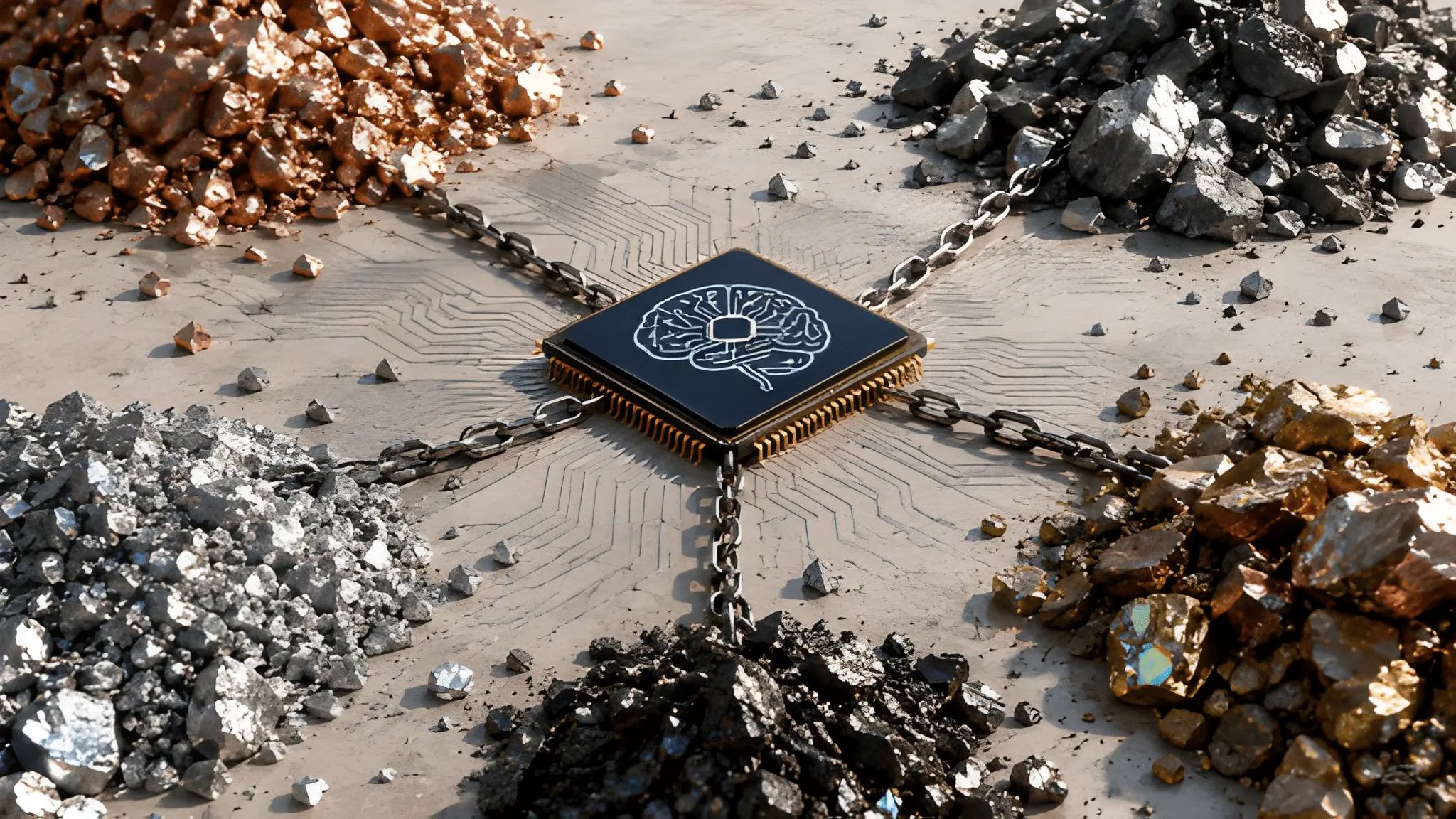
Many projections about artificial intelligence eventually collide with a less comfortable assumption: that the physical world will keep pace. Chipmakers will keep shrinking transistors, power utilities will keep energizing substations, and somewhere underground, the earth will keep yielding copper, lithium and rare earths. Yet geological, technical and development constraints can slow material supply far more than digital demand. That physical constraint is becoming harder to ignore as critical-mineral supply chains face declining ore grades, long project-development timelines and increasing competition from electrification and grid investment.

The conversation around AI’s mineral needs has often focused on the supply chain: how many tons does a hyperscale campus need, and where will those tons come from. But copper and other critical minerals cannot simply scale like cloud storage or compute capacity. Geology, mine development, processing capacity and investment decisions can take years to translate into additional production. The industry calls this ore-grade decline, and it turns “more supply” from a pricing question into an energy and engineering question.
Copper Is Carrying the Weight of the AI Buildout
Among the minerals tied to AI infrastructure, copper occupies an outsized position, since it is essential to the electrical infrastructure used to power and connect modern data centers. Server racks, busbars, power-distribution systems and substations all use copper, while high-density AI infrastructure has relatively limited substitution options in some applications. Analysts covering the sector have found that large AI data centers can require thousands of tons of copper, potentially exceeding the copper content of thousands of electric vehicles depending on the facility’s size and design.
That competition is already visible in the numbers coming out of the world’s largest copper-producing regions, as data centers, electric vehicles, renewable generation and grid expansion increasingly draw on the same global copper supply base. Chile, which supplies roughly a quarter of the world’s mined copper, has faced sustained production challenges as several major operations contend with declining ore grades and increasingly complex extraction conditions. Indonesia’s Grasberg mine, one of the largest copper and gold operations on the planet, has also been working through a prolonged recovery following a major operational disruption, with the restart of full production pushed further into the future.

The standard response to a supply squeeze is to open new capacity, and mining executives have not been shy about promising exactly that. The complication is timing. Bringing a new copper deposit from discovery to first production can take roughly fifteen to twenty years, with recent industry analysis putting the average development timeline at about seventeen years once exploration, permitting, construction and infrastructure requirements are taken into account. That is not simply a market failing to respond to demand; it is a market confronting long development timelines, rising project costs and increasingly difficult supply conditions.
When Ore Quality Becomes an Engineering Constraint, Not a Market One
This is where the AI mineral story departs from a conventional commodity narrative. Greater capital deployment can, in theory, address a shortage caused purely by underinvestment. A shortage compounded by declining ore quality presents a tougher challenge because the industrial effort required per unit of metal can rise even as spending increases. Lower-grade ore generally requires miners to process more material and can increase energy use, water requirements and waste generation, although technology and improved processing can offset some of those pressures. For an industry that has built its public case on efficiency gains and falling costs per unit of intelligence, that creates an uncomfortable mirror image on the physical side of the ledger.
Framing this purely as a scarcity problem understates its complexity because known copper resources remain far from geological exhaustion. The tighter constraint comes from the combination of economically viable deposits, available processing capacity and permitted mine development arriving on a timeline that can match rising demand. That distinction matters for how the industry should respond. Recycling, alternative alloys and demand-side efficiency in cabling and cooling design can all ease pressure at the margins, but none can change the underlying geological trajectory of declining ore grades at mines already in production.
A Boom Built on Digital Efficiency May Still Be Bottlenecked by Physical Inefficiency
There is a certain irony embedded in an industry that prizes computational efficiency above almost everything else, discovering that parts of its physical foundation face increasingly difficult extraction conditions. Declining ore grades, rising project costs and long development timelines can make each additional increment of primary copper supply harder to deliver. AI companies have gotten remarkably good at squeezing more intelligence out of every watt and every chip. Whether the mining sector can match that discipline in extracting more metal from every ton of rock, while bringing new capacity online against a rapidly expanding demand curve, may become an important factor in determining how quickly the AI buildout can actually move.