Skip to content
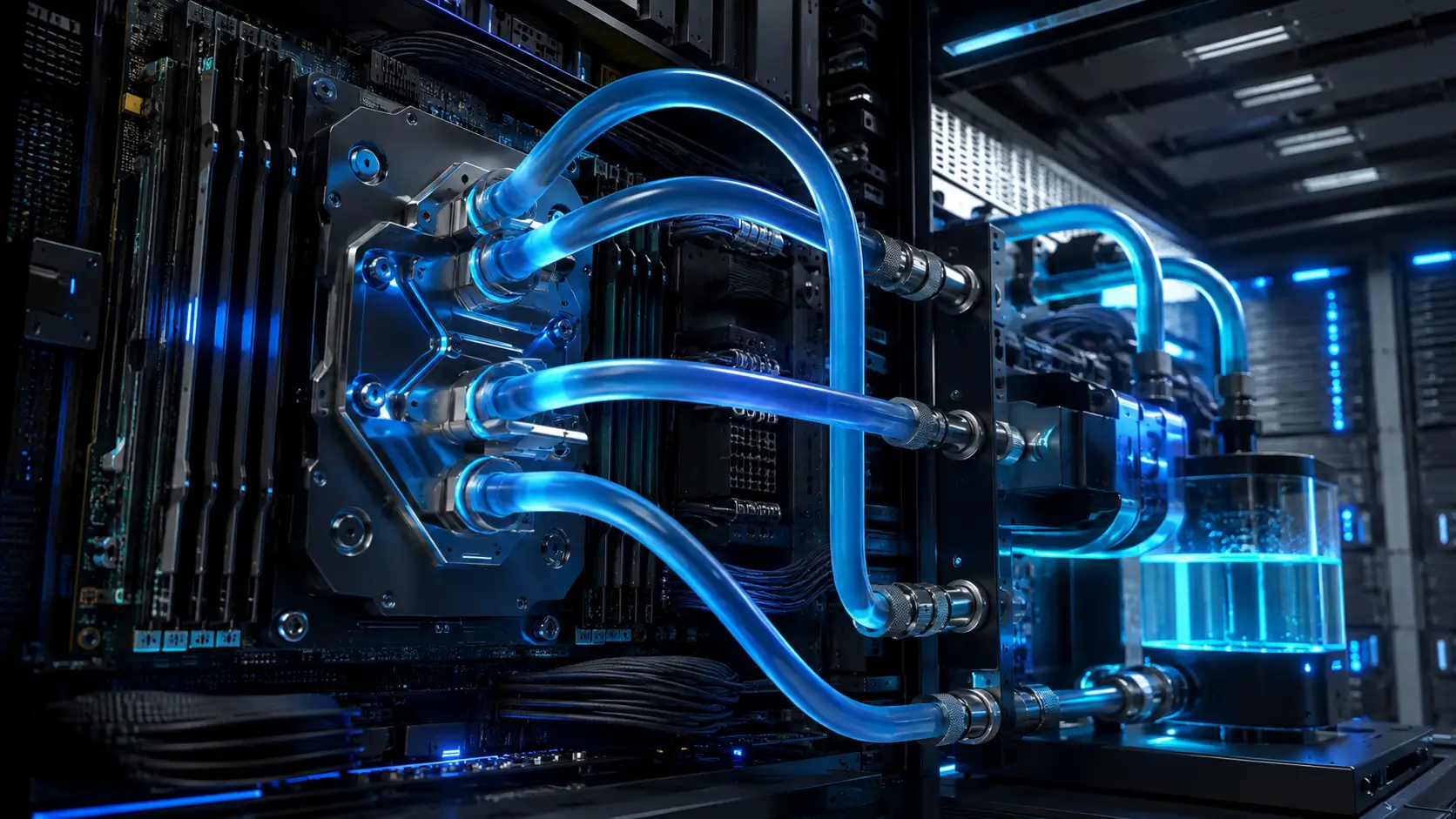
AI infrastructure is changing how operators approach thermal management. Processor density now influences the physical design of many data center environments. Chandra Mohan Mittal recently highlighted this shift in a discussion about AI workloads, GPU clusters and high-density racks. His commentary points to direct-to-chip, rear-door and hybrid cooling as important options for these environments. Cooling increasingly needs consideration alongside IT architecture and broader facility design. Higher processor heat also changes how operators plan heat removal. Operators must therefore consider rack configuration, electrical capacity, controls, maintenance access and future expansion. For end users, the key question is whether the cooling architecture matches the workload and facility requirements.

Rack density is changing the operating equation
The most consequential change for end users is the relationship between compute density and thermal density. AI and HPC systems can place significant processing capability into compact rack footprints. That concentration can also increase the amount of heat that equipment must reject. Traditional air cooling remains relevant across many data center environments. It can work well where rack density and workload characteristics match the existing thermal design. However, higher heat density can increase the value of cooling methods that capture heat closer to its source. Direct-to-chip liquid cooling does this through cold plates and associated fluid infrastructure. For end users, the important issue is how well cooling capacity matches the thermal profile of the computing equipment.
Liquid cooling introduces a broader infrastructure dependency
A liquid-cooled rack depends on more than the equipment installed inside the rack. The cooling chain can include cold plates, manifolds, hoses, CDUs, pumps, heat exchangers and controls. Facility-side heat rejection equipment also forms part of that system. Each component must work with the others to maintain required thermal conditions. The CDU can connect the facility cooling loop with the liquid loop serving IT equipment. Pumps and controls also introduce additional electrical requirements. Operators therefore need to consider cooling as part of facility resilience and broader infrastructure planning. For end users, a liquid-cooling specification should describe the complete operating system rather than one isolated component.
The hybrid model may remain important for mixed environments
The growth of liquid cooling does not mean that every data center will abandon air cooling. Data center environments can contain conventional servers, storage and networking equipment alongside higher-density computing systems. These systems can have different thermal requirements within the same facility. Hybrid cooling can provide one way to introduce liquid-based heat removal without redesigning the entire environment. Rear-door heat exchangers can support rack-level heat removal in suitable deployments. Direct-to-chip systems can address equipment with higher thermal requirements. Immersion cooling provides another option, although hardware compatibility and operating practices remain important. The strongest approach may therefore be the one that matches cooling technology with actual rack density, IT load and facility design.

Reliability has to remain ahead of efficiency
Energy efficiency is an important reason to evaluate liquid cooling. Reliability, however, remains central to any mission-critical deployment. A system that reduces energy use still needs dependable thermal control and manageable operations. Liquid systems introduce fluid-management requirements that require careful engineering and monitoring. Leak detection, commissioning and maintenance also become important parts of the operating model. Physical connections between cooling components and IT equipment require attention during service activities. Liquid-cooling deployments can also require coordination among mechanical, electrical, controls and IT teams. From an end-user perspective, reliable performance depends on both the technology and the practices used to manage it.
Cooling architecture should follow the workload, not the marketing cycle
The growth of AI infrastructure is increasing interest in cooling technologies designed for higher-density computing. Technology selection still requires workload-specific engineering. A facility built for dense GPU clusters can have different thermal requirements from a conventional enterprise environment. Rack configurations and processor generations can also vary within AI deployments. Utilization patterns and deployment models can further influence thermal requirements. These differences make blanket assumptions about liquid cooling difficult to justify. Operators should examine heat loads, rack density, facility capacity and operational requirements before selecting an architecture. Cooling should support the computing strategy rather than dictate it without evidence.
The real test will come during expansion and operations
The suitability of a cooling architecture becomes particularly important during facility expansion. The same applies when operators introduce higher-density computing equipment. AI hardware can evolve faster than the mechanical infrastructure supporting it. That difference can create a risk of future thermal or capacity constraints. Operators therefore need to consider how cooling systems can accommodate changing rack densities and equipment configurations. Fluid requirements, controls and monitoring can also change as deployments evolve. Modularity and controllability can help operators manage these changes alongside raw cooling capacity. For end users, predictable cooling performance becomes increasingly important as the compute environment changes.
The industry needs to judge liquid cooling by outcomes
Liquid cooling continues to attract attention as high-density computing changes thermal requirements. Its value should still be assessed through operational outcomes rather than technology labels. Higher compute density is useful only when surrounding infrastructure can maintain performance and availability. Energy savings also matter most when they coexist with dependable thermal control. Water requirements can influence facility planning and depend on the complete cooling architecture. Local climate, facility design and operating conditions can also affect the resource profile. Sustainability assessments should therefore rely on measurable system performance rather than assumptions about one cooling method. Current industry guidance increasingly treats cooling as part of broader data center infrastructure design.
End users will ultimately decide what becomes standard
The next phase of data center cooling is unlikely to produce one architecture for every facility. Different workloads and operating environments require different thermal strategies. Current industry evidence supports continued use of air, hybrid and liquid approaches. Each approach can serve different density, performance and facility requirements. This creates more choice for data center customers while increasing the importance of careful evaluation. Procurement teams, facilities engineers and IT leaders need to understand how cooling affects the wider infrastructure. Companies deploying AI workloads can evaluate systems through uptime, performance, efficiency, maintainability and scalability. Liquid cooling is therefore best viewed as an increasingly important tool for high-density computing rather than a universal replacement for existing cooling methods.